

You’ve seen the commercials where Flex Seal patches boats and stops water instantly. When you discover a roof leak in your Rocky River or Cleveland-area home, it’s tempting to grab that familiar spray can for a quick fix. Yes, you can use Flex Seal on a roof leak, but it’s only a temporary patch that may void warranties and damage asphalt shingles over time.
The reality is more complex than the marketing suggests. While Flex Seal can stop water temporarily, using it on your roof comes with significant risks that most Northeast Ohio homeowners don’t consider. As local roofing professionals serving the Cleveland metro area, we’ve seen countless situations where a $15 spray turned into thousands in additional repair costs.
Quick Fact: According to roofing industry standards, no major shingle manufacturer like GAF or CertainTeed approves Flex Seal as a warranty-compliant repair method for asphalt shingle roofs.
This guide will help you understand when Flex Seal might work, the serious risks involved, and what roofing professionals recommend instead. You’ll learn about better alternatives that won’t compromise your roof’s integrity or your home’s value.
When Flex Seal works on roofs and when it doesn’t
Flex Seal can provide emergency water stoppage in very specific situations. It works best on small, localized issues like pinhole leaks in metal roofing, minor cracks around flashing, or compromised seams around vents. These repairs are typically less than a quarter-inch wide and on surfaces that aren’t heavily granulated.
The product adheres reasonably well to metal roofs, PVC membranes, and some rubber surfaces. For RV owners dealing with emergency leaks on membrane roofing, Flex Seal can buy time until proper repairs are possible.
However, Flex Seal shouldn’t be used on asphalt shingle roofs, which make up about 80% of residential roofing in Northeast Ohio. The granulated surface of shingles doesn’t provide ideal adhesion, and the product can actually accelerate shingle deterioration. Large holes, missing shingles, or structural damage—especially common after Cleveland’s severe winter storms—require professional attention that Flex Seal simply cannot provide.
The risks of using Flex Seal on asphalt shingle roofs
You may void your roof warranties
Most Cleveland-area homeowners have two types of roof protection: a workmanship warranty from their contractor and a material warranty from the shingle manufacturer. Using Flex Seal immediately voids both warranties on the affected area.
This happens because manufacturers and contractors cannot determine if a leak was caused by material defects, poor installation, or the unauthorized sealant application. Even if your original problem was covered, you’ll pay out of pocket for repairs once Flex Seal is applied.
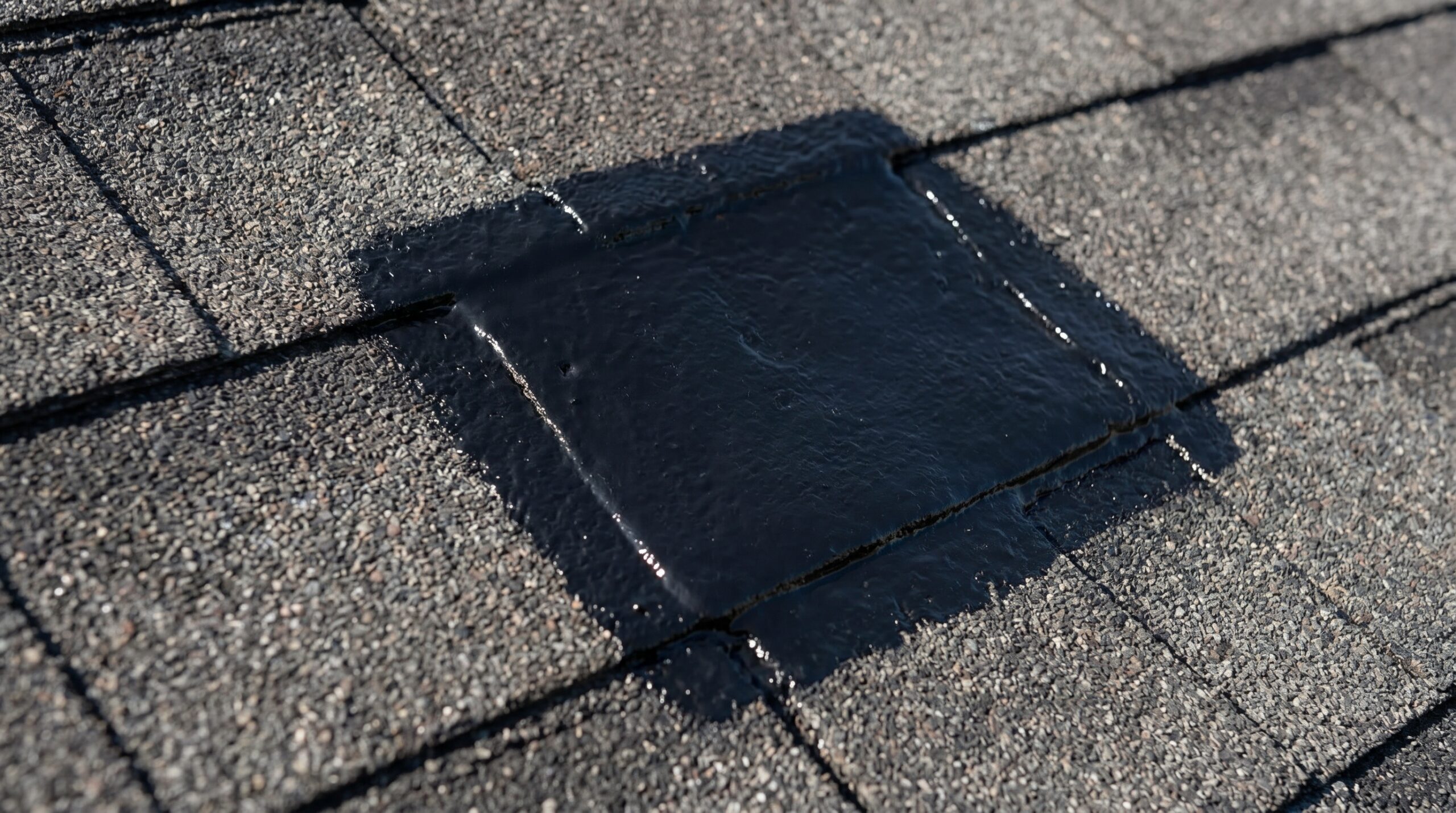
Flex Seal can crack and damage shingles over time
While Flex Seal claims UV resistance, it’s not UV stabilized like proper roofing materials. According to billraganroofing.com, the product dries out and cracks under prolonged sun exposure, which is constant on rooftops.
As the Flex Seal degrades, it can crack the surrounding shingles. What starts as a small quarter-inch hole often grows into a three-inch damaged area requiring multiple shingle replacements. The chemical breakdown also makes the area more susceptible to future leaks—particularly problematic given Northeast Ohio’s harsh freeze-thaw cycles.
It’s only a temporary solution that creates bigger problems
Flex Seal doesn’t address the root cause of roof leaks. Whether it’s damaged flashing, nail pops from thermal expansion, or worn shingles from Cleveland’s weather extremes, spraying over the symptom leaves the underlying issue unresolved.
The temporary nature means you’ll need repeated applications as the product fails. Each reapplication can spread damage to healthy shingles, turning a simple repair into a major project. Professional roofers often need to remove all traces of Flex Seal before making proper repairs, adding to your costs.
Important: engineerfix.com notes that Flex Seal repairs typically last 1-3 years depending on climate conditions, while proper roof repairs can last decades—crucial in Northeast Ohio’s challenging weather.
Visible patches hurt your home’s curb appeal
Multiple black patches across your roof are highly visible from the street. Unlike proper repairs that blend with existing materials, Flex Seal creates obvious dark spots that can make your Rocky River or Cleveland home look neglected.
This aesthetic impact can affect your property value and neighborhood appearance. If you’re planning to sell your home in the competitive Cleveland market, visible Flex Seal patches may raise questions about overall maintenance and hidden problems.
Better alternatives to Flex Seal for roof leaks
| Feature | Flex Seal Spray | Roofing Cement | Professional Repair |
|---|---|---|---|
| Warranty Impact | Voids warranties | May preserve if approved | Maintains warranties |
| Lifespan | 1-3 years | 5-10 years | 15-25 years |
| Shingle Compatibility | Poor on granulated surfaces | Designed for asphalt | Optimal |
| Appearance | Visible dark patches | Blends better | Invisible when done right |
The most effective approach addresses the leak’s source rather than just covering symptoms. For small nail holes or minor shingle damage, roofing-specific sealants designed for asphalt shingles provide better adhesion and longevity.
Roofing cement or elastomeric sealants are formulated to work with shingle materials and thermal expansion. These products cost slightly more than Flex Seal but offer significantly better performance and won’t void manufacturer warranties when applied correctly.
For larger issues, partial shingle replacement combined with proper flashing repair provides a permanent solution. This approach costs more upfront but prevents the escalating damage cycle that Flex Seal often creates.
When to DIY versus calling a professional
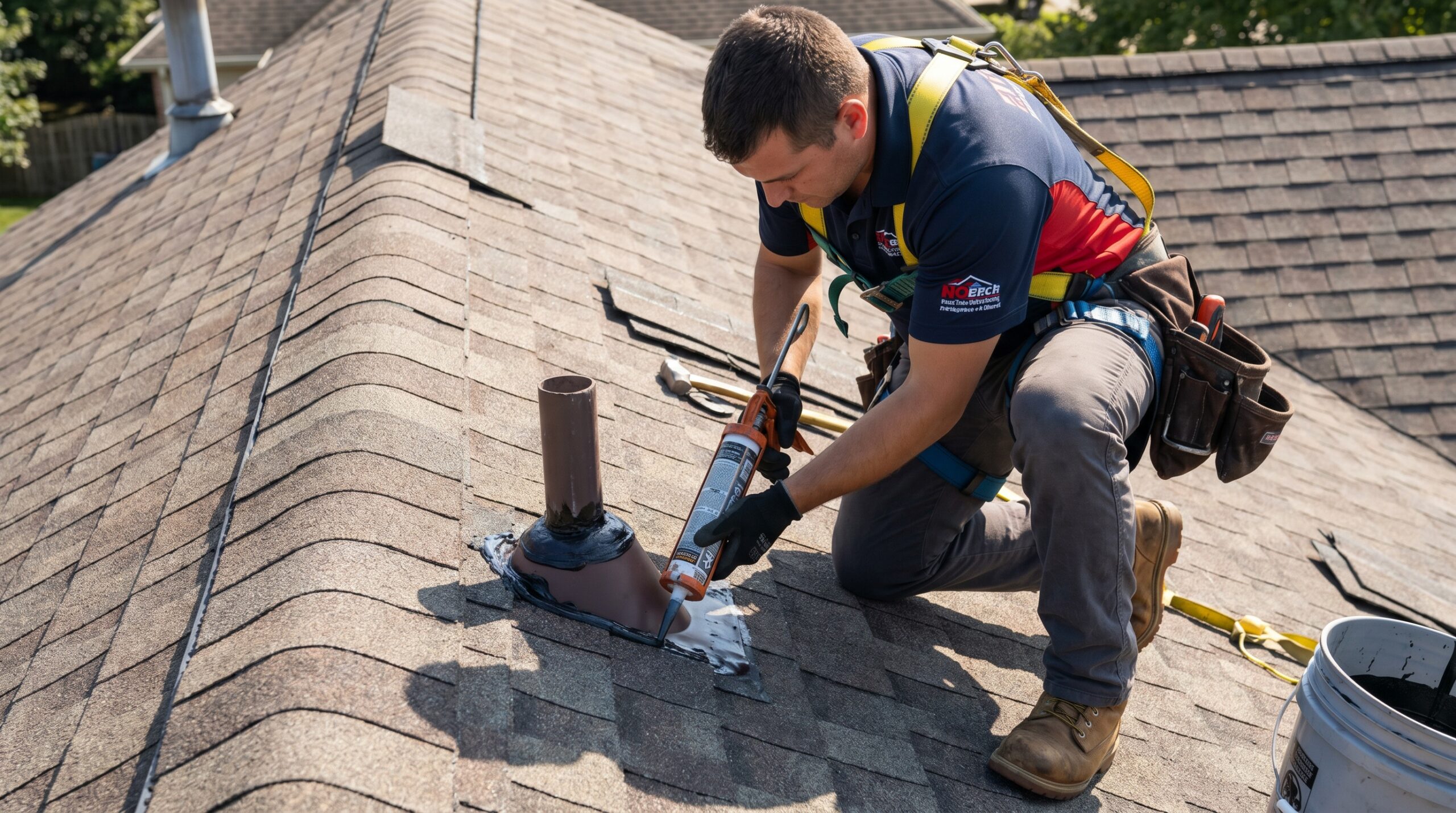
You might consider DIY repair for single, easily accessible nail holes on low-slope sections where you can work safely. The leak should be clearly visible, small, and not near valleys or complex flashing areas. Your roof should also be relatively new without active warranties.
However, call a professional when you’re dealing with multiple leaks, steep roof sections, or any structural sagging. If water damage is visible inside your home, the problem likely extends beyond what surface sealants can address. Active warranties also make professional repair the smart financial choice.
Safety considerations matter too. According to smithroofingexteriors.com, roof work involves significant fall risks, especially on wet or steep surfaces. Professional roofers have proper equipment and insurance coverage that protect both you and your property. Given Northeast Ohio’s unpredictable weather, working on roofs can be particularly hazardous for untrained homeowners.
Pro Tip: If you’ve already used Flex Seal, be upfront with any roofer you call. They’ll need to factor removal time and potential shingle replacement into their estimate.
What to do if you’ve already used Flex Seal
If you’ve already applied Flex Seal to your roof, document the areas with photos and review your warranty information. When calling roofing professionals in the Cleveland area, be honest about where and how much product you used.
Expect that proper repair may require removing the Flex Seal and replacing affected shingles rather than simply sealing over the existing patch. This isn’t necessarily expensive if caught early, but it does require professional expertise to avoid further damage.
The key is addressing the underlying issue before it spreads. Many Cleveland-area homeowners successfully transition from Flex Seal patches to proper repairs without major complications when they act quickly.
While Flex Seal offers immediate water stoppage, it’s best viewed as an emergency measure rather than a repair solution. For lasting protection of your home’s most important barrier against Northeast Ohio’s challenging weather, proper roofing materials and techniques provide the reliability and warranty protection your investment deserves.