

If you’re seeing water stains around your fireplace, smelling dampness, or hearing dripping sounds during storms, you’re dealing with one of the most common yet concerning home maintenance issues in Northeast Ohio. Rain entering your chimney isn’t just an inconvenience – it can lead to structural damage, mold growth, and costly repairs if left unaddressed.
The good news? Most chimney leaks stem from a few predictable causes that can be diagnosed and fixed with the right approach. You’ll learn how to identify where water is entering, understand the most effective solutions, and know when to call a professional versus tackling repairs yourself.
Quick Fix: The most effective solution is installing a chimney cap, which prevents 90% of direct rainwater entry while also blocking debris and animals from entering your flue.
Quick ways to stop rain getting into your chimney
Before diving into detailed explanations, here are the primary solutions that address most chimney leak problems:
- Install or replace a damaged chimney cap or cowl
- Repair loose or corroded flashing where the chimney meets your roof
- Fix cracks in the chimney crown at the top of your structure
- Seal gaps in brickwork and deteriorated mortar joints
- Clear debris and blockages from the flue opening
Each solution targets specific entry points where water typically infiltrates your chimney system.
How to tell if rain is leaking through your chimney
Confirming that rain is actually entering through your chimney helps you focus your repair efforts effectively. According to chimneyinsight.com, water infiltration often combines multiple failure points working together.
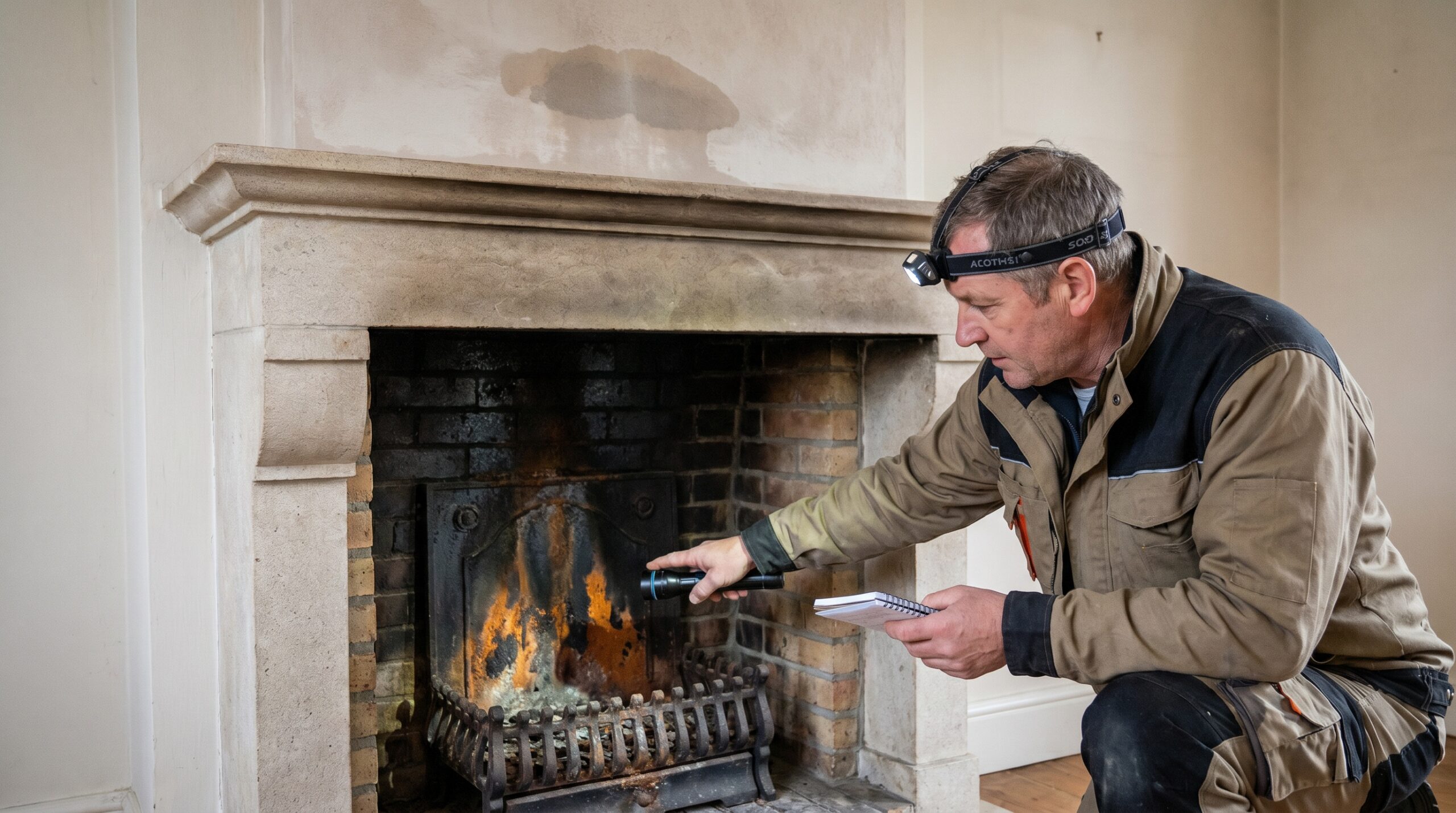
Signs at your fireplace: Look for water pooling in the firebox, rust stains on the damper, or a damp smell that appears only during or after heavy rain. White chalky deposits on brick surfaces also indicate moisture problems.
Interior wall indicators: Damp patches on walls near the chimney, peeling paint around the fireplace area, or ceiling stains where the chimney passes through upper floors point to water entry.
Timing matters: If moisture appears only during storms with driving rain, you’re likely dealing with weather-driven leaks rather than condensation issues that occur year-round. Cleveland’s harsh winters and frequent freeze-thaw cycles can make these problems more pronounced.
Why rain is coming down your chimney
Understanding the root cause helps you choose the most effective repair approach. Based on professional chimney maintenance data from skroofingandconstruction.com, these are the most common failure points.
Missing or damaged chimney cap: Your chimney cap acts like an umbrella, directing water away from the flue opening. When it’s missing, rusted, or improperly sized, rain falls directly into your chimney system.
Failing flashing where chimney meets roof: Flashing creates a waterproof seal between your chimney and roof surface. According to roofingkc.com, damaged flashing causes the majority of chimney-related ceiling stains.
Cracked chimney crown: The concrete crown at your chimney’s top takes constant weather exposure. Cracks allow water to seep into the flue walls and saturate masonry from inside out.
Deteriorated masonry and mortar: Brick and mortar naturally absorb moisture over time. Northeast Ohio’s freeze-thaw cycles widen small cracks, creating larger entry points for water during heavy rain.
Professional Insight: Most homeowners assume chimney leaks have one source, but water infiltration typically involves 2-3 failure points working together, which is why comprehensive inspection is crucial.
Step-by-step solutions to stop rain coming down your chimney
The right fix depends on identifying your specific leak source. Start with a visual inspection from the ground using binoculars, then apply the relevant solution below.
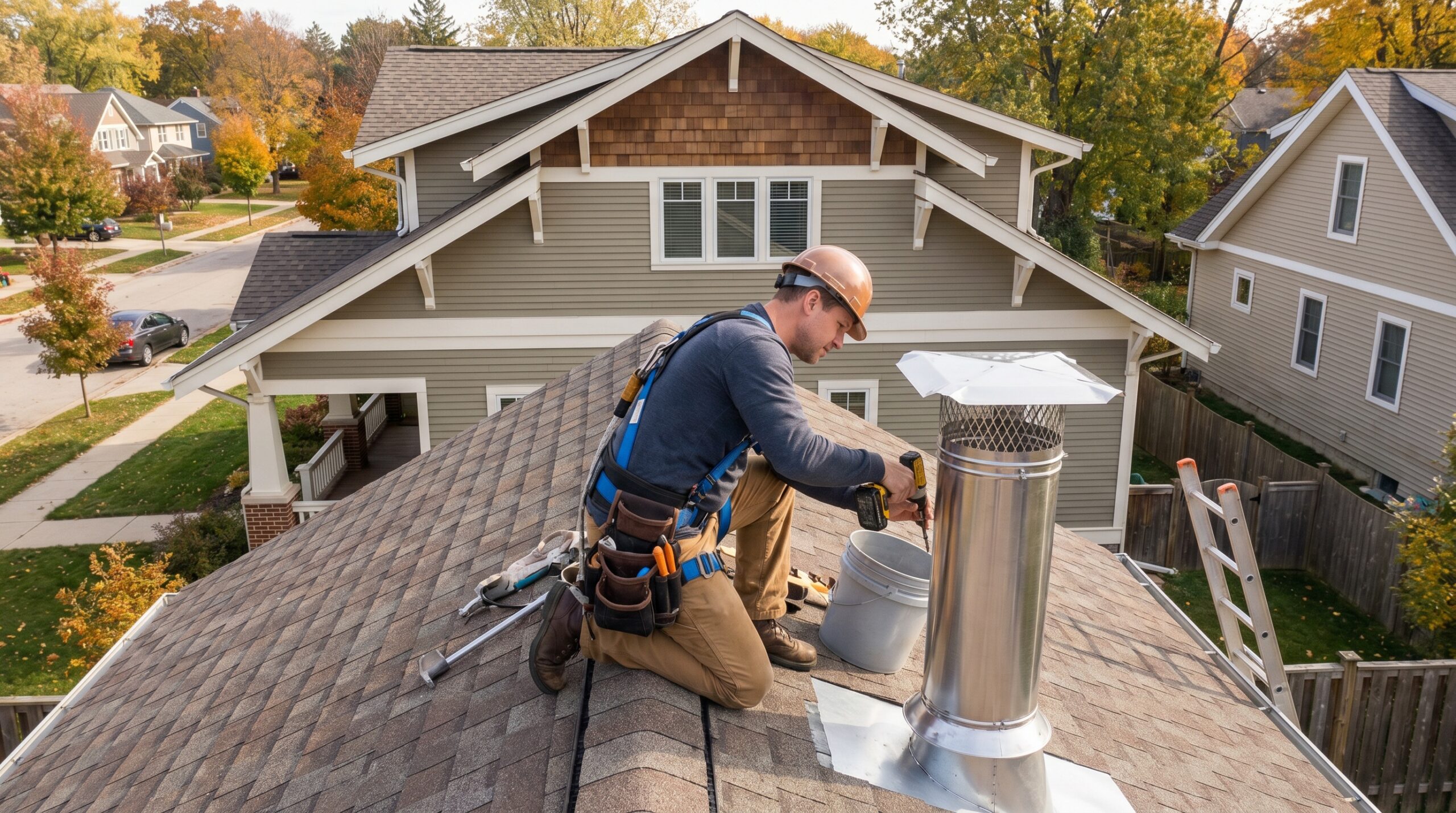
Install or replace your chimney cap: This addresses the most common cause of direct water entry. Chimney caps prevent rain, debris, and animals from entering while reducing downdrafts. Professional installation ensures proper sizing and secure mounting, especially for multi-flue chimneys.
Repair damaged flashing: Flashing repair requires roofing expertise since it involves removing shingles and properly layering waterproof barriers. mrroof.com recommends professional installation to ensure step flashing and counter flashing work together effectively.
Fix the chimney crown: Crown repair may involve applying specialized sealants for minor cracks or rebuilding the entire concrete surface for major damage. Proper crown slope directs water away from the flue opening.
Seal masonry cracks: Use breathable, water-repellent sealers that prevent moisture penetration while allowing the chimney to release trapped humidity. Avoid non-breathable coatings that can trap moisture and cause spalling.
Safety Note: Roof work and chimney repairs above ground level should be handled by certified professionals due to fall risks and the specialized knowledge required for proper waterproofing.
| Problem | Primary Solution | DIY Feasible? | Professional Recommended |
|---|---|---|---|
| Missing cap | Install chimney cap | Sometimes | For complex installations |
| Damaged flashing | Flashing repair/replacement | No | Always |
| Cracked crown | Crown sealing/rebuilding | No | Always |
| Masonry cracks | Water-repellent sealing | Limited | For structural issues |
Long-term prevention to keep your chimney dry
Preventing future leaks requires consistent maintenance habits that address problems before they become costly repairs.
Schedule annual chimney inspections with certified professionals who can identify early signs of wear in flashing, crowns, and masonry. Regular cleaning removes debris that can trap moisture and redirect water flow.
Check your chimney cap and surrounding roof area visually from the ground after major storms. Look for missing or damaged components, and clean gutters regularly to prevent water overflow toward your chimney base.
Consider professional water-repellent treatments every few years as recommended by your chimney technician, especially in Northeast Ohio where harsh freeze-thaw cycles are common.
Rain entering your chimney is a solvable problem when you identify the cause and apply the appropriate fix. Most issues involve chimney caps, flashing, or crown problems that professionals can address effectively. Taking action quickly prevents minor leaks from becoming major structural damage, protecting both your chimney and your home’s interior from costly water damage.