

Choosing sustainable siding for your home has never been more important or accessible than it is today. With growing environmental awareness and rising energy costs, homeowners are increasingly seeking exterior materials that deliver both performance and environmental responsibility. The good news is that 2026 offers an impressive array of eco-friendly siding options that outperform traditional materials in durability, energy efficiency, and long-term value.
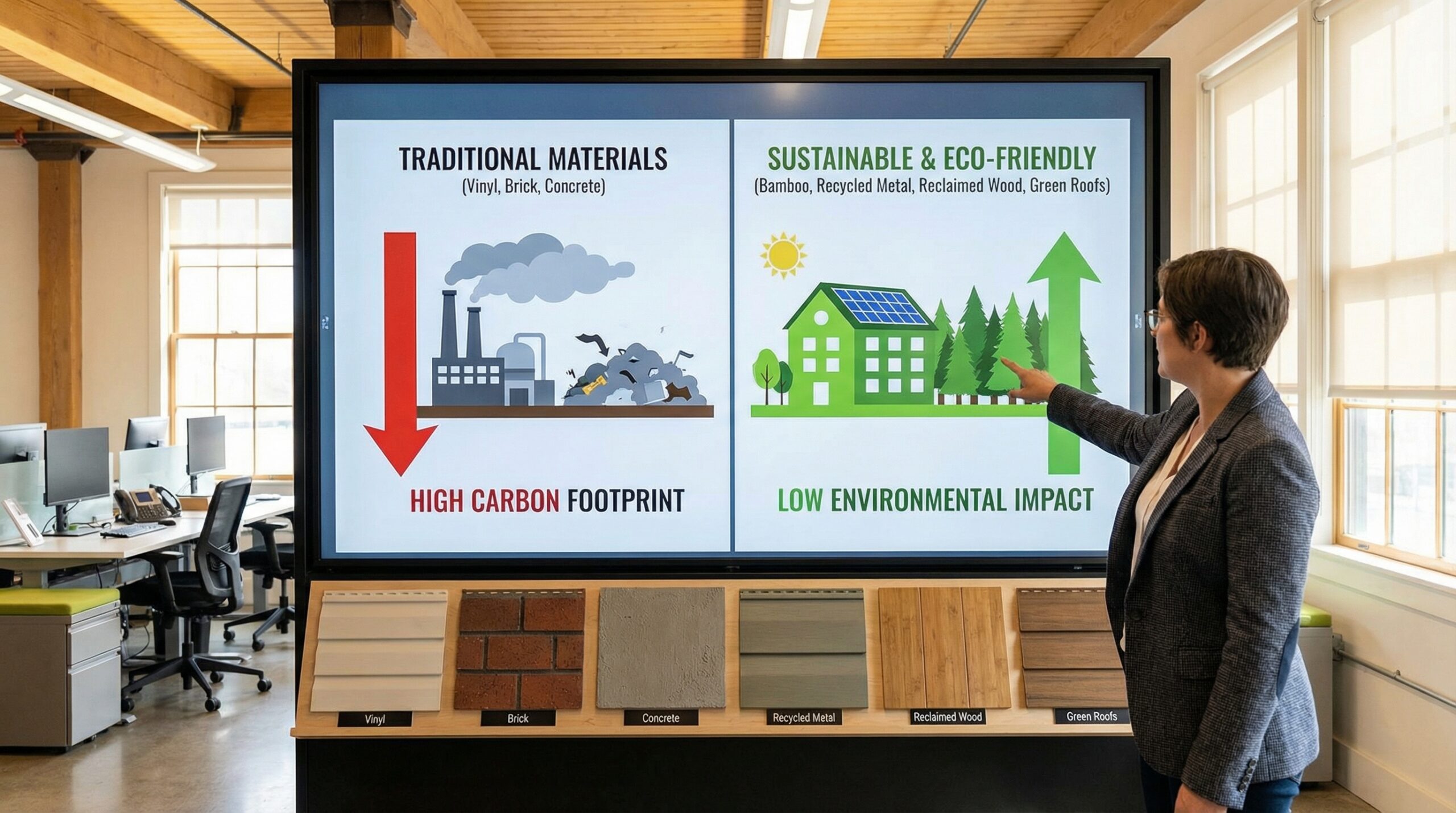
Modern sustainable siding materials can reduce your home’s carbon footprint by up to 60% compared to conventional vinyl while providing superior insulation and weather resistance. From reclaimed wood that prevents deforestation to recycled metal siding incorporating 95% post-consumer content, today’s green options prove you don’t have to sacrifice quality for environmental consciousness.
Quick Fact: Sustainable siding materials typically last 40-60 years compared to 20-30 years for traditional vinyl, while generating 50-70% lower carbon emissions during production.
Why traditional siding falls short environmentally
Traditional siding materials create significant environmental challenges that extend far beyond their initial installation. Vinyl siding production relies heavily on petroleum-based chemicals and releases harmful volatile organic compounds during manufacturing. The process generates substantial greenhouse gas emissions while creating materials that will persist in landfills for centuries without biodegrading.
Aluminum siding presents its own set of environmental concerns through intensive bauxite mining operations that often lead to habitat destruction and deforestation. The energy-intensive refining process required to transform raw bauxite into finished aluminum siding generates considerable carbon emissions and toxic byproducts that impact both air and water quality.
The manufacturing footprint of these conventional materials extends to their transportation and installation phases as well. Heavy materials require more fuel for shipping, while complex installation processes often involve additional chemical treatments and sealants that further increase environmental impact. Understanding common siding installation mistakes can help you avoid compounding these environmental concerns during your project.
Top sustainable siding materials for 2026
The market for environmentally responsible exterior materials has evolved dramatically, offering homeowners sophisticated options that excel in both performance and sustainability. Each material brings unique advantages suited to different architectural styles and climate conditions.
Reclaimed wood siding leads the sustainability category by giving new life to salvaged timber while preventing additional deforestation. This material offers excellent natural insulation properties and develops beautiful weathered character over time. The carbon footprint remains minimal since no new trees are harvested, and the material can be fully recycled at the end of its lifespan.
Fiber cement with recycled content combines durability with environmental responsibility through the incorporation of recycled materials like fly ash and cellulose fibers. Modern formulations achieve exceptional fire resistance and dimensional stability while maintaining a significantly lower environmental impact than traditional cement products.
Recycled metal siding represents perhaps the most circular approach to exterior cladding, incorporating up to 95% post-consumer content while delivering superior weather resistance and longevity. Steel and aluminum variants both offer complete recyclability at end-of-life, creating a truly sustainable material cycle.
Energy Insight: Homes with sustainable siding materials can reduce heating and cooling costs by 15-25% annually through improved insulation and thermal regulation properties.
| Material Type | Lifespan (Years) | Recyclability | Carbon Footprint (CO2/sq ft) |
|---|---|---|---|
| Reclaimed Wood | 40-60 | 100% | 0.5-1.0 |
| Fiber Cement | 50+ | 80% | 1.5-2.0 |
| Recycled Metal | 50+ | 100% | 1.0-1.5 |
| Traditional Vinyl | 20-30 | 25% | 4.0-5.0 |
Energy efficiency and performance benefits
Sustainable siding materials deliver measurable improvements in home energy performance through advanced thermal properties and innovative design features. Many eco-friendly options incorporate reflective pigments that reduce solar heat gain during summer months while maintaining beneficial heat absorption in winter.
The superior insulation properties of materials like reclaimed wood and insulated fiber cement help create more stable indoor temperatures year-round. This thermal stability reduces the workload on heating and cooling systems, translating directly into lower utility bills and reduced energy consumption. Learn more about how new siding improves your home’s insulation to maximize these energy-saving benefits.
Advanced installation techniques further enhance these benefits through proper ventilation gaps and moisture management systems. When combined with high-performance sustainable materials, these methods create building envelopes that significantly outperform conventional siding installations in both energy efficiency and durability.
Cost considerations and long-term value
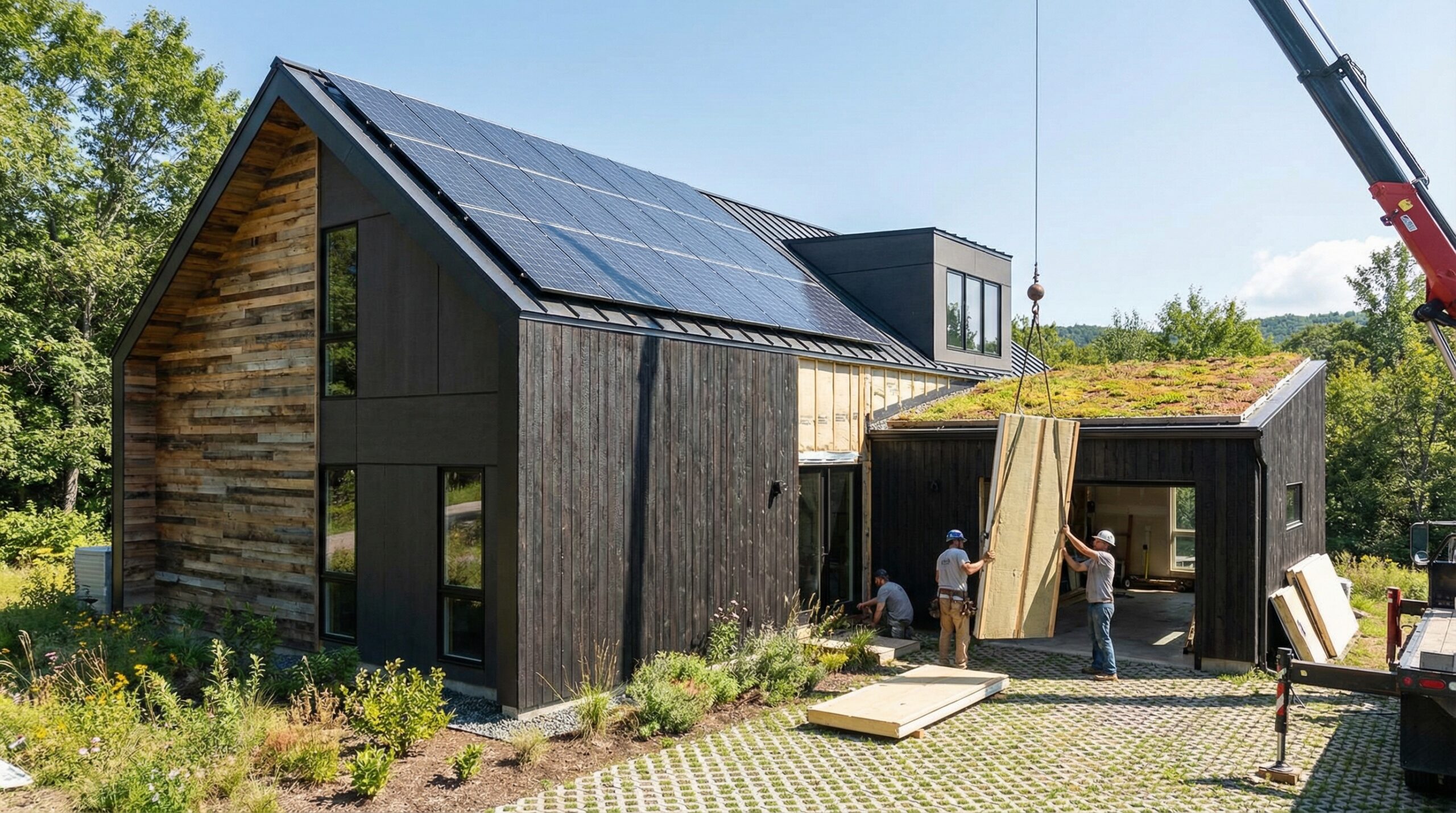
While sustainable siding materials often require higher upfront investment, their long-term financial benefits typically provide excellent returns. The extended lifespan of these materials means fewer replacement cycles, reducing both material costs and labor expenses over the building’s lifetime. When evaluating your options, consider reviewing a complete siding replacement cost breakdown to understand the full financial picture.
Energy savings represent another significant financial advantage, with many homeowners seeing 15-25% reductions in heating and cooling costs after installing high-performance sustainable siding. These savings compound over time, often offsetting the initial investment within 5-7 years.
Property value increases provide additional financial benefits, as homes with certified sustainable materials often command premium prices in today’s environmentally conscious real estate market. Many sustainable siding installations also qualify for federal tax credits and local utility rebates, further improving the overall return on investment. Understanding siding warranties and what’s actually covered is crucial for protecting your investment.
Financial Tip: Factor in the complete lifecycle costs when comparing siding options, including energy savings, maintenance requirements, and end-of-life value to get the true cost picture.
The maintenance requirements for sustainable materials are typically lower than conventional options, with many requiring only periodic cleaning rather than frequent repairs or refinishing. This reduced maintenance translates into both cost savings and reduced environmental impact over the material’s lifetime. For guidance on keeping your siding in optimal condition, explore how to maintain your siding in Ohio.
Choosing sustainable siding for your home represents a smart investment in both environmental responsibility and long-term value. The combination of reduced environmental impact, superior performance, and financial benefits makes these materials an increasingly attractive option for homeowners looking to upgrade their exterior while supporting a more sustainable future. With the wide range of options available in 2026, you can find sustainable siding that perfectly matches your aesthetic preferences, climate requirements, and budget considerations.