

Are you tired of cleaning bird droppings from your roof or dealing with constant noise from roosting birds? Bird spikes are 99% effective at deterring large birds like pigeons and seagulls from landing on your property. These humane deterrent devices create an uncomfortable landing surface that encourages birds to find alternative roosting spots without causing them harm.
Quick Fact: According to birdbgone.com, bird spikes are among the most effective physical deterrents for preventing bird damage to residential and commercial properties.
Bird spikes offer a long-term solution for protecting your roof from acidic droppings, preventing nest-related damage, and maintaining a cleaner property. This guide covers everything you need to know about choosing, installing, and maintaining bird spikes for maximum effectiveness.
What are bird spikes and how do they work
Bird spikes are humane deterrent devices designed to prevent birds from landing or roosting on specific surfaces. These devices consist of narrow, upward-pointing spikes made from plastic or metal materials, mounted on a flexible base that can be attached to various surfaces.
The spikes work by creating an uneven and uncomfortable landing area that birds naturally avoid. The spikes are not sharp enough to injure birds but are effective enough to make landing difficult and uncomfortable. Most quality bird spikes feature blunted or curved ends to ensure they remain completely humane while maintaining their deterrent effectiveness.
When birds approach a spike-protected area, their natural instinct to avoid potential harm causes them to seek alternative roosting locations. This behavioral response makes bird spikes particularly effective against larger birds like pigeons, seagulls, and crows that typically cause the most property damage.
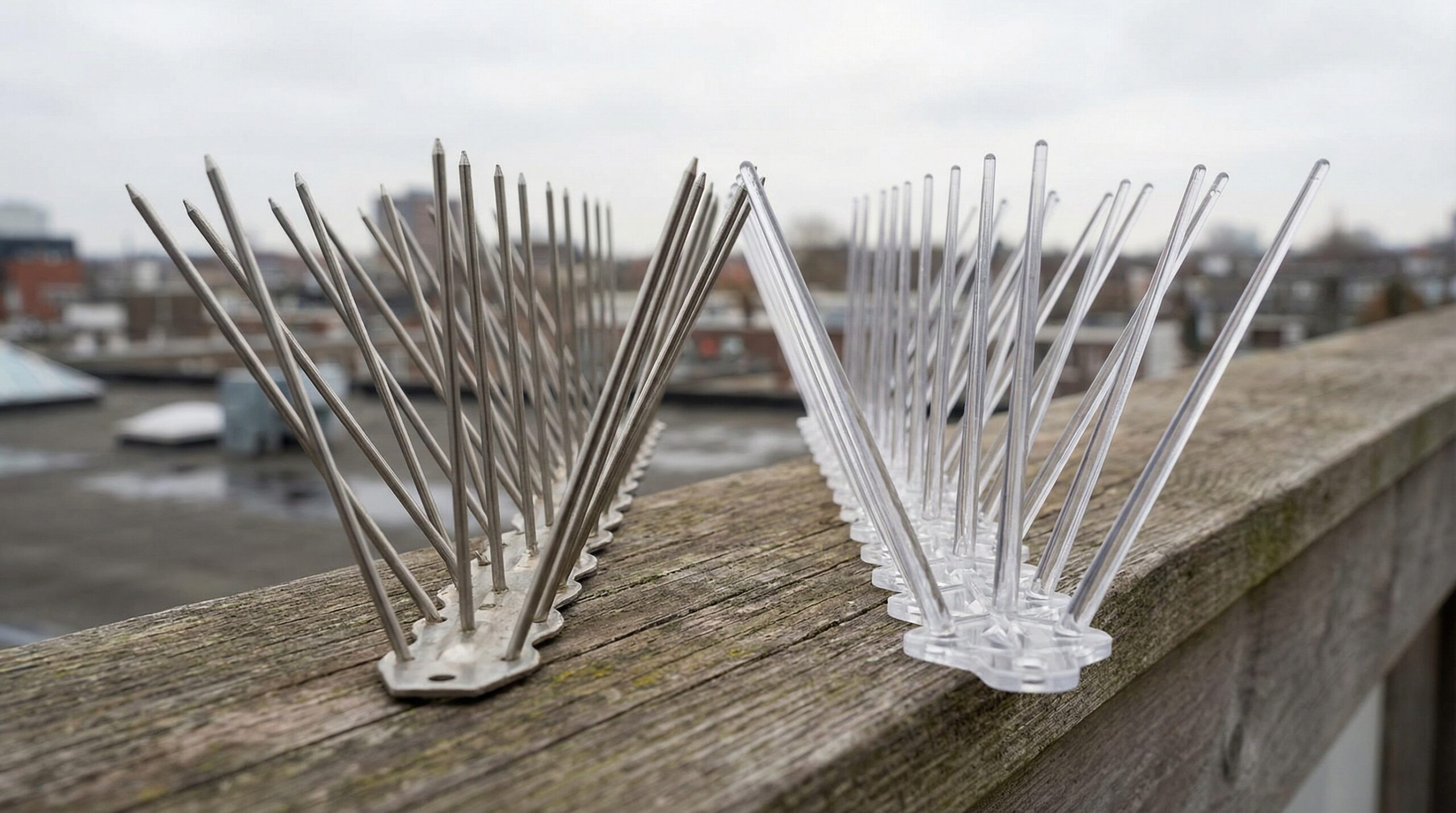
Types of bird spikes: Metal vs plastic options
Choosing between metal and plastic bird spikes depends on your specific needs, budget, and local weather conditions. Both materials offer distinct advantages for different situations.
Metal bird spikes are typically made from stainless steel or aluminum and provide superior durability. These spikes can last 10-15 years with minimal maintenance, making them ideal for permanent installations. Metal spikes are also less visible from a distance, which helps maintain your property’s aesthetic appeal. However, they come with a higher upfront cost.
Plastic bird spikes offer a more budget-friendly option that works well for temporary installations or areas with severe weather conditions. While they may need replacement every 3-5 years, plastic spikes won’t rust or corrode and are easier to remove and store during extreme weather. They’re also lighter, making installation simpler for DIY projects.
| Feature | Metal Spikes | Plastic Spikes |
|---|---|---|
| Durability | 10-15 years | 3-5 years |
| Cost | Higher upfront | Lower upfront |
| Visibility | Less visible | More visible |
| Weather resistance | Excellent | Good |
Installation Tip: According to birdbgone.com, proper spacing is crucial regardless of material choice. Spikes should be placed no more than 6 inches apart to prevent birds from landing between them.
Installation guide and best placement locations
Installing bird spikes requires careful planning and attention to detail for maximum effectiveness. The key to successful installation lies in proper surface preparation and strategic placement.
Surface preparation is essential before installation. Clean the area thoroughly and ensure it’s completely dry. Remove any existing bird droppings, nesting materials, or debris that could interfere with adhesion. For best results, use a degreasing agent to remove any oily residues. If you’re dealing with significant buildup, consider professional roof cleaning techniques to ensure proper adhesion of your bird deterrent system.
Installation methods vary depending on your surface type and spike material. Adhesive installation works well for smooth surfaces and provides quick, easy mounting. For rough surfaces or high-traffic areas, mechanical fastening with screws or nails offers more secure attachment. Always follow manufacturer guidelines for your specific spike type.
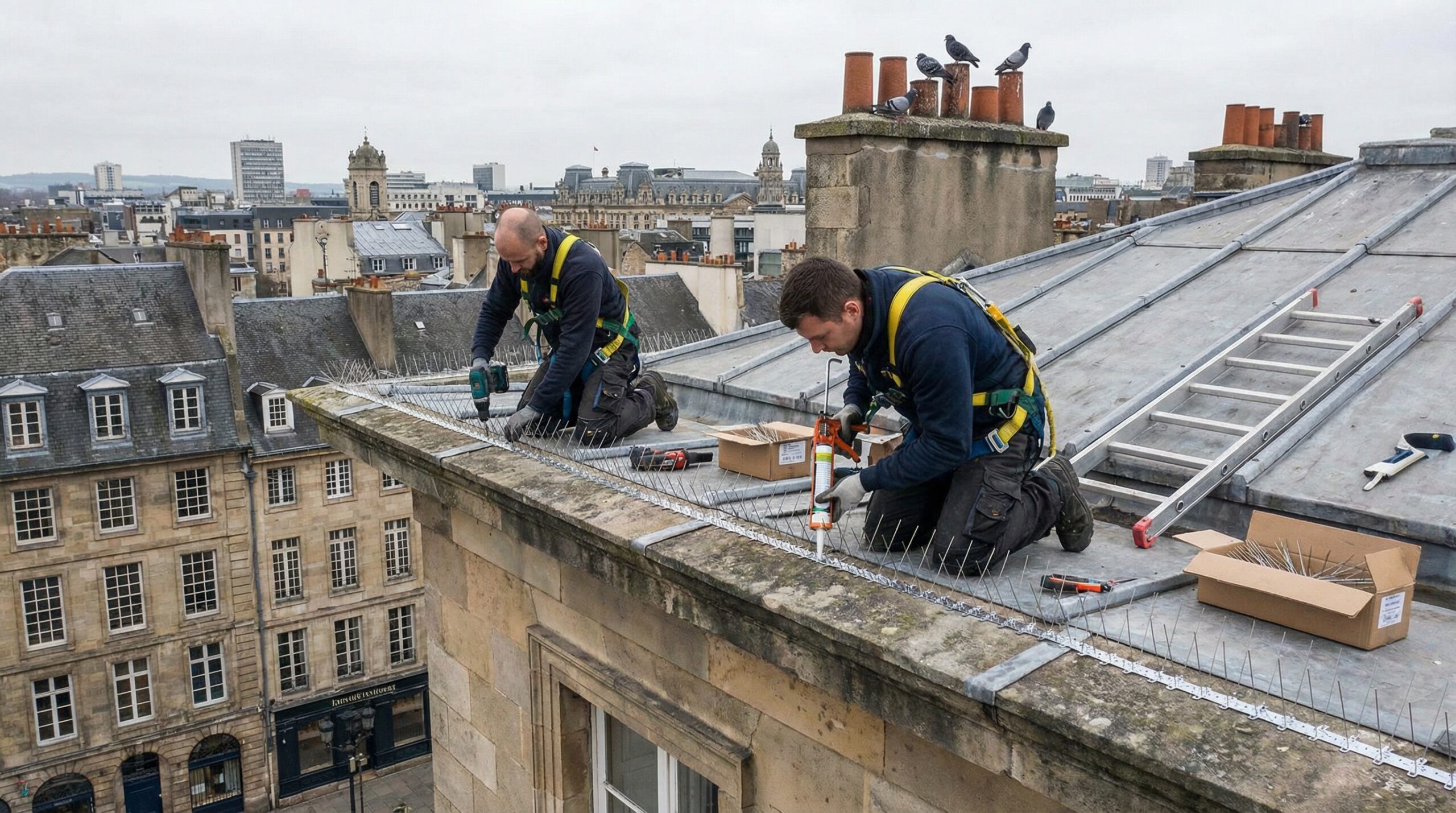
Strategic placement locations include roof peaks, gutters, ledges, window sills, and signs. Focus on areas where you’ve observed bird activity or found evidence of roosting and nesting. Remember that birds will often move to nearby unprotected areas, so comprehensive coverage of potential landing spots is important for long-term success.
The most effective installations cover flat surfaces, curved areas like pipe tops, narrow ledges, and wide parapets. Pay special attention to sheltered spots that provide protection from weather and predators, as these are prime roosting locations. Areas near chimney roof integration points are particularly attractive to birds seeking shelter.
Effectiveness and limitations for different bird sizes
Bird spikes excel at deterring medium to large birds but have important limitations when dealing with smaller species. Understanding these limitations helps you set realistic expectations and choose appropriate alternatives when needed.
Large birds like pigeons, seagulls, and crows are effectively deterred by properly installed spikes. These birds have leg spans that make landing between spikes uncomfortable and unstable. Pestcontrolworldwide.com confirms that bird spikes achieve near 100% effectiveness against these common pest birds.
Small birds present a different challenge. Sparrows, finches, and similar small species can often fit between spike gaps and may even use the spikes as nesting support structures. For these birds, alternative deterrents work better. If you’re dealing with persistent pest problems, you may want to explore comprehensive roof pest control strategies that address multiple types of unwanted visitors.
Important Limitation: If spikes are spaced too far apart, they can actually help smaller birds build nests by providing a framework that holds nesting materials together.
Alternative solutions for small birds include bird netting with fine mesh, reflective tape or shiny objects that create movement and glare, and bird gel that creates an unpleasant sticky surface. These methods address the specific behaviors and physical characteristics of smaller bird species more effectively than traditional spikes.
When dealing with mixed bird populations, a combination approach often works best. Use spikes for primary deterrence against large birds while incorporating supplementary methods for comprehensive small bird control. Regular roof maintenance and inspections can help you identify new bird activity before it becomes a serious problem.
Bird spikes represent a proven, humane solution for protecting your roof from bird-related damage. While they work exceptionally well for larger pest birds, understanding their limitations helps you create a comprehensive bird control strategy. For complex installations or persistent bird problems, consulting with a professional pest control specialist ensures you get the most effective solution for your specific situation. With proper selection, installation, and maintenance, bird spikes can provide years of reliable protection for your property. Consider incorporating bird spike installation as part of your seasonal roof maintenance routine to ensure year-round protection from avian pests.