
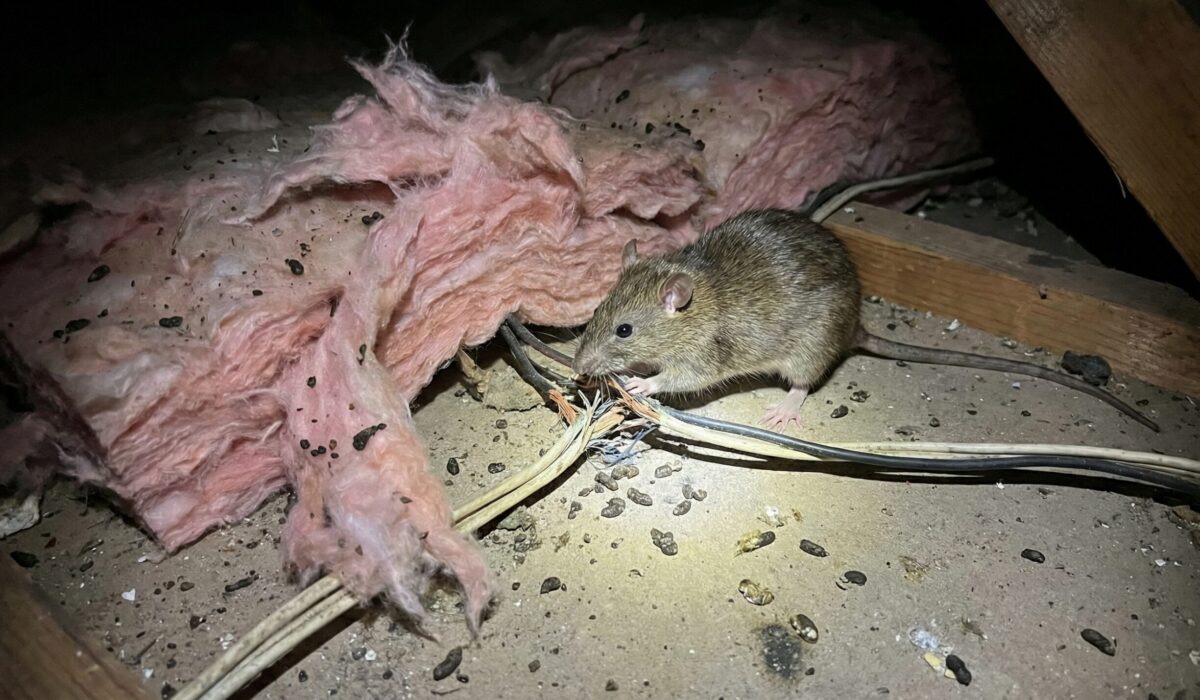
Dealing with roof rats in your attic? You’re not alone. These agile climbers can squeeze through openings as small as half an inch and quickly establish colonies in your home’s upper levels. Roof rats contaminate food, spread diseases like hantavirus, and cause structural damage by chewing through electrical wiring and insulation.
The good news is that you can eliminate roof rats using a combination of strategic trapping, entry point sealing, and habitat modification. Most homeowners see results within 2-3 weeks when following a systematic approach that targets their food sources, nesting areas, and access routes.
Quick Fact: According to pinnaclepest.com, roof rats are black rodents that prefer high places like attics and tree lines, making them distinct from ground-dwelling Norway rats.
Identify roof rats in your home
Before you can effectively eliminate roof rats, you need to confirm their presence and understand their behavior patterns. Roof rats are slender, black or brown rodents measuring 6-8 inches in body length with tails longer than their bodies. Unlike mice, which are only 3 inches long, roof rats have prominent ears, pointed snouts, and smooth, silky fur.
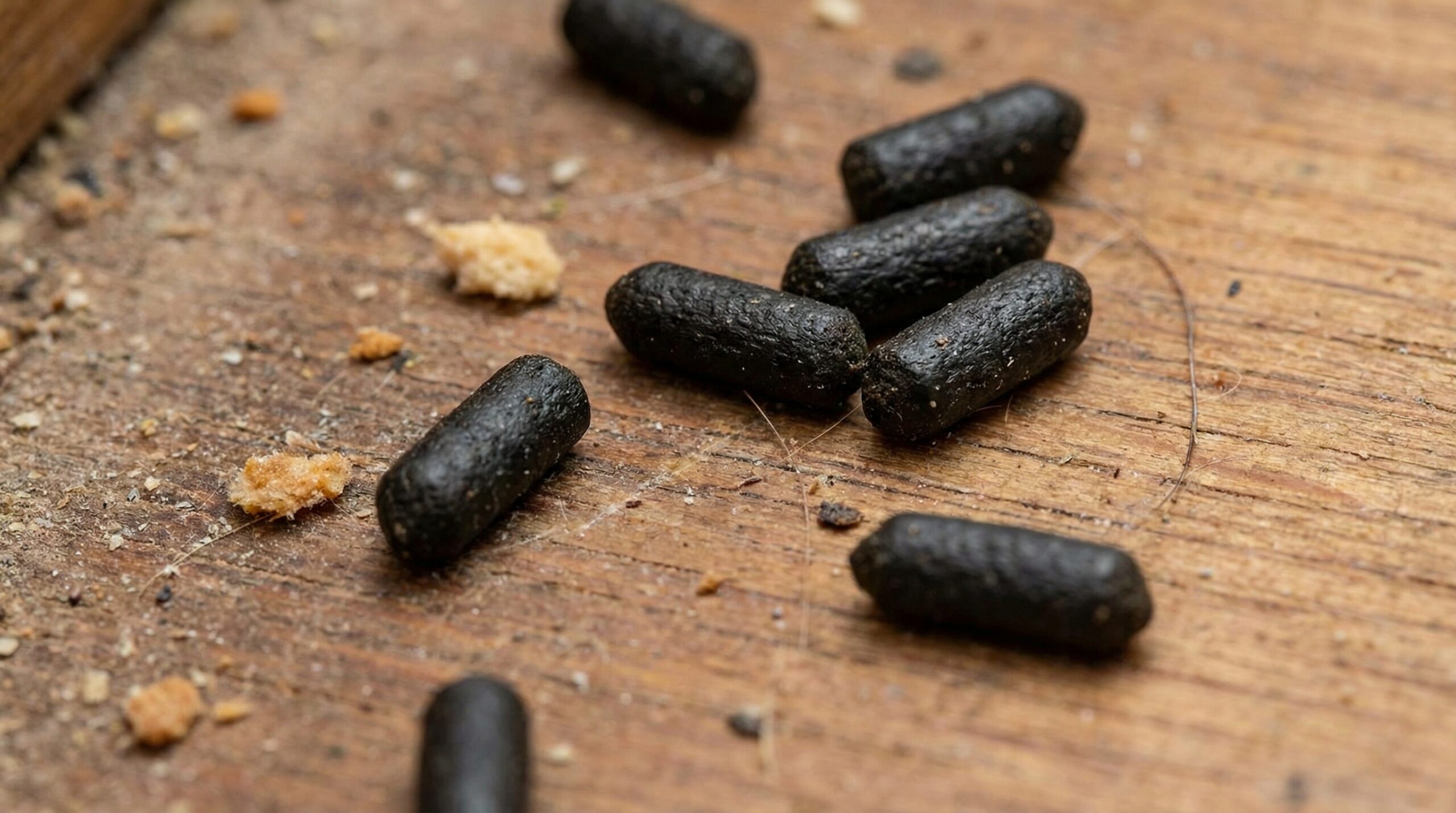
Look for these telltale signs of roof rat activity. Fresh droppings are capsule-shaped with blunt ends, measuring 1/4 to 1/2 inch long and appearing shiny black. You’ll typically find them near food sources, in attic corners, or along their travel routes. Listen for scratching, scurrying, or gnawing sounds, especially at night when these nocturnal pests are most active.
Check for gnaw marks on wood, electrical wires, and food packaging. Roof rats create holes roughly 2 inches in diameter with rough edges. You might also notice grease marks along walls where their oily fur rubs against surfaces, or discover well-worn pathways through dust and debris.
Set up effective traps and bait stations
Snap traps remain the most effective method for capturing roof rats, according to ipm.ucanr.edu. Place traps along walls, in dark corners, and near areas where you’ve found droppings. For roof rats specifically, position traps in elevated locations like shelves, ledges, or overhead beams since these pests prefer staying above ground level.
Use enticing baits like peanut butter, nuts, dried fruit, or chocolate. Here’s a pro tip that increases success rates: bait the traps for several days without setting them. This conditioning period makes rats comfortable approaching the traps before you activate the trigger mechanism.
Bait stations offer another effective option, especially for ongoing control. Space them no more than 40 feet apart around your property’s perimeter. You can use commercial rodent bait blocks or natural attractants like the baits mentioned above.
Safety Note: Always wear gloves when handling traps and keep them away from children and pets. Consider the EPA restrictions on rodenticides and consult local pest control professionals about appropriate bait options.
Eliminate food and water sources
Roof rats are opportunistic feeders attracted to the same foods you and your pets enjoy. They particularly love fruits, nuts, seeds, grains, and pet food. Store all food in airtight containers and never leave pet food out overnight.
Pay special attention to outdoor food sources that draw rats to your property. Remove fallen fruit from trees, clean up scattered birdseed, and temporarily stop filling bird feeders. Trim fruit tree branches that overhang your roof, as aptivepestcontrol.com notes that roof rats use these as highways to access your home.
Don’t forget about water sources. Fix leaky faucets, ensure proper gutter drainage, and eliminate standing water around your property. Even small water sources can sustain a roof rat population. Proper gutter maintenance is essential not only for preventing water damage but also for eliminating potential water sources that attract pests.
Seal entry points and prevent future infestations
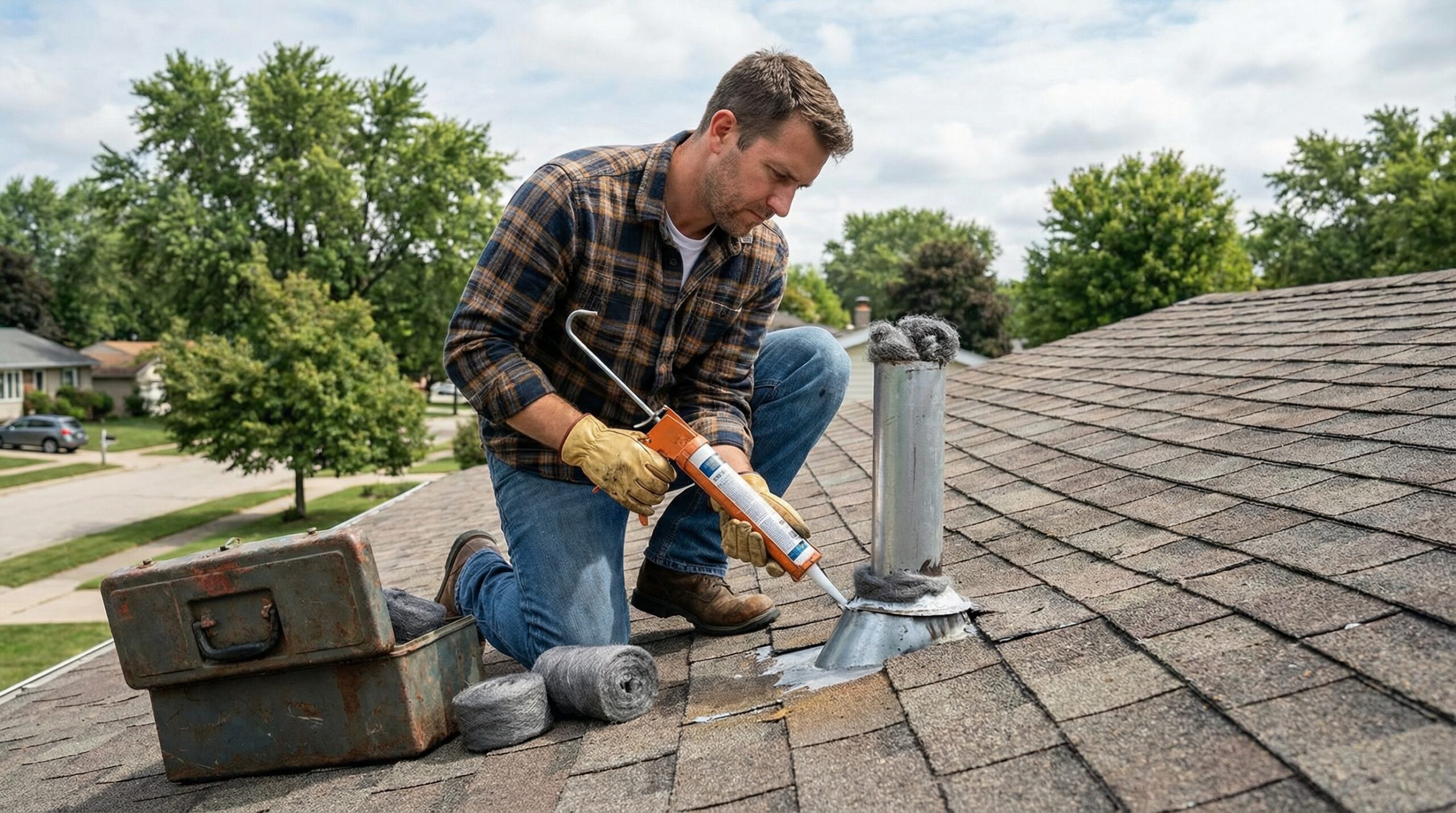
The most critical step in long-term roof rat control is blocking their access routes. These agile rodents can enter through gaps as small as a nickel, so thorough inspection is essential. Focus on areas where utilities enter your home, gaps around vents, and spaces under eaves. Understanding common types of roof damage can help you identify vulnerable entry points that rats might exploit.
Use appropriate materials for different types of openings. Steel wool works well for small gaps, while larger holes require wire mesh or sheet metal. Avoid using materials rats can easily chew through, such as plastic, foam, or standard caulk.
| Entry Point | Sealing Material | Why It Works |
|---|---|---|
| Small gaps (under 1 inch) | Steel wool + caulk | Rats can’t chew through steel |
| Medium holes (1-2 inches) | Wire mesh (1/4 inch) | Flexible but durable barrier |
| Large openings (over 2 inches) | Sheet metal | Permanent, chew-proof solution |
Create a maintenance routine to prevent future problems. Trim vegetation away from your home, maintaining at least 2 feet of clearance between shrubs and your building. Remove climbing plants from exterior walls and prune tree branches within 3 feet of your roof. Learn more about protecting your roof and gutters through proper tree trimming to prevent pest access and other damage.
Keep your property clean and organized. Store firewood away from your home’s exterior, secure garbage cans with tight-fitting lids, and maintain compost bins properly. These simple steps eliminate the shelter and food sources that attract roof rats in the first place. Understanding the impact of tree coverage on your roof can help you make informed decisions about landscaping that deters pests.
Most homeowners can handle basic roof rat control using these proven methods. However, if you’re dealing with a large infestation, have difficulty accessing entry points, or notice ongoing activity after several weeks of treatment, it’s time to call in professionals. Pest control experts have specialized tools and knowledge to address complex infestations safely and effectively. If you discover damage during your pest control efforts, consider whether repairing just part of your roof is a viable option.
Remember that successful roof rat elimination requires patience and persistence. By combining immediate removal tactics with long-term prevention strategies, you can protect your home from these destructive pests and enjoy peace of mind knowing your family and property are safe.