

Cleaning your metal roof properly can extend its lifespan by 10-15 years while maintaining its energy efficiency and curb appeal. Whether you have a galvanized, tin, or corrugated metal roof, regular cleaning prevents corrosion, removes harmful buildup, and preserves the protective coating that keeps your roof performing at its best.
A clean metal roof isn’t just about appearance. Dirt, algae, and debris create moisture traps that lead to rust and premature failure. Most experts recommend cleaning metal roofs at least once yearly, though coastal areas and humid climates may require more frequent attention.
Pro Tip: Metal roofs that receive regular cleaning maintain up to 70% of their solar reflectance, significantly reducing cooling costs during summer months.
Why metal roof cleaning matters for your home
Your metal roof faces constant exposure to elements that gradually compromise its performance. Leaves, pine needles, and organic debris hold moisture against the metal surface, creating perfect conditions for algae, lichen, and moss growth. These organisms secrete acids that break down protective coatings, exposing bare metal to rust and corrosion.
In coastal areas, salt air accelerates this process, while humid climates promote faster organic growth. Tree coverage adds another layer of complexity, with sap, pollen, and falling debris creating stubborn stains that require specialized cleaning approaches. Understanding the impact of tree coverage on your roof can help you develop a more effective maintenance strategy.
Regular cleaning prevents this chain reaction from starting. By removing debris and organic growth before they establish themselves, you maintain the roof’s protective barriers and preserve its structural integrity for decades.
Essential tools and materials for safe cleaning
Before starting any cleaning project, gather the right equipment to protect both yourself and your roof. Metal roof finishes are durable but not scratch-proof, so choosing appropriate tools makes the difference between effective cleaning and costly damage.
For basic cleaning, you’ll need a soft-bristle brush or non-abrasive pad, a low-pressure garden hose, and a sturdy ladder with someone to spot you. Avoid wire brushes or stiff bristles that can permanently damage the roof surface.
Your cleaning solution should match the level of buildup you’re addressing. Mild dish soap mixed with water handles routine maintenance, while trisodium phosphate works for heavier industrial buildup. For stubborn stains, consider specialized metal roof cleaners, but always test them on an inconspicuous area first.
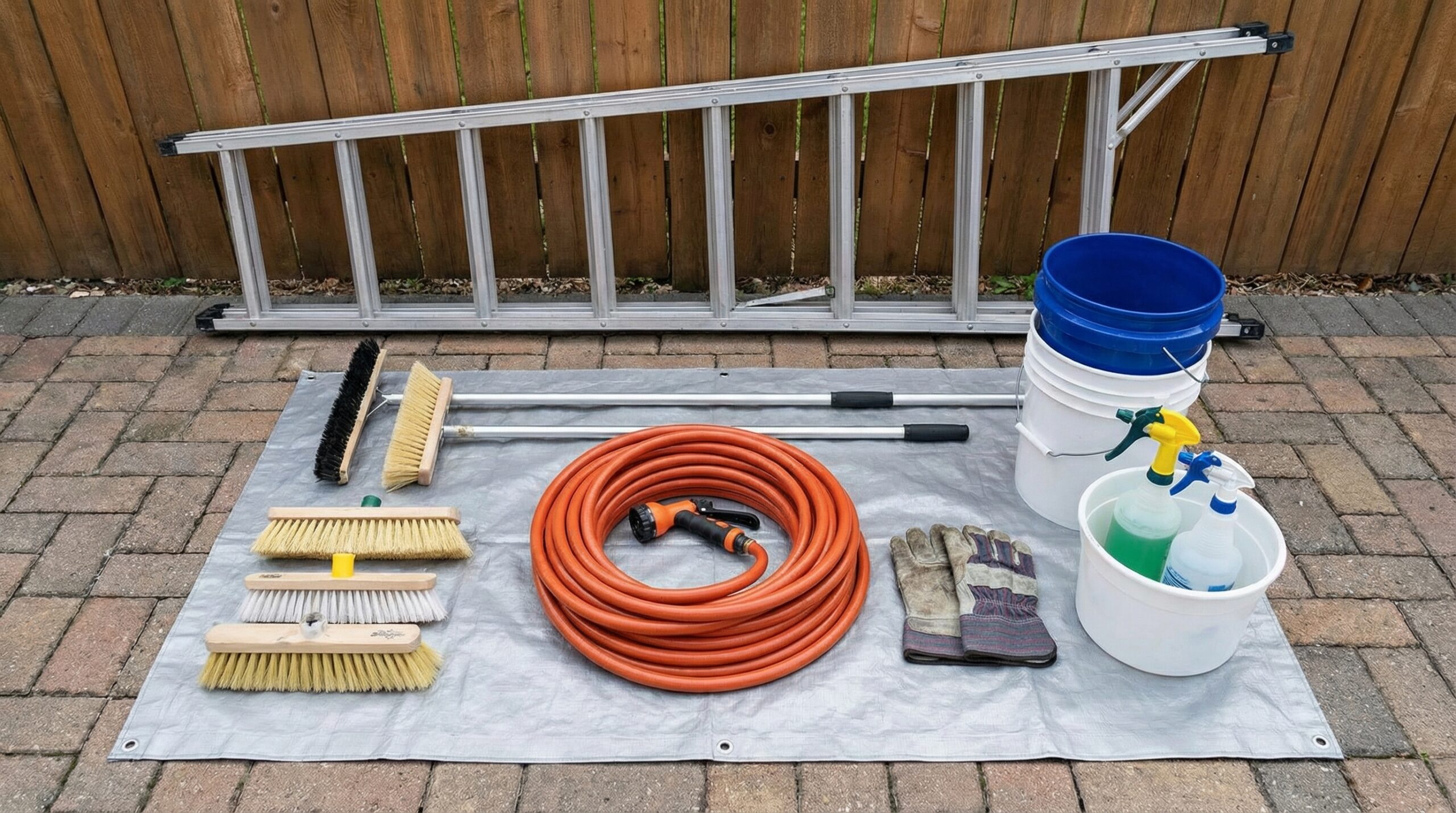
Safety First: Never clean your metal roof during wet conditions or extreme temperatures. Metal surfaces become extremely slippery when wet and dangerously hot in direct sunlight.
Step-by-step cleaning process
Start by inspecting your roof for loose screws, rust spots, or damaged panels. Address any structural issues before cleaning to prevent water intrusion or further damage during the process. If you discover significant damage during your inspection, you may need to explore common types of roof damage and repair solutions.
Step 1: Rinse the entire roof with plain water using low pressure. This removes loose debris and prepares the surface for cleaning solution application. Proper safe roof leaf removal techniques should be employed before rinsing.
Step 2: Apply your chosen cleaning solution evenly across the roof surface using a garden sprayer. Allow the solution to sit for 10-15 minutes, giving the chemicals time to break down stubborn buildup.
Step 3: Gently scrub problem areas with your soft-bristle brush, working in circular motions. Pay special attention to areas with visible stains or organic growth, but avoid aggressive scrubbing that could damage the finish.
Step 4: Rinse thoroughly with clean water, working from top to bottom to ensure complete removal of cleaning residue. Any leftover chemicals can cause staining or accelerated corrosion.
Step 5: Allow the roof to air dry completely before inspecting your work. This final step helps you identify any areas that need additional attention.
Handling special cleaning challenges
Different types of buildup require targeted approaches for safe, effective removal. Mold, mildew, and algae respond well to a mixture of one part bleach to three parts water, applied with a sponge and left for 15 minutes before rinsing. For more detailed guidance on dealing with organic growth, check out our guide on how to remove moss from your roof safely and effectively.
Rust stains need gentler treatment to avoid damaging surrounding areas. Start with a vinegar and water solution, applying it sparingly and avoiding aggressive scrubbing. For persistent rust, oxalic acid products provide stronger cleaning power, but require careful handling and proper disposal of runoff.
Tree sap and bird droppings often require solvent-based cleaners, but these can be harsh on painted surfaces. Always dilute according to manufacturer instructions and test in an inconspicuous area before widespread application.
| Cleaning Challenge | Recommended Solution | Application Time | Safety Notes |
|---|---|---|---|
| Mold/Mildew | 1:3 bleach to water | 15 minutes | Wear gloves and eye protection |
| Light rust | Vinegar and water | 15 minutes | Avoid aggressive scrubbing |
| Tree sap | Mineral spirits (diluted) | 5-10 minutes | Ensure proper ventilation |
| General dirt | Mild dish soap | 10 minutes | Safe for all metal types |
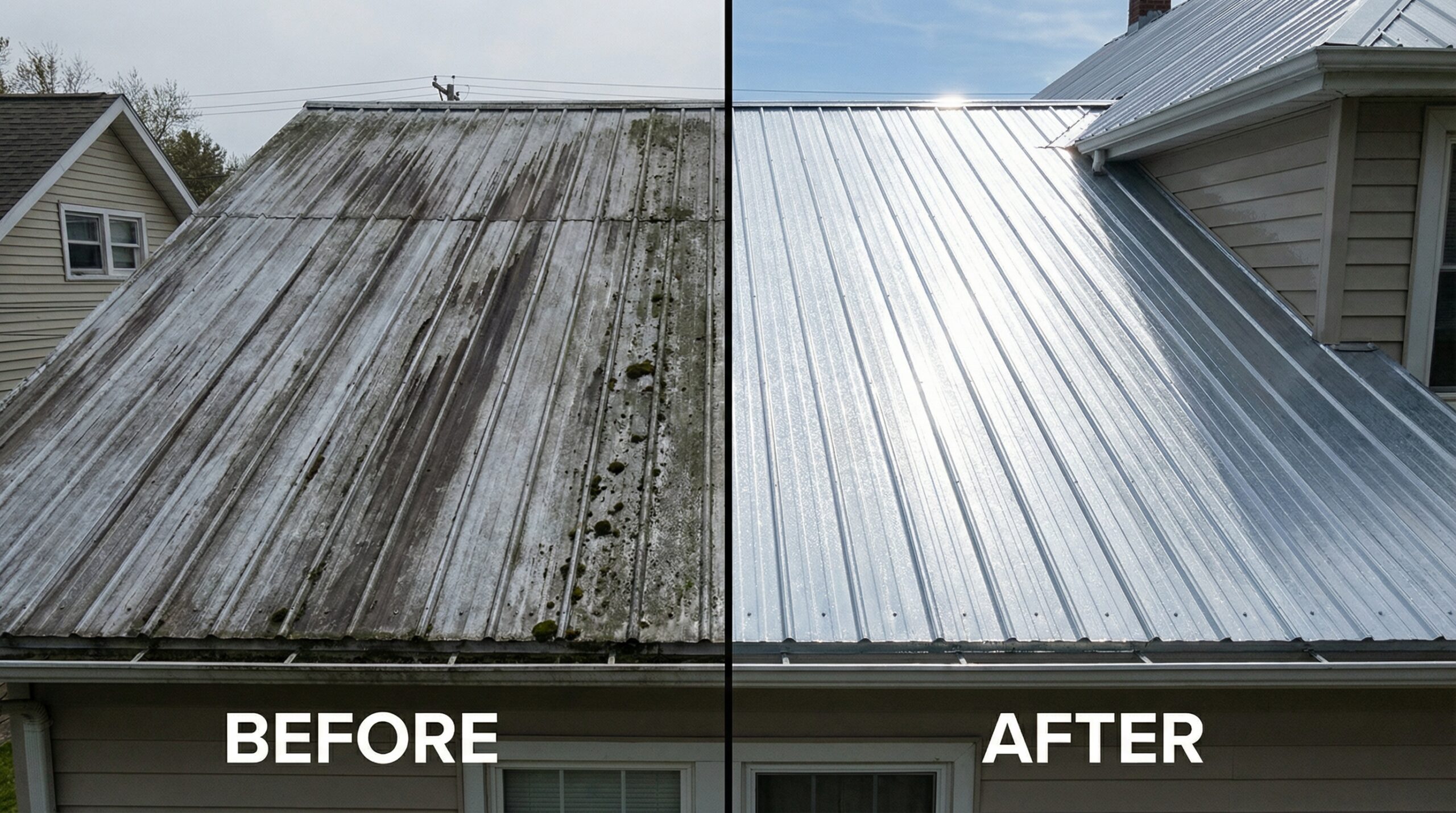
Climate Consideration: Homes in humid or coastal environments should clean their metal roofs twice yearly, while drier climates can typically maintain effectiveness with annual cleaning.
When you’re dealing with extensive rust, large roof areas, or uncomfortable working at heights, professional cleaning services offer expertise and specialized equipment that ensure thorough, safe results. Most professional services cost between $300-800 for average residential roofs, depending on size and condition.
Professional cleaners have access to commercial-grade equipment and cleaning solutions not available to homeowners. They also carry insurance and safety certifications that protect you from liability if accidents occur during the cleaning process.
Regular metal roof maintenance protects your investment and keeps your home looking its best. With the right approach, tools, and safety precautions, you can maintain your roof’s performance and appearance for decades. Whether you choose the DIY route or hire professionals, consistent cleaning prevents small problems from becoming expensive repairs down the road. For comprehensive maintenance strategies, consider implementing pre-winter roof cleaning preparations to protect your roof year-round.