

That green, velvety growth on your roof might look harmless, but moss can seriously damage your shingles and lead to costly repairs. Moss acts like a sponge, trapping moisture against your roof surface and creating the perfect environment for rot and leaks.
The good news? You can safely remove moss from your roof shingles using gentle methods that won’t damage your roofing materials. This guide covers everything from safe removal techniques to proven prevention strategies that keep moss from coming back.
Quick Answer: Use gentle cleaning solutions like oxygen bleach or vinegar mixtures, apply with low-pressure spraying, and never use pressure washers or aggressive scrubbing that can damage shingles.
Why moss damages your roof shingles
Moss creates multiple problems for your roof that go far beyond appearance. When moss establishes itself on your shingles, it retains moisture like a natural sponge, keeping your roof constantly damp. This trapped moisture accelerates shingle deterioration and shortens your roof’s lifespan significantly.
The root-like structures of moss, called rhizoids, work their way under shingle edges and lift them up. This lifting creates entry points for water, leading to leaks and potential structural damage. According to littlerockroofing.com, moss can also prevent proper drainage, causing water to pool and freeze during winter months.
As moss decomposes, it forms acidic solutions that eat away at the asphalt in your shingles. This chemical breakdown makes your roof more vulnerable to UV damage and weather exposure, potentially voiding your warranty if left untreated. Understanding common types of roof damage can help you identify moss-related issues before they become severe.
Methods to avoid when removing roof moss
Before diving into safe removal techniques, you need to know what not to do. These common mistakes can cause more damage than the moss itself.
Never use a pressure washer on your roof. The high-pressure water stream can strip away protective granules, damage the adhesive holding shingles in place, and force water underneath shingles where it doesn’t belong. As noted by thisoldhouse.com, pressure washing can also void your roof warranty.
Aggressive scrubbing with stiff brushes is equally damaging. While it might seem logical to scrub moss away, this approach removes protective granules and can lift shingle edges. The abrasive action weakens your shingles and creates vulnerabilities that lead to premature failure.
Harsh chemicals like chlorine bleach can also damage asphalt shingles and harm your landscaping. These chemicals break down the asphalt and can cause runoff that kills plants and contaminates groundwater.
Safe moss removal solutions and methods
The key to effective moss removal is using gentle solutions that kill moss without damaging your shingles. Here are the most effective approaches that professionals recommend.
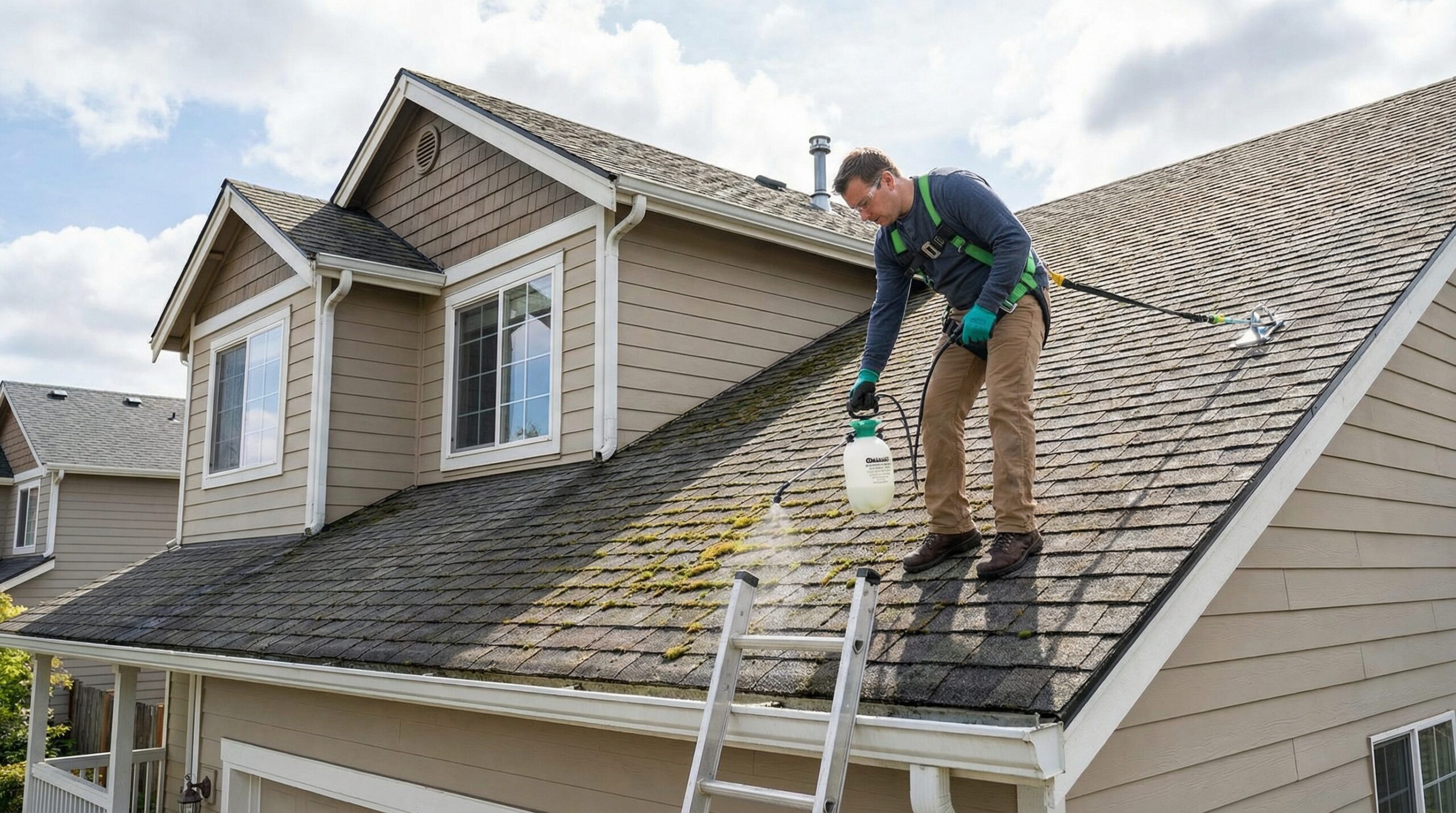
Oxygen bleach solution works exceptionally well for moss removal. Mix one cup of oxygen bleach with a gallon of warm water, spray it on the affected areas, and let it sit for 20 minutes before rinsing with low-pressure water. This eco-friendly option breaks down moss roots and removes stains without harsh chemicals.
For a DIY approach, combine equal parts white vinegar and water with a quarter cup of salt per gallon. This mixture effectively kills moss and prevents regrowth. According to bhg.com, vinegar-based solutions work well on most roofing materials when applied correctly.
Commercial moss removal products offer convenience and proven effectiveness. Look for products specifically designed for roofs and follow manufacturer instructions carefully. These solutions typically require 20-30 minutes of contact time before rinsing. For comprehensive guidance on maintaining your roof’s appearance and integrity, check out our guide on how to clean roof shingles for lasting protection.
When applying any solution, use a pump sprayer for even coverage and better control. Start at the ridge and work downward, allowing gravity to help distribute the solution. Never mix different chemicals together, as this can create dangerous reactions.
Safety Tip: Always cover nearby plants with plastic sheeting before applying any moss treatment, and rinse vegetation thoroughly afterward to prevent damage from chemical runoff.
Step-by-step moss removal process
Start by choosing a cool, overcast day for your moss removal project. Sunny conditions cause solutions to evaporate too quickly, reducing their effectiveness. Gather your safety equipment including non-slip shoes, safety goggles, gloves, and consider using a safety harness for steep roofs.
Begin by setting up your ladder on level ground and having someone spot you. Cover plants and landscaping with plastic sheeting to protect them from runoff. Prepare your chosen moss removal solution at ground level and transfer it to a pump sprayer.
Apply the solution starting at the roof ridge and working downward. Spray evenly across mossy areas, ensuring complete coverage without oversaturating. Allow the solution to sit for the recommended contact time, typically 20-30 minutes.
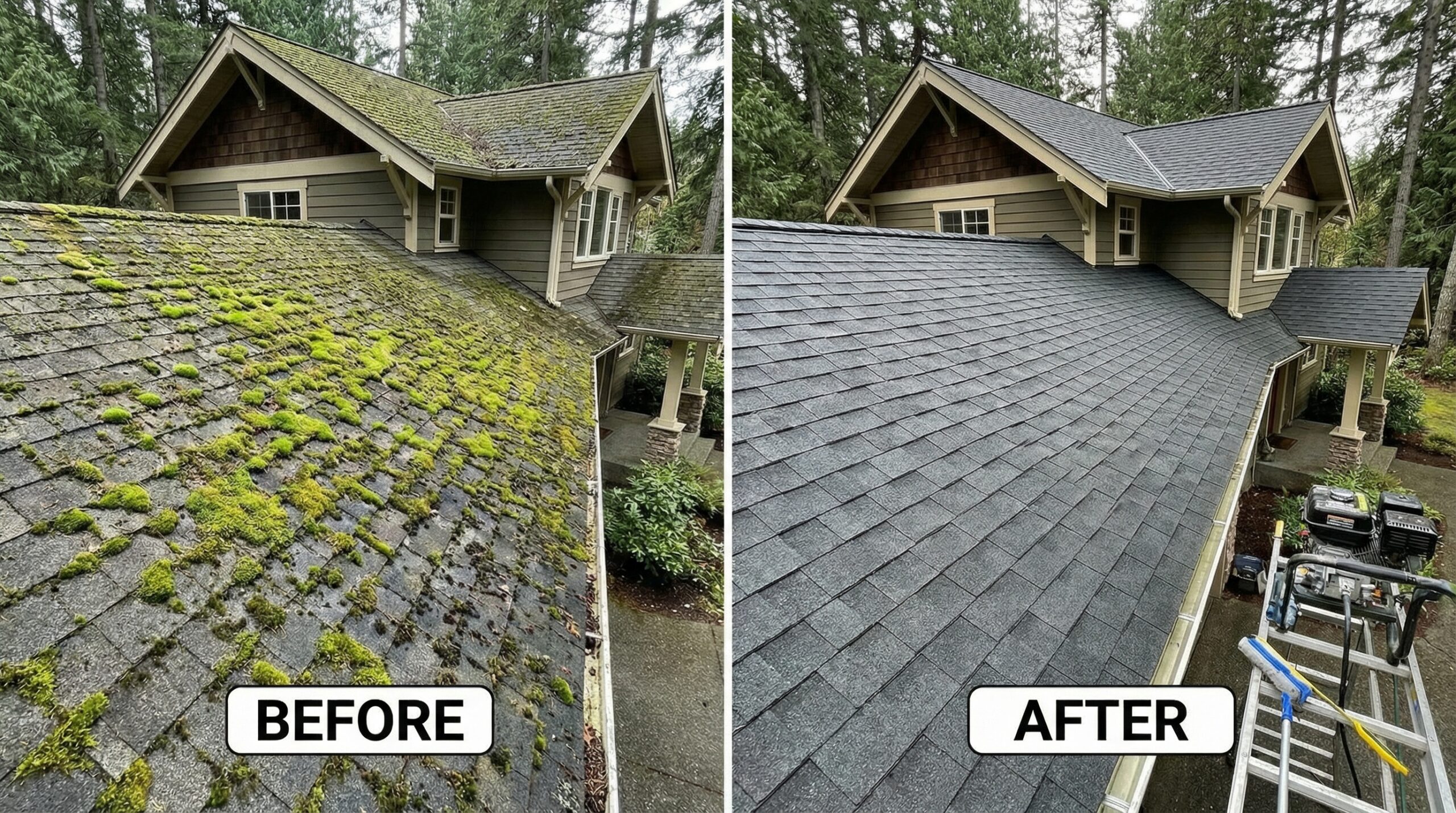
After the waiting period, rinse the treated areas with low-pressure water from a garden hose. Work from top to bottom, using gentle pressure to wash away dead moss and cleaning solution. For stubborn areas, you can gently brush with a soft-bristled brush, but avoid aggressive scrubbing.
Inspect your work and reapply treatment to any remaining moss patches. Some areas may require a second application for complete removal, especially thick moss growth that has been established for years.
Proven prevention strategies
Preventing moss growth is much easier than removing established colonies. These strategies create an environment where moss struggles to take hold and thrive.
Trim overhanging tree branches that shade your roof. Moss thrives in shaded, damp conditions, so increasing sunlight exposure dramatically reduces moss growth. According to badgerlandexteriors.com, reducing shade is 90% of the moss prevention battle. Learn more about the impact of tree coverage on your roof and how proper tree management protects your investment.
Homeowners in areas like Rocky River often address these long-term moisture issues early to avoid larger problems that can eventually require storm damage restoration.
Keep your gutters clean and flowing freely. Clogged gutters create moisture buildup that encourages moss growth. Install gutter guards to prevent debris accumulation and ensure proper drainage year-round. Regular post-winter roof and gutter maintenance is essential for preventing moss and other moisture-related issues.
Install zinc or copper strips near your roof ridge. When rainwater flows over these metals, it releases ions that naturally inhibit moss, algae, and lichen growth. These strips provide long-term protection with minimal maintenance.
Improve your attic ventilation to reduce moisture buildup. Proper ventilation prevents condensation that can contribute to moss-friendly conditions on your roof surface.
Prevention Fact: Regular roof cleaning every 1-2 years prevents heavy moss buildup and extends your roof’s lifespan by preventing moisture-related damage.
When to call professionals
While DIY moss removal works for most situations, some circumstances require professional intervention. If your roof is particularly steep, high, or if you’re uncomfortable working at heights, professional roof cleaning services offer safer alternatives.
Extensive moss coverage that has been growing for years may indicate underlying moisture problems or roof damage that needs professional assessment. mightydogroofing.com notes that heavy moss growth can hide damaged shingles, cracked flashing, or other issues that require expert evaluation. If you discover damage during your inspection, understanding how much roof leak repair costs can help you budget for necessary repairs.
Professional roofers have specialized equipment and experience to safely remove moss without damaging your roof. They can also identify potential problems early and recommend preventive measures specific to your roof type and local climate conditions.
Taking action against moss growth protects your investment and prevents costly repairs down the road. Whether you choose DIY methods or professional services, addressing moss promptly keeps your roof healthy and your home protected. Regular maintenance and prevention strategies ensure that moss never becomes a serious problem for your roof again.