
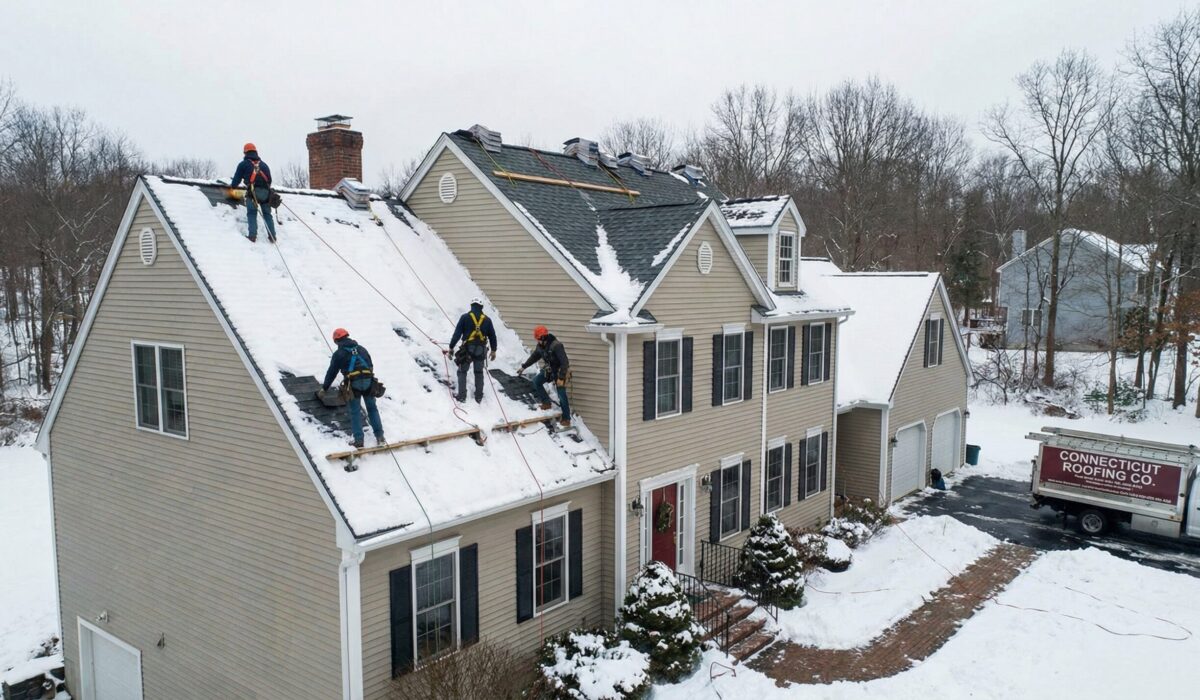
Yes, you absolutely can install a roof in snow and cold weather. Northeast Ohio homeowners often face this question during harsh winters when severe lake-effect storm damage or urgent leaks can’t wait until spring. With proper techniques, cold-weather materials, and experienced contractors, winter roof installation is not only possible but sometimes necessary to protect your home from further damage.
Quick Answer: Modern roofing techniques and materials make winter installation safe and effective when temperatures stay above 20°F and proper safety protocols are followed.
Winter roofing requires specialized knowledge and equipment that many homeowners don’t realize exists. The key lies in understanding when conditions are suitable, which materials work best in cold weather, and how professional roofers adapt their techniques for Ohio’s challenging winter climate.
When winter roofing becomes necessary
Emergency situations don’t wait for perfect weather. Storm damage from heavy snow loads, ice dams, or fallen tree branches can create urgent roofing needs that require immediate attention rather than waiting months for warmer temperatures.
Active leaks pose the greatest risk during winter months. Water infiltration can quickly lead to mold growth, insulation damage, and structural problems that become exponentially more expensive to repair than the original roofing issue. Waiting until spring often means dealing with thousands of dollars in additional interior damage.
Home sales also drive winter roofing decisions. Real estate transactions rarely pause for seasonal weather, and buyers expect functional roofs regardless of the closing date. A damaged or aging roof can derail a sale or significantly reduce property value, which is why understanding how a new roof increases home value becomes crucial for sellers.
The spring construction rush creates another compelling reason to consider winter installation. Roofing contractors typically have shorter wait times and more flexible scheduling during colder months, allowing homeowners to avoid the busy season when demand peaks and prices often increase.
Safe installation techniques for cold weather
Professional winter roofing starts with careful weather monitoring and planning. Contractors track forecast windows to identify suitable installation periods when temperatures remain above freezing and precipitation stays minimal for several consecutive days.
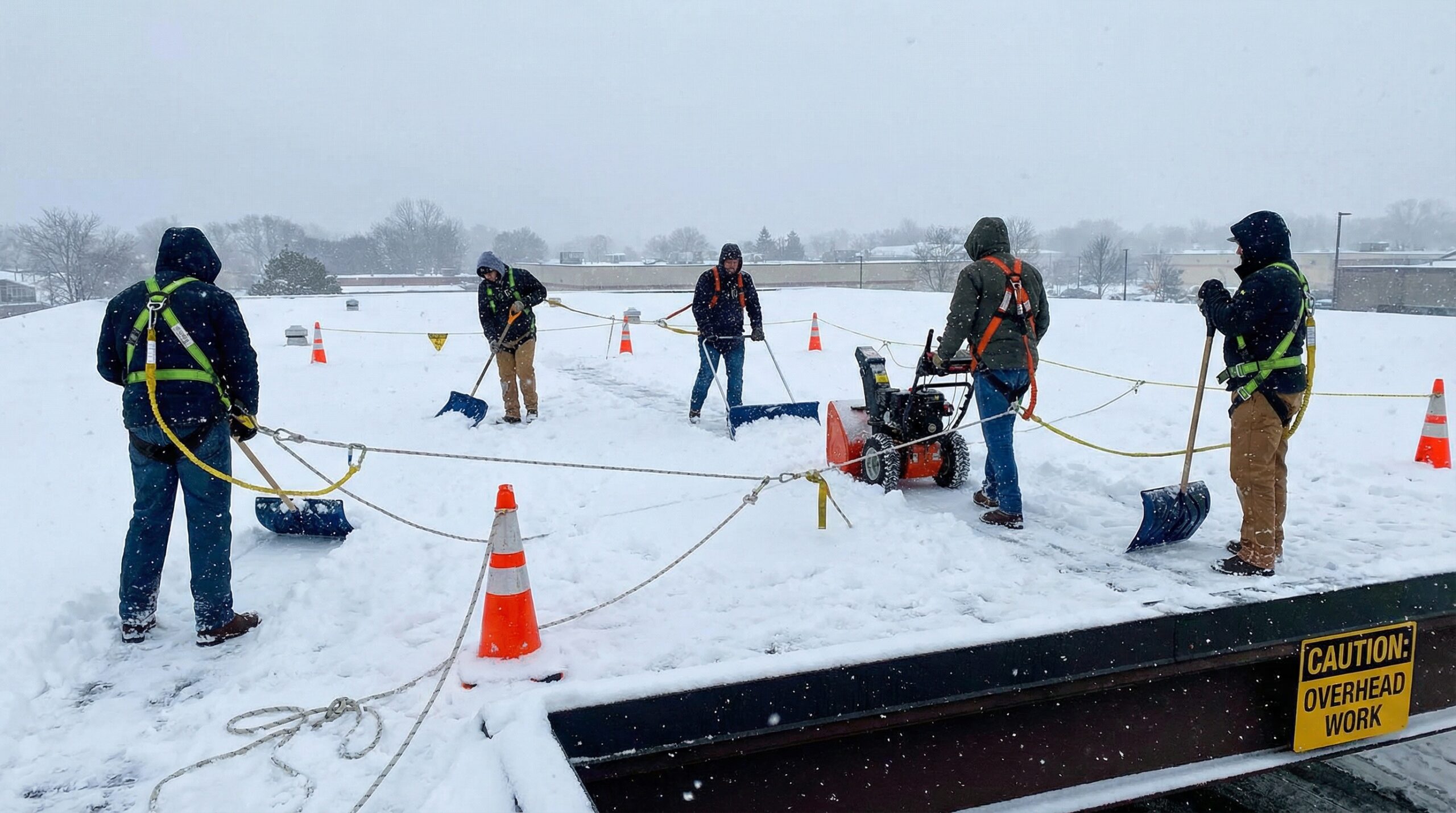
Snow and ice removal becomes the critical first step before any installation begins. The roof deck must be completely clear and dry to ensure proper material adhesion. Professional crews use specialized tools and techniques to safely remove snow without damaging the underlying structure.
Temperature considerations affect every aspect of the installation process. Shingles become more brittle in cold weather, requiring careful handling and storage in heated areas when possible. Installation timing often focuses on midday hours when temperatures peak and materials remain most flexible.
Safety First: Professional winter roofing crews use specialized fall protection equipment designed for icy conditions, including ice cleats, heated safety lines, and additional anchor points.
Hand-sealing techniques replace the natural heat activation that occurs with traditional shingle installation. Since cold weather prevents shingles from self-sealing through solar heat, contractors manually apply roofing cement to ensure proper adhesion and wind resistance. This attention to detail is essential to avoid poor roof installation practices that can compromise your roof’s performance.
Materials that work in Ohio winters
Cold-weather roofing materials differ significantly from standard options used during warmer months. Asphalt shingles designed for low-temperature installation maintain flexibility and adhesion properties even when temperatures drop below freezing.
Specialized adhesives and sealants formulated for winter conditions ensure proper bonding between roofing components. These products activate at lower temperatures and provide reliable sealing even when traditional materials would fail to perform adequately.
| Material Type | Winter Rating | Key Benefit |
|---|---|---|
| Cold-weather shingles | Down to 20°F | Maintains flexibility |
| Winter adhesives | Down to 15°F | Proper sealing |
| Ice & water shield | All temperatures | Enhanced protection |
Underlayment selection becomes even more critical during winter installations. High-quality synthetic underlayments provide superior moisture protection and temperature resistance compared to traditional felt options, creating an additional barrier against winter weather infiltration.
Metal components like flashing and gutters require special attention in cold weather. Thermal expansion and contraction can affect fit and sealing, making proper installation techniques essential for long-term performance.
Benefits and cost considerations
Winter roofing often provides unexpected financial advantages for homeowners. Many contractors offer off-season pricing incentives to maintain steady work during slower months, potentially saving homeowners significant money compared to peak season rates.
Scheduling flexibility represents another major benefit of winter installation. Rather than waiting weeks or months for contractor availability during busy spring and summer seasons, homeowners can often secure installation dates within days or weeks during winter months. Understanding how long roof replacement takes can help you plan accordingly, even in winter conditions.
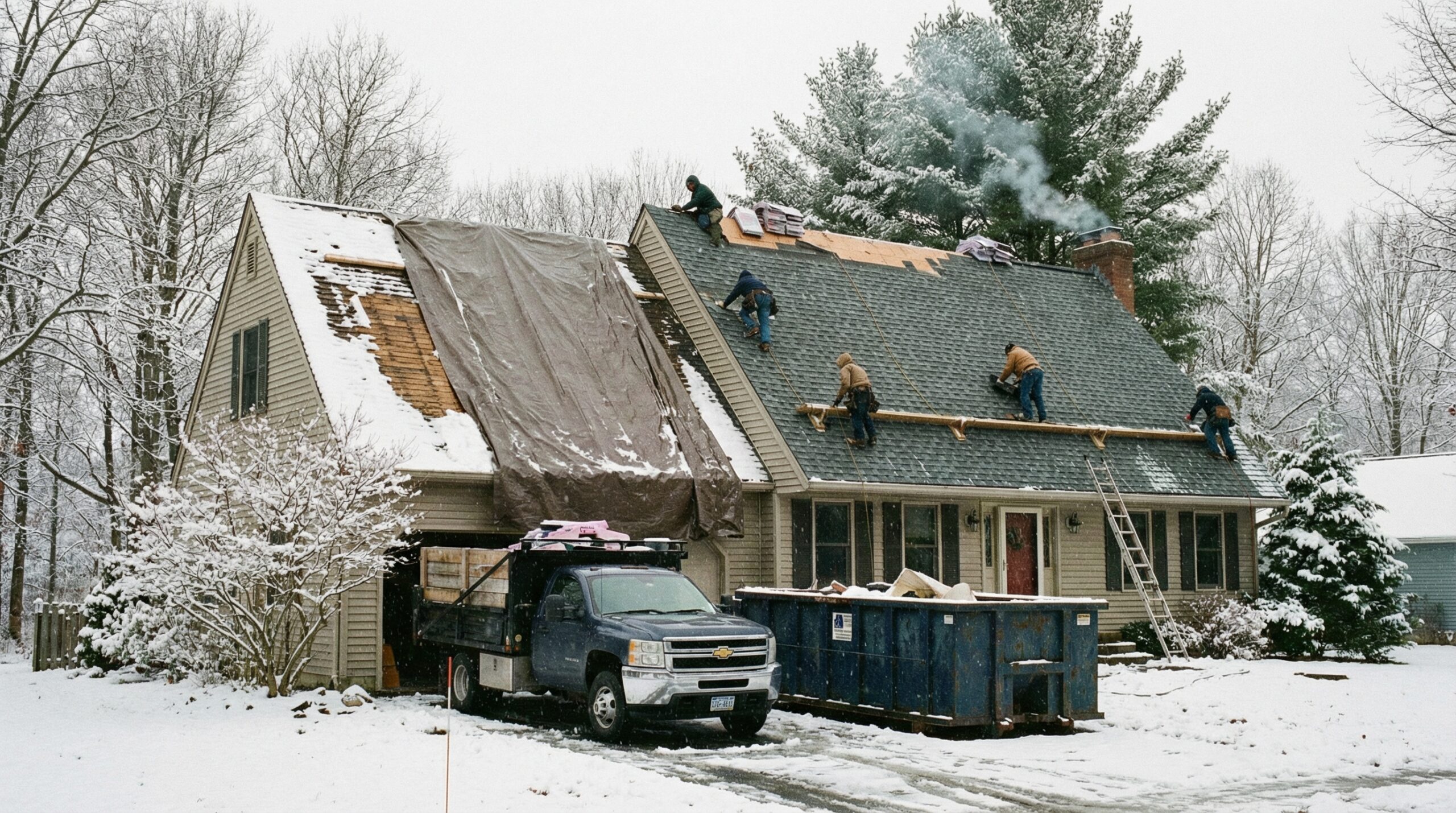
Preventing additional damage creates the most substantial long-term savings. A leaking roof during winter can cause extensive interior damage that far exceeds the cost of immediate roof replacement, making winter installation a financially sound decision in many situations.
Energy efficiency improvements take effect immediately with winter installation. New roofing systems with proper insulation and ventilation can reduce heating costs throughout the remaining winter months, providing immediate return on investment.
Insurance considerations also favor prompt winter repairs. Many policies require timely response to damage, and delaying necessary repairs until spring could potentially affect coverage for subsequent damage caused by the original problem. Knowing how to get insurance to pay for roof replacement costs can make the process smoother during emergency winter situations.
When to wait for better conditions
Extreme cold below 20°F creates genuine safety and performance concerns that responsible contractors won’t ignore. Materials become too brittle for safe handling, and adhesives fail to activate properly, compromising installation quality and longevity.
Active precipitation makes roofing work dangerous and ineffective. Snow, sleet, or freezing rain creates hazardous working conditions and prevents proper material installation, requiring contractors to postpone work until conditions improve.
Ice-covered roof surfaces present unacceptable safety risks that no amount of equipment can fully mitigate. Even experienced crews with specialized gear cannot safely work on roofs with significant ice accumulation, necessitating delay until natural melting or professional ice removal occurs.
High wind conditions compound winter roofing challenges beyond acceptable limits. Cold air combined with strong winds off Lake Erie creates dangerous working conditions and can affect material installation, making postponement the only responsible choice. If you’re uncertain whether conditions warrant immediate action, reviewing signs it’s time for a roof replacement can help you determine if the work is truly urgent.
Winter roof installation in Northeast Ohio requires expertise, proper materials, and careful attention to weather conditions, but it remains a viable solution for homeowners facing urgent roofing needs. Professional contractors with winter experience can safely and effectively install quality roofing systems even during challenging weather conditions. The key lies in working with experienced professionals who understand the unique requirements of cold-weather installation and prioritize both safety and quality in their approach to winter roofing projects.