

Your commercial flat roof faces unique challenges in Northeast Ohio’s demanding climate. With freeze-thaw cycles, heavy lake-effect snow, nearly 40 inches of annual rainfall, and intense UV exposure, proper maintenance isn’t just recommended—it’s essential for protecting your business investment.
Regular flat roof maintenance can extend your roof’s lifespan from 10-15 years to 20-25 years while preventing costly emergency repairs that average $15,000 in direct costs plus operational disruptions. Whether you have an EPDM, TPO, or PVC system, understanding your roof’s specific needs helps you avoid unexpected failures and maximize your return on investment.
Did you know? Businesses with proactive maintenance programs reduce their lifetime roofing costs by 30-50% compared to reactive repair approaches.
This guide walks you through everything you need to know about maintaining your commercial flat roof in Rocky River, from seasonal schedules to system-specific care protocols.
Understanding your flat roof’s vulnerabilities
Northeast Ohio’s climate creates specific challenges that put stress on commercial flat roofing systems year-round. The region’s repetitive freeze-thaw patterns cause materials to expand and contract, potentially compromising seams and membrane integrity. When you add the area’s substantial precipitation and dramatic temperature shifts, your roof works overtime to protect your business.
Different business operations also influence vulnerability factors. Restaurant environments generate grease-saturated humidity that can affect roof materials, while retail establishments experience HVAC-related stresses from constant temperature regulation. Manufacturing facilities produce vibrations that can loosen fasteners, and all properties experience foot traffic that may compromise membrane surfaces.
Water accumulation presents one of the biggest threats to flat roofs. Each inch of standing water adds approximately 5 pounds per square foot of weight to your roof structure. More importantly, water constantly seeks penetration points through membrane junctions, making efficient drainage systems critical for managing Northeast Ohio’s significant yearly precipitation.
The good news is that systematic roof inspection and preventative maintenance programs substantially extend roofing longevity. Professional maintenance helps you achieve 15-20 years of service life compared to just 5-10 years for neglected installations.
Seasonal maintenance schedules that work
Successful commercial flat roof maintenance requires a methodical approach that aligns with Northeast Ohio’s seasonal weather patterns. Following a consistent timeline helps you prevent unexpected complications while maximizing your roofing investment.
Spring maintenance focus
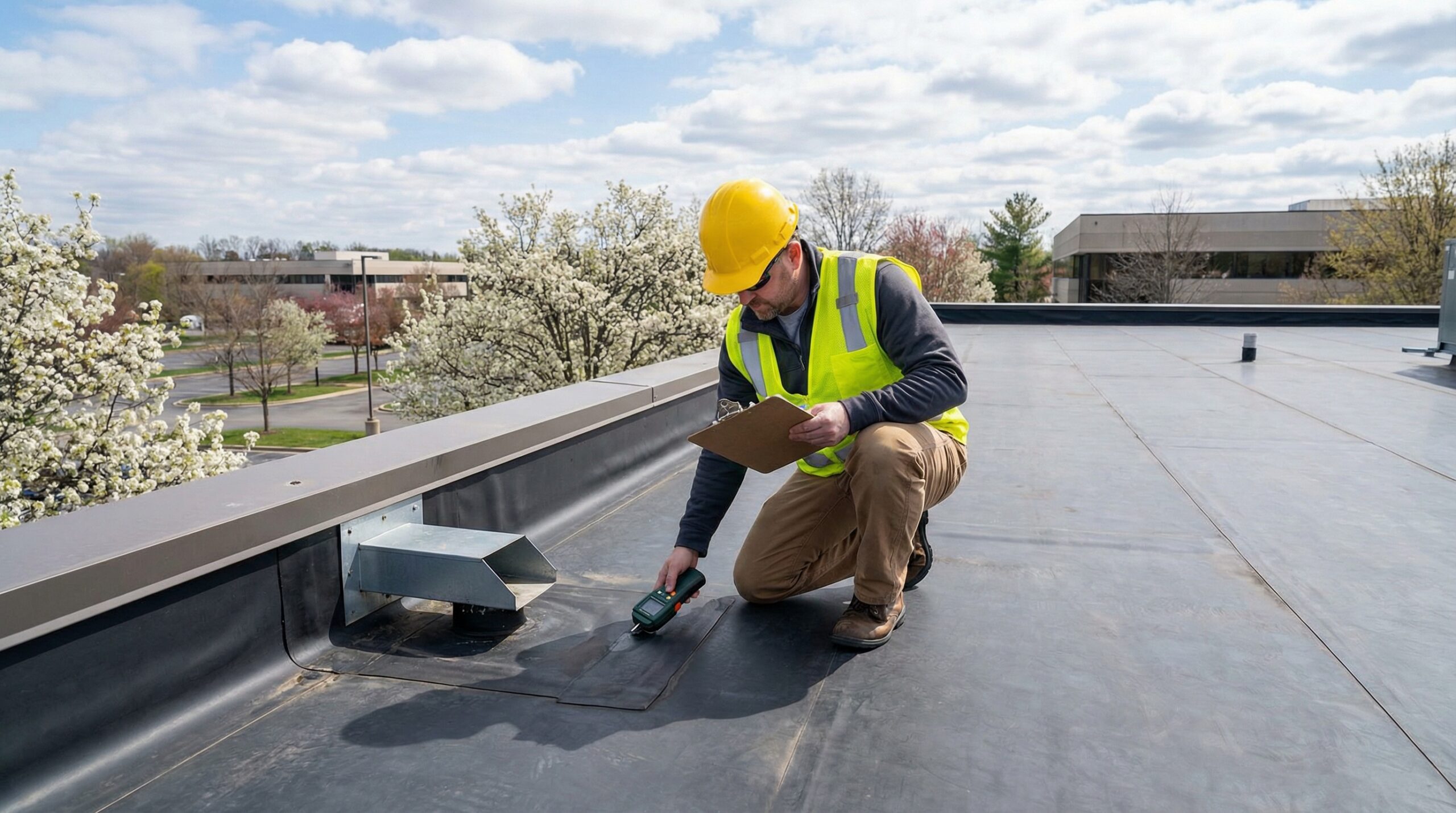
After Northeast Ohio’s harsh winters, your commercial flat roof needs thorough professional evaluation as temperatures moderate. Spring represents the ideal time for comprehensive surface examinations to identify winter-related deterioration before summer’s thermal fluctuations cause minor issues to escalate.
Focus your spring efforts on expansion joints, perimeter flashing installations, and drainage pathways where winter stress typically manifests. Look for membrane displacement, debris accumulation, and signs of ice damage around roof penetrations. Understanding common types of roof damage helps you identify issues early. Professional cleaning services can eliminate winter buildup without damaging sensitive roofing materials.
Fall preparation strategies
Autumn maintenance prepares your roof for winter through comprehensive drainage system cleaning to prevent ice dam formation. This season requires thorough inspection of seams and penetrations where moisture infiltration typically begins, plus evaluation of insulation effectiveness to minimize ice development.
Schedule your professional roof inspection by early October to complete necessary repairs before decreasing temperatures render certain treatments ineffective. Different roofing systems require specific winter preparations—EPDM systems benefit from liquid seam reinforcement applications, while TPO installations perform better with heat-welded reinforcements at stress points. Learning about ice dam prevention strategies can help you prepare your commercial roof for winter challenges.
Maintenance by roof system type
Each commercial roofing system requires individualized care based on its specific materials and installation methodology. Understanding these distinctions helps you properly maintain your particular roof type and prevent premature system failure.
EPDM rubber system care
EPDM rubber roofing systems are popular on Rocky River commercial buildings for their durability and cost-efficiency. However, the region’s repetitive freeze-thaw cycles and persistent UV exposure create significant stress on EPDM membranes, requiring systematic professional care.
Critical maintenance procedures include detailed seam examination to evaluate adhesion strength and identify early separation indicators. EPDM requires specialized cleaning approaches that preserve rubber integrity—avoid petroleum-based products and harsh chemical solvents in favor of manufacturer-endorsed cleaners.
UV protection becomes particularly important for EPDM systems. Specialized acrylic coating applications reflect harmful radiation and establish a protective barrier, potentially extending system lifespan by 5-10 years. With appropriate maintenance protocols, EPDM systems in Northeast Ohio typically achieve 20-25 years of effective service.
TPO and PVC system maintenance
Thermoplastic membrane systems require specialized care to perform optimally in Northeast Ohio commercial applications. Focus on heat-welded seams and attachment points where system failures typically originate, using both visual assessment and physical testing to verify structural integrity.
Implement gentle, manufacturer-approved cleaning protocols that preserve the membrane’s reflective surface characteristics. This reflective property can reduce cooling expenses by 15-25% during Northeast Ohio’s intense summer periods, making proper maintenance a direct contributor to energy savings.
Energy savings tip: Maintaining your TPO or PVC roof’s reflective properties through proper cleaning can reduce summer cooling costs by up to 25%.
When repairs become necessary, use matching materials and approved application techniques to maintain warranty coverage. Generic products can compromise system performance and potentially invalidate manufacturer guarantees.
Professional inspection and monitoring protocols
Your commercial property requires both expert professional evaluation and consistent in-house monitoring. We recommend comprehensive roof inspections twice yearly—spring and fall—plus prompt evaluation following severe weather events.
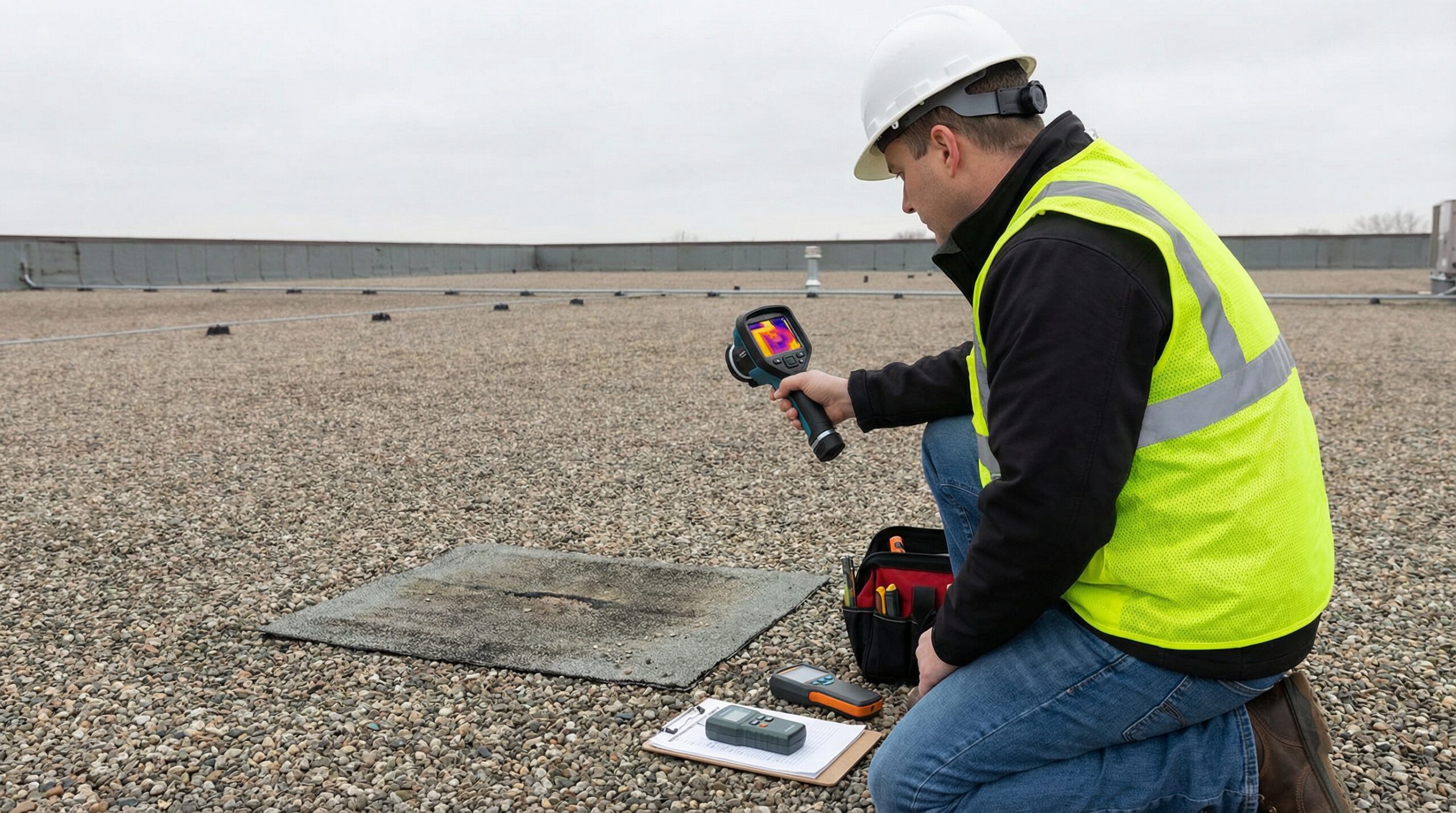
Professional assessments include membrane thickness measurements, infrared scanning for hidden moisture, adhesion testing, and drainage system evaluation that untrained personnel typically miss. These advanced techniques identify problems before they become visible from ground level or cause interior damage.
For ongoing monitoring, conduct monthly visual inspections of both interior and exterior building components. Check for ceiling discoloration patterns, wall-ceiling junction staining, and membrane displacement following storm events. Document everything with dated entries and photographic evidence.
| Monitoring Task | Frequency | Focus Areas | Action Required |
|---|---|---|---|
| Visual inspection | Monthly | Interior staining, exterior debris | Document findings |
| Drainage check | After storms | Water ponding, blockages | Clear obstructions |
| Professional assessment | Bi-annually | Membrane integrity, seam condition | Schedule repairs |
| Documentation review | Quarterly | Maintenance records, warranty status | Update files |
During significant rainfall events, observe drainage patterns for potential blockages and document areas where water accumulation persists beyond 48 hours. Proper drainage functionality prevents membrane deterioration and structural stress that can lead to costly repairs. After severe weather, knowing what types of storm damage to look for is crucial for commercial property managers.
Advanced moisture detection systems now offer early warning capabilities before interior damage becomes apparent. These technological solutions complement traditional monitoring approaches and provide particular value for properties with limited roof access or complex architectural configurations.
Warning signs to watch: Water staining, membrane displacement, surface bubbling, or unusual odors in upper building areas suggest moisture intrusion requiring immediate professional assessment.
Maintaining detailed records serves multiple essential functions—ensuring warranty compliance, strengthening insurance claims following severe weather, and preserving long-term property value. Keep professional inspection reports with photographic evidence, complete maintenance histories, and contractor qualification information in both digital and physical formats.
Your commercial roof represents both a significant investment and essential protection for your Rocky River business operations. Regular preventive care customized to your specific system type provides crucial asset protection and operational continuity. Industry studies demonstrate that planned maintenance programs reduce lifetime ownership costs by 30-50% while extending average roof lifespan by 5-10 years.
Implementing structured inspection programs tailored to your building’s usage characteristics helps prevent disruptive leakage issues and maximizes return on investment. Whether you manage retail environments, manufacturing facilities, or office complexes, each presents unique maintenance challenges that professional roofing contractors can help you address effectively. Understanding how much roof leak repair costs can help you budget appropriately for maintenance needs, and following post-winter maintenance protocols ensures your commercial roof remains in optimal condition year-round.