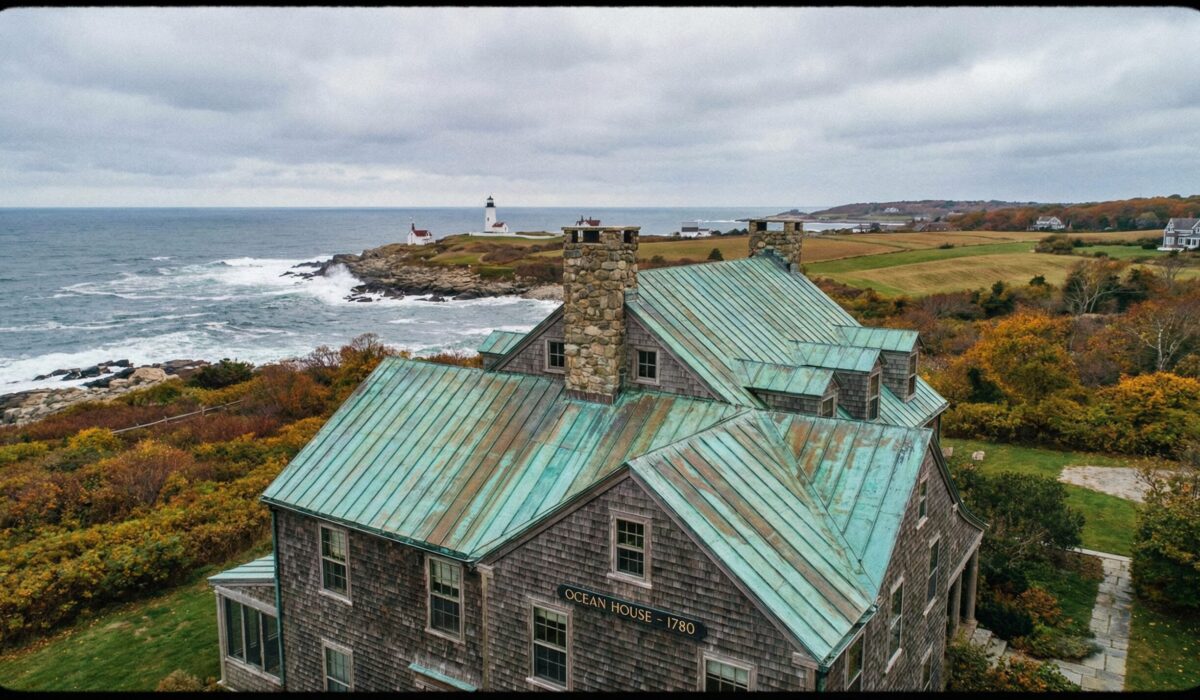
Walk through the historic streets of Shaker Heights or admire the century homes in Lakewood, and you’ll notice something striking about the most distinguished properties. The warm gleam of new copper or the elegant green patina of aged copper catches your eye immediately. There’s a reason copper has been the material of choice for generations on Northeast Ohio’s most prestigious estates.
At Peak and Valley Roofing, we understand that choosing copper isn’t just about roofing materials. It’s about investing in a legacy that will protect and beautify your historic Ohio home for generations. Copper roofing can last 100 to 200 years with minimal maintenance, making it one of the most cost-effective long-term roofing solutions available for the Cleveland climate.
Quick Fact: According to the Copper Development Association, properly installed copper roofing systems have been protecting buildings for over 2,000 years, with some ancient installations still functioning today.
Why copper dominates historic Northeast Ohio architecture
Copper isn’t just another roofing material. It’s a time-tested solution that actually improves with age, making it perfect for the challenging weather near Lake Erie.
The secret lies in copper’s unique ability to form a protective patina. When exposed to air, moisture, and the occasional salt spray from our lakefront environment, copper develops a thin, stable layer that shields the metal beneath. This natural process transforms the original bright copper color through rich browns to the distinctive blue-green finish we see on historic landmarks throughout Cleveland and Akron.
Unlike steel that rusts or aluminum that eventually corrodes, copper’s patina acts as armor. Research shows that this protective layer makes copper increasingly resistant to corrosion over time. In Ohio’s intense freeze-thaw cycles and humid summers, this natural adaptation gives copper a significant advantage over other metals.
The maintenance requirements are remarkably low for Ohio homeowners. Once properly installed, copper requires no painting, sealing, or regular treatments. It naturally resists mold and rot, making it ideal for our damp spring seasons and harsh, snowy winters.

Essential copper applications for Cleveland-area homes
You don’t need a complete copper roof to enjoy the benefits. Many Rocky River and Westlake homeowners start with strategic upgrades that address the most vulnerable areas while adding immediate character to their property.
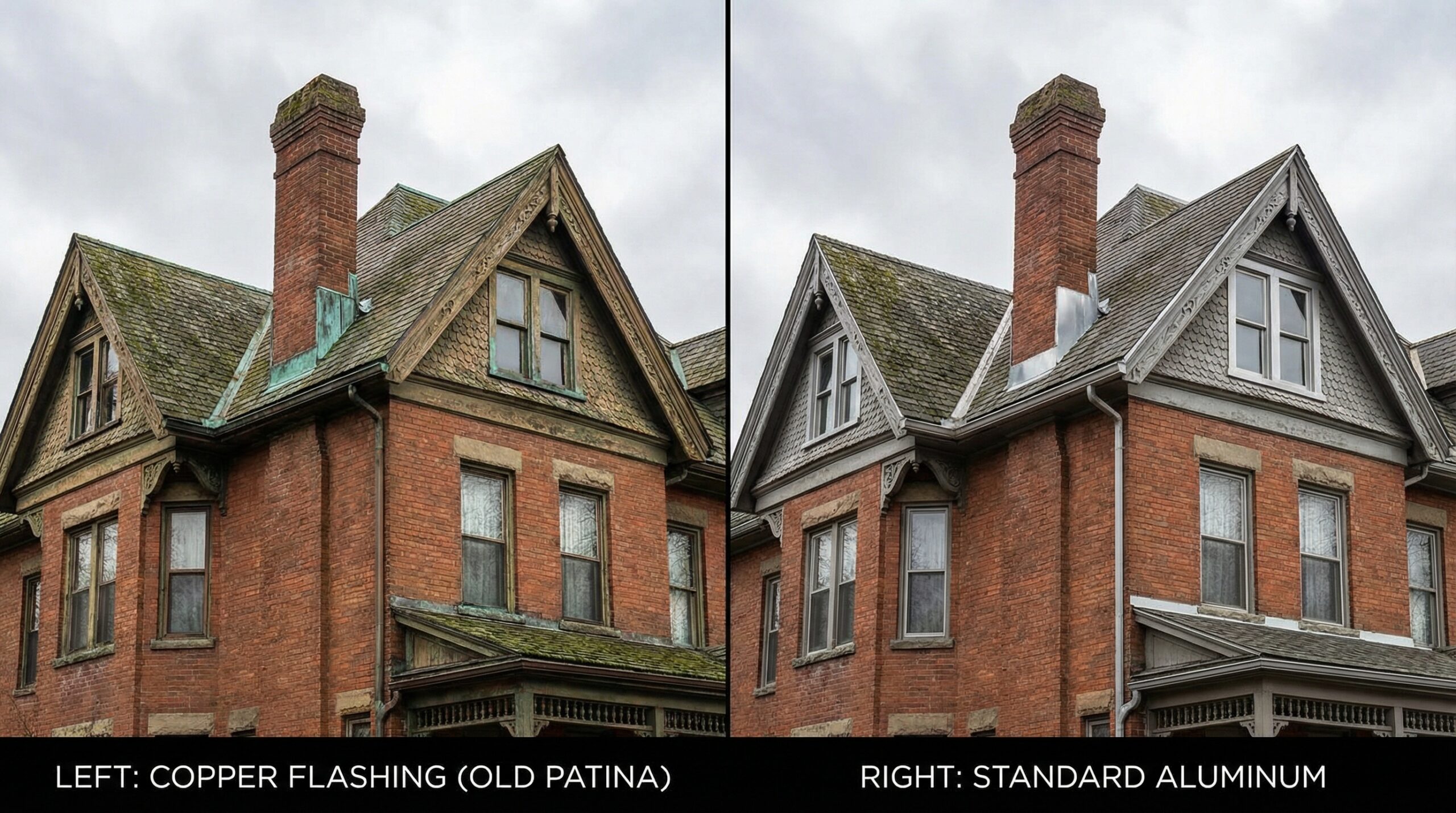
Flashing represents the most critical application in the Midwest. The areas where different roof planes meet create natural weak points where ice dams often cause water infiltration. Replacing standard aluminum flashing with properly formed copper creates watertight seals that last decades. This includes chimney flashing, dormer connections, and valley installations where proper soldering techniques ensure long-term performance against heavy snow loads.
Bay windows and portico roofs offer excellent opportunities for copper upgrades on classic Ohio colonials. These smaller installations provide immediate visual impact while protecting high-splash zones where water damage commonly occurs. A standing seam copper roof over your front entry creates an impressive focal point that speaks to the quality and attention to detail Peak and Valley Roofing is known for.
Gutters and downspouts complete the copper aesthetic. Half-round copper gutters handle Northeast Ohio snow loads effectively while maintaining the historic character that makes our local neighborhoods so distinctive. The natural expansion and contraction properties of copper accommodate our extreme temperature swings without cracking.
Professional Tip: When planning copper installations in Ohio, consider the entire water management system. Mixing metals can create galvanic corrosion, so copper gutters work best with copper downspouts and flashing for optimal longevity.
Copper versus alternative materials in the Ohio Market
| Material | Lifespan | Maintenance | Patina Development | Ohio Suitability |
|---|---|---|---|---|
| Copper | 50-100+ years | Minimal | Natural protective green | Excellent |
| Aluminum | 20-30 years | Moderate | None (eventual corrosion) | Good |
| Galvanized Steel | 15-25 years | High (painting required) | Rust formation | Fair |
| Zinc | 40-80 years | Low | Blue-grey patina | Very Good |
The comparison reveals why copper is the gold standard for premium Ohio homes. While zinc offers similar longevity, copper’s proven track record and superior performance in Great Lakes weather make it the preferred choice for historic properties.
Consider the lifecycle economics. A copper installation might cost more initially, but when you factor in replacement cycles and property value enhancement, copper often proves more economical over time. Many Ohio homeowners view copper as a one-time investment that future generations will inherit. Understanding expected roof lifespan by material helps put copper’s longevity into perspective.
Professional Ohio installation makes the difference
Copper work demands specialized knowledge and craftsmanship. The material’s unique properties require specific handling techniques, proper expansion joint planning, and expert soldering skills that distinguish professional installations from amateur attempts.
Temperature considerations play a crucial role in Northeast Ohio installations. Copper expands and contracts significantly with our seasonal changes, so proper fastening techniques prevent buckling. Professional contractors understand how to accommodate these movements while maintaining watertight seals.
Soldering represents perhaps the most critical skill. Properly soldered copper joints create permanent, flexible connections that move with the building while maintaining complete water resistance. At Peak and Valley Roofing, we’ve specialized in historic home copper installations throughout the Cleveland area. When planning your project, reviewing a detailed roofing estimate ensures all copper components are properly accounted for.
Investment Insight: Historic homes in areas like Shaker Heights with quality copper installations typically see property value increases that offset much of the initial cost, while enjoying decades of worry-free protection.
Choosing copper for your historic Ohio home means investing in a material that will outlast multiple generations. The natural beauty of copper’s patina development, combined with its exceptional durability in our Great Lakes climate, makes it the ultimate upgrade for discerning homeowners. For those exploring financing options for this premium investment, our Ohio roof financing guide outlines available programs and tax credits for 2026.
Ready to explore copper options for your historic property? Contact Peak and Valley Roofing for a comprehensive evaluation of how copper can enhance and protect your home.