
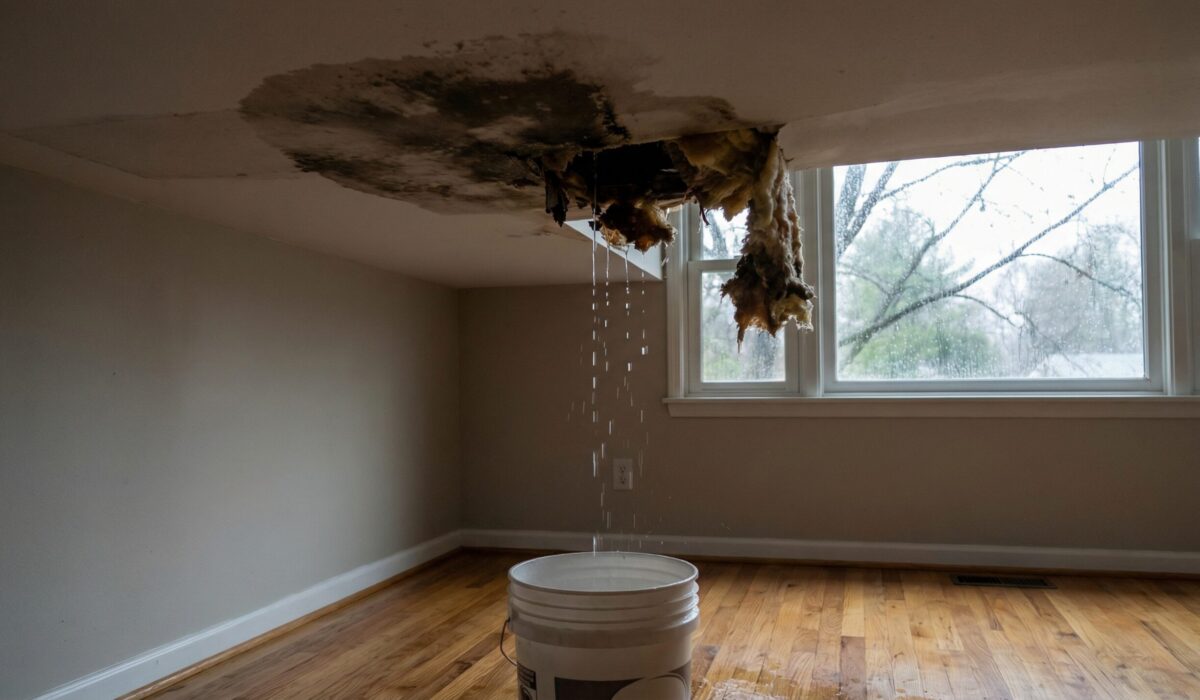
Your roof starts leaking during a severe Northeast Ohio storm, and water drips through your ceiling. You need immediate action to prevent thousands in water damage. Emergency roof repair services in the Rocky River area respond within hours to stop active leaks and protect your home from further damage.
This guide walks you through recognizing true roofing emergencies, taking immediate protective steps, and finding reliable 24/7 repair services in Cuyahoga County. Quick response can mean the difference between a simple patch and extensive interior repairs.
Emergency roof repairs can reduce water damage by up to 80% when properly installed within the first few hours after storm damage occurs.
When you need emergency roof repair in Northeast Ohio
Not every roof problem requires middle-of-the-night service calls. Some issues can wait until morning, while others demand immediate attention from professional roofers.
Call for emergency roof repair when water actively enters your home, severe storm damage exposes the roof deck, or high winds off Lake Erie tear off shingles and flashing. Heavy tree branches puncturing your roof under the weight of lake-effect snow or visible daylight through the roof deck also qualify as emergencies.
These situations worsen rapidly. Water spreads through insulation, walls, and structural components within hours. Your belongings, electrical systems, and home’s foundation face increasing risk with every passing minute.
Less urgent issues include minor granule loss, small exposed nail heads, or single missing shingles during dry weather. Understanding common types of roof damage helps you determine whether you need emergency service or can schedule standard repairs within a few days.
Immediate steps when your roof leaks
Stop water damage first, then contact professional help. Your quick actions in the first hour determine how much interior damage occurs.
Move furniture, electronics, and valuables away from leak areas immediately. Water damages floors, walls, and everything below the entry point. Place buckets under active leaks and change them before overflow occurs.
Document everything with photos and videos. Capture the leak location inside your home, water stains on ceilings and walls, damaged belongings, and exterior roof damage if safely accessible. Insurance companies require this documentation before processing claims.
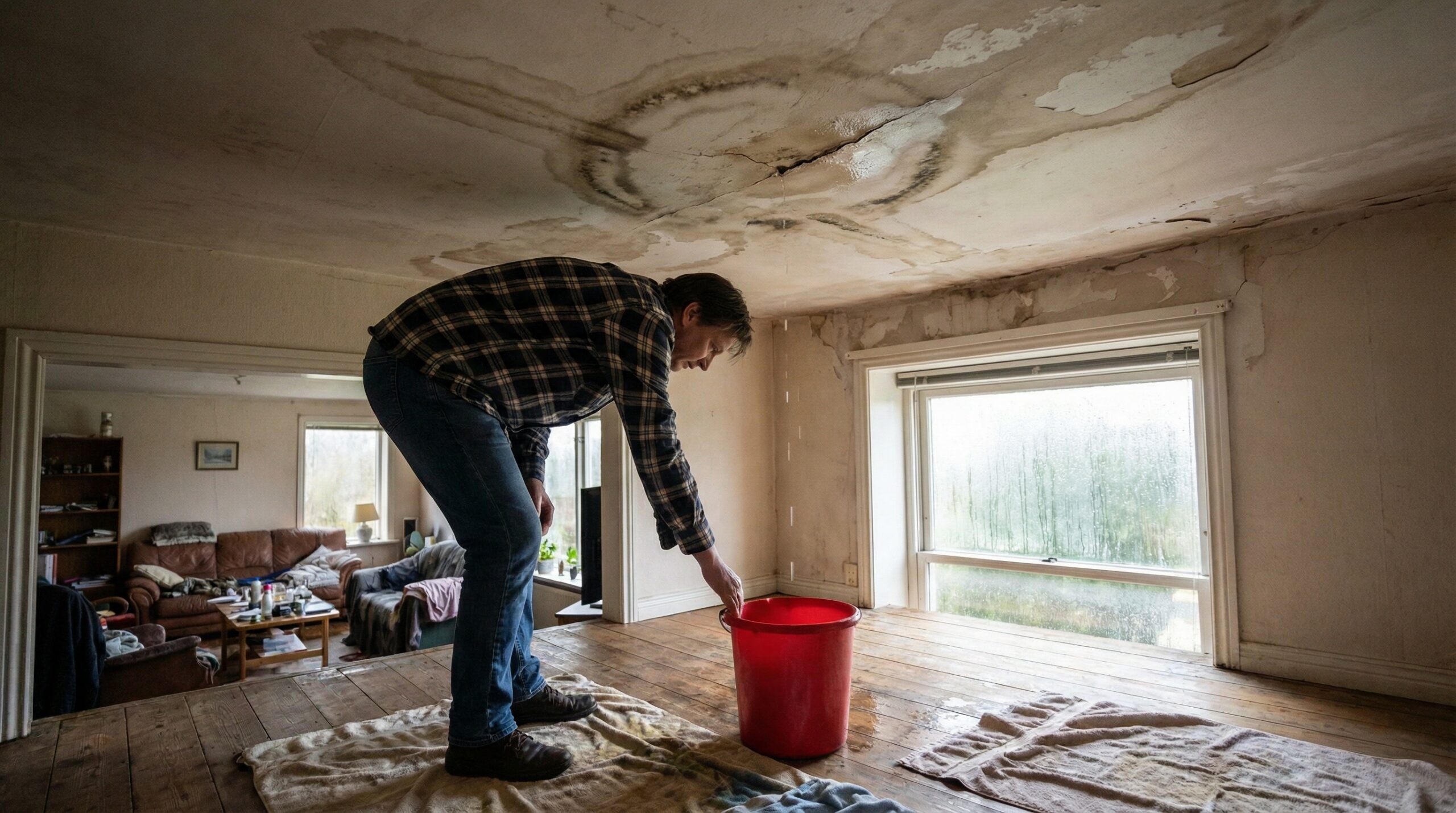
Poke small holes in sagging ceiling sections to let trapped water drain into containers instead of spreading across the ceiling. Use towels to absorb standing water on floors and turn off electricity in affected rooms if water approaches outlets or fixtures.
Professional roofers have specialized safety equipment and experience to work on damaged roofs safely, while most temporary fixes by homeowners create additional risks.
Only attempt exterior temporary fixes if you can access the roof safely with proper equipment and weather permits. With Ohio’s icy, wet, and windy conditions, most homeowners should avoid roof access entirely and wait for professional help.
Finding reliable emergency roofers in Rocky River
Northeast Ohio’s volatile weather creates high demand for emergency roof services, attracting both legitimate contractors and opportunistic scammers (often called “storm chasers”). Choosing the right company protects your home and wallet.
Look for locally registered and insured contractors available 24/7 with physical Northeast Ohio addresses. Reliable companies provide transparent emergency pricing and maintain positive reviews from verified local customers. They offer written estimates before starting permanent repairs and explain exactly what work they’ll perform.
Avoid roofers demanding full payment upfront, companies without physical business addresses, or contractors pressuring immediate signatures. Legitimate emergency services never ask you to pay insurance deductibles differently or promise to waive deductibles entirely.
Peak and Valley Roofing provides emergency roof repair throughout the West Shore, including zip codes 44116, 44145, 44140, 44107, and 44126. Our licensed contractors respond within hours to assess damage and install temporary protection.
Emergency repair process and costs
Emergency roof repair focuses on stopping immediate water intrusion, not completing permanent fixes. Professional roofers assess damage from inside and outside your home, then install tarps, temporary patches, or cover exposed areas.
The repair process includes damage documentation, temporary weatherproofing, and written estimates for permanent repairs. Emergency fixes buy time until storms pass and contractors obtain proper materials for lasting solutions. Learning about roof leak repair costs helps you budget for both emergency and permanent repairs.
| Service Type | Price Range | Coverage |
|---|---|---|
| Temporary tarp installation | $300-$800 | Basic leak protection |
| Emergency patch and seal | $500-$1,200 | Multiple leak points |
| Extensive temporary coverage | $1,200-$2,800 | Large damaged areas |
Emergency repairs cost more than standard work due to after-hours availability, immediate response, and temporary materials. Most homeowners insurance policies cover emergency roof repairs following storm damage, and contractors provide necessary documentation for claims.
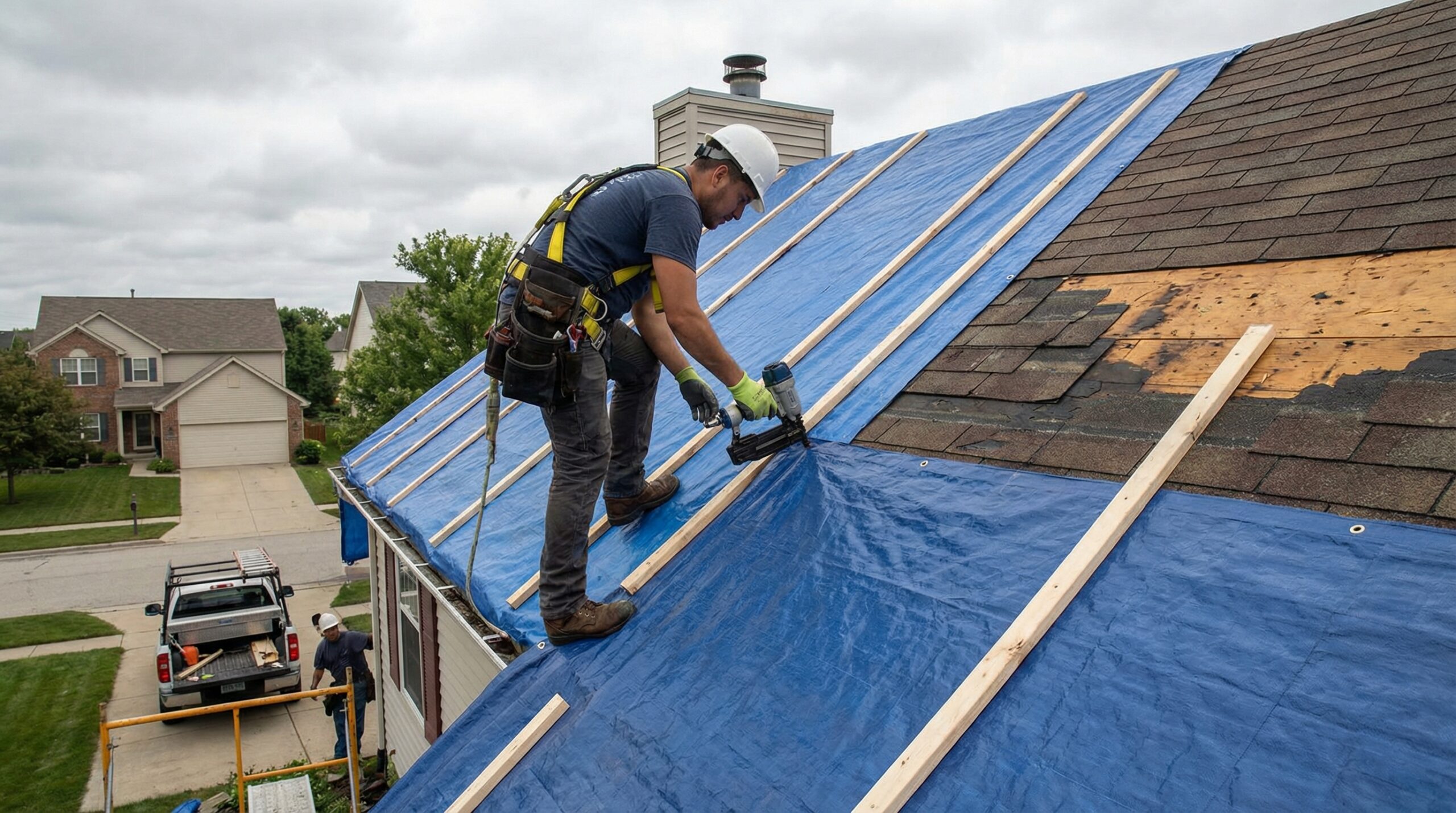
Permanent repairs happen separately once weather clears and proper materials arrive. Complete repair costs depend on damage extent, roofing materials, and structural issues discovered during inspection. If you’re wondering whether repairing just part of a roof is possible, the answer depends on the extent and location of the damage.
Preventing future roofing emergencies
Regular maintenance catches small problems before they become expensive emergencies. Northeast Ohio’s severe freeze-thaw cycles, high winds off Lake Erie, and heavy lake-effect snows accelerate roof aging compared to milder regions.
Schedule professional inspections twice yearly, especially after severe weather events. Clear debris from gutters and roof valleys regularly, trim overhanging tree branches, and replace damaged shingles promptly. Check attic insulation and ventilation to prevent moisture buildup and ice dams that weaken roof structures.
Proper maintenance and timely minor repairs extend roof life by 5-7 years in Northeast Ohio’s challenging climate conditions.
Professional inspections identify worn flashing, loose shingles, and other vulnerabilities before they fail during storms. Addressing these issues during calm weather costs significantly less than emergency repairs during severe weather. Understanding types of roof storm damage helps you recognize potential problems after severe weather passes through your area.
When roof emergencies strike Rocky River homes, quick professional response prevents minor leaks from becoming major disasters. Document damage immediately, protect your belongings, and contact licensed emergency roofers who understand local weather challenges and insurance requirements. Taking swift action saves money and protects your most valuable investment.