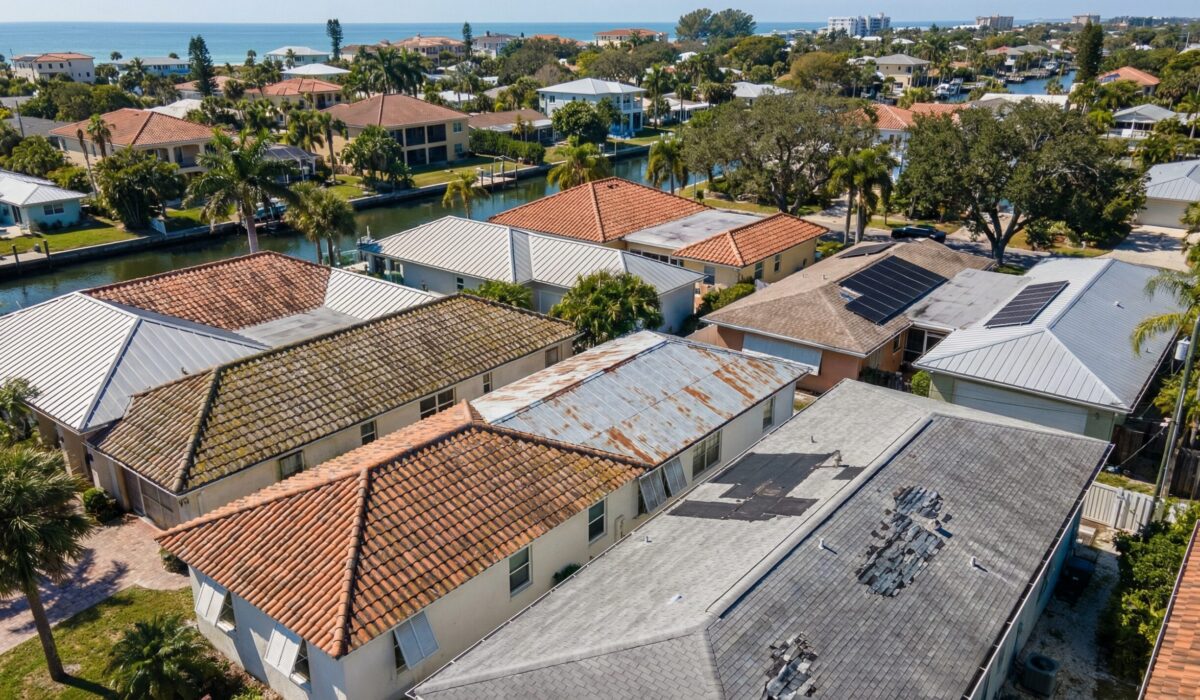
When you notice roof problems in your Rocky River home, you might blame Northeast Ohio’s intense weather or normal aging. However, many roof failures actually stem from poor installation practices that create vulnerabilities from day one. These installation mistakes can lead to water damage, premature material failure, and expensive repairs that could have been avoided with proper workmanship.
Poor roof installation can cause problems within the first year, with issues becoming more apparent after exposure to Northeast Ohio’s harsh weather conditions.
Understanding the warning signs of improper installation helps you protect your investment and take action before minor issues become major structural problems. Whether your home is in Rocky River, Westlake, Fairview Park, or Lakewood, recognizing these red flags early can save you thousands in repair costs and help you determine when it’s time for a roof replacement.
Visual signs that indicate poor workmanship
The most obvious indicators of installation problems are often visible from the ground or during a basic inspection. Misaligned or uneven shingle rows create an immediate red flag, as properly installed roofing materials should form straight, consistent lines across your roof surface. When shingles appear crooked or inconsistent, they become vulnerable to wind uplift during Northeast Ohio’s frequent storms.
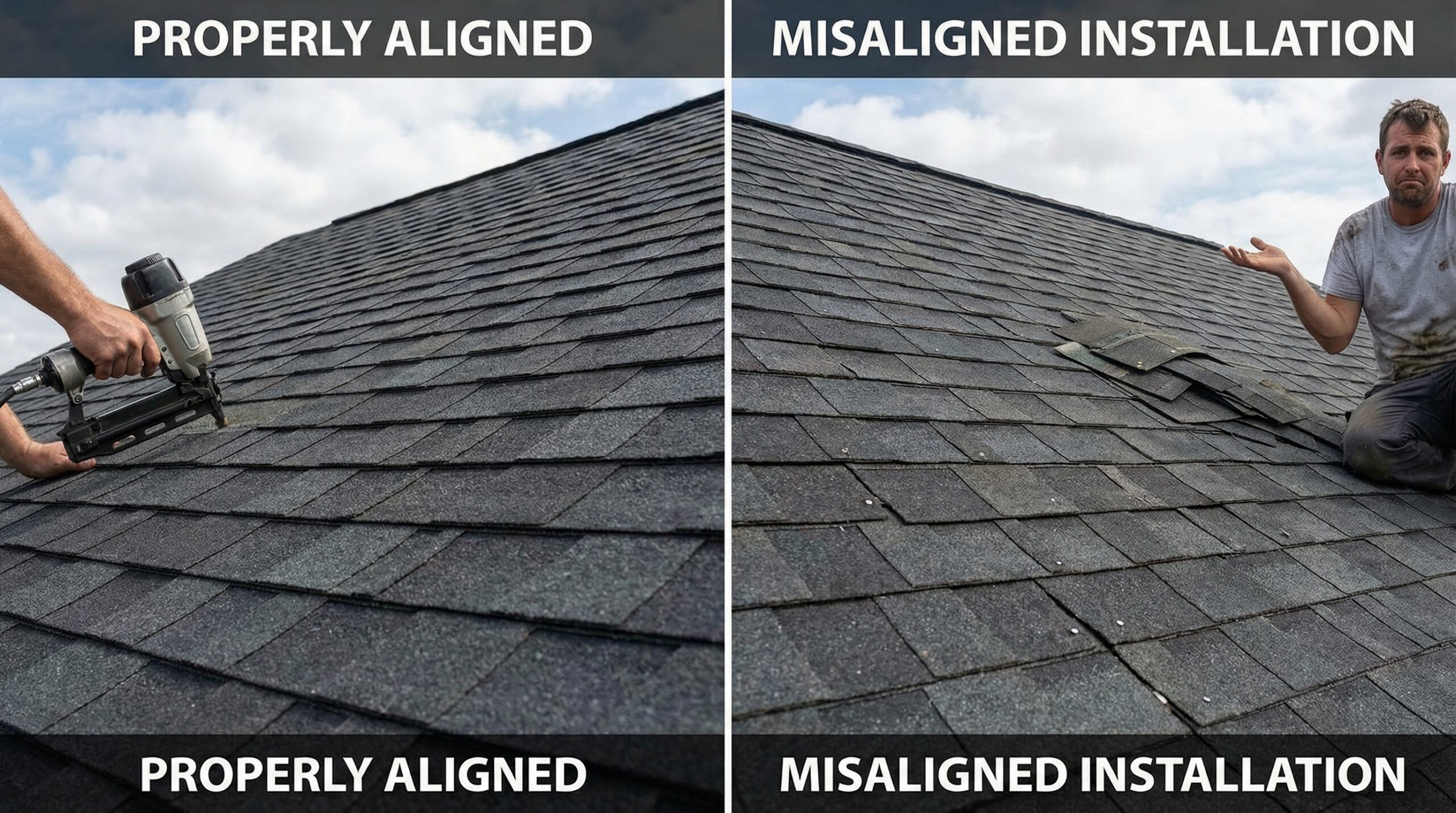
Exposed or protruding nail heads represent another clear sign of poor craftsmanship. Professional installation requires nails to sit flush with the shingle surface and receive proper sealing. When nail heads stick out or show signs of rusting, they create entry points for water infiltration, particularly during the heavy spring storms and winter thaws that affect Northeast Ohio.
Damaged or missing shingles immediately after installation work indicates careless handling or inexperienced crews. New roofing materials should not show cracks, tears, or missing pieces unless they were damaged during the installation process itself.
Critical flashing and sealing problems
Flashing installation around roof penetrations like chimneys, vents, and skylights requires precise attention to detail. According to roofing experts, improper flashing represents one of the most common sources of water intrusion in Ohio homes. When contractors reuse old flashing instead of installing new materials, or fail to properly seal these critical areas, water can bypass your roof’s protective barriers.
The absence of drip edge installation creates another pathway for moisture problems. This seemingly small component directs water away from your home’s fascia and prevents moisture buildup that leads to rot and mold growth. Many contractors skip this step to save time, but the long-term consequences can be significant in Northeast Ohio’s variable climate.
Missing or improperly installed drip edge can lead to fascia rot and mold growth, particularly problematic in Northeast Ohio’s wet environment.
Step flashing problems around chimneys and wall intersections often reveal themselves through water stains on interior ceilings or walls. These areas require careful layering of materials to create a watertight seal that can withstand both driving rain and thermal expansion.
Structural and ventilation concerns
Sagging or uneven roof sections indicate serious structural issues that may stem from inadequate support during installation or overloading of the roof deck. As noted by industry professionals, these problems compromise the roof’s ability to shed water effectively and can lead to ponding that accelerates deterioration.
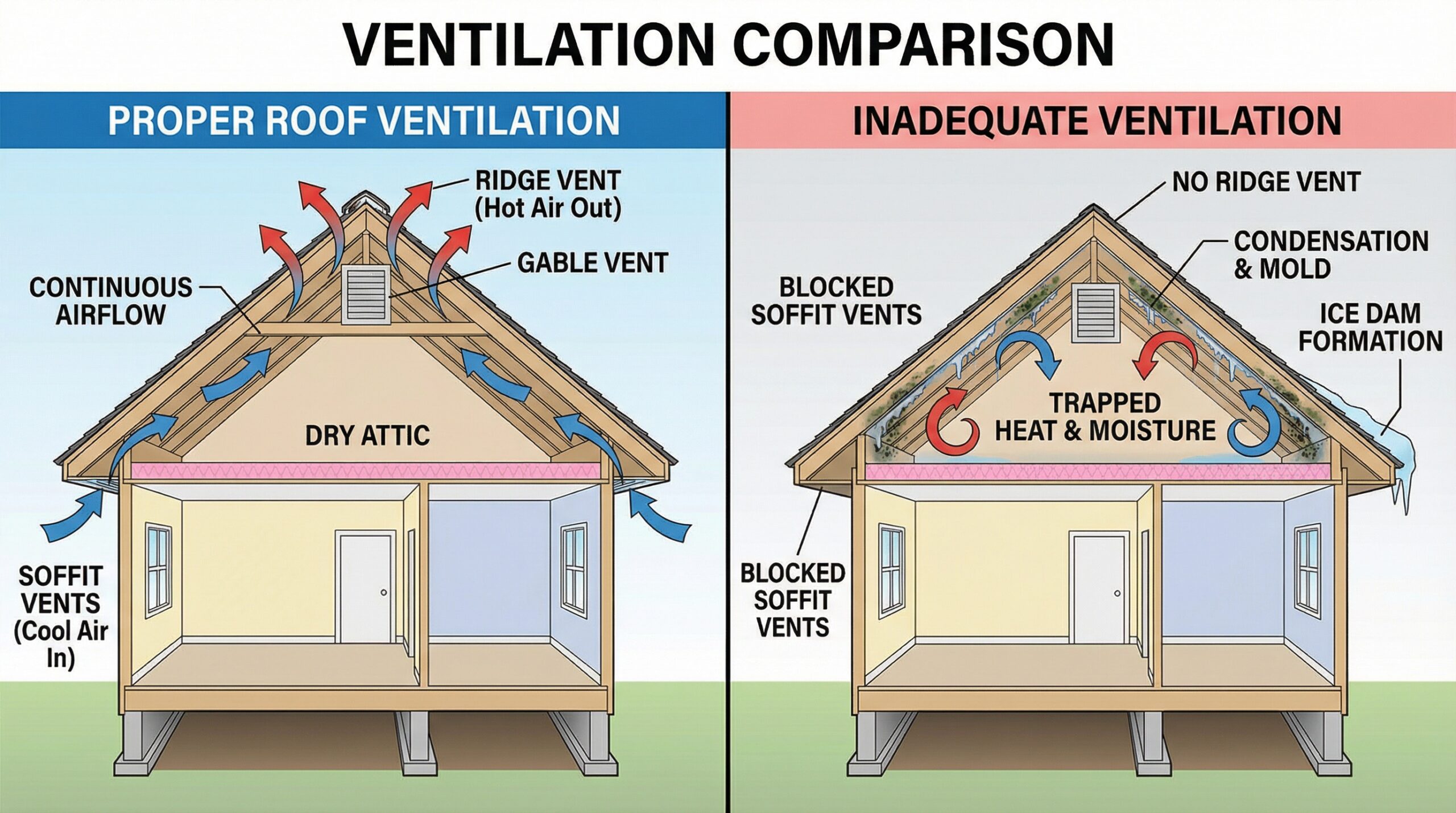
Inadequate ventilation represents a hidden problem that becomes apparent through excessive heat buildup in your attic, condensation on interior surfaces, or musty odors. Proper airflow prevents moisture accumulation that can cause wood rot, mold growth, and premature material failure. Many installation crews focus on visible components while neglecting ventilation requirements that are crucial for Northeast Ohio’s climate. If you’re planning an attic conversion, your roof needs proper ventilation updates to ensure optimal performance.
Loose or missing fasteners compromise your roof’s ability to withstand wind loads. Roofing specialists emphasize that proper fastener installation is critical for structural integrity, particularly in areas prone to high winds off Lake Erie and severe weather.
Material and debris indicators
Excessive granule loss from new shingles often appears as dark particles collecting in your gutters or around downspouts. While some granule shedding is normal for new asphalt shingles, large amounts may indicate rough handling during installation or defective materials. This granule loss reduces the shingles’ protection against UV damage and heat absorption.
| Installation Issue | Normal Condition | Warning Sign |
|---|---|---|
| Granule Loss | Light dusting in gutters | Heavy accumulation of dark granules |
| Nail Placement | Flush, sealed fasteners | Exposed, rusting, or overdriven nails |
| Shingle Alignment | Straight, consistent rows | Crooked or uneven patterns |
| Flashing Condition | New, properly sealed | Reused, loose, or missing |
The presence of old roofing materials mixed with new installation work suggests corner-cutting practices. According to roofing guidelines, covering old shingles rather than removing them creates moisture traps and accelerates deterioration. Professional installation requires complete removal of existing materials before applying new roofing systems. Understanding the differences between roof overlays and complete replacement can help you make informed decisions about your roofing project.
Debris left on your roof or around your property after completion indicates rushed work or poor cleanup practices. Quality contractors remove all old materials, dispose of waste properly, and leave your property clean upon project completion. Understanding how long roof replacement takes can help you set realistic expectations for your project.
Taking action when you spot these warning signs can prevent minor installation flaws from becoming major structural problems. If you notice any of these indicators, consider having your roof inspected by a qualified professional who can assess the extent of any issues and recommend appropriate solutions. Early detection and correction of installation problems protects your home’s value and prevents costly water damage that can affect your entire property. Additionally, knowing how to get insurance to pay for roof replacement costs can help offset the financial burden of necessary repairs.
Professional roof inspection can identify installation problems before they cause extensive water damage, potentially saving thousands in repair costs.