

Managing roof replacement for multi-unit residential properties in Northeast Ohio presents unique challenges that require specialized planning and expertise. With the region’s diverse weather patterns, apartment complex roof systems typically last 15-20 years before requiring replacement, though severe storms can significantly shorten this timeline. Current industry data shows multi-family roofing costs in Northeast Ohio range from $8-$14 per square foot, with most apartment communities investing between $50,000-$100,000 depending on building size and materials chosen.
Quick Fact: Multi-family roof replacement projects in Rocky River typically cost 20-30% more than single-family homes due to complex logistics, specialized materials, and tenant coordination requirements.
This comprehensive guide helps property managers navigate every aspect of apartment building roof replacement, from initial planning and resident communication to material selection and contractor evaluation. You’ll learn how to minimize disruption while ensuring your roofing investment delivers optimal value and protection for decades to come.
Strategic planning for multi-family roof replacement
Successful apartment roof replacement begins with thorough preparation tailored specifically for multi-unit properties. Start with a professional assessment to evaluate damage extent and identify priority areas that need immediate attention. Understanding the signs that indicate it’s time for a roof replacement is crucial before moving forward with your project. The optimal timing for Northeast Ohio roofing projects is during spring or fall when weather conditions are most favorable and predictable.
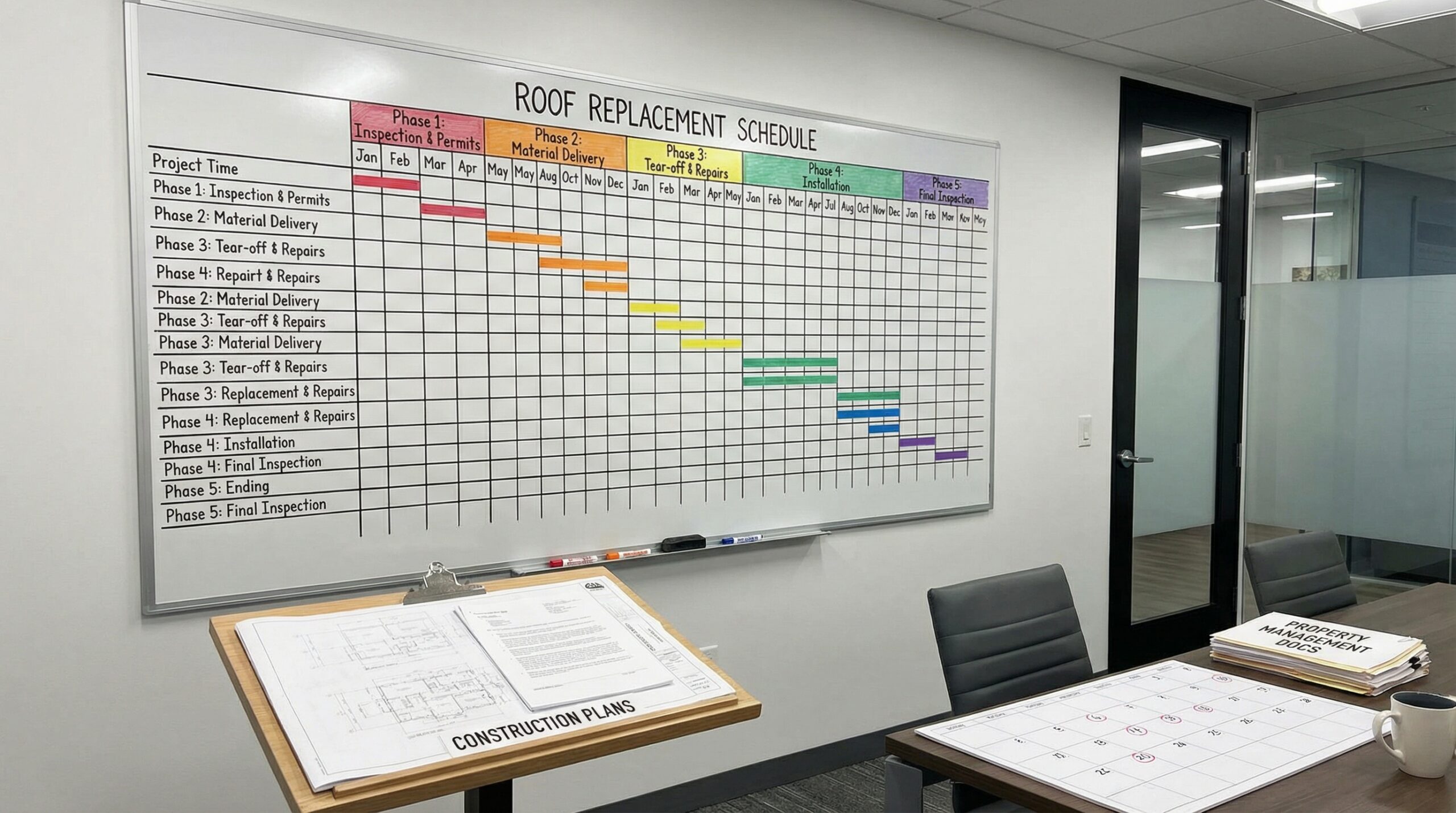
When planning your project timeline, coordinate with other scheduled maintenance activities to maximize efficiency. For large developments, consider a phased approach that divides the property into manageable sections. This strategy allows you to maintain normal operations while containing disruption to specific areas during replacement. Learning about how long roof replacement typically takes can help you set realistic expectations for your multi-family project.
Communication between property management, contractors, and maintenance staff drives project success. Designate a dedicated project coordinator to monitor daily operations and address issues as they arise. Secure all required permits well in advance, as multi-family projects typically require more extensive documentation than residential work.
Tenant communication and logistics coordination
Strategic resident communication is essential for a smooth roofing project. Notify tenants at least 30 days before work begins with detailed information about project scope, timeline, and potential impacts. Use multiple communication channels including email, physical notices, and online portals to keep everyone informed throughout the process.
Schedule disruptive work during weekday business hours when most residents are away from home. Work with your roofing contractor to establish clear work hours and determine if weekend work is necessary for specific phases. Develop detailed plans for temporary parking arrangements, equipment placement, and debris removal to minimize community disruption.
Pro Tip: Create a dedicated project hotline for tenant concerns and guarantee response within 24 hours to maintain positive relationships during the replacement process.
Safety remains the top priority during multi-family roof projects. Establish clearly marked construction zones with protective barriers to keep residents safe from potential hazards. Ensure your contractor maintains clean work areas and removes debris daily to prevent accidents and maintain tenant satisfaction. Being able to spot poor roof installation practices early can save you from costly problems down the road.
Material selection for Rocky River apartment buildings
Choosing the right roofing system for your apartment complex requires balancing durability, cost-effectiveness, and energy efficiency. Northeast Ohio’s variable climate significantly influences material performance, making proper selection crucial for long-term success. Consider the best time to replace your roof for longevity when planning your material selection strategy.
For flat or low-slope roofs common in apartment buildings, TPO systems offer excellent energy efficiency with reflective surfaces that reduce cooling costs. Modified bitumen provides superior moisture protection, while EPDM rubber roofing delivers exceptional longevity with 20-30 year service life, making it ideal for properties where minimizing future maintenance is essential.
For pitched-roof apartment structures, architectural asphalt shingles remain popular due to their affordability and 25-30 year lifespan. Metal roofing, though requiring higher upfront investment, provides 40+ years of protection with minimal maintenance while offering excellent resistance to high winds and heavy lake-effect snow common in Northeast Ohio.
Consider total lifecycle costs when selecting materials for your project. Premium products typically require fewer repairs and replacements, often providing better value for property management budgets over time. Energy-efficient options can also qualify for rebates through local Ohio energy efficiency programs, helping offset initial costs.
Budgeting and financial planning strategies
Creating a comprehensive budget for apartment roof replacement requires understanding all potential expenses beyond basic materials and labor. Account for structural repairs, insulation upgrades, and ventilation improvements that often become necessary once existing roofing is removed. Understanding whether a new roof increases home value can help justify your investment to property owners and stakeholders.
| Budget Component | Percentage of Total | Key Considerations |
|---|---|---|
| Materials | 40-45% | Quality grade, warranty length, energy efficiency |
| Labor | 35-40% | Crew size, project complexity, accessibility |
| Permits & Inspections | 3-5% | Local requirements, building size, scope |
| Structural Repairs | 5-10% | Building age, existing damage, weather exposure |
| Contingency | 10-15% | Weather delays, hidden damage, scope changes |
Include permits, waste management, and protective measures during installation in your budget planning. Allocate 10-15% as contingency funding for unexpected issues that commonly arise in multi-family projects, such as hidden structural damage or weather delays.
Budget Reality: Properties over 20 years old typically require 15-25% more budget allocation due to structural repairs and code compliance upgrades discovered during replacement.
Several financing options are available for property managers. Capital improvement funds and reserve accounts provide the most straightforward approach. Many contractors offer financing solutions for commercial projects with favorable terms. If you’re exploring ways to reduce out-of-pocket expenses, learn how to get insurance to pay for roof replacement costs. Consider phasing larger projects across multiple budget periods to distribute costs while addressing critical areas first.

Contractor selection and project management
Selecting the right contractor for your multi-family roofing project requires evaluating experience, capabilities, and project management approach. Look for companies with substantial experience in commercial and apartment projects similar to yours in size and complexity. Reviewing successful residential roof replacement case studies in Rocky River can give you insight into what quality work looks like in your region.
Verify that potential contractors maintain proper licensing, insurance, and bonding for commercial work, including general liability coverage of at least $1 million. They should demonstrate sufficient crew capacity and specialized equipment for large-scale installations, as multi-family projects require significantly more resources than residential work.
Evaluate each contractor’s project management methodology by asking about quality control procedures, communication protocols, and documentation systems. Inquire how they handle unexpected challenges, weather delays, and resident concerns. Request examples of similar Northeast Ohio projects they’ve completed for other property managers, including references you can contact.
The lowest bid rarely represents the best value for your investment. Focus on contractors who demonstrate clear understanding of multi-family challenges, provide detailed project timelines, and show commitment to minimizing tenant disruption. Quality workmanship and professional project management ultimately protect your investment and maintain tenant satisfaction throughout the replacement process.
Successful multi-family roof replacement requires careful planning, quality materials, and partnership with experienced contractors who understand the unique challenges of apartment properties. By following this comprehensive approach, property managers can ensure their roofing investment provides decades of reliable protection while maintaining positive tenant relationships throughout the project.