
Staring up at your roof after a storm and wondering when you should actually replace it? You’re asking exactly the right question. The timing of your roof replacement affects everything from installation quality to project costs, and getting it right can save you thousands while ensuring your new roof lasts for decades.
Spring and fall are generally the best times to replace your roof, offering moderate temperatures that help materials bond properly and more predictable weather patterns. However, the ideal window varies significantly based on your location and specific circumstances.
Quick Fact: According to gaf.com, asphalt shingles need warm temperatures to seal properly, making timing crucial for long-term performance.
Let’s explore exactly when roof replacement makes the most sense for your situation and location.
Why timing matters for roof replacement
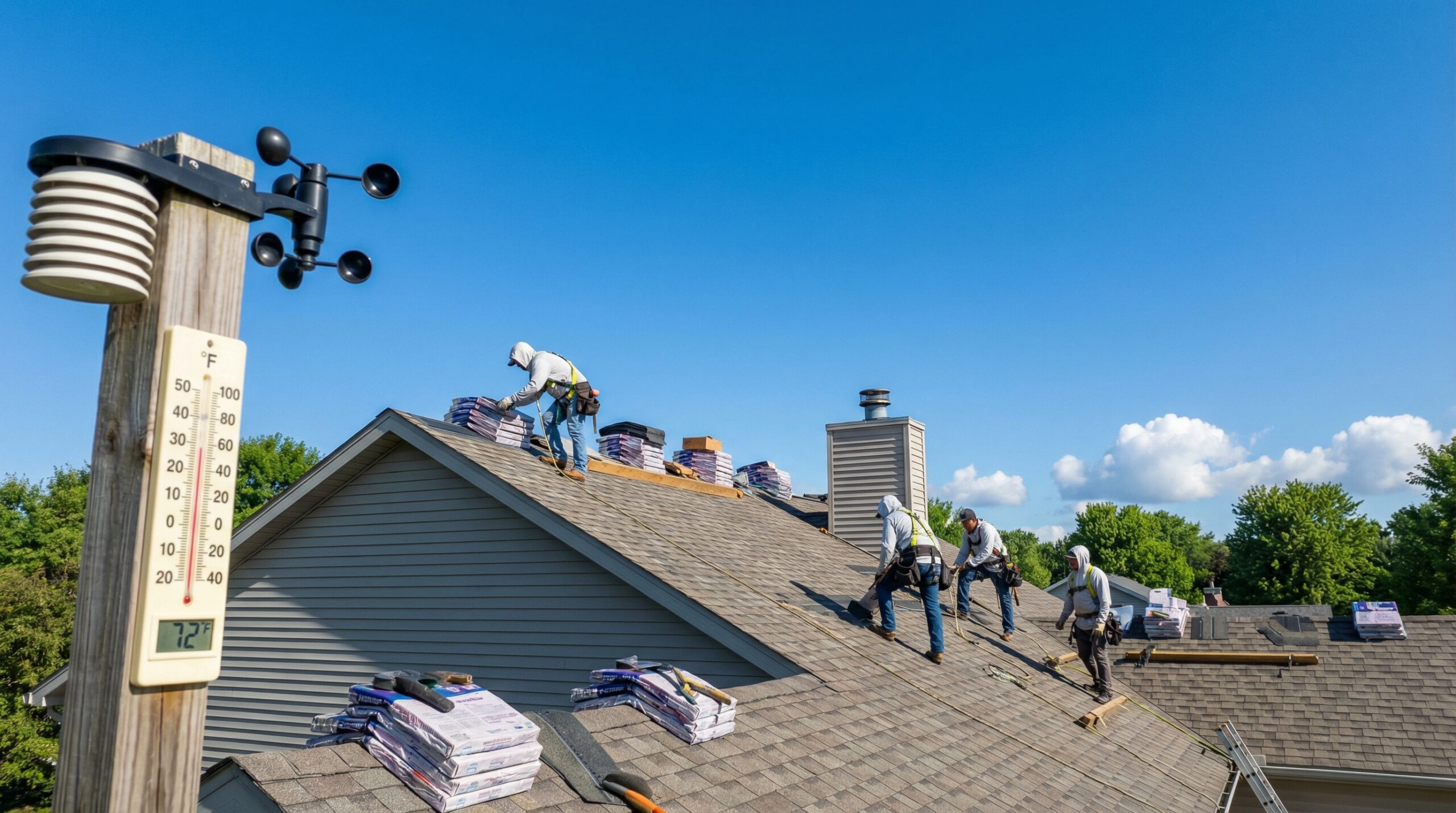
The success of your roof replacement depends heavily on weather conditions during installation. Temperature affects how shingles bond together, while moisture can compromise the installation process and materials.
When shingles are installed in optimal conditions, they create watertight seals that protect your home for 20-30 years. Poor timing can lead to premature failure, leaks, and costly repairs down the road. Weather also impacts crew safety and work efficiency, directly affecting your roof replacement timeline and costs.
The best seasons for roof replacement
Spring emerges as a top choice for many homeowners. Temperatures warm up enough for proper shingle adhesion, but you avoid the intense heat of summer. gorillaroofing.com notes that spring replacement prepares your home before summer storms arrive.
Fall takes the crown in many regions. mccauleyconstructionpa.com reports that many contractors consider fall the sweet spot, offering cool, stable weather that’s ideal for both materials and crew safety.
Summer works well if you can schedule early in the season, though extreme heat can create challenges. Winter replacement is possible but requires special techniques and may cost more due to installation complications.
Pro Tip: reliableroofingms.com suggests booking fall projects early, as this busy season fills up quickly with homeowners preparing for winter.
Regional considerations across the United States
Your location dramatically impacts the ideal replacement window. The Northeast benefits from late spring and early fall timing, avoiding heavy spring rains and early snowstorms that can delay projects.
In the Southeast, spring often wins due to intense summer heat and hurricane season concerns. The Southwest sees spring and fall as optimal choices, dodging scorching summers and monsoon periods that can halt work.
| Region | Best Seasons | Key Considerations |
|---|---|---|
| Northeast | Late spring, early fall | Avoid heavy rains, early snow |
| Southeast | Spring | Beat summer heat, hurricane season |
| Southwest | Spring, fall | Dodge extreme heat, monsoons |
| Pacific Northwest | Late spring through early fall | Maximize dry weather window |
The Pacific Northwest enjoys the longest favorable window, with late spring through early fall offering dry conditions. Midwest homeowners typically favor late spring and summer for the warmer temperatures that help shingles seal properly.
Weather conditions and installation quality
Warm weather installation offers significant advantages. Shingles become pliable and bond effectively, creating the watertight seals essential for long-term performance. Longer daylight hours mean crews can work more efficiently, potentially completing your project faster.
However, extreme heat presents challenges. Materials can become too soft to handle properly, and crew safety becomes a concern during heat waves. roofaidusa.com warns that temperatures above 85°F can affect adhesive curing and installation quality.
Cold weather installation requires special considerations. Shingles become brittle and may not seal properly without hand-sealing techniques. Shorter daylight hours extend project timelines, and weather delays become more likely. In fact, winter roof installation in snowy conditions requires specialized expertise and techniques to ensure quality results.
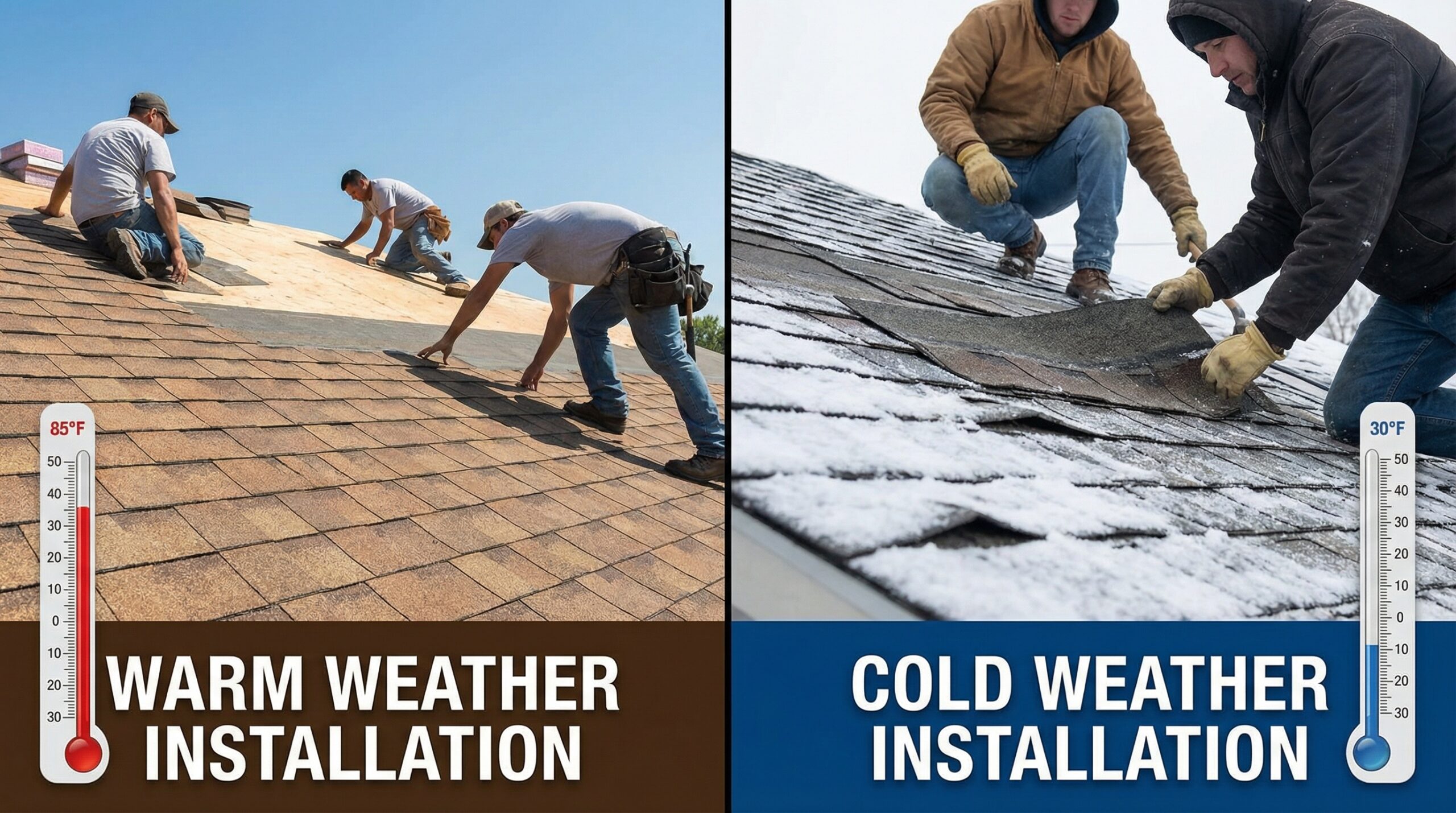
The trade-off often comes down to scheduling flexibility versus optimal conditions. Cold weather may offer better availability and pricing, but warm weather ensures the best installation quality. Being aware of signs that indicate it’s time for a roof replacement can help you plan ahead and choose the optimal season for your project.
Smart timing means planning ahead. Whether you choose spring, summer, or fall, booking early gives you the best shot at ideal conditions and competitive pricing. Most importantly, don’t wait for an emergency – proactive replacement during favorable weather protects your investment and ensures quality installation. If you’re considering whether the investment is worthwhile, understanding how a new roof increases your home value can help you make an informed decision.
Additionally, if you’re working with insurance to cover the costs, learning how to get insurance to pay for roof replacement can significantly impact your project budget and timeline.
A reputable local roofer can help you determine the perfect timing for your specific situation and location. At Peak and Valley Roofing, we work year-round to ensure you get the roof replacement you need, when you need it most.