

Ice dams form when heat leaking from your attic melts snow on the upper roof. That meltwater runs down and refreezes at the colder eaves, building a ridge of ice that backs water under your shingles. Proper prevention happens before winter: air sealing attic leaks, adding enough insulation, and balancing intake and exhaust ventilation.
An ice dam looks like a winter problem. It shows up in January, builds along your eaves in a thick ridge, and eventually pushes water back under your shingles. By the time you see it, though, the real problem would have been sitting in your attic since October.
Ice dams are caused by insulation and ventilation issues, and they only become visible once the temperature drops far enough to freeze what’s melting. It’s why some homeowners chip ice off the same stretch of roof every single January. They’re treating what they can see, not what’s causing it. If this is going to be the winter that doesn’t happen, the work needs to happen now, before the first hard freeze.
How Ice Dams Form
Warm air rises, and in a home with attic air leaks or thin insulation, it migrates into the attic and heats the roof deck from underneath. That heat melts the snow on the upper roof, and the meltwater runs down under the snowpack until it reaches the eaves where the roof deck is cold again. There, it refreezes, and layer by layer, that refreezing builds into a dam.
Once the dam is thick enough, meltwater has nowhere to go but back up and under your shingles, reaching your roof deck, attic insulation, and eventually your ceilings. Roof valleys make this worse, since they funnel runoff from two roof planes into a single channel, which is exactly where ice tends to build first. We’ve covered how valleys and ice dams fail together in more detail.
What Actually Prevents Ice Dams
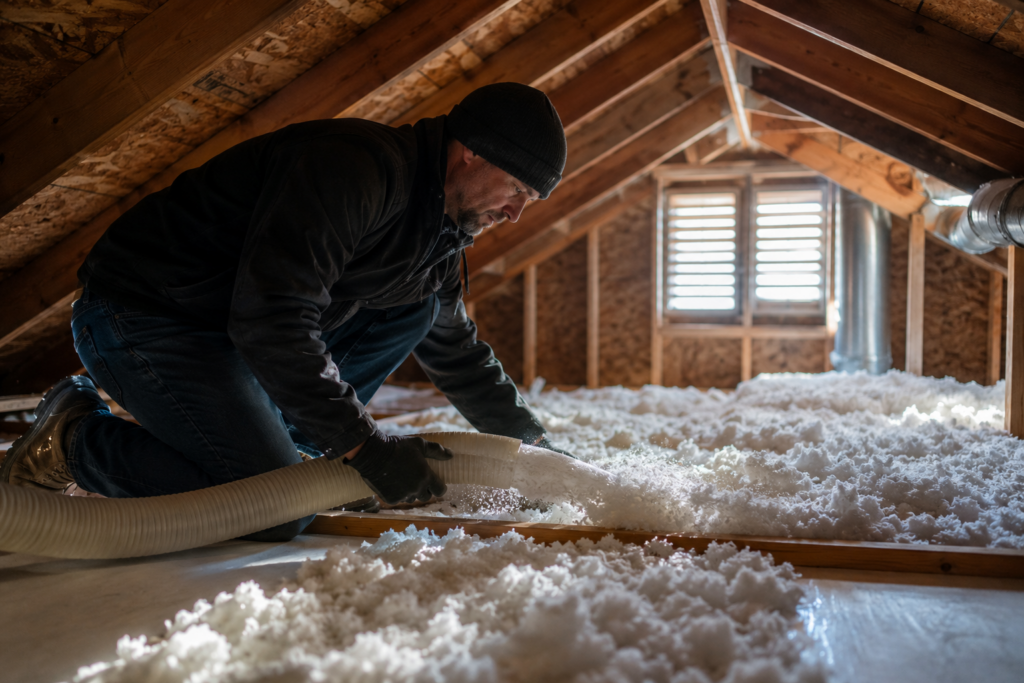
Here are a few pointers that can actually help you address the problem
Air Sealing the Attic Floor
Every gap where warm air can reach your attic, around recessed lighting, bathroom fans, plumbing stacks, and the attic hatch, is a place heat is leaking. Sealing those gaps is the single most effective step, because it stops the heat before it ever reaches your insulation.
Insulation Depth
Even a well-sealed attic needs enough insulation to keep the heat that does escape from ever reaching the roof deck. Much of Northeast Ohio’s older housing stock was insulated to standards that don’t hold up against lake-effect winters. If your attic insulation looks thin or uneven, it’s worth having someone measure it against current recommendations rather than guess.
Balanced Ventilation
Insulation and air sealing keep heat out. Ventilation removes the heat and moisture that still make it through, by pulling cold outside air in at the soffits and pushing warm air out at the ridge. When intake and exhaust aren’t balanced, part of the attic stays warmer than it should, and that’s usually where a dam starts first.
Approaches that are only Useful for Damage-Control after the Fact
Heat cables and roof rakes have their place, but neither one prevents an ice dam. A heat cable melts a channel through ice that’s already formed, which can relieve pressure in the moment. It doesn’t touch the attic heat loss causing the dam to rebuild the next cold snap. A roof rake clears snow load, which helps, but it doesn’t reach ice that’s already bonded to your shingles.
What doesn’t help at all is climbing up and chipping at the ice directly. It’s tempting when water is actively working its way into your ceiling, but a hammer or ice pick on a frozen roof is more likely to crack shingles, tear flashing, or send you off a roof coated in ice. Homeowners who hack at ice dams void more roofs than they save.
The Importance of Drainage for Ice Dam Prevention
Gutters and ice dams are connected more than most homeowners realize. If your gutters aren’t pitched correctly or don’t extend far enough past the roofline, meltwater sits at the eave line instead of moving away from the house, giving ice one more place to start building. It’s worth checking how far your gutters should stick out as part of any ice dam prevention plan.
If you’re not sure whether your attic is sealed, insulated, and ventilated the way it should be, a roof inspection before the freeze will tell you exactly where the gaps are. Get a Free Roof Inspection
When you Need More Than a Maintenance Fix
Sometimes ice dams keep coming back even after air sealing, insulation, and ventilation work is done. That usually means the roof deck itself was damaged by a previous winter, or the roof is old enough that repeated freeze-thaw cycles have worn down its ability to shed water the way it used to. If that’s the pattern you’re seeing, it may be less a maintenance question and more a question of when it makes sense to replace the roof rather than keep patching it.
The Bottom Line
Ice dams are predictable. They form the same way, in the same conditions, every year, which means they’re also preventable, as long as the work happens before the freeze instead of after the leak. If you have questions about your own roof, our Roofing FAQs page covers more of what Northeast Ohio homeowners ask us every winter, and if you’re ready to get ahead of this winter’s freeze-thaw cycle? Book a Free Consultation.
Frequently Asked Questions
Does every ice dam mean I have a roof leak?
Not necessarily right away. An ice dam can sit on a roof for days without water making it past the shingles. But the longer it stays, the more likely it is to work water underneath them, so an ice dam is worth acting on even before you see a leak inside.
Can I remove an ice dam myself?
Removing an ice dam safely means relieving pressure without breaking the ice bond to your shingles, which is difficult to do from the ground and dangerous to do from a ladder or the roof itself. Calcium chloride in a stocking laid across the dam can create a channel for water to drain. Chipping, chiseling, or hammering at the ice is not safe and can damage the roof underneath.
How much attic insulation do I actually need?
It depends on your attic’s current depth and your home’s construction, but many older homes in Northeast Ohio fall short of current recommendations. The only reliable way to know is to have your attic measured rather than estimate from what looks like a lot of insulation.
Will heat cables stop ice dams from forming next year?
No. Heat cables melt a path through ice that’s already there. They don’t address the attic heat loss that causes the dam to form in the first place, so without air sealing and insulation work, the dam will likely come back.
What time of year should I have my attic checked?
Before the first hard freeze, ideally in the fall while temperatures are still mild enough to work in the attic comfortably and make any changes before snow starts sitting on the roof.