

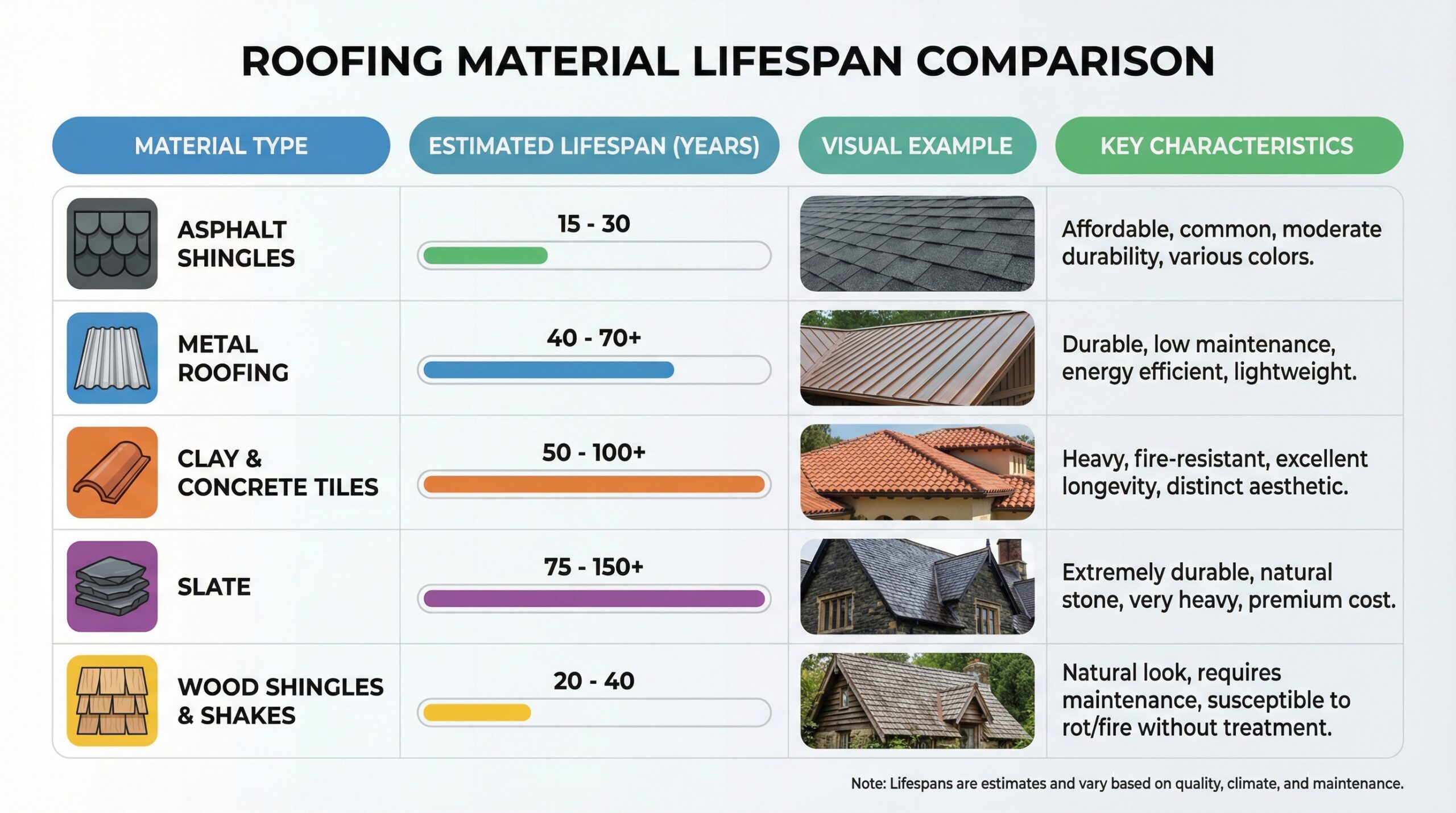
When you’re investing in a new roof, longevity matters more than almost anything else. The difference between a roof that lasts 20 years versus one that lasts 100 years can save you tens of thousands of dollars over your lifetime. According to recent industry data, slate roofing leads the pack with a lifespan of 100+ years, followed by clay tiles at 50-100 years, while standard asphalt shingles typically last just 15-20 years.
Quick Fact: The longest-lasting roofing material, slate, can outlast the shortest-lasting option by up to 8 times, making material choice crucial for long-term value.
Understanding how different materials perform over time helps you make a smarter investment for your home. Let’s explore which roofing materials offer the best longevity and what factors influence their lifespan.
The longest-lasting roofing champions
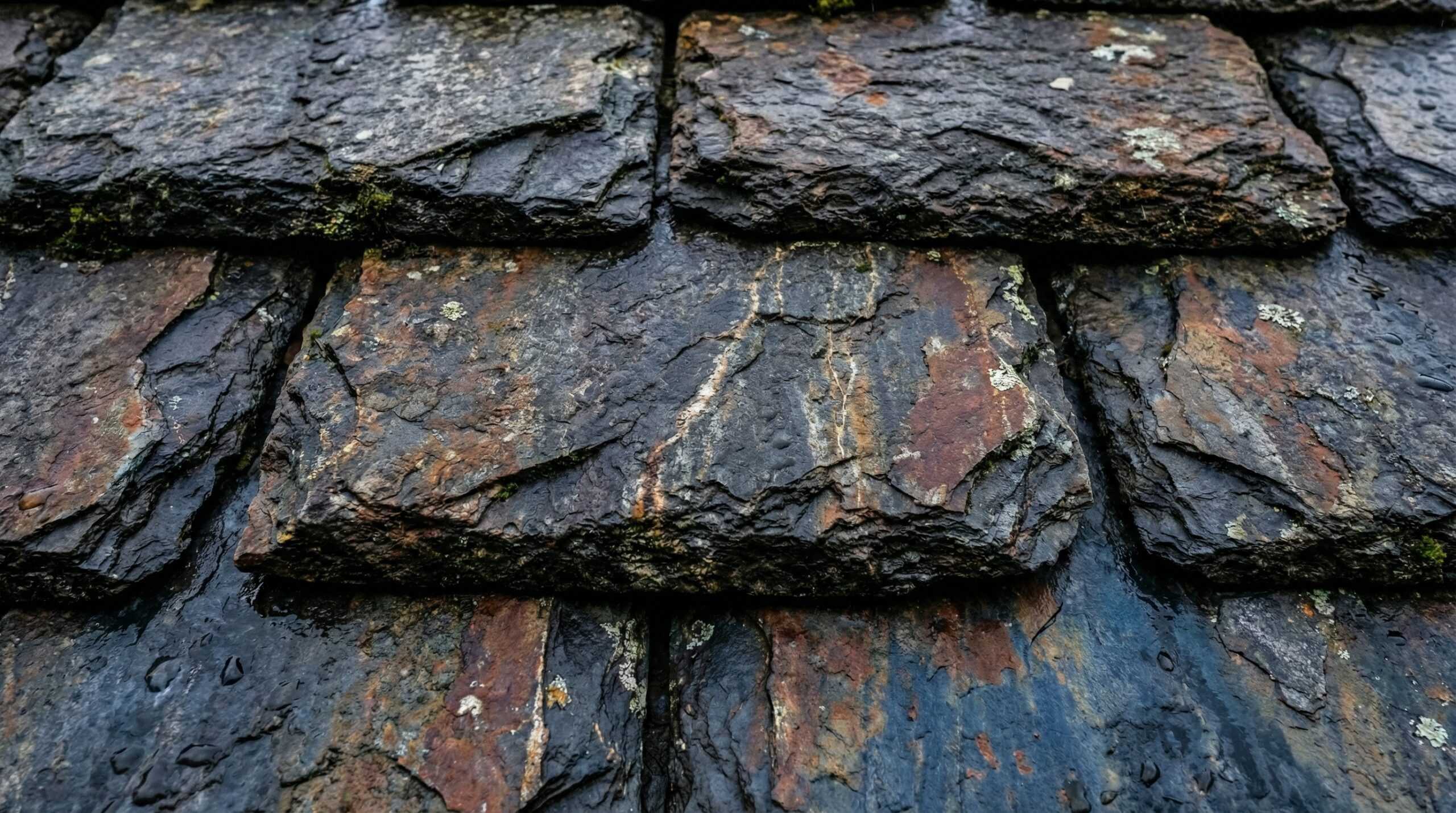
Slate roofing stands as the undisputed champion of roof longevity, with many installations lasting well over a century. This natural stone material resists weathering, fire, and pests better than any other roofing option. The secret lies in its non-porous surface that prevents water absorption and freeze-thaw damage.
Clay and concrete tiles claim the second position, offering 50-100 years of protection. Clay tiles, used for centuries in Mediterranean architecture, can actually exceed 100 years when properly maintained. Their heavy weight provides excellent wind resistance, while their fired ceramic composition creates an impervious barrier against the elements.
Metal roofing rounds out the top tier with lifespans of 40-70+ years. Modern metal roofs made from copper, steel, or aluminum offer excellent durability while being lighter than stone options. Copper roofing can last over 100 years, developing a protective patina that actually enhances its weather resistance over time.
Mid-range performers worth considering
Synthetic composite shingles represent a newer category that bridges the gap between affordability and longevity. These engineered materials typically last 40-50 years, offering better durability than traditional asphalt while maintaining easier installation and lower costs than premium materials. For a detailed comparison, explore our guide on composite vs asphalt shingles.
Wood shakes and shingles provide 30-50 years of service when properly maintained. Cedar and other naturally rot-resistant woods can perform well in the right climate, though they require regular maintenance to prevent moisture damage and pest infiltration.
Cost Insight: While premium materials cost more upfront, their cost-per-year can be significantly lower than cheaper options due to extended lifespans.
Architectural asphalt shingles offer improved longevity over basic options, typically lasting 25-30 years. These thicker, multi-layered shingles provide better wind resistance and weather protection than standard 3-tab varieties.
The budget-friendly but shorter-lived options
Standard 3-tab asphalt shingles remain the most economical choice, lasting 15-20 years on average. While they offer the lowest upfront cost, their shorter lifespan means more frequent replacements over your home’s lifetime.
Modern synthetic materials like rubber and plastic composites typically last 20-40 years. These materials offer good impact resistance and can mimic the appearance of more expensive options, though they haven’t been in use long enough to verify their longest-term performance claims. Learn more about impact-resistant roofing materials and their protective benefits.
Factors beyond material type significantly impact actual lifespan. Climate conditions, installation quality, and maintenance practices all play crucial roles. Proper ventilation, regular inspections, and prompt repairs can extend any roof’s life significantly. Understanding all the parts of a roof helps you maintain each component for maximum longevity.
Making the smart choice for your situation
Your choice should balance upfront costs with long-term value. If you plan to stay in your home for decades, investing in longer-lasting materials like metal or tile makes financial sense. The higher initial investment pays off through reduced replacement costs and increased home value. For more information on choosing durable options, check out our guide to the best roofing materials for durable roofs.
Consider your local climate when selecting materials. Areas with severe weather, high winds, or extreme temperature fluctuations may benefit from more durable options. Coastal regions might favor materials that resist salt corrosion, while areas with heavy snow loads need materials that can handle the weight.
Installation quality matters as much as material choice. Even the best materials will underperform with poor installation, while proper installation can maximize the lifespan of any roofing system. Working with experienced contractors ensures you get the full benefit of your material investment. Understanding what should be on a detailed roofing estimate helps you evaluate contractor proposals effectively.
The smartest roofing decision considers both immediate needs and long-term goals. While premium materials require higher upfront investment, their extended lifespans often provide better value over time. Understanding these longevity rankings helps you make an informed choice that protects your home and your budget for years to come.