
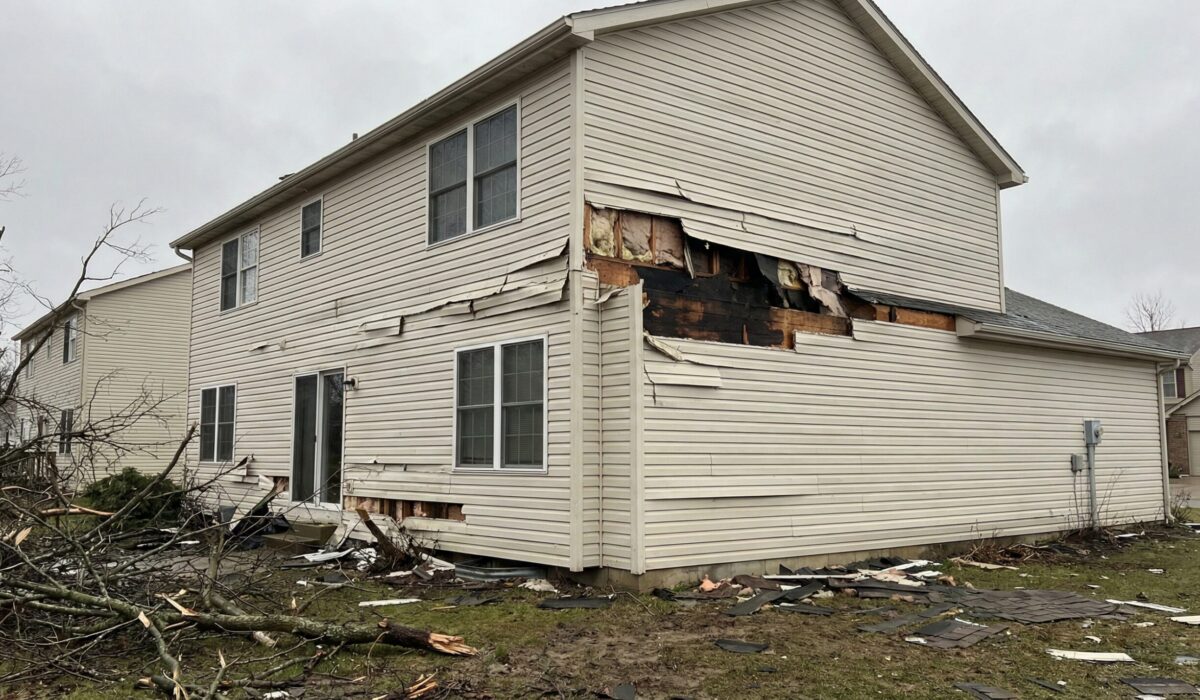
When severe weather strikes your area, your home’s siding takes the first hit from wind, hail, and flying debris. You might think your exterior looks fine after a storm, but hidden damage can lead to costly repairs and insurance headaches down the road. Recognizing storm damage early and properly documenting it for insurance claims can save you thousands of dollars and protect your home’s structural integrity.
Quick Fact: Most homeowners insurance policies require damage reporting within 48-72 hours of a storm event, making immediate inspection crucial for successful claims.
This guide walks you through identifying both obvious and subtle siding damage, understanding your insurance coverage, and working effectively with adjusters to get fair compensation for repairs.
Immediate safety assessment after storms
Your safety comes first when inspecting potential siding damage. Wait for daylight and complete weather clearance before heading outside to examine your home’s exterior. If you spot fallen power lines, structural shifts, or widespread damage, contact professionals immediately rather than attempting your own assessment.
Start your inspection from a safe distance, looking for obvious signs like missing panels, large holes, or hanging sections. These visible issues need immediate attention to prevent water infiltration and further deterioration. Take photos of any damage you can see from the ground before getting closer for detailed examination.
Professional contractors can safely evaluate situations that might be too dangerous for homeowners, especially when dealing with potential electrical hazards or unstable structural elements.
Identifying visible storm damage types
Different types of storms create distinct damage patterns on your siding, and recognizing these signatures helps you document issues properly for insurance claims.
Hail damage patterns
Hail creates unique impact marks that vary based on your siding material. On vinyl siding, look for cracks, holes, or areas that feel brittle to the touch. Fiber cement typically shows chips or visible cracks, while aluminum develops characteristic dimpling patterns.
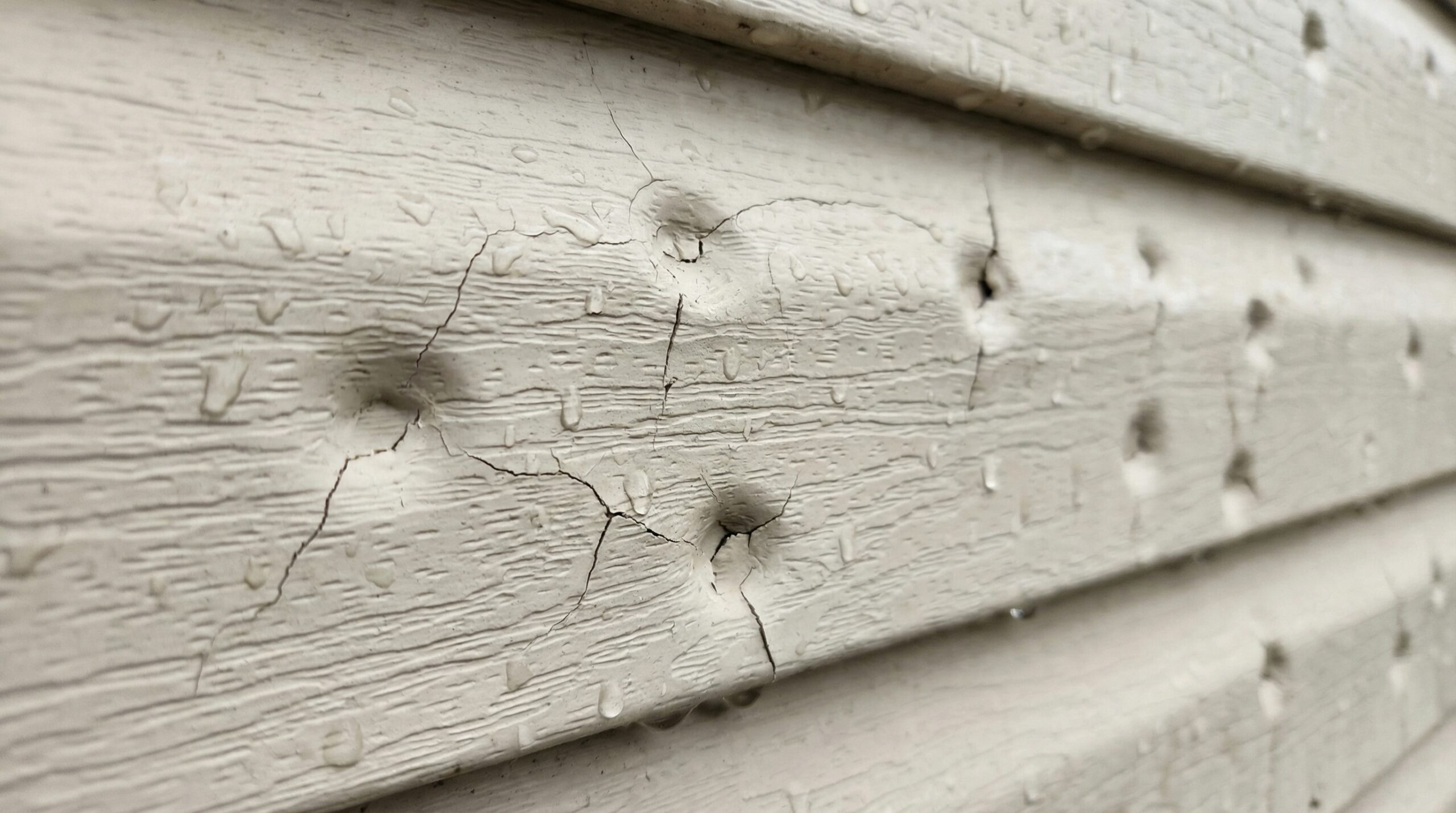
The size of hail impacts usually corresponds to the hailstone diameter, ranging from dime-sized dents to golf ball-sized holes that require immediate repair. Even small hail damage can compromise your siding’s protective capabilities, leading to moisture problems if left unaddressed. Understanding how long vinyl siding lasts can help you determine whether repair or replacement makes more sense after storm damage.
Wind and debris impact signs
High winds affect different siding materials in distinct ways. Vinyl panels may become loose, warped, or completely detached from their mounting points. Wood siding can splinter under pressure, while fiber cement may develop stress fractures.
Pay special attention to corners and edges where wind forces concentrate. Even minor lifting or separation can create entry points for wind-driven rain during future storms. Flying debris often leaves horizontal scratches, punctures, or web-like crack patterns radiating from impact points.
Hidden damage you might miss
Beyond obvious visible damage, storms often cause subtle issues that become major problems over time. These hidden concerns frequently show up as interior wall stains or musty odors weeks after the weather event has passed.
Loose fasteners and panel shifts
Storm forces can loosen nails and fasteners without visibly displacing siding panels. Test sections by gently pressing against them to detect unusual movement or clicking sounds. Panels that look normal might have compromised overlap protection, creating perfect entry points for moisture.
Shifted panels may appear properly aligned but have lost their weather-resistant seal. These alignment issues are particularly problematic because they allow wind-driven rain to penetrate behind your siding during subsequent storms. Learning to fix warped and buckling siding early can prevent more extensive damage.
Seal and caulking failures
Weather extremes frequently damage the weatherproofing around windows, doors, and material transitions. Inspect all caulked joints for cracking, shrinkage, or complete failure. Pay close attention to areas where different materials meet, as these joints are especially vulnerable to storm damage.
Important: Compromised seals allow moisture to penetrate behind your siding, potentially causing extensive structural damage before becoming visible inside your home.
Though these issues might seem minor, failed seals can lead to significant water damage, mold growth, and structural problems that cost far more to repair than simple recaulking. In fact, detecting wood rot behind siding early is crucial to preventing major structural issues.
Documenting damage for insurance success
Proper documentation forms the foundation of successful insurance claims and significantly improves your chances of fair settlement. Start documenting immediately after discovering damage, before making any temporary repairs.
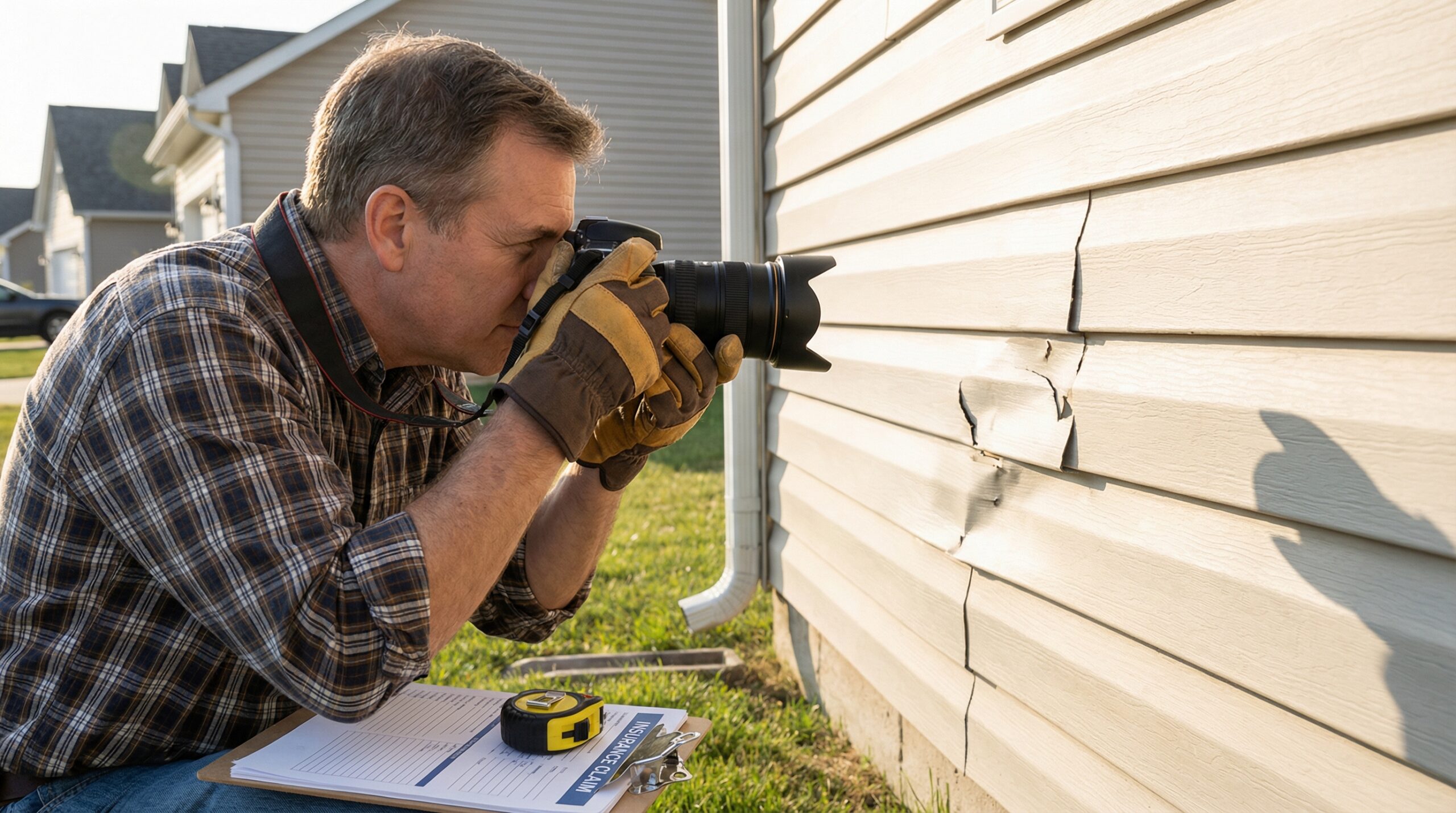
Take clear, dated photographs from multiple angles showing the full extent of damage. Create a detailed written inventory noting the location, type, and severity of each issue. Include close-up shots of specific damage areas as well as wider shots showing the overall affected zones.
Contact your insurance provider promptly, as many policies require reporting within specific timeframes. Keep copies of all communications, claim numbers, and documentation throughout the entire process. This organized approach demonstrates professionalism and helps prevent disputes during claim processing.
| Documentation Type | Purpose | Best Practices |
|---|---|---|
| Photos | Visual evidence | Multiple angles, good lighting, date stamps |
| Written inventory | Detailed damage list | Specific locations, damage descriptions |
| Insurance communication | Claim timeline | Save emails, record call details |
Working with insurance adjusters effectively
Understanding your insurance coverage helps you navigate the claims process more successfully. Most homeowner policies cover sudden, unexpected damage from covered perils like wind, hail, and falling objects, but coverage varies significantly between policies and providers.
Replacement Cost Value coverage pays the full cost to replace damaged materials with comparable new materials, while Actual Cash Value coverage deducts depreciation based on age. Many insurers now use percentage-based deductibles for weather events, typically ranging from 1-5% of your home’s insured value. Before meeting with adjusters, it’s helpful to understand siding warranties and what’s actually covered to ensure you’re getting fair compensation.
Pro Tip: Professional contractor assessments often identify damage that homeowners miss, leading to more complete insurance settlements and better long-term protection.
When working with adjusters, provide comprehensive documentation and consider having a professional contractor present during the inspection. Experienced contractors understand insurance requirements and can help ensure all damage gets properly evaluated and included in your claim settlement. Knowing when to pursue siding repair versus replacement can also maximize your insurance settlement value.
Working with Peak and Valley Roofing’s experienced team during your insurance inspection ensures nothing gets overlooked. Our professionals understand insurance requirements and can help document all storm-related damage for maximum coverage under your policy.
Contact our emergency response team at your earliest convenience to schedule a comprehensive post-storm inspection that protects both your home and your insurance interests.