

If you’ve noticed your upstairs rooms feel like a sauna in summer or your energy bills keep climbing, poor attic ventilation might be the culprit. The right roof vents can transform your home’s comfort while protecting your roof from costly damage caused by trapped heat and moisture.
There are several main types of roof vents: ridge vents (installed along the roof peak), box vents (static square vents), turbine vents (spinning wind-powered units), power vents (electrically powered), solar vents (solar-powered), and soffit vents (intake vents under the eaves). Each type serves a specific purpose in creating proper airflow through your attic space.
Quick Fact: A properly ventilated attic can reduce cooling costs by up to 10-15% and significantly extend your roof’s lifespan by preventing moisture damage and ice dams.
As a family-owned roofing company serving Rocky River, Cleveland, and Northeast Ohio, Peak and Valley Roofing has helped countless homeowners choose the right ventilation systems for their specific needs. This guide will walk you through each type of roof vent, explain how they work together, and help you determine the best combination for your home’s design and Northeast Ohio’s climate.
Understanding how roof ventilation works
Your attic ventilation system works like your home’s respiratory system. Fresh air enters through intake vents (usually soffit vents under your eaves), flows through the attic space, and exits through exhaust vents positioned higher on your roof. This continuous airflow removes trapped heat in summer and moisture year-round.
The key to effective ventilation is balance. You need roughly equal amounts of intake and exhaust ventilation, measured in Net Free Area (NFA). Think of NFA as the actual open space air can flow through, minus any screens or louvers that might restrict airflow.
Roof vents fall into two categories: active vents that use mechanical assistance (like fans or wind-powered turbines) to move air, and passive vents that rely purely on natural convection and wind pressure. Both can be effective when properly sized and installed, but active systems generally provide more consistent airflow.
Main types of roof exhaust vents
Ridge vents
Ridge vents run along your roof’s peak and are often the most popular choice for good reason. They’re virtually invisible from the ground and provide even exhaust along your entire ridge line. Baffled ridge vents include internal channels that help direct airflow and prevent weather infiltration, making them more effective than basic ridge vents.
These work exceptionally well with continuous soffit intake vents because they create a natural convection current from the lowest point of your roof to the highest. However, ridge vents require a sufficiently long ridge line to be effective and may not work well on complex hip roofs with limited ridge space.
Box vents and static vents
Box vents (also called static vents, turtle vents, or louver vents) are square or rectangular units installed near your roof’s ridge. They’re purely passive, relying on heat rising to push hot air out of your attic. While they’re simple and inexpensive, you typically need multiple units to match the effectiveness of a single ridge vent system.
These vents work best when ridge vents aren’t feasible due to short ridge lines or complex roof designs. The main drawbacks are their visibility and the need for multiple roof penetrations, which can increase leak potential if not properly installed.
Turbine vents
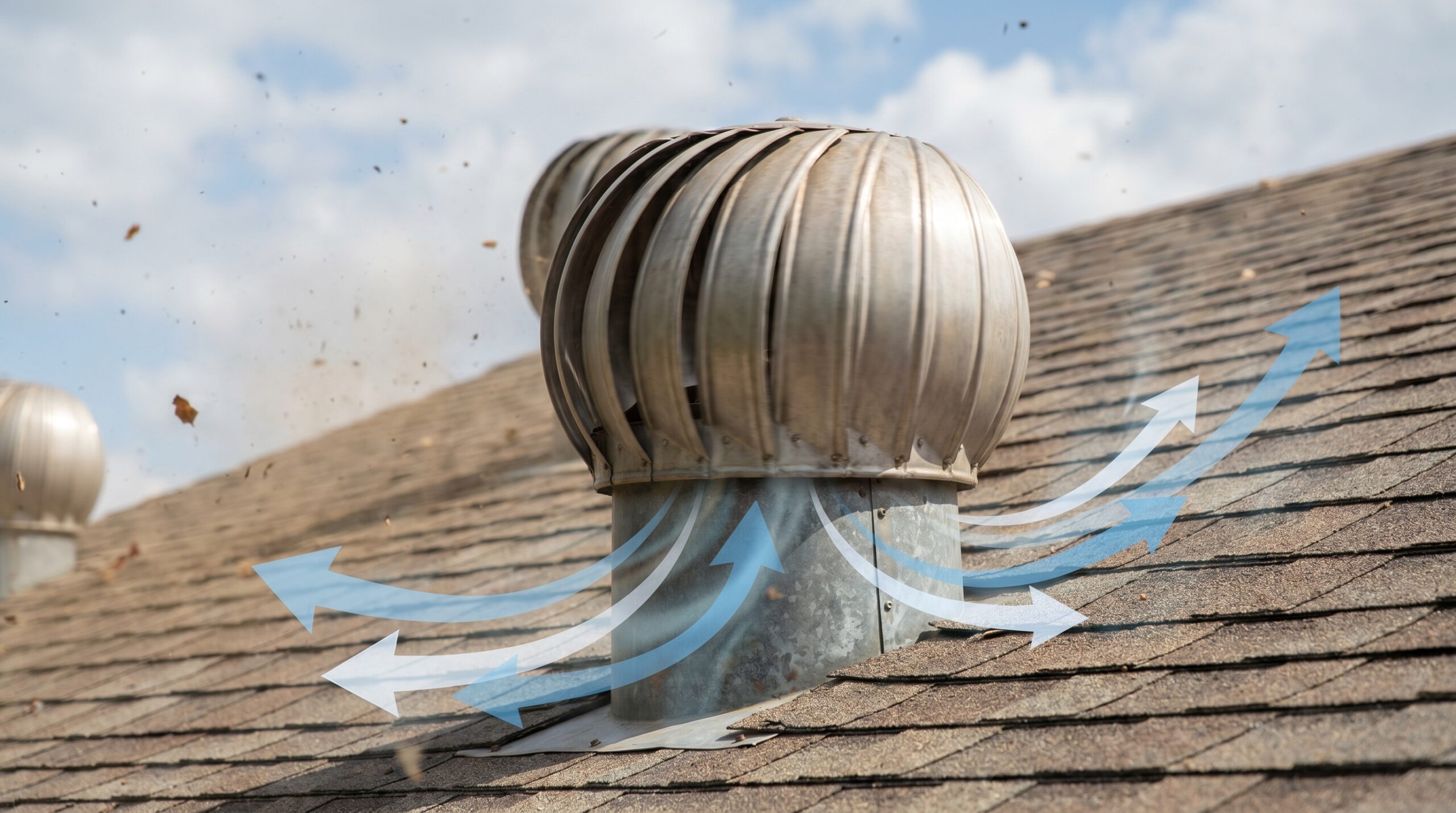
Turbine vents (nicknamed “whirlybirds”) use wind power to spin and create suction that pulls hot air from your attic. When properly installed, they can move air through your attic 10-12 times per hour. Even on calm days, natural convection keeps them working, though less efficiently.
These vents excel in consistently windy climates but can be noticeable from the ground and may create some noise during high winds. A common myth suggests they leak during storms, but properly installed turbine vents are designed to shed water effectively.
Power and solar vents
Power vents use electric fans to actively exhaust hot air from your attic. They’re highly effective in extremely hot or humid climates where passive ventilation isn’t sufficient. However, they require electrical connections, ongoing energy costs, and eventual motor replacement.
Solar-powered vents offer similar benefits without the electrical costs, using solar panels to power the exhaust fan. The trade-off is intermittent operation when sunlight is limited, and they typically cost more upfront than standard power vents.
Important Note: Power vents can actually pull conditioned air from your living space if your attic lacks sufficient intake ventilation, potentially increasing energy costs rather than reducing them.
Types of roof intake vents
Proper intake ventilation is just as crucial as exhaust vents, yet it’s often overlooked. Learn more about attic ventilation systems. Without adequate air coming in, your exhaust vents can’t work effectively.
Continuous soffit vents are the gold standard for intake ventilation. They run along your entire eave line, providing consistent airflow that pairs perfectly with ridge vents. The key is ensuring they’re not blocked by insulation or paint, which commonly happens during home improvements.
Individual soffit vents are spaced units that work similarly but provide less total intake area. They’re easier to retrofit in some situations but generally less effective than continuous systems.
For homes without adequate soffits, over-fascia intake vents or drip-edge vents can provide alternative intake options. These are installed along the roof edge and work well with various exhaust vent types.
Choosing the right vent system for your Cleveland area home
The best vent combination depends on your specific situation. Here’s how to approach the decision:
Consider your roof design first. Homes with long, straight ridge lines are perfect candidates for ridge vent systems paired with continuous soffit intake. Hip roofs or homes with short ridges may need multiple box vents or turbine vents instead.
Factor in Northeast Ohio’s climate. Our region experiences hot, humid summers and cold winters with potential for ice dams. This makes proper moisture management crucial, especially during Cleveland’s snowy months. Baffled ridge vents with adequate intake help prevent ice dams while managing summer heat effectively.
Balance your intake and exhaust. A good rule of thumb is providing 1 square foot of ventilation for every 150 square feet of attic floor space, split roughly equally between intake and exhaust. When in doubt, slightly favor intake over exhaust.
Consider long-term costs. While ridge vents cost more initially, they’re virtually maintenance-free. Power vents are highly effective but require ongoing electrical costs and eventual motor replacement.
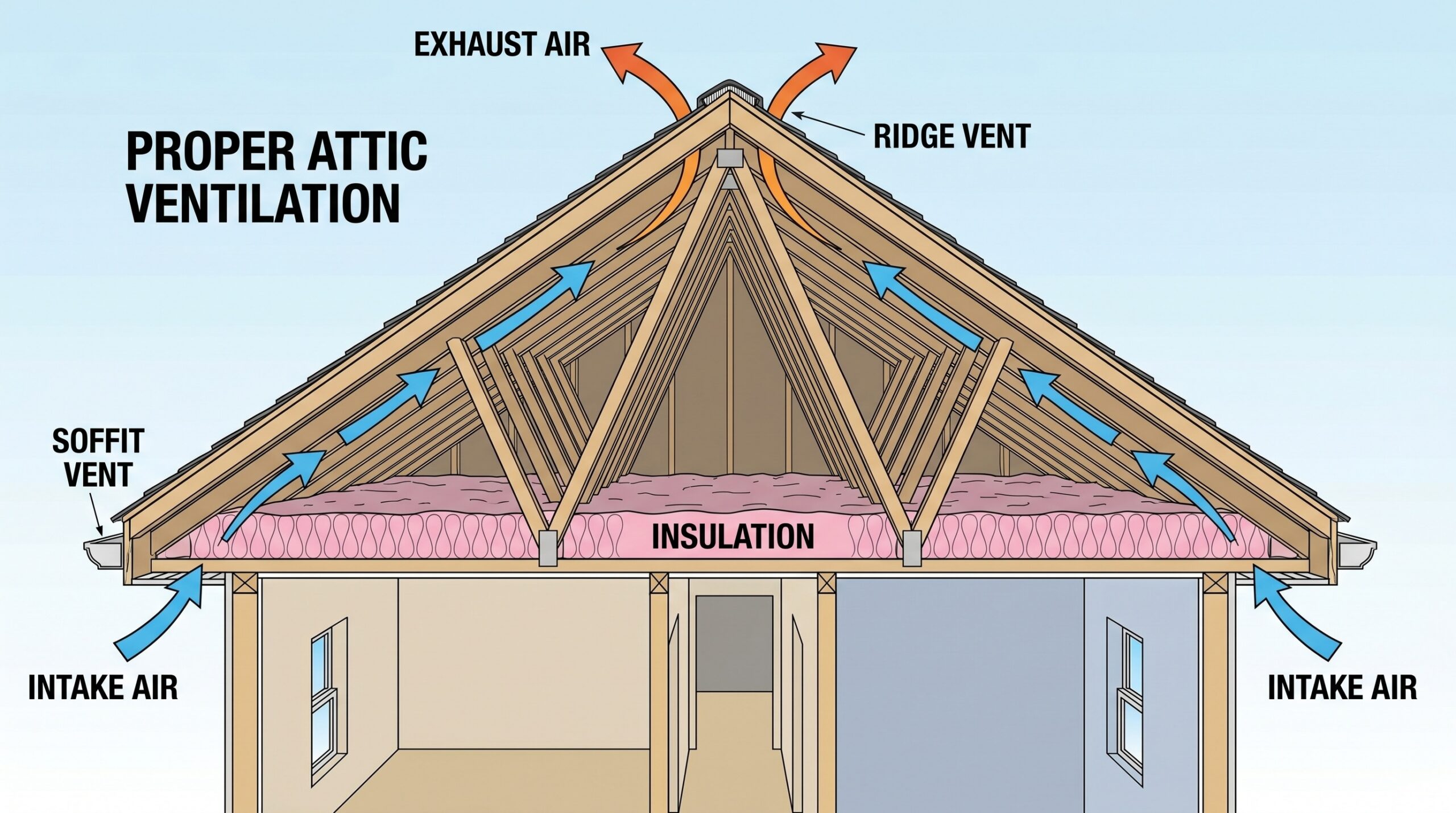
Most Cleveland area homes benefit from a ridge vent and continuous soffit combination as the foundation, supplemented by additional vents if needed. This creates the most natural and effective airflow pattern while maintaining your roof’s appearance and handling our variable Northeast Ohio weather conditions.
The right roof ventilation system protects your home’s comfort, energy efficiency, and structural integrity. While the initial investment varies by vent type, proper ventilation pays dividends through lower energy bills, extended roof life, and improved indoor comfort. When choosing your system, consider your roof design, Northeast Ohio’s climate challenges, and long-term maintenance preferences to find the combination that works best for your specific situation.