
You’ve probably never heard of a roof boot until water started dripping into your bathroom or kitchen. A roof boot is a type of flashing that seals around pipes coming through your roof, preventing water from following the pipe down into your home. Without this crucial component, you’d have guaranteed leaks wherever pipes penetrate your roof.
Quick fact: Most roof boots are made from neoprene rubber and typically last about 10 years before needing replacement, but Northeast Ohio’s UV exposure and freeze-thaw cycles can cause them to crack and fail sooner.
The most common roof leaks we see at Peak and Valley Roofing involve failed roof boots. When these seals crack or deteriorate, water runs straight down the pipe into closets, bathrooms, and kitchens during Cleveland’s frequent rainstorms. Understanding what roof boots are and how they work helps you spot problems early and avoid costly water damage.
This guide covers what roof boots are, why they fail, repair versus replacement options, typical costs, and maintenance tips to keep your Northeast Ohio home dry.
What is a roof boot and where do you find them
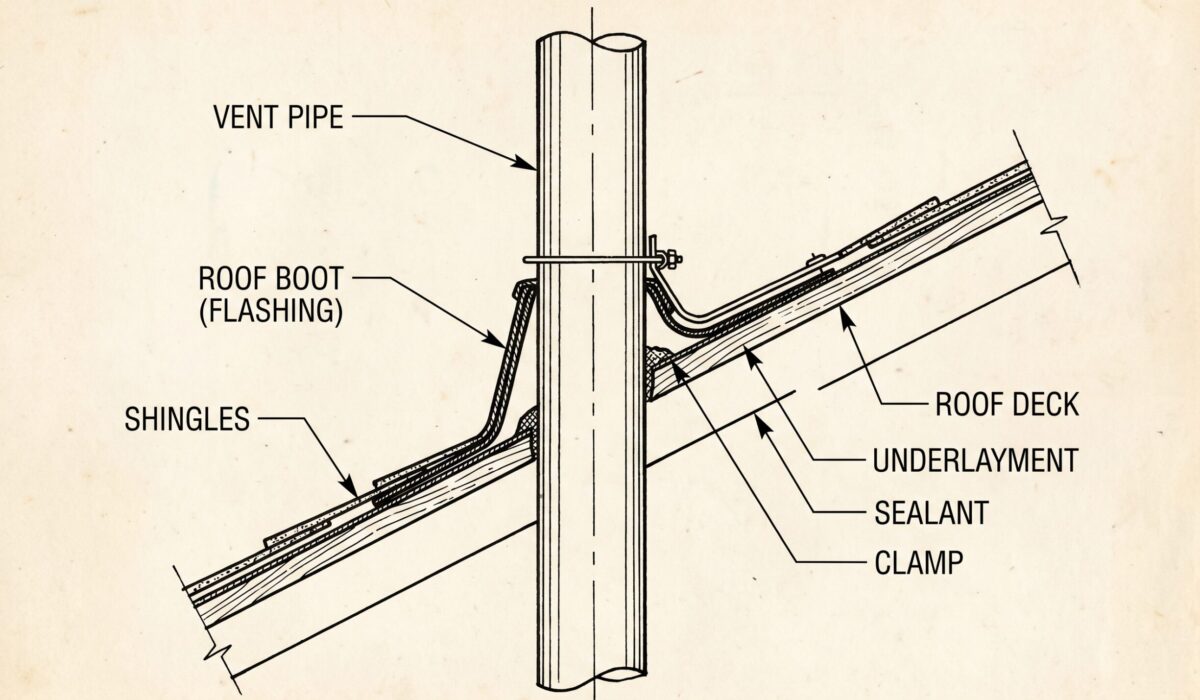
A roof boot, also called a pipe boot or vent boot, is flashing that creates a watertight seal around pipes protruding through your roof. These pipes serve essential functions like plumbing ventilation, exhaust systems, and electrical connections.
The boot consists of two main parts. The flange is the flat base that slides under shingles above and over shingles below, directing water away from the penetration. The collar or sleeve fits snugly around the pipe itself, creating the critical seal that keeps water out.
You’ll find roof boots wherever pipes exit your roof. Most Cleveland-area homes have them around plumbing vent pipes in bathrooms and kitchens, exhaust fan vents, and sometimes electrical mast heads. The collar flexes with temperature changes while maintaining a tight seal against the pipe.
Common roof boot materials include neoprene rubber, lead, copper, and plastic. Neoprene boots are most popular because they’re affordable and flexible, though they typically need replacement every 10 years due to UV degradation and Northeast Ohio’s harsh weather conditions.
Why roof boots are essential for preventing water damage
Without roof boots, water would flow directly down pipes into your home every time it rains. The boot creates a barrier that forces water to flow over the flange and away from the penetration point instead of following the pipe downward.
When roof boots fail, the results are immediate and costly. Water follows gravity straight down the pipe, often appearing as ceiling stains, wall damage, or puddles in closets and bathrooms. This moisture creates perfect conditions for mold growth and can rot wooden framing over time.
Important: A single failed roof boot can cause thousands of dollars in water damage to drywall, insulation, and structural components beneath your roof.
The critical junction is where the collar meets the pipe. This seal must remain flexible enough to accommodate thermal expansion while staying watertight. When this junction fails due to cracking or separation, you have a direct pathway for water infiltration.
Even small cracks allow significant water entry during Northeast Ohio’s heavy storms and snow melts. By the time you notice interior damage, the problem has often existed for months, potentially affecting insulation, ceiling materials, and even electrical systems.
Common signs your roof boot is failing or leaking
Indoor signs often appear first since water follows pipes directly into living spaces. Look for water stains on ceilings near bathrooms and kitchens, especially circular or oval patterns around where pipes would be located above. Musty odors in closets or cabinets near plumbing fixtures can indicate hidden moisture from boot leaks.
Peeling paint or wallpaper near plumbing areas suggests ongoing moisture problems. You might notice dampness in walls or hear dripping sounds during rainstorms that seem to come from inside walls rather than obvious roof areas.
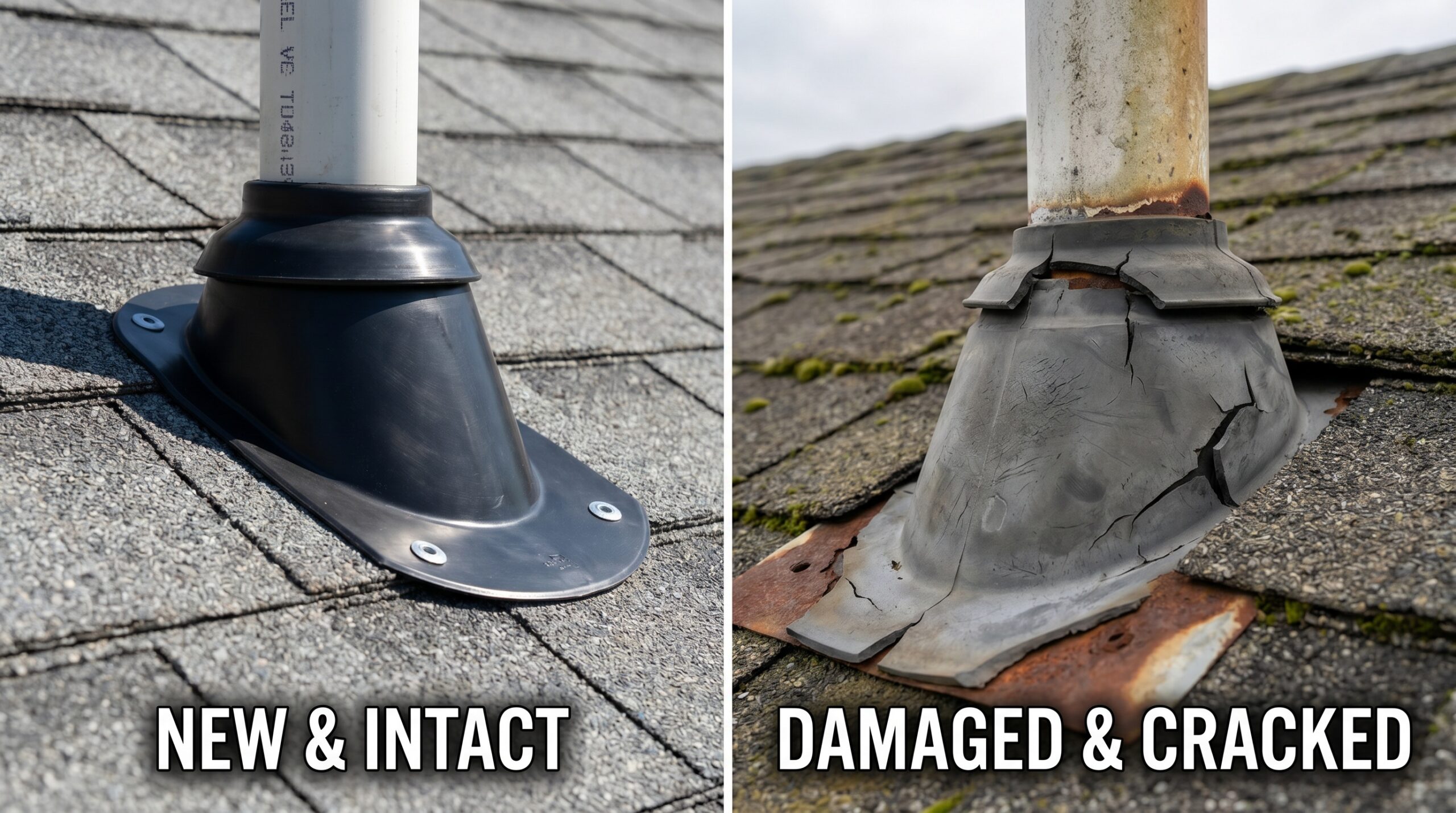
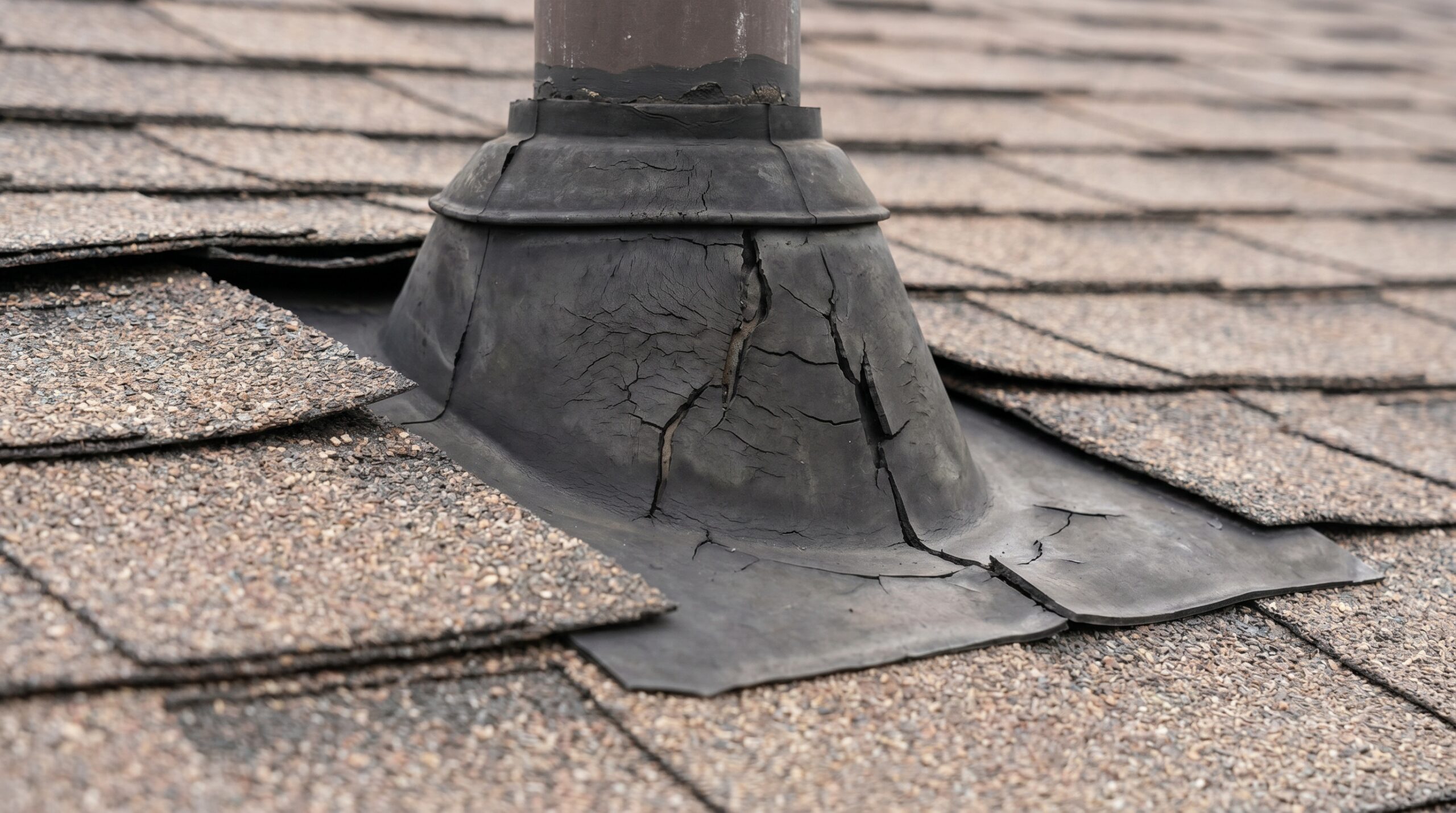
From outside, visible cracks in the boot collar are the most obvious warning sign. The rubber may appear dried, brittle, or separated from the pipe. UV damage and Northeast Ohio’s freeze-thaw cycles cause neoprene to crack and lose flexibility over time, creating gaps that allow water entry.
Other exterior signs include missing or damaged shingles around the boot, gaps between the flange and surrounding materials, or animal damage from squirrels or birds. Storm damage from Cleveland’s severe weather can also dislodge boots or create separations that weren’t previously visible.
If you can safely view your roof from the ground or with binoculars, look for any obvious deterioration around vent pipes. However, avoid walking on steep or unsafe roofs and call a professional for thorough inspection.
Roof boot repair options and replacement process
You have two main repair approaches depending on the boot’s condition. For boots with minor collar damage but intact flanges, installing a rubber collar sleeve over the existing boot can extend its life by about 10 years. This repair costs less and requires minimal shingle removal.
Full replacement becomes necessary when the entire boot has deteriorated or the flange is damaged. Professional replacement involves removing surrounding shingles, extracting the old boot, installing a new one, and replacing or reinstalling shingles properly.
The replacement process requires careful attention to shingle layering and proper flashing installation. Improper installation can create new leak points or damage surrounding materials. Most Rocky River and Cleveland-area homeowners should hire experienced roofers for this work due to safety concerns and the precision required for watertight installation.
Safety note: Roof work involves significant fall risks, especially around penetrations where footing can be unstable. Professional roofers have proper equipment and experience to work safely at height.
Material choice affects longevity and cost. While neoprene boots cost less initially, lead or copper boots last much longer in Northeast Ohio’s harsh climate with intense UV exposure and freeze-thaw cycles. Discuss options with your contractor based on your roof’s age and local weather conditions.
Cost factors and maintenance for roof boot longevity
Roof boot replacement typically costs between $250 and $550 per boot, though prices vary based on several factors. Roof pitch and height affect labor time and safety requirements. Multiple boots often qualify for bundled pricing, reducing per-unit costs.
| Factor | Impact on Cost |
|---|---|
| Roof pitch | Steeper roofs increase labor time |
| Access difficulty | Hard-to-reach areas cost more |
| Material choice | Lead/copper cost more than neoprene |
| Shingle condition | Damaged shingles need replacement |
| Emergency service | After-hours calls increase pricing |
Neoprene boots typically last 10 years, while lead or copper boots can last 20-30 years or more. Northeast Ohio’s climate affects lifespan significantly. Intense UV exposure, freeze-thaw cycles, and severe weather accelerate deterioration.
Regular roof maintenance helps catch boot problems before they cause interior damage. Annual inspections allow contractors to identify early signs of wear and plan replacements during routine maintenance rather than emergency situations.
Proactive boot replacement during scheduled roof work costs less than emergency repairs after leaks develop. When planning roof replacement, always include new boots in the scope since surrounding shingles will already be removed.
Professional maintenance inspections examine boot condition along with other roof components, helping you budget for replacements and avoid surprise leaks. This preventive approach protects your Cleveland-area home and maximizes your roof system’s overall lifespan.
Understanding roof boots helps you maintain your Northeast Ohio home’s weather protection and avoid costly water damage. These small but critical components deserve attention during regular roof maintenance to keep your home dry and comfortable for years to come.