

Yes, a drip edge is absolutely necessary on your Cleveland area roof. It protects your fascia and roof decking from water damage and is required by the International Residential Code for asphalt shingle roofs. Without it, you’re looking at potential fascia rot, deck deterioration, leaks behind gutters, and failed home inspections—especially critical in Northeast Ohio’s climate with frequent rain and snow cycles.
A drip edge is a thin piece of corrosion-resistant metal flashing installed at your roof’s edges. Think of it as a rain gutter for your roof edge—it guides water away from vulnerable wood components and into your gutters where it belongs.
Key Fact: According to IRC Section R905.2.8.5, drip edge must be installed at both eaves and rakes of shingle roofs, with specific dimensional requirements for proper water management.
Missing or improperly installed drip edge leads to serious problems in Cleveland’s wet climate. Water can wick back under your shingles, rot your fascia board, damage your roof decking, and eventually cause leaks inside your home. Some unscrupulous contractors skip drip edge to lower their bids, but this shortcut will cost you thousands in repairs later—especially when dealing with Northeast Ohio’s freeze-thaw cycles that can worsen any existing water damage.
This guide covers what drip edge does, why it’s required by code, what happens when you skip it, and your options if your current roof lacks proper drip edge protection.
What does a drip edge do on your roof?
A drip edge serves as your roof’s first line of defense against water damage at the edges. Its primary job is directing water flow away from vulnerable areas and into your gutters—particularly important in Rocky River and the greater Cleveland area where heavy rains and snowmelt can overwhelm inadequate drainage systems.
When rain hits your roof, water naturally wants to follow the path of least resistance. Without a drip edge, that water can curl back under your shingles through capillary action—imagine how water creeps up a paper towel. The drip edge creates a clean break point, forcing water to drip away from your home’s structure.
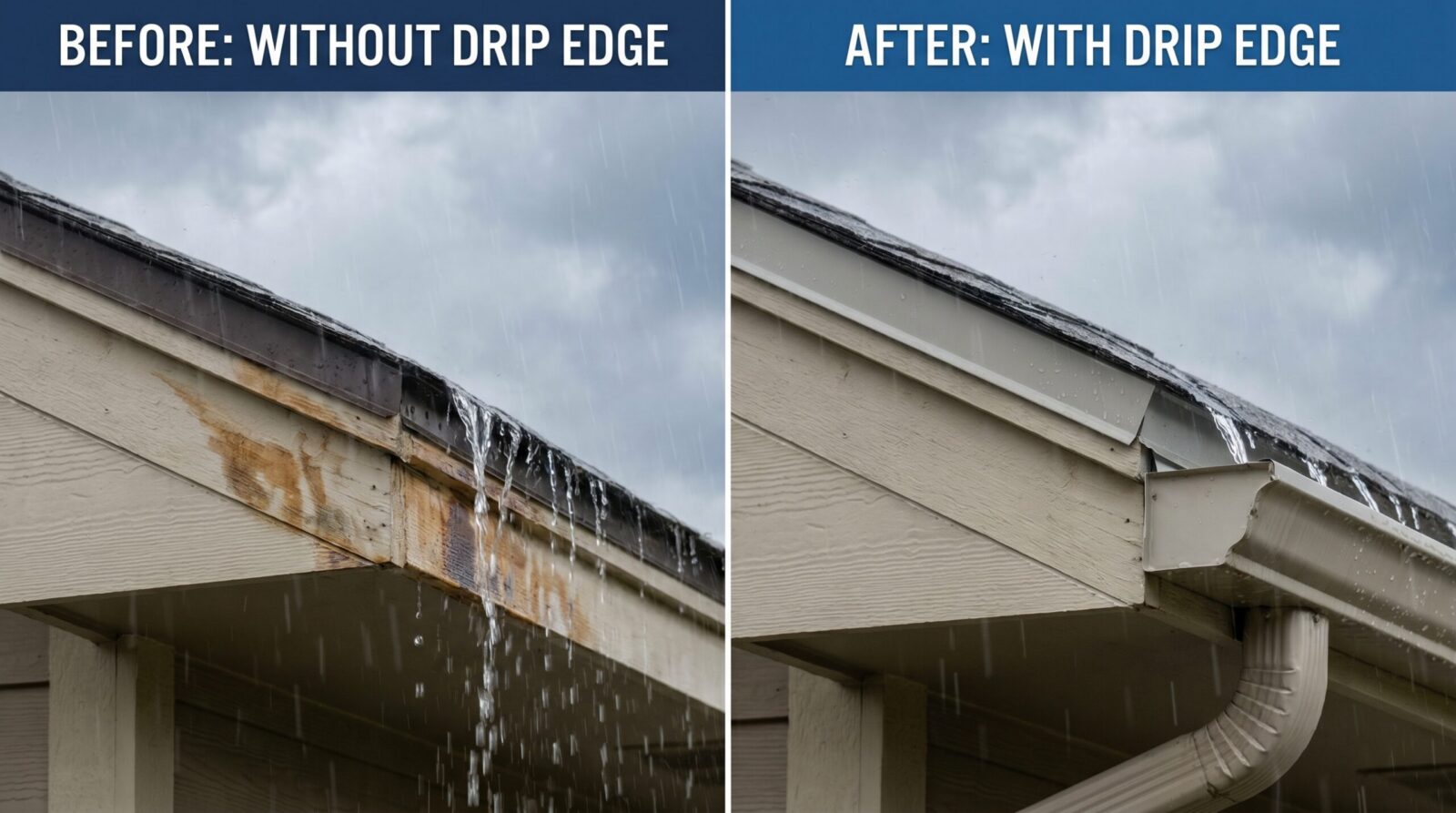
The metal flashing also protects against wind-driven rain that might otherwise penetrate gaps at your roof’s edge. During Northeast Ohio winters, it helps prevent ice dam issues by providing a clear path for melting snow to exit your roof system—a common concern for homeowners in the Cleveland metro area.
Beyond water management, drip edge gives your roof a finished, professional appearance. It creates clean lines along your roofline and helps support the edges of your shingles, preventing them from sagging or curling over time.
Building code requirements for drip edge
The International Residential Code specifically mandates drip edge installation on asphalt shingle roofs. According to jaspector.com, the 2026 IRC requires drip edge flashing at both eaves and rakes with specific installation sequences and dimensional requirements.
Your local building department may use different IRC editions or have additional amendments, so always verify requirements in your area. In Northeast Ohio, most municipalities follow IRC standards closely. The code specifies that drip edge must extend at least 2 inches onto your roof sheathing and project at least 1/4 inch beyond the fascia board or sheathing edge.
Installation Sequence Matters: At eaves, drip edge goes under the underlayment. At rakes, it goes over the underlayment. This sequence ensures proper water shedding in both locations.
Major shingle manufacturers also require drip edge in their installation guidelines. bertroofing.com notes that manufacturers like Owens Corning and GAF specify drip edge use, and skipping it can void your warranty coverage—something Peak and Valley Roofing always ensures is properly addressed during our installations.
Adjacent drip edge sections must overlap by at least 2 inches, and the material must be minimum 26-gauge galvanized steel, aluminum, or equivalent corrosion-resistant metal.
What happens when you skip drip edge?
Skipping drip edge creates a cascade of expensive problems that start small but grow into major headaches—particularly problematic in Cleveland’s climate where moisture issues can be compounded by seasonal temperature swings. Water running off your roof edge without proper guidance will find its way behind your gutters and onto your fascia board.
Fascia rot is often the first visible sign of missing drip edge. You’ll notice water stains, peeling paint, or soft spots in the wood. Once water penetrates the fascia, it can reach your roof decking, causing structural damage that’s expensive to repair.
The problems don’t stop at wood rot. Water that gets behind your gutters can leak into your soffits, attic space, or even your home’s interior walls. This creates perfect conditions for mold growth and can damage insulation, drywall, and electrical components—issues we frequently see during our storm damage assessments in the Rocky River and Cleveland area.

During home inspections, missing or improperly installed drip edge is a red flag that can delay or derail a sale. Inspectors know that this seemingly small detail often indicates other roofing problems or shortcuts taken during installation.
The financial impact adds up quickly. What starts as a relatively inexpensive drip edge installation can balloon into thousands of dollars in fascia replacement, deck repair, and water damage remediation.
Solutions for roofs without proper drip edge
If your roof lacks drip edge or has an improper installation, you have several options depending on your situation and budget. The best approach depends on your roof’s age, condition, and whether you’re planning other roofing work.
For newer roofs in good condition, you might be able to add drip edge without removing all your shingles. This delicate process involves carefully lifting shingle edges, removing nails, and sliding new drip edge into place. However, this work requires professional expertise to avoid damaging shingles or voiding warranties.
| Solution | Best For | Typical Cost Range | Complexity |
|---|---|---|---|
| Retrofit installation | Newer roofs | $3-8 per linear foot | Moderate |
| Full replacement | During re-roofing | $5-12 per linear foot | Low |
| Repair existing | Minor damage | $2-5 per linear foot | Low |
If you’re planning a roof replacement anyway, that’s the ideal time to ensure proper drip edge installation. Make sure your contractor includes drip edge in their written estimate and specifies the type and dimensions they’ll use.
Contractor Red Flag: Be wary of any roofer who suggests skipping drip edge to lower costs. This indicates they’re cutting corners that will cost you more in the long run.
For older homes with pre-bent aluminum fascia or traditional rake molding, you might already have adequate edge protection. Have a qualified roofer assess whether your existing setup meets current standards or needs upgrading.
When you’re ready to address drip edge issues on your Cleveland area roof, Peak and Valley Roofing can help you understand your options and ensure proper installation that protects your home for years to come. As a family-owned company specializing in insurance restoration work throughout Northeast Ohio, we understand the importance of proper drip edge installation—especially when dealing with storm damage claims. Remember, investing in proper drip edge now prevents much more expensive repairs down the road, making it one of the smartest decisions you can make for your roof’s longevity.