

You’ve probably looked up at your roof and noticed various metal pieces – those shiny strips along the edges, spinning vents, metal around the chimney, or sleek panels covering the entire surface. If you’ve ever wondered what these metal things on roofs are called, you’re asking the right question.
The metal components on roofs include drip edge (the strips along roof edges), flashing (metal around chimneys and walls), ridge caps (covering roof peaks), various vents including spinning turbine vents, gutters and downspouts, snow guards, and metal roofing panels with their fasteners and trim pieces.
Quick Fact: Most roof leaks occur at metal component connections, making proper identification and maintenance of these parts crucial for preventing water damage in Northeast Ohio’s variable weather conditions.
Each metal component serves a specific purpose in protecting your home from water damage, improving ventilation, or managing snow and ice – particularly important considerations for Cleveland-area homes that face harsh winters and severe storms. Understanding what these parts are called helps you communicate effectively with contractors and maintain your roof properly.
Metal components along roof edges
The perimeter of your roof features several critical metal components that work together to manage water flow and protect the underlying structure.
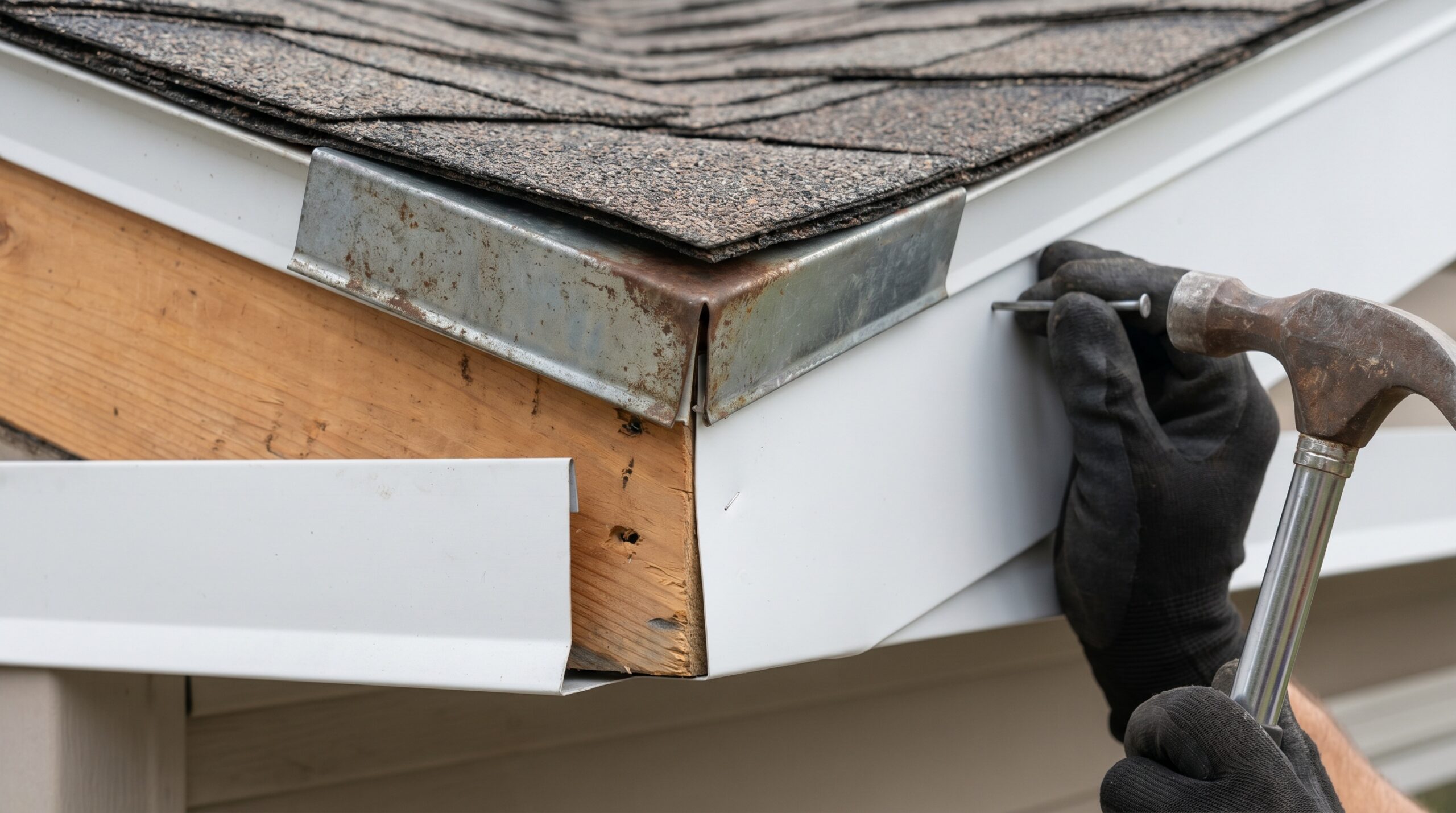
Drip edge is the L-shaped metal strip installed along the roof’s bottom and side edges. You’ll see it as a clean, straight line where your roof meets the gutters or overhangs. This component directs water away from the fascia boards and into gutters, preventing wood rot and water damage behind your gutters, and it works together with the underlying roof sheathing to protect the structure.
Fascia flashing wraps around the wooden fascia boards, providing additional protection from moisture. It’s often confused with drip edge, but fascia flashing specifically covers the vertical face of the fascia board, while drip edge handles the roof edge itself.
Eave trim and rake trim finish the roof edges on metal roofing systems. Eave trim runs horizontally along the bottom edge, while rake trim covers the sloped edges at gables. These pieces give metal roofs their clean, finished appearance while sealing panel edges.
Metal around chimneys, walls, and openings
Anywhere your roof meets a vertical surface or has an opening, you’ll find specialized metal components designed to create watertight seals around roof penetrations.
Step flashing consists of individual L-shaped pieces installed where the roof meets a vertical wall. Each piece overlaps the next, creating a stepped pattern that channels water down and away from the joint. You’ll typically see this where dormers meet the main roof or where the roof connects to exterior walls.
Chimney flashing is more complex, involving different types of base flashing around the chimney bottom and counter-flashing that’s embedded into the chimney mortar joints. The counter-flashing overlaps the base flashing, creating a double barrier against water infiltration.
Valley flashing protects the V-shaped areas where two roof planes meet, and a roof cricket may be installed behind chimneys to divert water around them. This metal channeling directs heavy water flow from both roof sections safely down to the gutters. Valley flashing experiences high water volume, making it one of the most critical leak-prevention components, especially during Northeast Ohio’s heavy spring rains and winter snow melts.
Important Note: Flashing failures account for approximately 95% of roof leaks, making these metal components among the most important on your entire roof system – particularly crucial for Cleveland-area homes dealing with freeze-thaw cycles.
Roof vents and spinning metal components
The various metal vents on your roof serve different ventilation purposes, and many homeowners specifically wonder about the spinning ones.
Turbine vents are those spinning metal things you see on roofs, and understanding the types of roof vents helps you choose the right ventilation for your home. They use wind power to create suction that pulls hot air from your attic. The spinning action increases their effectiveness compared to static vents, and they’re particularly noticeable because of their movement and dome-like shape.
Ridge vents run along the peak of your roof, often covered with metal caps that match your roofing material. These provide continuous ventilation along the entire ridge line, working with soffit vents to create proper airflow through your attic ventilation system.
Static box vents are square or rectangular metal vents that don’t move but provide passive ventilation. You’ll see these scattered across roof surfaces, typically in areas where ridge vents aren’t practical.
Powered exhaust fans are larger, electrically operated vents with metal housings. Some are solar-powered, featuring metal panels alongside the fan housing.
Metal for water management and weather protection
Several metal components specifically handle water drainage and weather-related challenges that Northeast Ohio homes face.
Gutters and downspouts form the primary water collection and drainage system. Modern gutters are typically aluminum or steel, with various profiles and sizes. Gutter guards are metal screens or covers that prevent debris buildup while allowing water flow – particularly useful in Rocky River and Cleveland areas with mature trees.
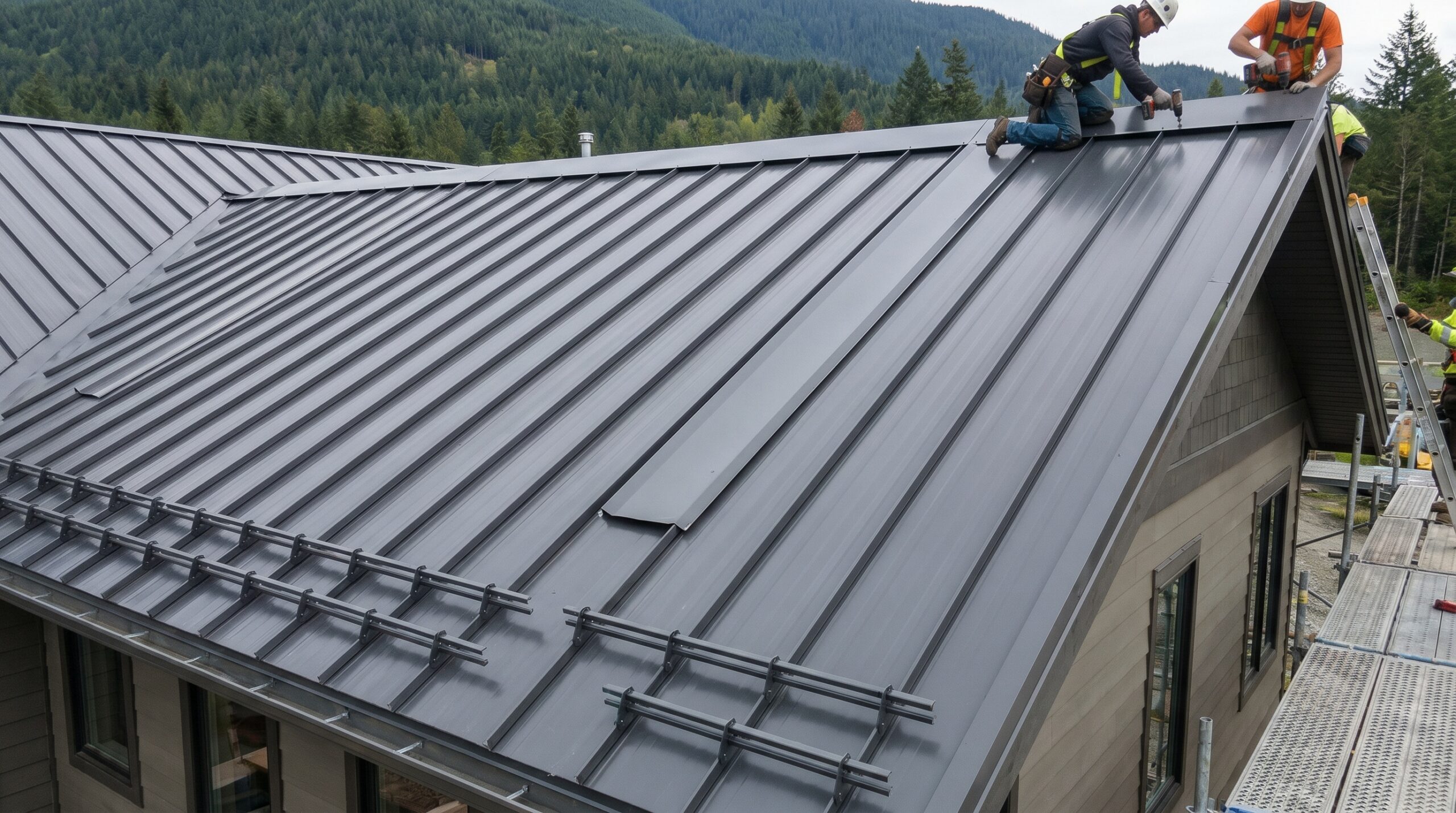
Snow guards are small metal devices installed on steep roofs to prevent sudden snow slides. They hold snow in place, allowing it to melt gradually rather than sliding off in dangerous chunks. Snow rails serve a similar purpose but run in continuous lines across the roof. These are especially important for Northeast Ohio homes given our significant snowfall and ice formation.
Ice and water barriers aren’t visible from outside, but these rubberized membranes with metal backing protect vulnerable areas like eaves and valleys from ice dam damage – a common concern for Cleveland-area homeowners during harsh winters.
| Component | Location | Primary Function | Common Issues |
|---|---|---|---|
| Drip Edge | Roof perimeter | Water direction | Missing sections, rust |
| Flashing | Joints and penetrations | Leak prevention | Sealant failure, corrosion |
| Turbine Vents | Roof surface | Active ventilation | Bearing wear, debris |
| Snow Guards | Steep roof sections | Snow retention | Loose mounting, ice buildup |
Understanding these metal roof components helps you identify potential problems early and communicate effectively with roofing professionals. Regular inspection of these elements, particularly after severe weather events common in Northeast Ohio, can prevent minor issues from becoming major repairs.
Pro Tip: Take photos of your roof’s metal components from ground level each season to track changes and identify problems before they cause leaks.
If you notice damaged, missing, or corroded metal components on your roof, addressing these issues promptly prevents water damage and extends your roof’s lifespan, though roof repairs can be costly. Peak and Valley Roofing provides comprehensive roof inspections and metal component repairs throughout Rocky River, Cleveland, and the greater Northeast Ohio area, helping homeowners maintain their roof systems effectively with honest, no-pressure guidance.