When storm damage hits your roof in Northeast Ohio, getting your insurance claim approved can feel like an uphill battle. You might find yourself facing pushback from adjusters who want to patch instead of replace, or disputes over whether your damaged shingles can be properly matched. This is where an ITEL roof report becomes a game-changer for Cleveland homeowners.
An ITEL report is an independent laboratory analysis that identifies your roof’s exact shingle brand, color, and specifications. Insurance companies and contractors use these reports to determine whether damaged materials can be reasonably matched for repairs or if a full roof replacement is necessary.
Quick Answer: ITEL Laboratories analyzes shingle samples to identify the exact manufacturer, product line, and color. If matching shingles aren’t available or don’t provide a reasonable uniform appearance, many states’ matching laws require insurers to replace the entire roof rather than patch it.
The process typically takes 7-10 days and can significantly impact your claim outcome. When shingles are discontinued or don’t match due to weathering, an ITEL report provides the objective documentation needed to support a full replacement claim. Let’s explore how this process works and when it might help your situation.
What exactly is an ITEL roof report?
ITEL Laboratories is an independent testing facility that specializes in identifying building materials, including roofing, siding, and flooring. For roofing purposes, they analyze physical shingle samples to determine the exact manufacturer, product line, material composition, and color specifications.
The company has been operating as a material identification service for decades, helping resolve disputes between homeowners, contractors, and insurance companies. Their reports remove subjectivity from the claims process by providing scientific, third-party documentation of what’s actually on your roof.
An ITEL roofing report typically includes the shingle manufacturer’s name, specific product line, material type (fiberglass or organic mat), color group, and sometimes pricing information. This detailed identification becomes crucial when your insurance adjuster needs to determine whether suitable replacement materials are available for repairs.
The key difference between an ITEL analysis and a regular contractor inspection is the laboratory-based approach. While contractors can often identify shingle brands visually, ITEL uses scientific testing methods to provide definitive identification that insurance companies widely accept as objective evidence.
How an ITEL report affects your insurance claim decision
Insurance adjusters rely on ITEL reports to make informed decisions about repair versus replacement claims. The report’s findings directly influence whether your claim gets approved for patching or a full roof replacement, making it a powerful tool in the claims process.
When ITEL identifies your shingles and confirms they’re still available, insurers typically approve repair work. However, if the report shows your shingles are discontinued or no longer manufactured, this creates a strong case for full replacement under most insurance policies.
Important Note: ITEL reports focus on material identification and availability, but they can’t account for weathering differences. Even if matching shingles exist, color variations from years of sun exposure may still prevent a reasonable uniform appearance.
The report also helps establish pricing baselines for replacement materials. Insurance companies use this information to calculate claim settlements and ensure they’re paying appropriate amounts for like-kind-and-quality materials. This prevents disputes over material costs and specifications during the claims process.
However, ITEL reports have limitations. They can’t guarantee perfect visual matches after installation, and they don’t consider how weathering and aging affect your roof’s current appearance. The final decision on whether materials provide “reasonable uniform appearance” often requires on-site comparison and adjuster judgment.
Understanding matching laws and your policy coverage
Matching laws exist in many states to protect homeowners from patchwork repairs that create inconsistent appearances. These laws typically require insurance companies to ensure repairs result in reasonably uniform appearance across the affected area or entire structure.
The concept behind matching requirements is straightforward. If you have storm damage to part of your roof, the insurance company can’t just replace those damaged sections with materials that obviously don’t match the rest. This protects your home’s value and aesthetic integrity.
Different states have varying matching law requirements, and some insurance policies include exclusions that limit matching coverage. Ohio homeowners should understand their specific policy language and how state regulations protect them from inadequate repairs that leave their homes with mismatched appearances.
When ITEL reports show that matching materials are unavailable or discontinued, these laws often require full roof replacement rather than partial repairs. This is where the combination of an ITEL report and state matching laws can transform a small repair claim into a complete roof replacement.
Before pursuing an ITEL report, check your specific policy language and consult with a knowledgeable contractor about your state’s matching requirements. Some policies exclude matching coverage, and not all states have comprehensive matching laws that protect homeowners.
The step-by-step ITEL process for roof claims
The ITEL process begins when you or your contractor determine that material matching might be an issue for your claim. This typically happens when insurance adjusters approve only partial repairs, or when you suspect your shingles may be discontinued or difficult to match.
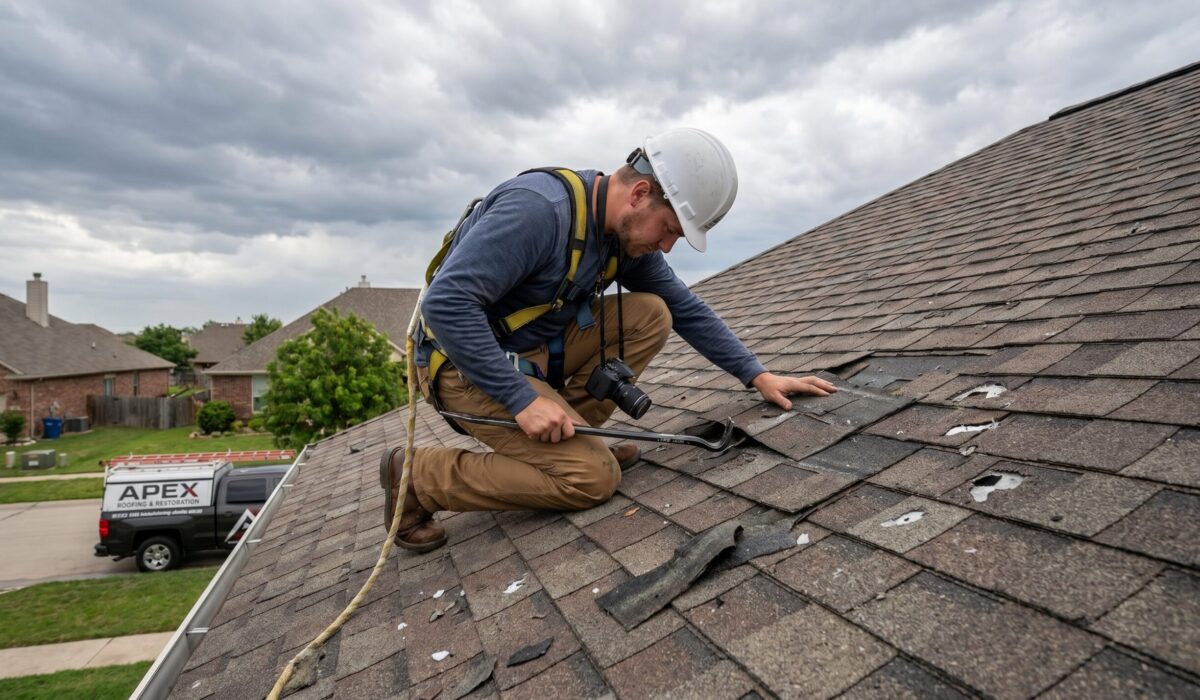
Your roofing contractor will carefully remove a shingle sample from an inconspicuous area of your roof, usually replacing it temporarily with a clearly mismatched shingle to document the need for proper matching during the roof replacement process. Safety is crucial during this step, as contractors need proper equipment and experience to work on damaged roofs.
Next, you or your contractor fills out ITEL’s submission form with your insurance claim information, policy details, and contact information. The shingle sample gets packaged and shipped to ITEL’s laboratory via UPS or FedEx, along with the completed paperwork.
ITEL’s analysis typically takes 7-10 days, though this can vary based on the complexity of the sample and current lab volume. They use scientific testing methods to identify the exact manufacturer, product specifications, and color information, comparing results against their extensive database of current and discontinued products.
Once you receive the ITEL report, your contractor will attempt to source the identified shingles and perform an on-site comparison. They’ll document any color differences with photographs showing the new shingles against your existing roof, creating visual evidence for your insurance adjuster to review.
| ITEL Report Scenario | Typical Insurance Response | Homeowner Outcome |
|---|---|---|
| Exact match available | Approve repair/patching | Partial roof repair |
| Close match available | Depends on visual comparison | Repair or negotiation |
| Shingles discontinued | Often approve replacement | Full or partial roof replacement |
| No reasonable match | Replacement under matching laws | Full roof replacement |
Choosing the right contractor for ITEL and insurance work
Working with an experienced roofing contractor makes all the difference when navigating ITEL reports and insurance claims. You need someone who understands both the technical aspects of material identification and the insurance claims process.
Look for contractors who regularly work with ITEL reports and can explain how the process fits into your specific claim situation. They should be able to walk you through your policy language, help you understand your state’s matching laws, and document everything properly for your adjuster.
Pro Tip: Ask potential contractors specific questions like “How often do you use ITEL reports?” and “Can you show me examples of how you’ve documented shingle mismatches for insurance adjusters?” Their answers will reveal their experience level.
Experienced contractors know how to safely collect shingle samples, properly complete ITEL paperwork, and effectively communicate results to insurance adjusters. They also understand when an ITEL report is likely to help your claim versus when other approaches might be more effective.
Be cautious of contractors who promise to “eat your deductible” or encourage misrepresenting damage to insurance companies. These practices can constitute insurance fraud and put you at legal risk. Instead, work with professionals who advocate for you through proper documentation and legitimate claim processes.
The right contractor will also help you understand realistic expectations for your claim outcome. While ITEL reports can be powerful tools for supporting replacement claims, they’re not guaranteed solutions, and success often depends on your specific policy language and state regulations.
At Peak and Valley Roofing, we’ve helped countless homeowners in Rocky River, Cleveland, and throughout Northeast Ohio navigate the ITEL process and insurance claims successfully. Our experience with material identification, matching laws, and insurance restoration procedures helps ensure you get the coverage you deserve while staying within legal and ethical boundaries. When storm damage threatens your home, having knowledgeable professionals on your side makes all the difference in achieving a fair claim resolution.