

Roof decking, also called roof sheathing, is the structural foundation layer of your roofing system. It consists of wooden panels or boards fastened directly to your roof’s rafters or trusses, creating the solid surface where underlayment, shingles, and other roofing materials attach.
Think of roof decking as the floor of your attic turned upside down. Just as your home’s floor provides a stable base for furniture and foot traffic, roof decking distributes the weight of your roof materials, snow loads, and wind forces across the entire roof structure. Without sound decking, your shingles have nothing secure to grip, and your roof becomes vulnerable to leaks, sagging, and structural failure.
Key Fact: Modern homes typically use 7/16-inch OSB or 1/2-inch plywood sheets, while older homes in Cleveland and Northeast Ohio may have 1×6 or 1×8 wooden planks running horizontally across rafters.
Understanding roof decking becomes crucial when you’re planning a roof replacement, as damaged decking must be repaired before new roofing materials can be installed according to building codes.
Types of Roof Decking
Your Cleveland-area home likely has one of two main decking types, depending on when it was built and local construction practices.
Plank Decking
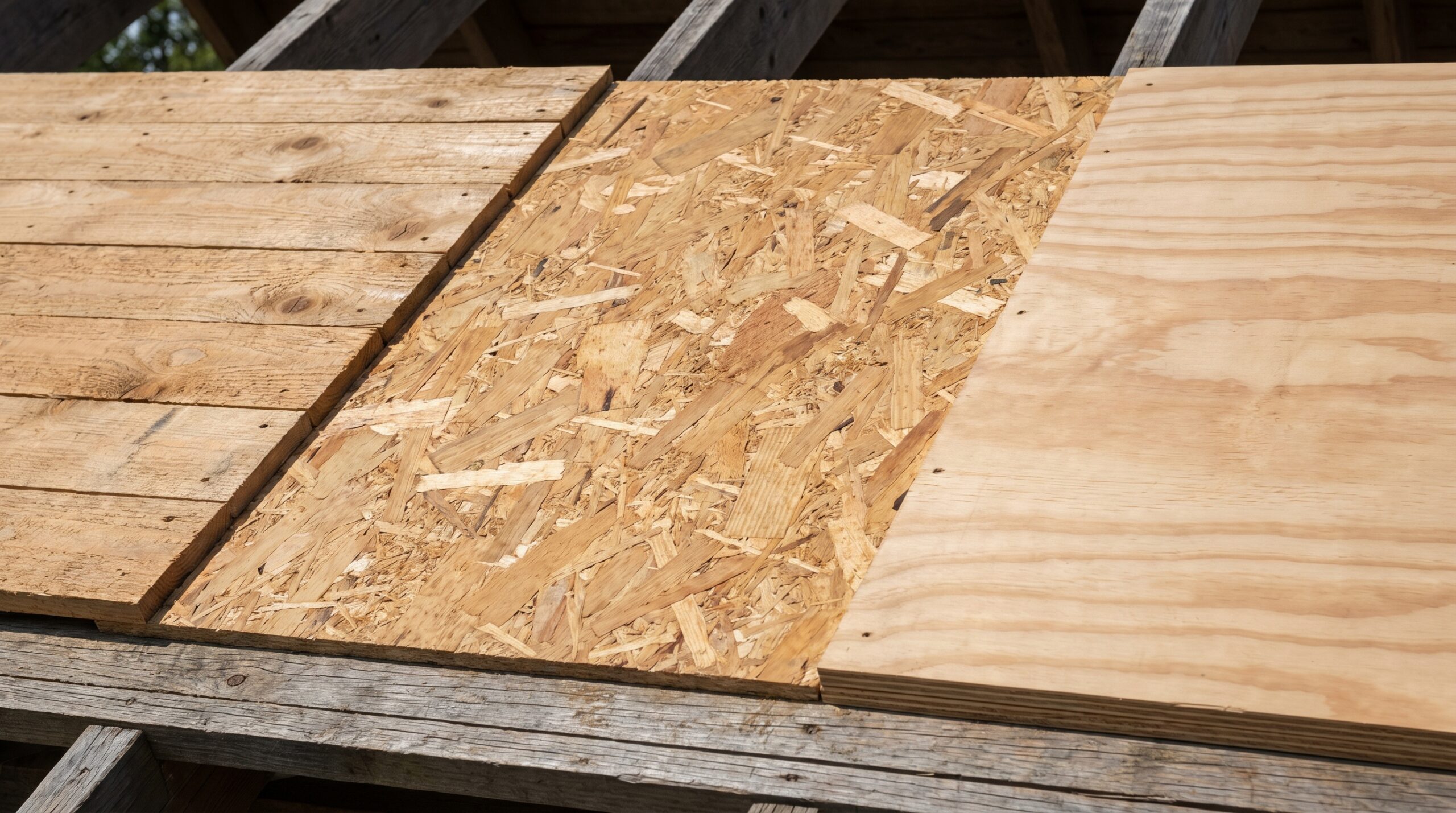
Plank decking was the standard before plywood became widely available. This system uses individual wooden boards, typically 1×6 or 1×8 lumber, installed horizontally across the rafters. You’ll find plank decking on most Northeast Ohio homes built before the 1970s.
While plank decking can last decades, it presents challenges during roof replacement. According to billraganroofing.com, shingle manufacturers now require that plank decking with gaps larger than 1/8 inch between boards must be overlaid with sheet decking before new shingles can be installed.
Sheet Decking
Sheet decking uses large panels of engineered wood products, primarily plywood or OSB (oriented strand board). These 4×8-foot sheets create a continuous, solid surface across your roof structure.
OSB (Oriented Strand Board) is currently the most common decking material. Made from compressed wood strands and resin, OSB typically comes in 7/16-inch thickness and offers excellent structural performance at a lower cost than plywood.
Plywood remains popular for its superior moisture resistance. As noted by modernexterior.com, plywood performs better when exposed to moisture from ice dams or minor leaks, making it especially valuable in Northeast Ohio where winter weather can create challenging conditions for roofing systems.
| Decking Type | Material | Thickness | Best For |
|---|---|---|---|
| Plank | Solid lumber | 1×6 or 1×8 | Older homes (pre-1970s) |
| OSB | Compressed wood strands | 7/16 inch | New construction, cost-conscious projects |
| Plywood | Cross-laminated veneer | 3/8 to 3/4 inch | Moisture-prone areas, premium installations |
When Roof Decking Needs Replacement
Not every roof replacement requires new decking, but certain conditions make replacement mandatory for safety and code compliance.
Your decking needs attention when contractors discover soft or spongy areas, visible rot, water staining, or structural sagging during tear-off. According to pearsonfamilyroofing.com, building codes require asphalt shingles to be fastened to “solidly sheathed decks,” meaning any compromised wood must be replaced.
For plank decking specifically, gaps exceeding 1/8 inch between boards trigger replacement requirements under current manufacturer installation instructions. This ensures nails have solid wood to grip and prevents leaks through gaps.
Important: The true extent of decking damage only becomes clear after the old roof is removed, so contractors typically include contingency pricing for potential decking work.
Water damage from chronic leaks, ice dams, or poor ventilation causes the most common decking problems in Cleveland’s climate. OSB is particularly vulnerable to edge swelling when moisture penetrates, while plywood may delaminate if repeatedly wetted and dried. Storm damage from Northeast Ohio’s severe weather can also compromise decking integrity, making professional inspection essential after hail or high winds.
How Contractors Replace Roof Decking
The decking replacement process varies based on the extent of damage and the type of existing decking.
For localized damage, contractors remove only the affected sections and install matching materials. They cut out damaged areas back to solid rafters, ensuring new panels have proper support and nailing surfaces.
When dealing with widespread plank decking issues, contractors often overlay the entire roof with new sheet decking rather than removing individual boards. As explained by mrrooferatlanta.com, this approach saves time while ensuring a solid, continuous nailing surface that meets modern building codes.
The replacement process follows these steps: complete tear-off of roofing materials, thorough inspection of existing decking, removal or overlay of compromised sections, installation of new decking materials, and finally, installation of underlayment and new roofing materials.
Contractors must hit rafters or trusses with proper fastener spacing, typically every 6 inches along panel edges and 12 inches in the field, to ensure structural integrity and wind resistance against Northeast Ohio’s weather conditions.

Roof Decking Costs and Pricing Factors
Decking replacement costs fluctuate significantly based on material prices, labor rates, and project scope. According to modernexterior.com, full decking replacement on average-sized homes typically ranges from $2,000 to $6,000 for materials and labor.
Material choice affects pricing substantially. OSB costs less than plywood, but plywood’s superior moisture performance may justify the extra expense in Cleveland’s climate where ice dams and winter moisture are common concerns. Current wood prices, which remain elevated in 2026, directly impact project costs.
Labor factors include roof pitch, accessibility, and whether existing decking requires complete removal or simple overlay. Steep roofs and complex layouts increase installation time and safety requirements, raising overall costs.
Cost Reality: Contractors typically price decking as a line item discovered during tear-off, since the full scope isn’t visible until the old roof is removed.
Geographic location, local building codes, and permit requirements also influence pricing. Some municipalities in Northeast Ohio require specific decking thicknesses or materials, potentially affecting your material costs and installation complexity. When working with insurance claims for storm damage, experienced contractors can help navigate the process to ensure proper decking replacement is covered.
Understanding roof decking helps you make informed decisions during roof replacement projects. Quality decking provides the foundation for a long-lasting roof system, making it worth the investment when replacement becomes necessary. Work with experienced local contractors who understand Cleveland’s climate challenges and can properly assess your decking condition to recommend appropriate solutions for your specific situation and budget.