

If you see yellow water dripping from your ceiling, it’s more than just a stain—it’s a warning that water has found its way into your home. This discoloration happens when water mixes with contaminants like rust, insulation fibers, dust, or other materials as it travels through your home’s structure.
Yellow ceiling leaks typically come from three main sources: roof damage, plumbing problems, or HVAC condensation issues. The yellow color indicates the water has been sitting somewhere it shouldn’t be, picking up particles along the way. This guide will help you identify what’s causing your leak, take immediate action to protect your home, and decide who to call for professional help.
Quick fact: Yellow or brown ceiling stains indicate repeated moisture exposure, not just a one-time spill. The discoloration forms when water carries contaminants from insulation, wood, or metal components through your home’s structure.
Understanding what you’re dealing with can save you time, money, and prevent serious damage to your property. Let’s walk through how to diagnose your specific situation and take the right next steps.
How to tell if your yellow ceiling leak is from the roof, plumbing, or HVAC
Identifying the source of your leak helps you call the right professional and take appropriate immediate action. Each type of leak has distinct characteristics that can guide your diagnosis.
Signs it’s probably a roof leak include timing that matches weather patterns—the leak appears or worsens during rain, snow, or after storms. You’ll often see these leaks near exterior walls, under roof features like chimneys or vents, or in rooms directly below the attic. If you can safely inspect your roof from the ground with binoculars, look for missing shingles, damaged flashing, or debris blocking gutters. In Northeast Ohio, ice dams and freeze-thaw cycles can create additional entry points for water during winter months.
Signs it’s probably a plumbing leak include constant dripping even during dry weather, especially if the stain appears under bathrooms, kitchens, or known plumbing runs. The water may slow or stop if you shut off your main water valve temporarily. You might also notice water pressure changes in nearby fixtures or hear running water sounds in walls.
Signs it’s probably an HVAC or condensation issue include leaks that appear when your air conditioning or heating system runs, stains located near HVAC vents or ductwork, or dampness that seems to worsen during humid weather. You might find wet condensate pans or see moisture on exposed ductwork in your attic or basement.

Common causes of yellow water leaks above ceilings
Understanding specific failure points helps you communicate effectively with contractors and prioritize repairs based on urgency and complexity.
Damaged roof components represent the most weather-dependent cause. Missing or cracked shingles allow water to penetrate your roof deck, while deteriorated flashing around chimneys, vents, and roof edges creates entry points for moisture. As water travels through attic insulation and along wooden beams, it picks up fibers and particles that create the yellow discoloration you see on your ceiling. Cleveland’s harsh winters and frequent storms can accelerate roof deterioration, making regular inspections especially important for local homeowners.
Clogged gutters and drainage issues cause water to overflow and seep into areas where your roof meets your home’s structure. When gutters can’t channel water away properly, it backs up under shingles or soaks into fascia boards, eventually finding its way to interior ceilings. This type of leak often worsens during heavy rain or rapid snowmelt—common occurrences in Northeast Ohio’s variable climate.
Plumbing system failures occur when pipe joints loosen, supply lines develop pinhole leaks, or fixture connections fail over time. Water from these leaks can travel along joists and beams before dripping through ceiling materials. The yellow color often comes from contact with metal pipes, joint compounds, or insulation materials.
Important: Plumbing leaks can waste hundreds of gallons per day and cause extensive hidden damage. If you suspect a plumbing leak, document the area and contact a plumber promptly to prevent escalating water damage.
HVAC condensation problems develop when condensate drain lines become clogged, drain pans overflow, or ductwork lacks proper insulation. Air conditioning systems naturally produce moisture that should drain away cleanly, but blockages or equipment malfunctions can redirect this water into ceiling spaces.
Immediate steps to take when you see yellow water leaking
Taking quick action protects your belongings and prevents additional damage while you arrange for professional repairs. Safety should be your first priority in any water leak situation.
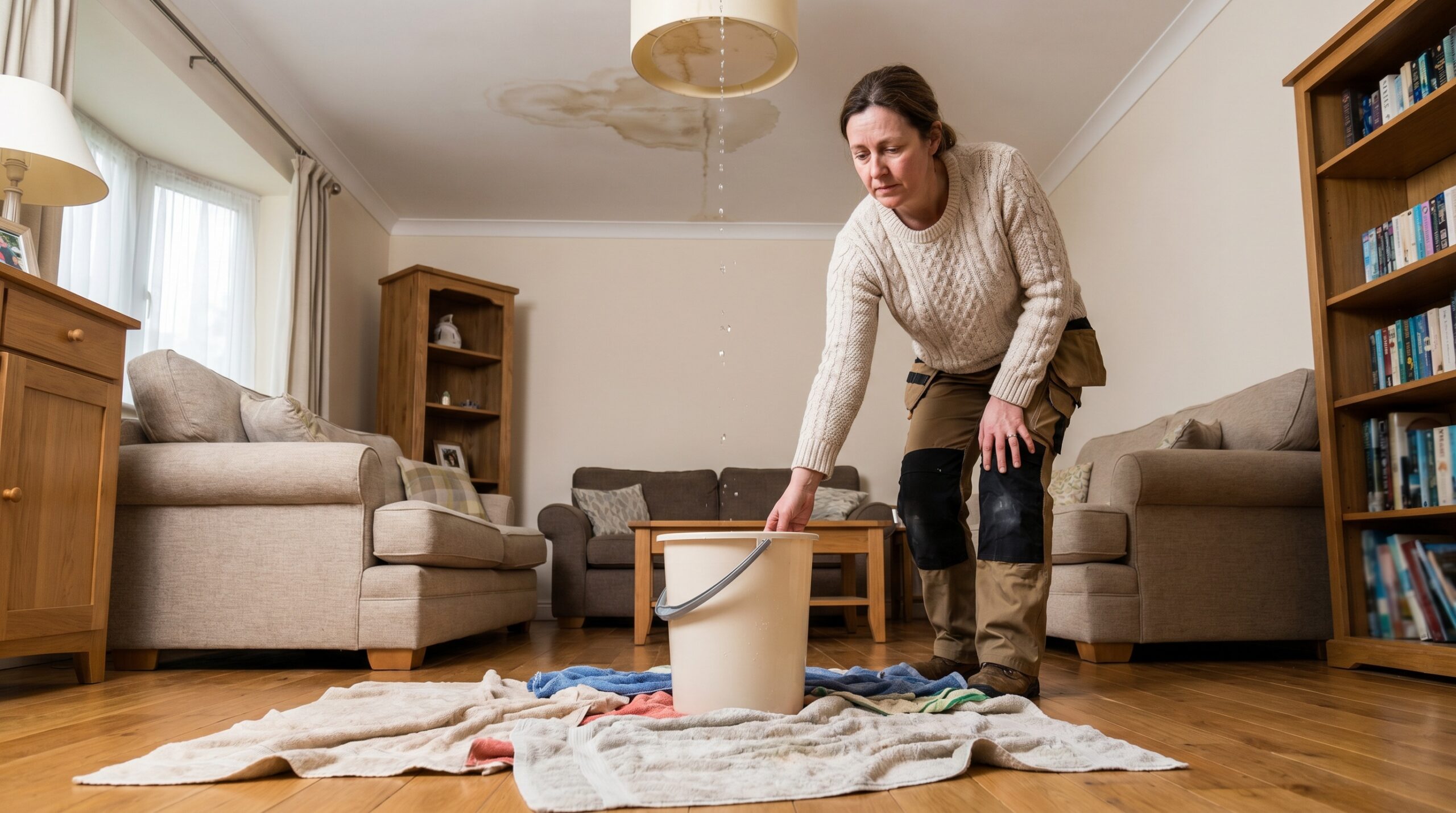
Protect people and property by moving everyone away from the leak area, especially if water is near electrical outlets, light fixtures, or ceiling fans. Turn off electricity to the affected room at your circuit breaker if you can do so safely. Move furniture, electronics, and valuables out of the drip zone and cover remaining items with plastic sheeting or tarps.
Contain and collect the water using buckets, large pots, or storage containers placed directly under the leak. Lay towels or plastic sheeting around containers to catch splashing. If you see a bulging area in your ceiling that appears ready to burst, you may need to carefully pierce a small hole with a screwdriver to relieve pressure—but only if you can do this safely while standing on a stable ladder with someone else present.
Document everything for insurance and contractors by taking clear photos of the leak, ceiling damage, and any affected belongings. Note the date, time, and weather conditions when you first noticed the problem. Write down any sounds you hear (dripping, running water) and measure the size of stained areas. This documentation helps insurance adjusters and repair professionals understand the scope of damage.
Contact the appropriate professional based on your diagnosis—a roofer for weather-related leaks, a plumber for constant dripping unrelated to weather, or an HVAC technician for leaks near heating and cooling equipment.
Long-term repairs and professional solutions
Professional repairs address both the immediate leak and underlying conditions that allowed water intrusion to occur. The approach depends on your specific situation and the extent of damage discovered during inspection.
Roof leak repairs typically involve replacing damaged shingles, resealing or replacing flashing around penetrations, and addressing any underlying roof deck damage. Professionals may also recommend gutter cleaning, downspout improvements, or attic ventilation upgrades to prevent future moisture problems. Extensive damage might require partial roof replacement or structural repairs to water-damaged framing. In Cleveland’s climate, storm damage restoration often involves coordinating with insurance companies—something local roofing experts are well-equipped to handle.
Plumbing repairs range from simple fixture adjustments to complete pipe replacement, depending on the age and condition of your system. Professionals will trace the leak to its source, which may involve opening walls or ceilings to access hidden pipes. They’ll also check for secondary damage to surrounding materials and recommend preventive maintenance to avoid future leaks.
HVAC system corrections focus on restoring proper drainage and preventing condensation buildup. This might include clearing clogged drain lines, replacing drain pans, improving ductwork insulation, or adjusting system operation to reduce moisture production. Technicians will also inspect for mold growth in ductwork and recommend cleaning if necessary.
After addressing the source, you’ll need to deal with ceiling damage through cleaning, drying, priming with stain-blocking products, and repainting. Severely damaged drywall or plaster may require replacement to prevent mold growth and restore structural integrity.
Professional tip: Most ceiling water damage requires 24-48 hours of complete drying before repairs can begin. Rushing this process often leads to recurring stains and potential mold problems behind finished surfaces.
Don’t ignore yellow water leaks hoping they’ll resolve on their own. What starts as a small stain can quickly become a major repair project involving structural damage, mold remediation, and extensive interior restoration. The yellow discoloration you see is just the visible part of a problem that’s likely affecting hidden areas of your home’s structure.
Taking immediate action to identify the source, protect your property, and arrange professional repairs saves money and prevents health risks associated with prolonged moisture exposure. Whether your leak comes from roof damage, plumbing failure, or HVAC issues, addressing it promptly keeps a manageable problem from becoming a major renovation project.
If you’re dealing with yellow water stains or active leaks in your Cleveland-area home, Peak and Valley Roofing can help diagnose the source and provide lasting solutions. Our experienced team handles roof inspections, emergency repairs, and complete restoration services to protect Northeast Ohio homes from water damage. As a family-owned company specializing in insurance restoration, we’ll work with your insurance adjuster to ensure proper coverage for storm-related damage.