

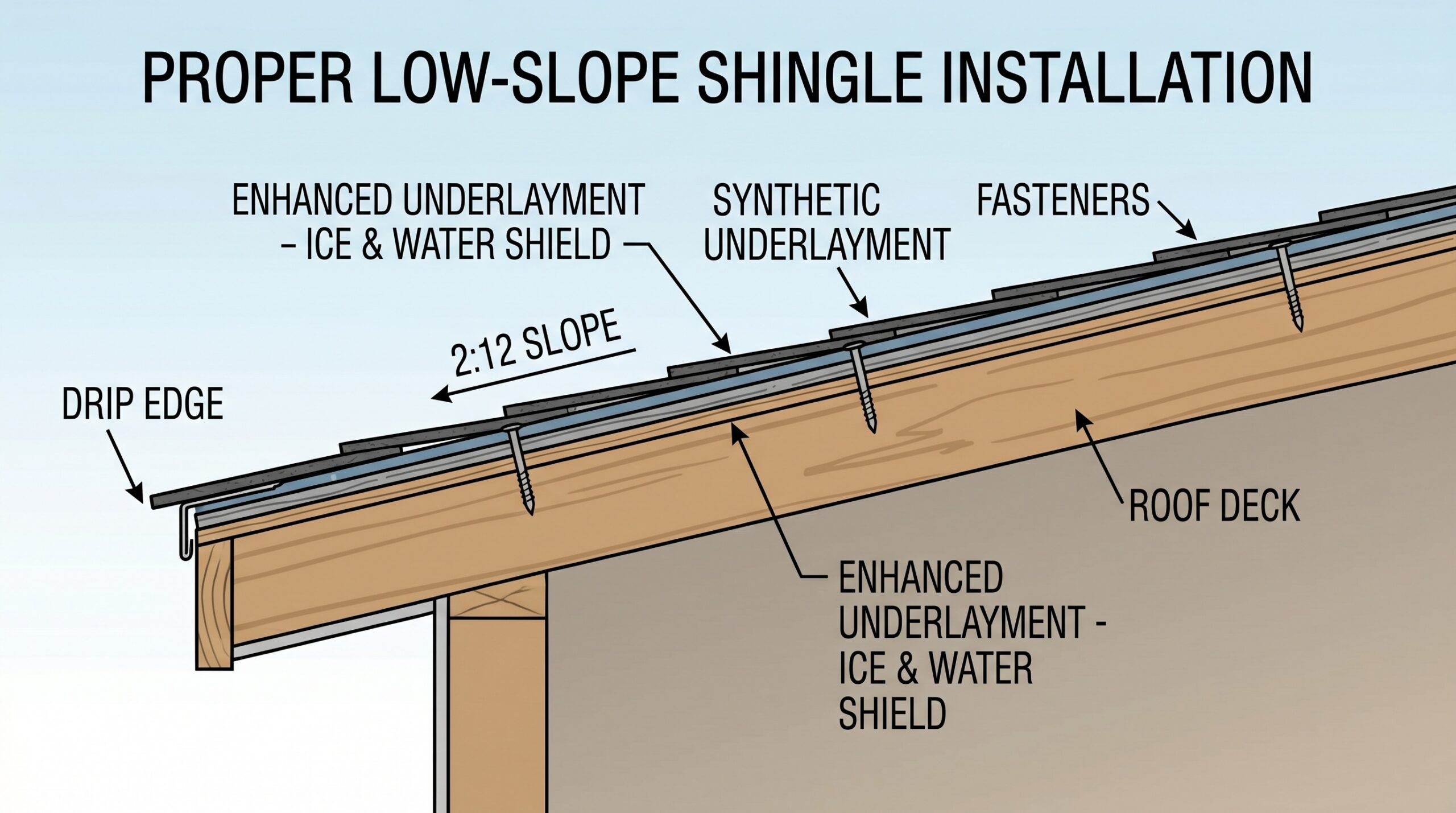
If you’re planning a roofing project in the Cleveland area and wondering about the steepest limits for asphalt shingles, you’re asking the right question. The minimum roof pitch for asphalt shingles is typically 2:12, meaning the roof rises 2 inches for every 12 inches of horizontal run. However, this minimum comes with specific installation requirements that many Northeast Ohio homeowners don’t realize.
Understanding these pitch requirements isn’t just about following building codes. It’s about protecting your investment and ensuring your roof performs as expected for decades through Cleveland’s harsh winters and severe storms. When shingles are installed below their recommended pitch, you risk water infiltration, voided warranties, and costly repairs down the road.
Key Insight: Installing shingles below the 2:12 minimum pitch without proper underlayment modifications can void your manufacturer warranty and violate local building codes.
In this guide, we’ll walk you through everything you need to know about minimum roof slopes for different shingle types, what happens when you go below these limits, and better alternatives for very low-slope roofs in Northeast Ohio.
Understanding roof pitch and slope basics
Roof pitch refers to the steepness of your roof, expressed as a ratio of vertical rise to horizontal run. When we say a roof has a 4:12 pitch, it means the roof rises 4 inches for every 12 inches of horizontal distance.
The terms “pitch” and “slope” are often used interchangeably, but they technically measure the same thing. Most residential roofs in Rocky River and the greater Cleveland area fall between 4:12 and 12:12, with steeper pitches better suited for areas with heavy snow or rain like we experience in Northeast Ohio.
Understanding your roof’s pitch is crucial because it determines which roofing materials will work effectively. Asphalt shingles are designed to shed water through gravity and overlapping layers, which requires a certain minimum slope to function properly during our region’s intense storms and snow loads.
Code requirements and manufacturer standards
Building codes and shingle manufacturers both establish minimum pitch requirements, but they don’t always align perfectly. The International Residential Code, which most Northeast Ohio municipalities follow, sets the baseline at 2:12 for asphalt shingles when installed with double underlayment.
However, individual shingle manufacturers often have more specific requirements. Many major brands recommend a 4:12 minimum pitch for standard installations, dropping to 2:12 only when special underlayment systems are used. These manufacturer guidelines directly impact your warranty coverage.
Important Note: Your local building department may have additional requirements beyond the IRC, so always check with your municipality before starting any roofing project.
At Peak and Valley Roofing, we always follow both local codes and manufacturer specifications to ensure your roof meets all requirements and maintains full warranty protection. Our family-owned company has built our reputation on honest, no-pressure guidance that helps Cleveland area homeowners make informed decisions.
Minimum pitch requirements by shingle type
Different asphalt shingle styles have varying minimum pitch requirements, though the differences are often subtle. Three-tab shingles, the most basic option, typically require the same 2:12 minimum as architectural shingles when proper underlayment is used.
Architectural or dimensional shingles follow similar guidelines but may perform better on low slopes due to their enhanced water-shedding design. Some manufacturers offer specific low-slope shingle systems that can work down to 2:12 with specialized installation methods.
For any shingle installation between 2:12 and 4:12, you’ll need enhanced underlayment protection. This usually means installing ice and water shield across the entire roof deck or using a double layer of synthetic underlayment, significantly increasing installation costs.
| Roof Pitch | Standard Shingles | Enhanced Underlayment Required | Warranty Impact |
|---|---|---|---|
| 4:12+ | Recommended | Standard | Full coverage |
| 2:12-4:12 | Acceptable | Required | May be limited |
| Below 2:12 | Not recommended | N/A | Typically void |
What happens when pitch is too low
Installing shingles below their minimum pitch creates several serious problems, especially in Northeast Ohio’s climate. Water moves more slowly down low-slope roofs, increasing the chance of wind-driven rain getting under shingle edges during our frequent storms. This slow drainage also means any small gaps or imperfections become potential leak points.
Ponding water is another major concern on roofs below 2:12 pitch. Even slight depressions or debris accumulation can cause water to sit on the surface, eventually finding its way through shingle overlaps. This standing water accelerates shingle deterioration and can lead to deck rot – a particular concern during Cleveland’s freeze-thaw cycles.
Most importantly, installing shingles below manufacturer specifications voids your warranty. Insurance companies may also question claims related to roofs that don’t meet code requirements, potentially leaving you responsible for expensive repairs after storm damage.
Better alternatives for very low-slope roofs
When your roof pitch falls below the 2:12 minimum for shingles, several better options exist for Northeast Ohio properties. TPO (Thermoplastic Polyolefin) roofing can be installed on slopes as low as 1/4:12, making it ideal for nearly flat residential additions or commercial buildings in the Cleveland area.
Roll roofing offers another budget-friendly alternative for slopes between 1:12 and 4:12. While it doesn’t have the aesthetic appeal of shingles, it provides reliable waterproofing at a lower cost than membrane systems.
Pro Tip: Modified bitumen and EPDM rubber roofing systems also work well on low slopes and often provide better long-term value than trying to force shingles onto an inappropriate pitch.
For Rocky River and Cleveland area homeowners dealing with a 1.5:12 pitch roof, these membrane systems typically offer better performance and longevity than attempting to use shingles with extensive modifications.
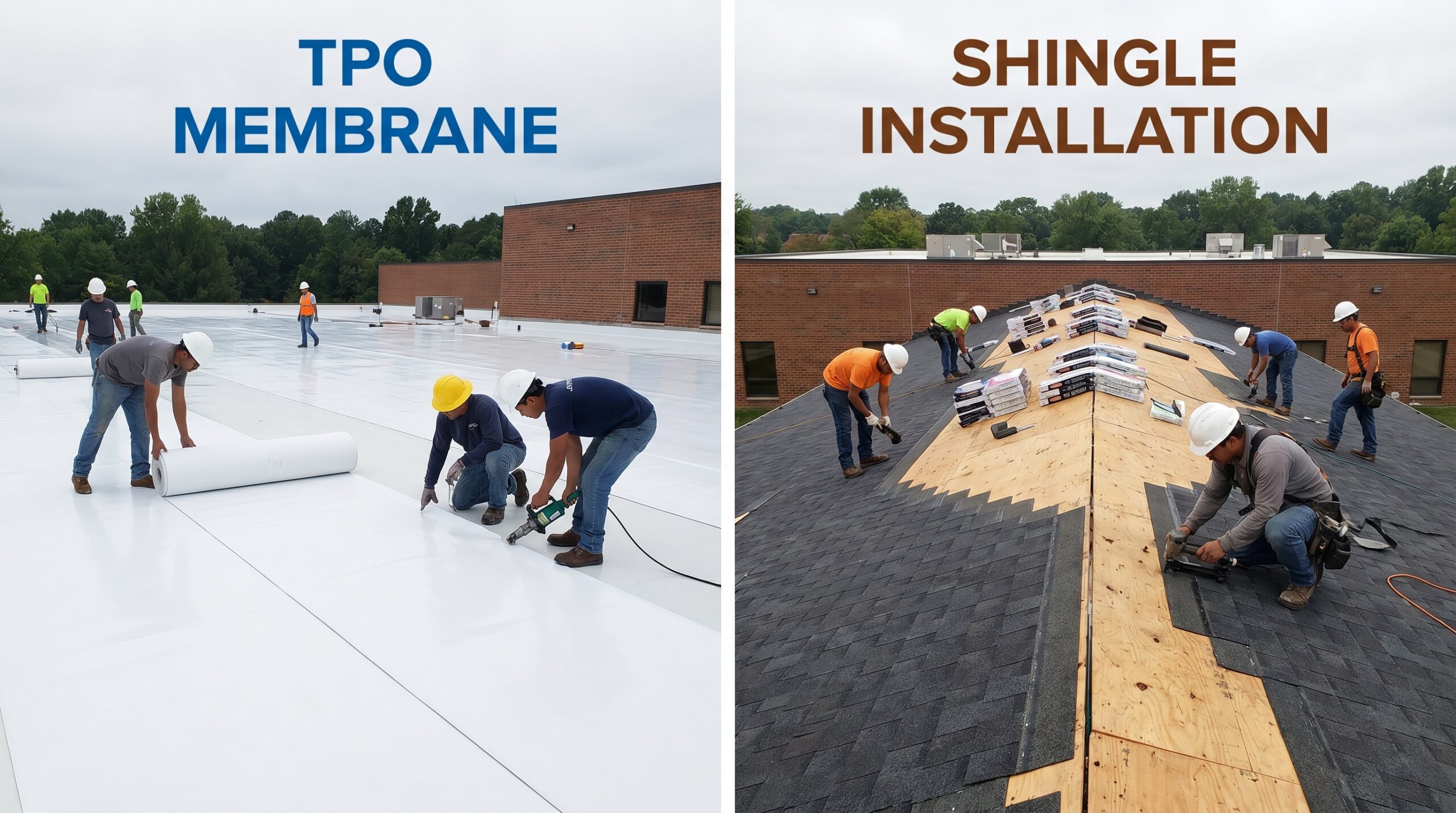
The choice between these systems depends on your budget, aesthetic preferences, and long-term plans for the building. Our team at Peak and Valley Roofing can evaluate your specific situation and recommend the most appropriate solution. As insurance restoration specialists, we also help coordinate with your insurance company when storm damage creates an opportunity to upgrade to a more suitable roofing system.
When you’re working with a roof that’s right at the minimum pitch for shingles, proper installation becomes even more critical. Every detail must be perfect to prevent water infiltration and ensure long-term performance. That’s why choosing an experienced contractor who understands these nuances makes all the difference in your roof’s success.