

Proper siding maintenance can extend your home’s exterior life by 10-20 years, potentially saving you thousands in premature replacement costs. Ohio’s challenging weather patterns—from humid summers to harsh freeze-thaw cycles—demand a strategic approach to keeping your siding in top condition.
Quick Fact: Regular maintenance can double your siding’s lifespan, with vinyl lasting up to 40 years and fiber cement exceeding 50 years when properly cared for.
Whether you live in Chester County or Delaware County, understanding how to protect your investment against our region’s unique climate challenges will keep your home looking great while maximizing its protective value. This guide provides you with practical, season-specific strategies that work specifically for Ohio homeowners.
Creating your seasonal maintenance schedule
Ohio’s four distinct seasons each bring unique challenges for your home’s exterior. From intense summer thunderstorms to damaging winter ice, your siding faces constant environmental stress that requires targeted attention throughout the year.
The key to effective maintenance lies in timing your efforts with seasonal changes. Spring offers the perfect opportunity to assess winter damage and prepare for the active months ahead. Summer requires vigilance against moisture and vegetation growth, while fall focuses on winterization and debris removal.
Here’s your Ohio-specific maintenance calendar:
| Season | Primary Tasks | Frequency |
|---|---|---|
| Spring | Inspect winter damage, deep clean, check caulking | March-May |
| Summer | Monitor moisture, trim vegetation, pest watch | June-August |
| Fall | Clear gutters, winterize, seal gaps | September-November |
| Winter | Remove ice buildup, post-storm checks | December-February |
Setting digital reminders for these quarterly tasks ensures you never miss critical maintenance windows. Ohio’s unpredictable weather makes consistency your strongest defense against premature siding deterioration.
Cleaning techniques for different siding materials
Each siding material responds differently to Ohio’s climate conditions, requiring specific cleaning approaches to maintain both appearance and structural integrity. Understanding your material’s needs prevents damage while ensuring effective maintenance.
Vinyl siding performs well in our region but needs gentle care. Mix warm water with mild dish soap for regular cleaning, using a soft-bristled brush for stubborn stains. When pressure washing, maintain at least three feet of distance and keep pressure below 1,500 PSI to prevent water infiltration behind panels. Learn more about extending your vinyl siding’s lifespan with proper care techniques.

Fiber cement siding demands annual cleaning with mild detergent and warm water applied through a medium-bristle brush. Avoid high-pressure washing that exceeds 1,500 PSI, as this can compromise the material’s surface integrity. Pay special attention to caulking around seams where moisture infiltration commonly occurs.
Wood siding requires the most vigilant care in Ohio’s humid climate. Use oxygen-based bleach solutions for effective mildew removal, avoiding pressure washers that can force moisture deep into wood grain. Always ensure complete drying before applying protective finishes. If you’re considering different materials, check out our vinyl vs wood siding cost analysis to understand long-term value.
Pro Tip: Wood siding in Ohio typically needs protective coating renewal every 3-7 years, with south and west-facing walls requiring earlier attention due to increased UV exposure.
Inspection checklist for early problem detection
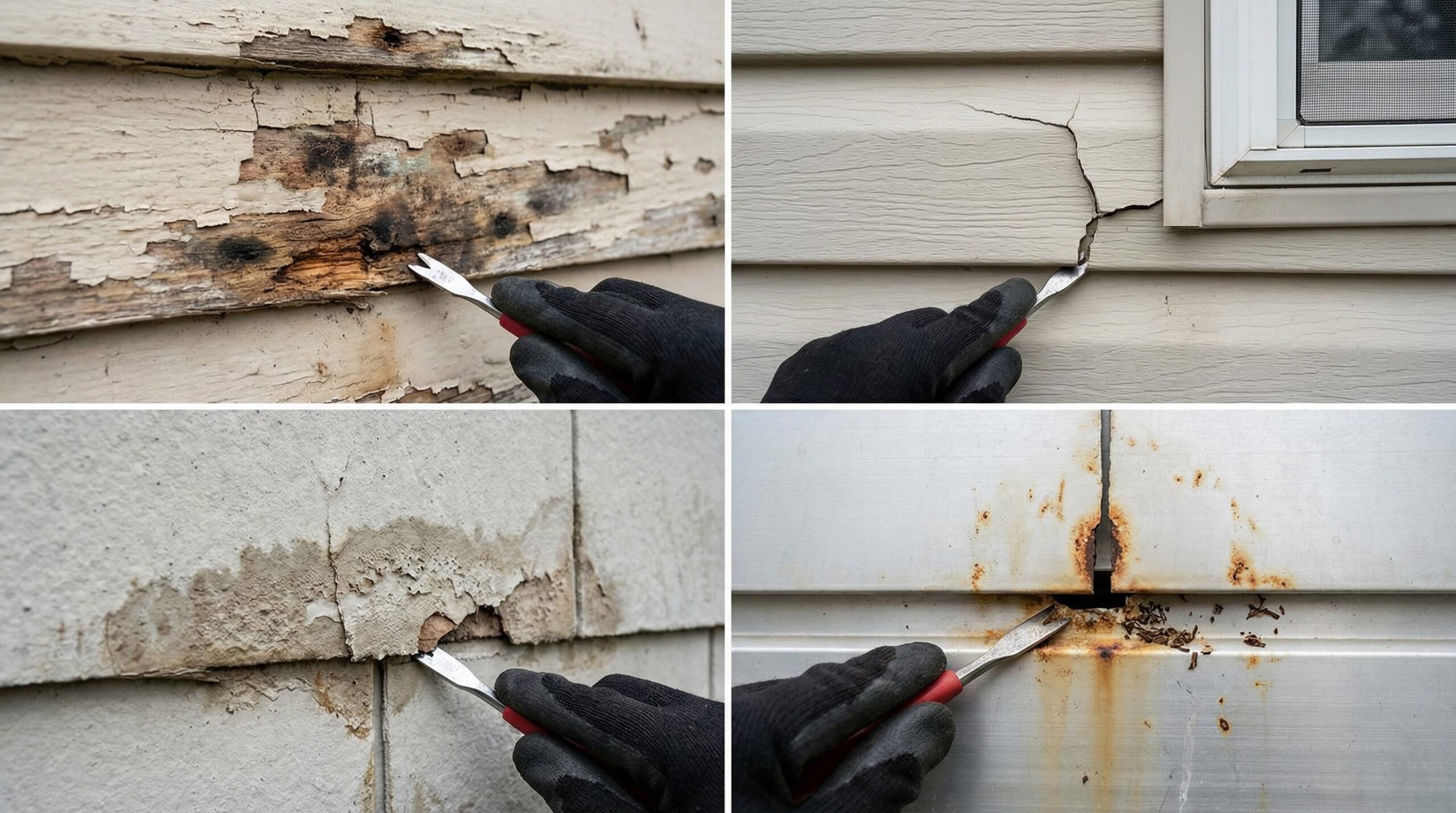
Regular inspections form the backbone of effective siding maintenance, helping you catch minor issues before they become costly repairs. Walk your home’s perimeter quarterly, examining each section methodically for signs of wear or damage.
Focus your attention on ground-level areas where moisture accumulates, window surroundings where caulking commonly fails, and under-eave sections where problems often originate. Look for warping, cracking, loose sections, water staining, and evidence of pest activity. Understanding common signs of storm siding damage can help you identify weather-related issues early.
Document any changes with clear photographs to monitor progression over time. This visual record proves invaluable when determining whether issues require immediate attention or can wait for scheduled maintenance periods.
Pay particular attention to areas where different materials meet, such as where siding connects to trim or foundation elements. These transition zones often experience the most stress and require frequent monitoring to prevent water infiltration. Additionally, maintaining proper gutter and downspout systems is crucial for protecting your siding from water damage.
DIY repairs you can handle safely
Many minor siding issues can be addressed before they escalate into major problems. Homeowners can confidently manage tasks like replacing individual damaged vinyl panels, refreshing caulk around small gaps, and touching up paint on wood surfaces.
Caulking and sealing prevents moisture penetration that leads to structural deterioration. Remove old, deteriorated caulk completely before applying premium-quality silicone or acrylic latex caulk. Work during dry weather when temperatures range between 50-80°F for optimal adhesion.
Touch-up painting should address deterioration promptly to prevent moisture damage. When matching colors, bring a small sample to your local paint retailer for exact color matching. For wood exteriors, lightly sand the repair area, apply appropriate primer, and use quality exterior paint with UV protection.
Safety First: Always work from stable ground when possible and delegate elevated repairs to professionals. Your safety is worth more than any potential savings from DIY repairs.
However, recognize your limits. Widespread warping, significant color fading, interior water staining, or persistent mold growth after thorough cleaning all require professional assessment. These warning signs often indicate underlying issues that need expert diagnosis and repair. If you’re noticing extensive problems, it may be time to consider whether siding repair or replacement is the better option. One critical issue to watch for is wood rot behind siding, which requires immediate professional attention.
Professional service costs typically range from $300-$800 depending on your home’s size and material type, but catching problems early through regular maintenance can prevent much more expensive full replacement projects down the road.
Regular attention to your siding maintenance dramatically extends your exterior’s operational lifespan while preserving your home’s curb appeal and structural integrity. By implementing these Ohio-specific strategies, you can potentially double your siding’s functional durability and protect your investment for decades to come.