

Northeast Ohio homeowners face unique roofing challenges with the region’s demanding climate and distinctive historic architecture. When choosing between asphalt and rubber roofing systems, you need materials that can handle everything from icy lake-effect winters to humid summers while fitting your budget and home’s specific needs.
The short answer: Rubber roofing (EPDM) typically lasts 20-30 years with minimal maintenance, while asphalt systems last 15-20 years at a lower upfront cost. Your choice depends on your budget, roof type, and long-term ownership plans.
Quick fact: Roofing costs have stabilized in 2025-2026, making it an ideal time to compare these two popular options for Rocky River homes.
Understanding Northeast Ohio’s roofing challenges
Your Rocky River home faces specific obstacles that directly impact roofing material performance. The region’s climate creates extreme temperature swings, from freezing, snowy winters to hot, humid summers. These conditions cause materials to expand and contract repeatedly, testing their durability.
Historic homes and older properties present additional complications with complex rooflines, limited access for installation crews, and flat or low-slope additions (like porches or garages) that require specialized drainage solutions. The dense suburban environment also means dealing with local building permits, neighbor coordination, and restricted staging areas for materials and equipment.
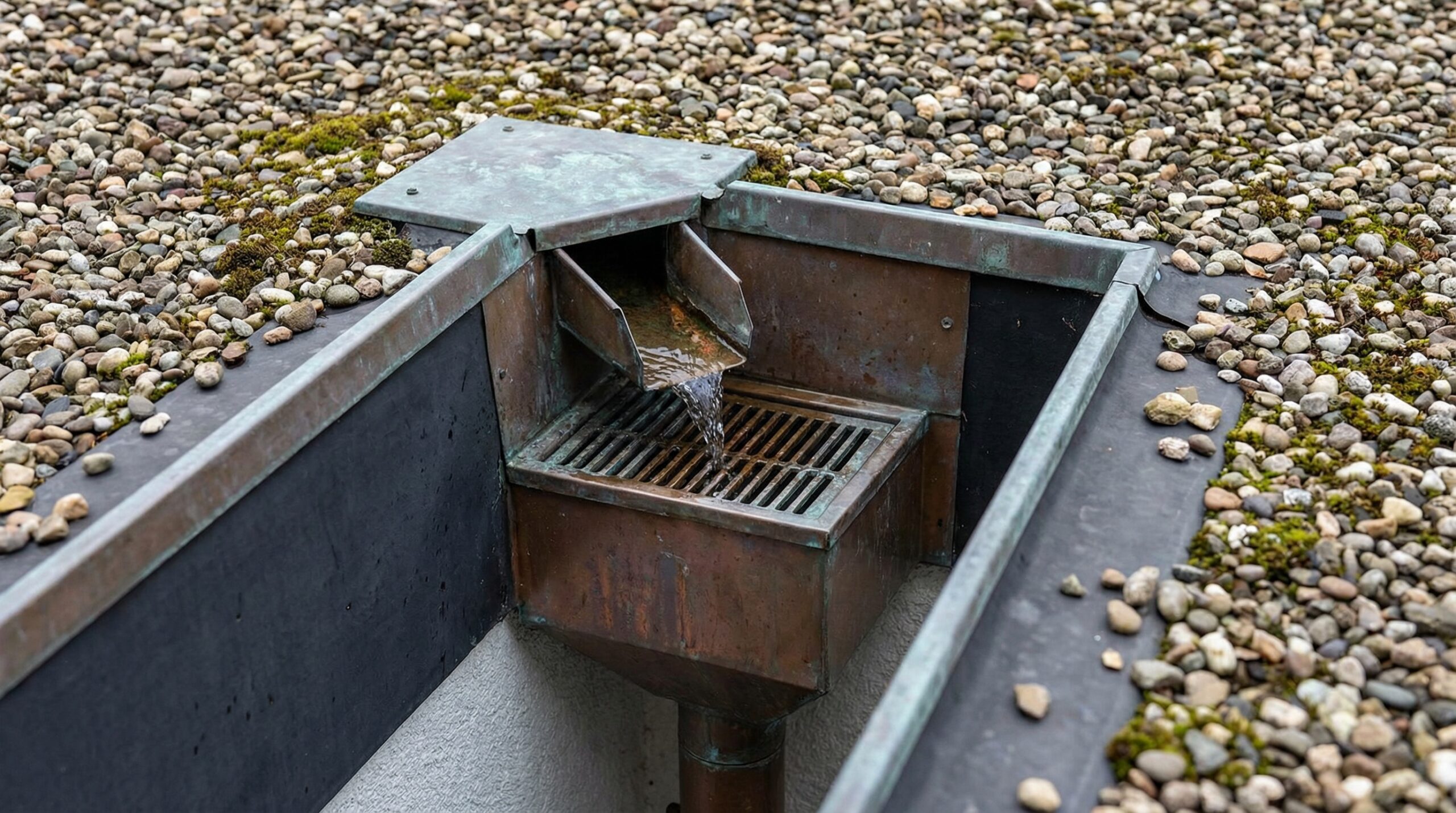
Water management becomes critical in this setting. Poor drainage can lead to ponding water and severe ice dams, which accelerates roof deterioration and creates leak risks. Your roofing choice must handle these drainage challenges while meeting local Ohio building codes and fire safety requirements. Proper roof flashing installation around penetrations and edges is essential for preventing water infiltration in flat roof applications.
Asphalt roofing systems for flat roofs
Asphalt-based systems offer proven protection through built-up roofing (BUR) and modified bitumen options. These multi-layer systems create redundant barriers against water infiltration, making them reliable choices for flat and low-slope applications common in Northeast Ohio.
Built-up roofing involves alternating layers of asphalt and reinforcing materials, creating a robust waterproof membrane. This traditional approach has protected buildings for decades and continues evolving with improved materials. The multiple layers provide excellent puncture resistance, important in environments where falling branches and severe weather are concerns.
Modified bitumen systems enhance traditional asphalt with polymer additives (APP or SBS) for improved flexibility and faster installation. These systems adapt better to temperature changes while maintaining the proven reliability of asphalt-based protection. Understanding the different roofing materials available can help you make an informed decision for your specific needs.
Cost insight: Asphalt systems typically cost $5-10 per square foot installed, making them the more budget-friendly option for homeowners with immediate cost concerns.
Rubber roofing advantages and considerations
EPDM (ethylene propylene diene monomer) rubber roofing provides single-membrane protection that excels in Northeast Ohio’s challenging climate. This synthetic rubber material offers exceptional flexibility, allowing it to expand and contract without cracking or splitting during severe freeze-thaw cycles.
The installation process involves fewer layers than asphalt systems, often resulting in faster completion and reduced labor costs. Quality EPDM membranes resist UV radiation, ozone, and environmental pollutants that can degrade other materials over time. Similar to TPO roofing systems, EPDM offers excellent durability for flat and low-slope applications.
However, rubber roofing requires precise installation techniques, particularly around seams and penetrations. Poor workmanship can lead to premature failures, making contractor selection critical. EPDM also typically comes in black, which can absorb heat, though white membrane options are available for better energy efficiency.
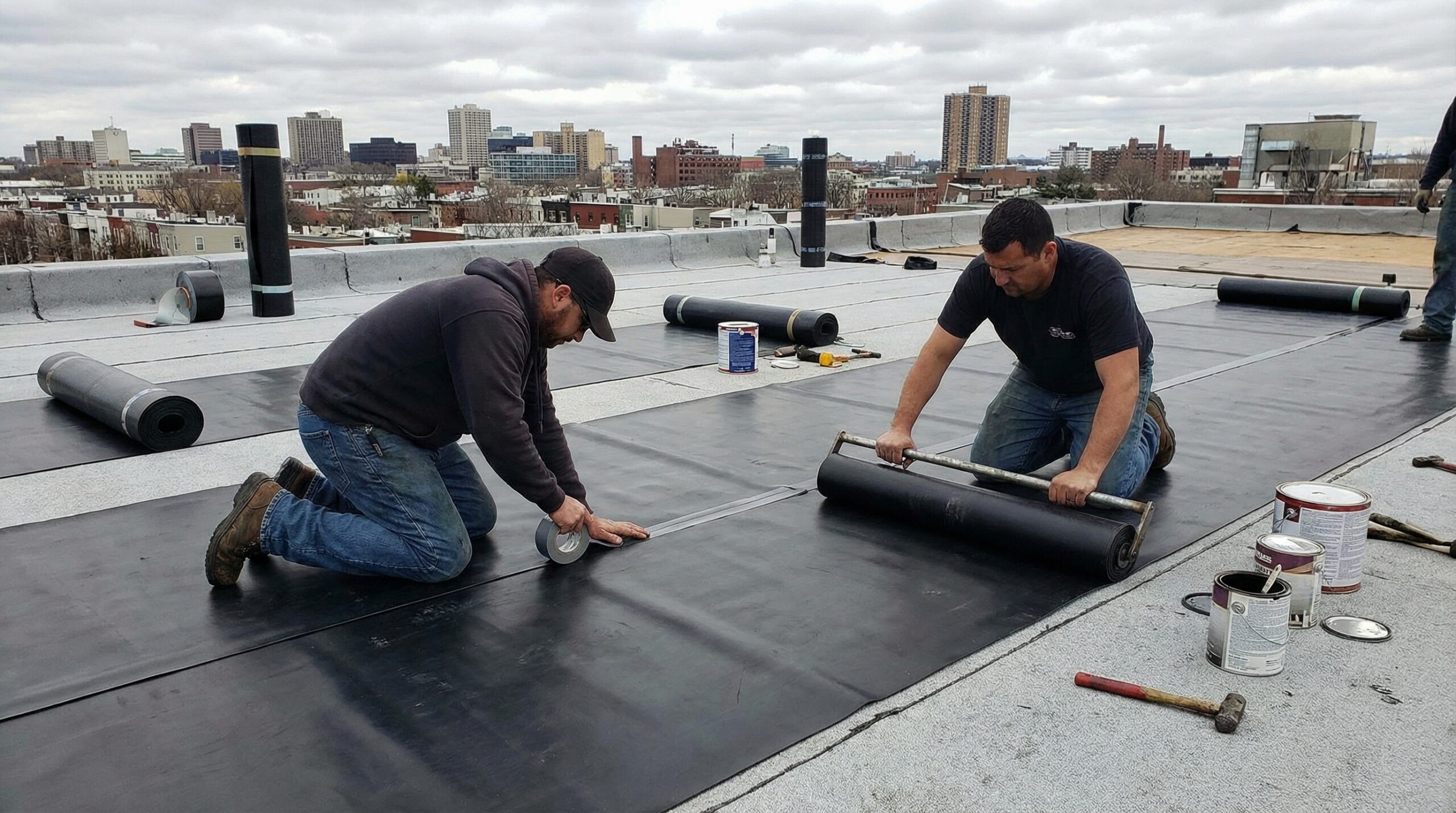
The material’s flexibility makes it ideal for buildings that experience settling or movement, common in older Century Homes throughout the Cleveland area. This adaptability helps prevent the cracking and splitting that can plague more rigid roofing materials.
Performance comparison and cost analysis
When comparing these systems for your Rocky River home, consider both immediate and long-term costs. While asphalt systems require lower upfront investment, rubber roofing often provides better value over time through extended lifespan and reduced maintenance needs.
| Factor | Asphalt Systems | EPDM Rubber |
|---|---|---|
| Initial cost | $5-10 per sq ft | $7-13 per sq ft |
| Expected lifespan | 15-20 years | 20-30+ years |
| Maintenance needs | Moderate | Minimal |
| Climate performance | Good with coatings | Excellent |
Climate performance varies between these options. Asphalt systems handle Ohio’s weather well but may require periodic coating applications to maintain effectiveness. Rubber roofing excels in extreme temperature fluctuations and typically needs only routine inspections. To understand how different materials compare in longevity, review this comprehensive guide to roof lifespan by material.
Maintenance reality: EPDM systems often require only annual inspections, while asphalt roofs may need coating renewal every 5-10 years to maintain optimal performance.
Energy efficiency considerations also matter in Northeast Ohio’s climate. White EPDM membranes reflect heat effectively, potentially reducing cooling costs during our hot, humid summers.
Asphalt systems can achieve similar benefits with reflective coatings but may require reapplication over time.
Your decision should factor in planned ownership duration. For long-term ownership, EPDM’s extended lifespan and minimal maintenance often justify higher initial costs. If you plan to sell within 10-15 years, asphalt systems may provide adequate protection at lower upfront expense. Before making your final decision, ensure you understand what should be included in a detailed roofing estimate to compare contractors accurately.
Both systems require professional installation to perform properly and maintain warranty coverage. Peak and Valley Roofing specializes in both asphalt and rubber installations, helping Rocky River homeowners choose the right system for their specific needs and budget constraints.
The choice between asphalt and rubber roofing ultimately depends on your priorities. Consider your budget, planned ownership duration, and maintenance preferences when making this important decision for your home’s protection. For commercial property owners with flat roofs, exploring flat roof solutions for commercial buildings may provide additional insights into material selection and installation best practices.