

Commercial flat roofs in Rocky River face unique challenges from the region’s lake-effect weather and variable climate. Whether you’re managing a warehouse near the river or an office building downtown, choosing the right flat roofing system directly impacts your building’s performance and operating costs.
Did you know? Properly installed commercial flat roofs can last 20-30 years and reduce cooling costs by up to 30% with reflective membrane systems.
At Peak and Valley Roofing, we understand that Rocky River’s commercial properties need roofing solutions designed for the Northeast Ohio climate. From EPDM and TPO systems to energy-efficient installations, we help businesses protect their investments while maximizing long-term value.
Understanding Rocky River’s commercial roofing environment
Rocky River’s location creates specific challenges for flat roof systems. The city’s proximity to Lake Erie introduces environmental stressors that accelerate roof deterioration. High winds, heavy lake-effect snow loads, and severe freeze-thaw cycles all impact roofing materials differently than in regions with milder weather.
Commercial buildings along Detroit Road and downtown Rocky River experience severe temperature fluctuations that can stress roofing membranes. These conditions require materials specifically chosen for durability and weather resistance. Additionally, local Ohio building codes mandate specific requirements for fire resistance, insulation values, and drainage systems that must be factored into any roofing project.
The local commercial construction also creates unique water and snow management challenges. Buildings positioned close together can create wind patterns that affect snow drifting and drainage, making proper system design crucial for preventing water damage and extending roof life.
Flat roofing material options for commercial buildings
Selecting the right material for your Rocky River commercial property involves balancing upfront costs with long-term performance. Each roofing system offers distinct advantages depending on your building’s use, budget, and performance requirements.
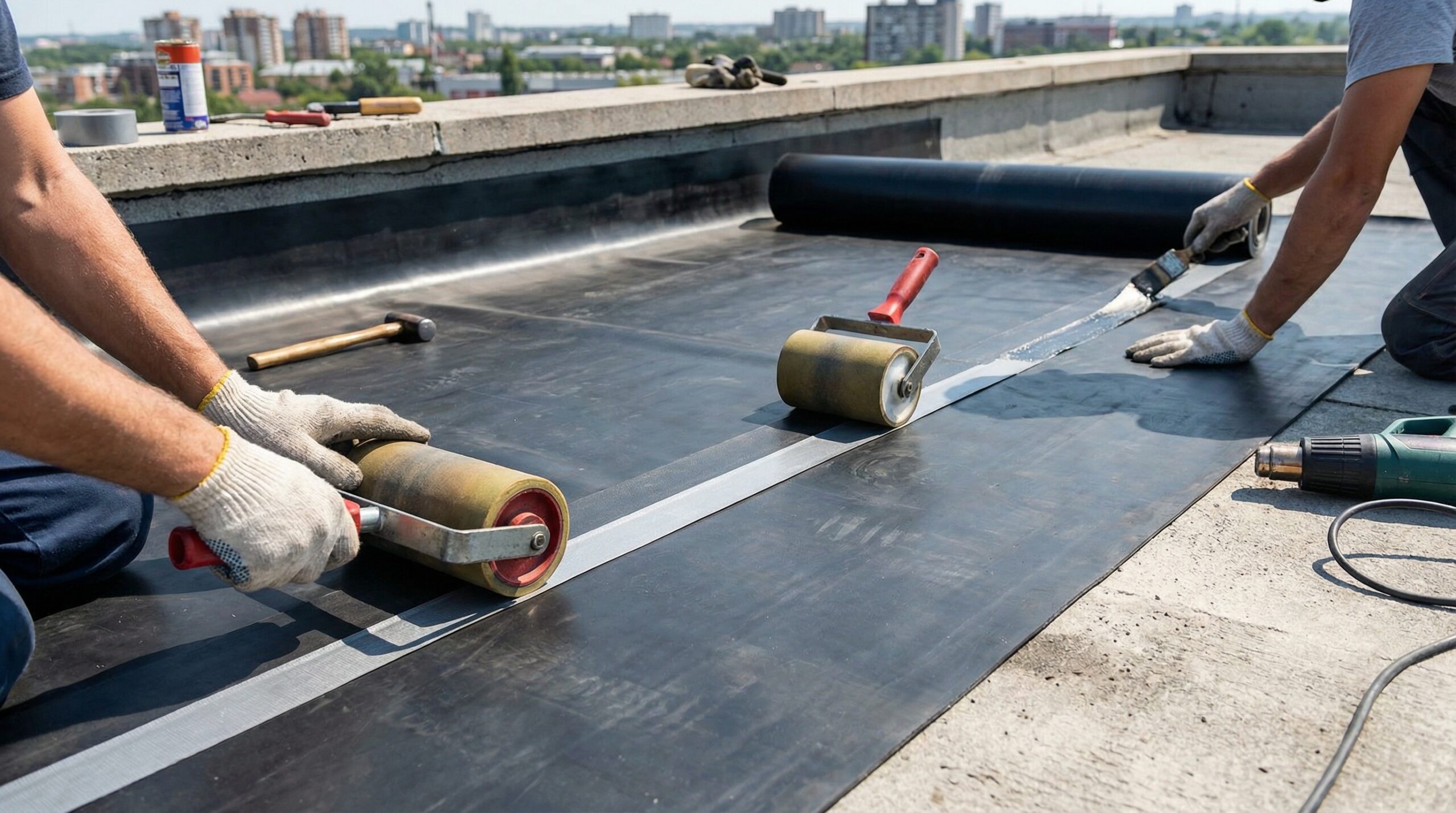
EPDM roofing provides excellent durability at a moderate cost. This rubber membrane resists UV damage and temperature extremes, making it ideal for Northeast Ohio’s climate. With a lifespan of 20-30 years and low maintenance requirements, EPDM offers reliable performance for warehouses, manufacturing facilities, and office buildings.
TPO systems excel in energy efficiency through their reflective properties. These thermoplastic membranes can significantly reduce cooling costs during Ohio’s hot, humid summers. TPO installation typically lasts 15-25 years and provides excellent chemical resistance, making it suitable for buildings with HVAC equipment or industrial processes.
Modified bitumen and built-up roofing systems offer traditional reliability through multi-layer construction. These options provide superior puncture resistance and perform well in high-traffic areas where maintenance crews frequently access the roof. While installation complexity is higher, these systems deliver 15-30 years of dependable service.
Pro tip: Cool roofing technologies can qualify for federal tax credits and utility rebates in Ohio, often providing 3-5 year payback periods through energy savings alone.
Drainage and water management solutions
Effective drainage represents the most critical factor in flat roof performance. Even minor water pooling or ice accumulation can lead to premature membrane failure and costly structural damage. Northeast Ohio’s precipitation and snowmelt patterns require carefully engineered drainage systems that handle both regular rainfall and severe winter thaws.
Internal drainage systems work well for larger commercial buildings. These systems use strategically placed drains connected to the building’s plumbing to channel water away efficiently. Proper sizing ensures adequate capacity during heavy rains, while emergency overflow drains provide backup protection.
Perimeter drainage through scuppers and edge systems offers an alternative approach. These methods direct water off the roof edges and work particularly well for smaller buildings or retrofit situations. When properly designed, perimeter systems integrate seamlessly with building architecture while providing reliable water management. Understanding roof flashing types and installation is essential for preventing water intrusion at these critical junctions.
Regular maintenance of drainage components prevents blockages that can cause water backup, ice dams, and roof damage. This includes clearing debris from drains, inspecting overflow systems, and ensuring proper slope maintenance to direct water flow.
Energy efficiency and cost-saving features
Modern flat roofing systems offer significant opportunities for energy savings that directly impact your bottom line. Reflective membranes can reduce surface temperatures by 50-60 degrees compared to traditional dark roofs, substantially lowering air conditioning costs during summer months.
<img src=”