

If you’re wondering about the actual lifespan of your 30-year architectural shingles here in Northeast Ohio, you’re not alone. Despite the “30-year” label, most architectural shingles realistically last between 20 to 25 years under normal conditions. The number on the package refers to the warranty class, not a guarantee of how long your roof will actually protect your Cleveland-area home.
Quick fact: Architectural shingles typically achieve 80-85% of their rated lifespan, meaning your 30-year shingles will likely serve you well for about two decades with proper installation and maintenance.
Understanding the real lifespan helps you plan better for one of your home’s most important investments. You’ll learn what affects how long your shingles last in our local climate, how to spot when replacement time approaches, and ways to maximize your roof’s service life.
What “30-year” architectural shingles actually mean
The “30-year” designation on your shingle packaging primarily indicates the warranty category, not the physical lifespan you can expect. Manufacturers use these numbers to classify their products by quality and coverage levels, but several factors beyond their control affect how long your roof actually lasts.
Most 30-year warranties cover manufacturing defects and material failures, but they’re prorated over time. This means if your shingles fail after 15 years, you might only receive partial coverage for replacement costs. Labor costs are often excluded after the first few years, leaving you responsible for installation expenses.
The warranty also becomes void if your shingles aren’t installed properly or if your attic lacks adequate ventilation. These installation factors play a huge role in determining whether you’ll get close to that 25-year mark or find yourself needing a new roof much sooner.
Real-world lifespan by climate conditions
Your local climate significantly impacts how long your architectural shingles will last. In Northeast Ohio’s moderate climate with our seasonal temperature variations, you can expect your 30-year shingles to reach 22 to 26 years with excellent installation and maintenance.

However, our regional weather patterns create unique challenges. Northeast Ohio’s freeze-thaw cycles during winter and spring cause expansion and contraction that can crack shingles over time. Heavy snow loads and ice dams create additional stress on roofing systems throughout the Cleveland area. While shingles in our climate might retain their granules longer than in hot southern regions, they’re more prone to cracking and typically need replacement around the 22 to 25-year mark.
Our area’s storm activity also affects longevity. Severe thunderstorms with hail and high winds are common during spring and summer months. According to local insurance data, repeated storm exposure can significantly shorten shingle lifespan in Northeast Ohio, sometimes requiring replacement well before the 20-year mark.
The lake effect from Lake Erie adds another consideration. Properties closer to the lake experience more moisture and humidity, which can accelerate certain types of deterioration, particularly if ventilation isn’t adequate.
Key factors that determine shingle longevity
Installation quality stands as the most critical factor in determining how long your shingles last. Poor installation practices like incorrect nail placement, inadequate underlayment, or improper deck preparation can cut your roof’s life in half. A roof installed poorly might fail in just 10 to 12 years instead of reaching the expected 20-plus years.
Attic ventilation deserves special attention because it’s often overlooked in Northeast Ohio homes. Without proper intake vents at the soffits and exhaust vents at the ridge, your attic becomes an oven during our hot, humid summers. This trapped heat literally cooks your shingles from underneath, causing premature aging, cracking, and curling. Poor ventilation can reduce your roof’s lifespan by 30 to 50 percent.
Important: Studies show that poorly ventilated attics run 20 to 30 degrees hotter than properly vented systems, dramatically accelerating shingle deterioration.
The quality of your shingles themselves also matters. Premium architectural lines from established manufacturers typically outlast builder-grade options by several years. Thicker shingles with better granule adhesion resist weather damage more effectively than basic versions.
Your roof’s design influences longevity too. Steeper pitches shed water more efficiently, reducing moisture-related problems common in our climate. South and west-facing slopes receive more intense sun exposure and age faster than north-facing sections. Complex roof designs with multiple valleys and penetrations create more opportunities for water infiltration during our heavy spring rains and winter snow melts.
Clear signs your roof needs replacement
Age becomes your first indicator when planning for replacement. Once your architectural shingles reach 18 to 20 years old, start budgeting for a new roof even if everything looks fine. This proactive approach prevents emergency situations during Northeast Ohio’s severe weather seasons and gives you time to research contractors and financing options.
Visible shingle damage tells the story of your roof’s condition. Look for curling edges, cracked or missing shingles, and areas where the underlying mat shows through. Granule loss creates bald spots that expose the asphalt to UV damage, accelerating deterioration. If you find granules collecting in your gutters after normal weather, your shingles are aging.
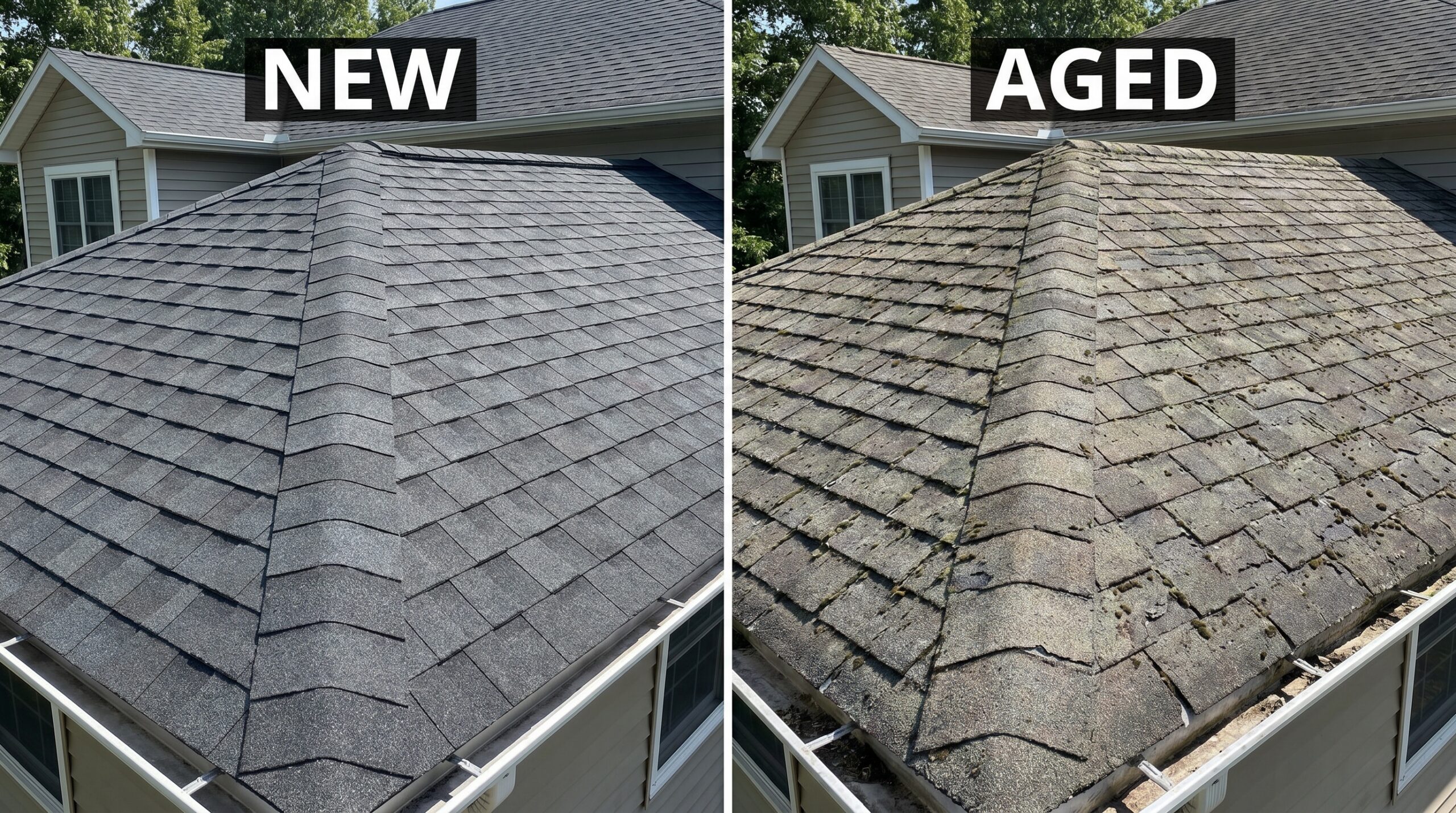
Water damage signs inside your home indicate serious problems. Ceiling stains, peeling paint, or mold growth in your attic suggest your roof’s protective barrier has failed. Don’t wait for major leaks to develop, as water damage spreads quickly and becomes expensive to repair.
Storm damage requires immediate attention in our area. After severe weather, check for creased shingles, lifted sections, or impact marks from hail. Even minor storm damage can compromise your roof’s integrity and lead to premature failure if not addressed promptly. As specialists in insurance restoration work, we often see how seemingly minor storm damage can significantly shorten a roof’s lifespan when left unaddressed.
Maximizing your shingle roof’s lifespan
Regular maintenance significantly extends your roof’s service life in Northeast Ohio’s challenging climate. Schedule annual professional inspections to catch small problems before they become major issues. After severe storms, have your roof checked even if you don’t see obvious damage from the ground.
Keep your roof clean and debris-free. Remove leaves, branches, and other materials that trap moisture against your shingles. This is especially important during our fall season when leaves accumulate heavily. Clean gutters regularly to prevent water backup that can damage roof edges and create ice dams during winter.
Trim overhanging tree branches to reduce shade and debris accumulation. While some shade can help protect shingles from UV damage, too much creates a damp environment that promotes moss and algae growth. These organisms hold moisture against your shingles and can cause premature deterioration.
Address small repairs immediately. Replace missing or damaged shingles as soon as you notice them. Reseal flashing around chimneys, vents, and other penetrations when you see gaps or cracks. These minor maintenance tasks can add several years to your roof’s life.
| Shingle Type | Typical Lifespan | Best Climate | Relative Cost |
|---|---|---|---|
| 30-Year Architectural | 20-25 years | Moderate | Baseline |
| 50-Year Premium | 30-35 years | All climates | 20-30% more |
| Lifetime Luxury | 35-50 years | Harsh conditions | 50-75% more |
Planning and budgeting for replacement
Start planning your roof replacement around the 18-year mark, even if your shingles look good. This timeline gives you adequate preparation time and helps avoid emergency situations during Northeast Ohio’s severe weather seasons that can limit your contractor choices and increase costs.
Replacement costs vary significantly based on your roof’s size, complexity, and local labor rates. In the Cleveland area, expect to invest between $8,000 to $15,000 for an average-sized home with architectural shingles. Factors like tear-off requirements, underlayment upgrades, and ventilation improvements affect final pricing.
Consider your long-term plans when choosing replacement shingles. If you’re planning to stay in your Northeast Ohio home for decades, investing in premium 50-year or lifetime shingles might provide better value despite higher upfront costs. These products typically last 30 to 40 years in real-world conditions.
Insurance coverage can significantly reduce replacement costs when storm damage is the cause. Document any damage with photos and contact your insurance company promptly after severe weather events. As a company specializing in insurance restoration, we help Cleveland-area homeowners navigate the claims process to ensure they receive fair coverage for storm-damaged roofs.
Understanding the realistic lifespan of 30-year architectural shingles helps you make informed decisions about maintenance, budgeting, and replacement timing. While you might not get the full 30 years from your roof, proper installation, regular maintenance, and proactive planning ensure you get maximum value from your investment. At Peak and Valley Roofing, we’ve helped homeowners throughout Rocky River, Cleveland, and Northeast Ohio maximize their roof’s lifespan through quality installation and honest guidance about realistic expectations.