

You’ve probably noticed those spinning metal vents on rooftops around your Rocky River and Cleveland neighborhood and wondered what they actually do. These are turbine roof vents, also called spinning roof vents or whirlybird vents, and they’re designed to pull hot, humid air out of your attic using wind power. They work by creating a vacuum effect when wind spins the turbine, drawing warm air from your attic space and helping regulate temperature and moisture levels in your home.
This guide will explain exactly how turbine roof vents work, their benefits and potential problems, how they compare to other ventilation options like ridge vents, and when you might need professional installation or replacement in Northeast Ohio’s climate.
Quick Fact: Turbine roof vents can move up to 347 cubic feet of air per minute when there’s a 15 mph wind, making them highly effective at reducing attic temperatures without using electricity.
What are turbine roof vents
Turbine roof vents are round, dome-shaped ventilation devices mounted on your roof that use wind power to create airflow. The basic design includes curved fins or blades arranged around a central shaft, all enclosed in a protective dome. When wind hits these fins, it causes the entire unit to spin, creating suction that pulls air from your attic.
These vents go by several names including spinning roof vents, attic wind turbines, turbo vents, and wind-driven roof ventilators. The key components include the rotating turbine head with curved fins, a central shaft with bearings, a base flange for roof mounting, and flashing to prevent water leaks.
Most turbine vents are made from aluminum or galvanized steel for durability and weather resistance – important considerations for Northeast Ohio’s variable weather conditions. They typically measure 12 to 14 inches in diameter and can handle attic spaces ranging from 1,200 to 2,400 square feet depending on the specific model and wind conditions.
How turbine roof vents create airflow
The physics behind turbine roof vents is straightforward. Hot air naturally rises due to convection, so your attic tends to trap warm, humid air during hot weather. When wind blows across the curved fins of a turbine vent, it causes the unit to rotate, creating a slight vacuum or negative pressure inside the vent.
This spinning action pulls the hot air from your attic up through the vent shaft and expels it outside. The faster the wind speed, the faster the turbine spins and the more air it moves. Even light breezes of 5-7 mph can get the turbine rotating and creating airflow – perfect for Cleveland’s often breezy conditions near Lake Erie.
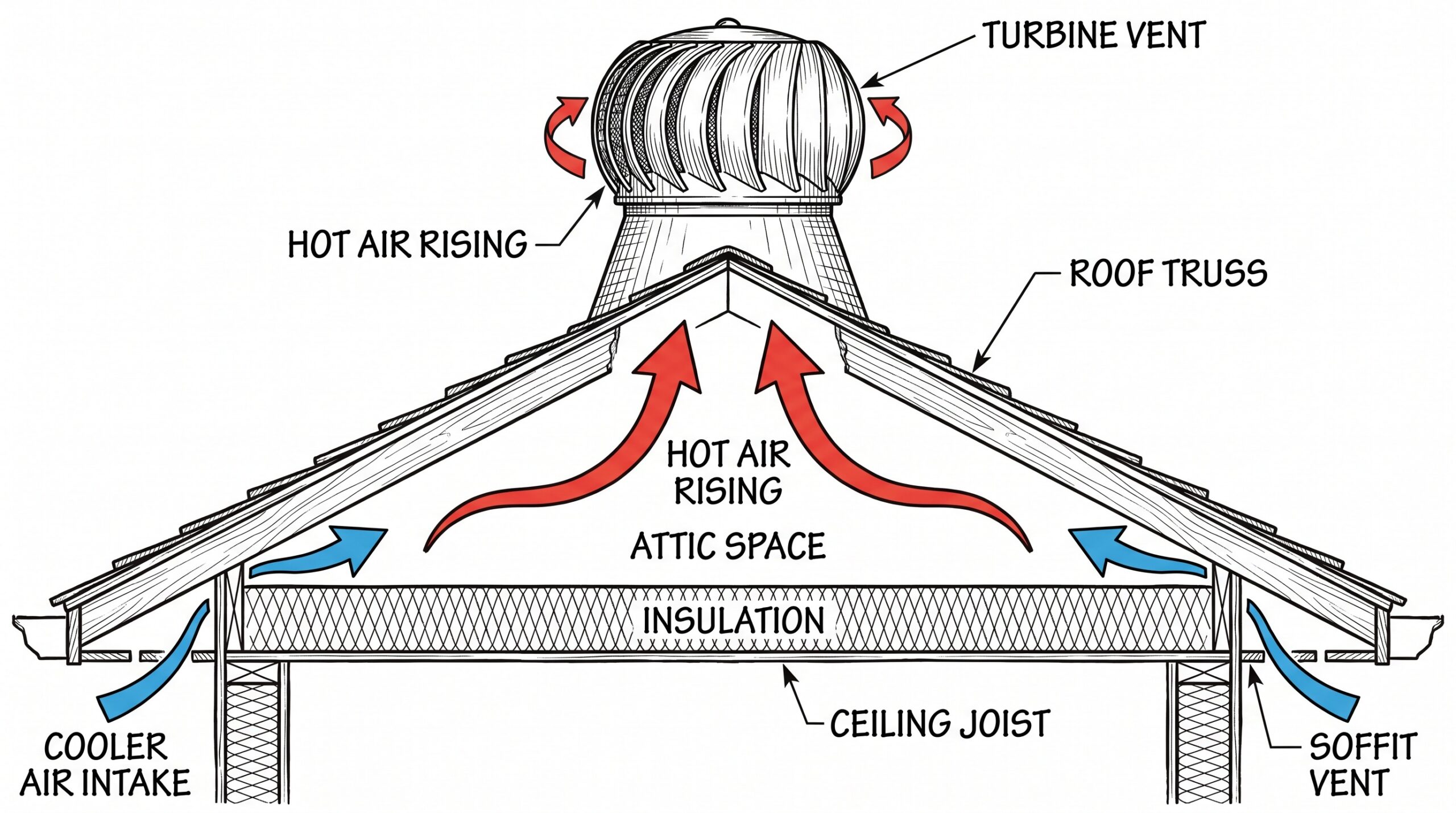
What many homeowners don’t realize is that turbine vents still work even when there’s no wind. Hot air will naturally rise and escape through the vent opening due to the stack effect, though not as efficiently as when the turbine is spinning. This passive ventilation ensures some air movement even on calm days.
For optimal performance, turbine vents need adequate intake ventilation at the soffit or eave level. This allows cooler outside air to enter the attic while hot air exits through the turbine, creating a continuous airflow cycle.
Benefits of installing turbine roof vents
Turbine roof vents offer several advantages for Northeast Ohio homeowners looking to improve attic ventilation. The primary benefit is temperature control – by removing hot air from your attic, these vents can reduce attic temperatures by 10-15 degrees Fahrenheit during summer months. This helps your air conditioning system work more efficiently and can lower cooling costs.
Moisture control is another significant advantage, especially important in our humid Cleveland climate. Turbine vents help prevent condensation buildup that can lead to mold growth, wood rot, and insulation damage. This is particularly crucial during Northeast Ohio winters when warm indoor air meets cold roof surfaces.
Energy Savings: Proper attic ventilation with turbine vents can reduce cooling costs by up to 10% by preventing heat buildup that forces your AC to work harder.
The spinning action of turbine vents makes them more effective than static vents at moving air. They’re also completely energy-free, unlike powered attic fans that consume electricity. Installation costs are typically lower than electric ventilation systems, and there are no ongoing operating expenses.
Turbine vents can also extend your roof’s lifespan by preventing ice dams in winter – a common problem in Northeast Ohio – and reducing thermal stress on roofing materials during hot weather. The improved airflow helps maintain more consistent temperatures across your roof surface.
Common problems with turbine roof vents
While turbine roof vents are generally reliable, they can develop issues over time, particularly in Northeast Ohio’s harsh weather conditions. The most common complaint is noise – squeaking, grinding, or rattling sounds that occur when bearings wear out or components become loose. This typically happens after 10-15 years of use, especially in areas with frequent high winds like those we experience near Lake Erie.
Leaks around the vent are another concern, usually caused by deteriorated flashing or improper installation. Water infiltration can damage your roof deck and attic insulation, so any signs of moisture around the vent base should be addressed promptly.
Some turbine vents may stop spinning due to debris buildup, damaged fins, or seized bearings. A non-spinning turbine still provides some passive ventilation but loses much of its effectiveness. Regular inspection can help identify these issues before they become major problems.
In areas with minimal wind, turbine vents may not perform as well as expected. They work best in locations that receive consistent breezes throughout the day. Homes in heavily wooded areas or urban settings with tall buildings may not get enough wind exposure for optimal turbine performance, though most Cleveland-area homes have adequate wind exposure.
Turbine vents vs other roof ventilation options
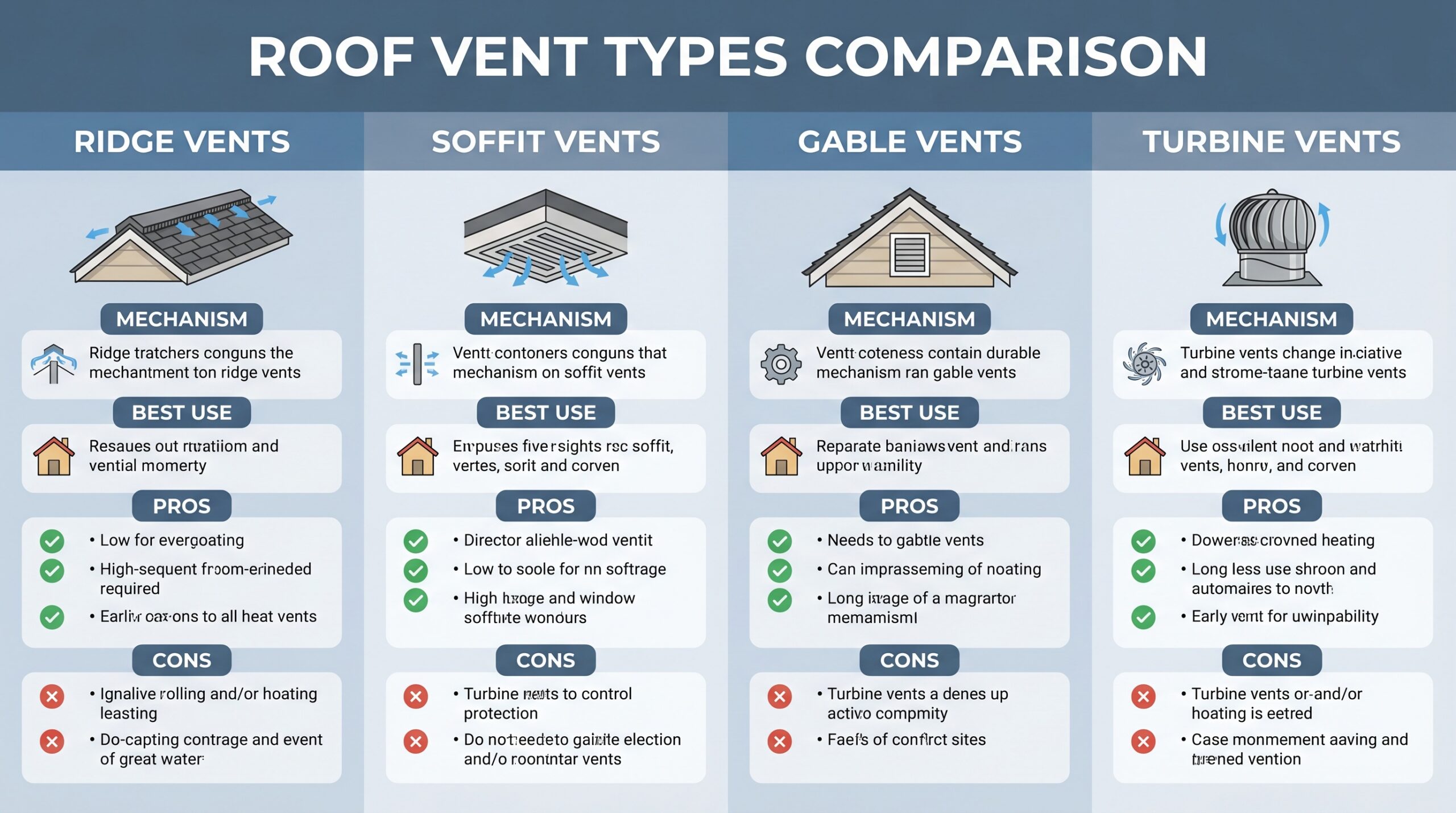
Understanding how turbine vents compare to other ventilation systems helps you make the best choice for your Northeast Ohio home. Ridge vents are the main alternative, running along the peak of your roof to provide continuous exhaust ventilation.
| Feature | Turbine Vents | Ridge Vents | Powered Fans |
|---|---|---|---|
| Airflow Rate | High (wind-dependent) | Moderate (consistent) | Very High |
| Energy Use | None | None | Electric required |
| Visibility | Noticeable | Nearly invisible | Noticeable |
| Maintenance | Low to moderate | Very low | Moderate |
Ridge vents offer more consistent performance regardless of wind conditions and are virtually invisible from ground level. However, they require adequate soffit ventilation to work effectively and may need more linear footage for larger attics.
Powered attic fans move the most air but consume electricity and can create negative pressure that pulls conditioned air from your living space if the attic isn’t properly sealed. Static vents are the most basic option but provide limited airflow compared to turbine or ridge systems.
The best choice depends on your roof design, local wind patterns, and ventilation needs. Many roofing professionals in the Cleveland area recommend ridge vents for new construction and turbine vents for retrofit applications where ridge installation isn’t practical.
When to call a professional for turbine vent service
Several situations warrant professional inspection or service of your turbine roof vents. If you notice persistent noise that doesn’t improve with basic maintenance, it’s time to have the bearings and moving parts evaluated. Continuing to operate a noisy turbine can lead to complete failure and potential roof damage.
Visible signs of wear like rust, cracked fins, or wobbling during rotation indicate the vent needs replacement. Most turbine vents last 10-15 years with proper maintenance, but Northeast Ohio’s harsh weather conditions can shorten their lifespan.
Professional Tip: If your attic temperature exceeds 150°F during summer or you notice condensation and musty odors, your ventilation system may need upgrading or additional vents.
Water stains around the vent base or in the attic below suggest flashing problems that require immediate attention. Roof leaks can cause extensive damage if not addressed quickly by qualified roofers familiar with Northeast Ohio’s weather challenges.
When planning a roof replacement, it’s an ideal time to evaluate your entire ventilation system. A roofing professional can assess whether your current turbine vents are properly sized and positioned, or if a different ventilation approach would work better for your home.
Professional installation ensures proper flashing, adequate structural support, and compliance with building codes. While turbine vents may seem simple, incorrect installation can lead to leaks, inadequate performance, and voided warranties. At Peak and Valley Roofing, we specialize in helping Rocky River and Cleveland-area homeowners choose and install the right ventilation solutions for their specific needs.
Turbine roof vents provide an effective, energy-free solution for attic ventilation when properly installed and maintained. They work best in areas with regular wind exposure and can significantly improve your home’s comfort and energy efficiency. If you’re experiencing attic ventilation issues or considering upgrading your current system, consulting with a qualified roofing contractor familiar with Northeast Ohio’s climate will help you determine the best approach for your specific situation and local weather conditions.