When you’re searching for a BBB accredited roofer in Northeast Ohio, you’re already ahead of most homeowners. You understand that protecting your investment requires more than just picking the first contractor who knocks on your door after a hail storm. But here’s what many don’t realize: BBB accreditation is just the starting point, not the finish line.
Cleveland’s lakefront climate creates unique challenges that go far beyond what standard accreditation covers. Between heavy lake-effect snow loads, high winds off Lake Erie, and brutal freeze-thaw cycles, your roof needs more than a trustworthy contractor. It needs someone who understands the technical demands of Ohio weather.
Quick Answer: BBB accreditation means a roofer has committed to business standards and complaint resolution processes, but it doesn’t verify technical expertise, proper insurance coverage, or the specific manufacturer certifications needed for Ohio’s harsh winters.
At Peak and Valley Roofing, we believe informed homeowners make better decisions. Here’s exactly what BBB accreditation means, what it doesn’t cover, and the complete checklist you need before signing any roofing contract in Northeast Ohio.
What BBB accreditation actually tells you
BBB accreditation differs significantly from a simple BBB rating. When a roofing company earns accreditation, they’ve voluntarily applied and met specific eligibility requirements while committing to BBB Standards for Trust.
This typically means the business maintains transparent communication practices, responds to customer complaints within reasonable timeframes, and operates under their legal business name. In a market like Cleveland, where “storm chasers” often appear after severe weather, this accreditation helps separate established local businesses from fly-by-night operations.
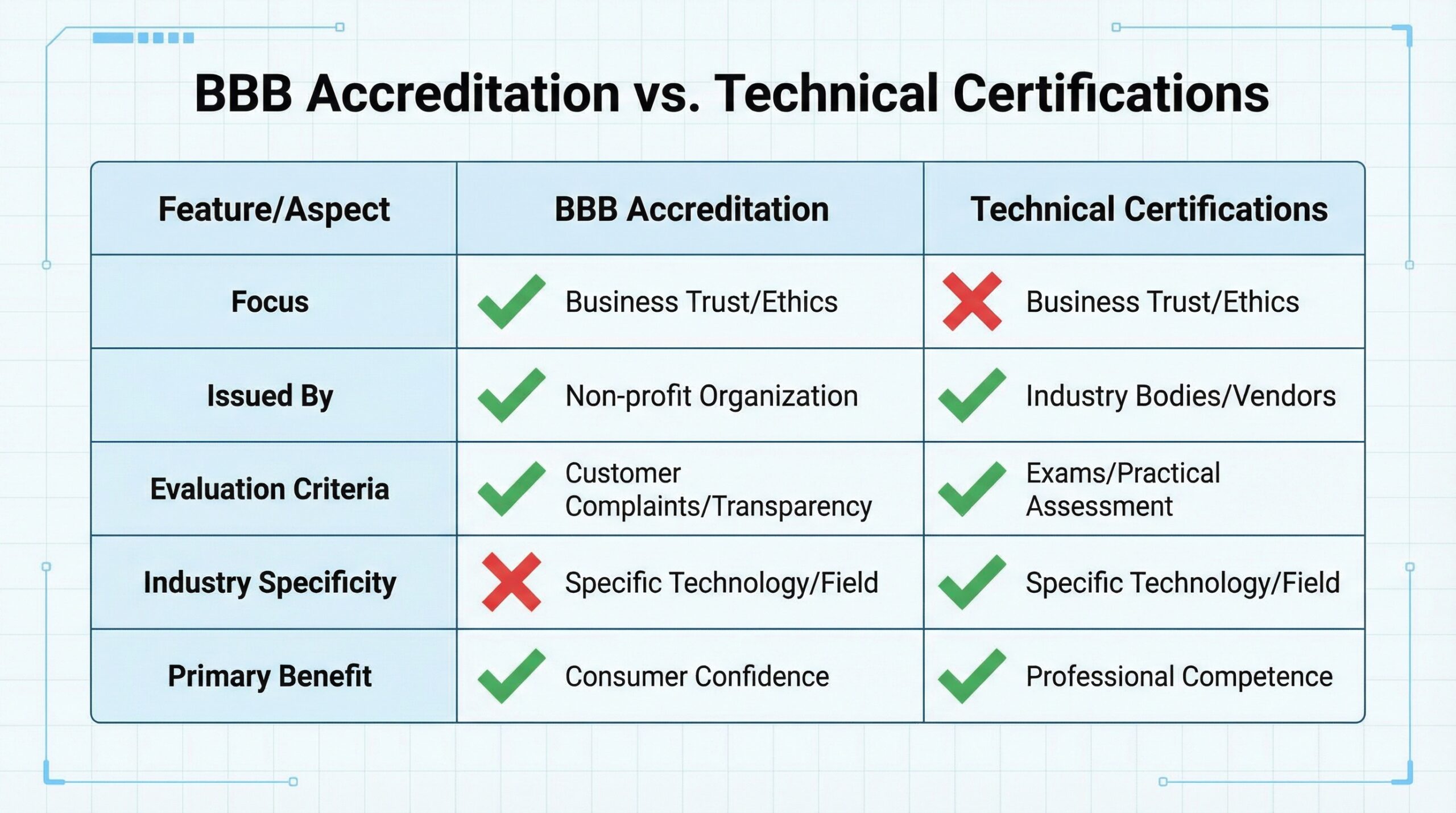
However, accreditation focuses on business practices rather than technical competency. A BBB accredited roofer might excel at customer service while lacking the specialized knowledge needed for Ohio’s challenging attic ventilation and ice dam prevention requirements.
The value lies in risk reduction. Accredited businesses are less likely to disappear mid-project or ignore warranty claims, which provides important peace of mind for a major home investment.
What BBB accreditation doesn’t guarantee
While BBB accreditation offers valuable assurance about business practices, it doesn’t verify the technical aspects that determine whether your roof will actually survive a Northeast Ohio winter.
Accreditation doesn’t confirm that installers hold manufacturer certifications (like Owens Corning Platinum Preferred), which are often required for the best long-term warranties. It doesn’t verify that the company understands Ohio’s specific ventilation requirements, which are critical to prevent the ice dams that plague homes in Rocky River and Shaker Heights.
Insurance coverage represents another gap. BBB accreditation doesn’t guarantee adequate liability limits for your property value or confirm that Ohio Bureau of Workers’ Compensation (BWC) coverage remains current. Many homeowners discover coverage gaps only after accidents occur on their property.
The contract details that protect you from cost overruns also fall outside BBB’s scope. Accreditation won’t prevent vague scopes of work, surprise change orders for “unforeseen” plywood replacement, or warranty language that becomes meaningless when you need it most.
Critical Insight: 80% of warranty claim denials result from improper installation rather than material defects, highlighting why technical verification matters more than business accreditation alone in the Midwest.
Your Northeast Ohio roofer verification checklist
Start with municipal registration verification. Unlike some states, Ohio roofing licenses are often handled at the city level (such as Rocky River or Westlake). Confirm the legal business name matches your contract exactly and check that their registration with your specific city building department is current.
Insurance verification requires requesting current certificates showing both general liability and active Ohio BWC coverage. Don’t accept expired certificates. The coverage dates must include your project timeline, and liability limits should reflect your property value to protect you from personal loss.
For manufacturer warranties, ask specific questions about certification status. If a contractor promises “lifetime” warranties, they should hold current elite certifications and commit to registering the warranty in your name using matching system components (shingles, underlayment, and ice/water shield). Understanding whether your roof warranty is actually worthless can save you from costly surprises down the road.
Ice dam prevention planning separates experienced Ohio roofers from general contractors. Ask how they calculate intake and exhaust requirements for your specific attic space. Request a clear plan for ice and water shield installation, which should extend at least 24 inches inside the warm wall line per local building codes.
Before finalizing your decision, make sure you’re armed with the right questions to ask your roofing contractor to ensure they meet both business and technical standards.
Ohio-specific considerations
Northeast Ohio’s environment creates roofing challenges that many contractors underestimate. Lake-effect moisture accelerates wood rot if ventilation is poor, while rapid temperature changes—swinging from 60°F to 10°F in 24 hours—stress roofing systems to their limits.
High winds off Lake Erie require enhanced fastening patterns (6-nail vs. 4-nail) and high-wind-rated shingles that exceed standard building codes. Many out-of-state contractors lack experience with these local requirements.
Flashing details are critical in our freeze-thaw environment. Standard flashing techniques that work in milder climates often fail during our harsh winters when snow sits in roof valleys for weeks. Your contractor should specify heavy-duty flashing at all wall and chimney intersections.
Historic district requirements, such as those in the **Heritage Home Program** areas like Lakewood or Cleveland Heights, add another layer of complexity regarding material and color choices.
Local Weather Impact: Northeast Ohio experiences some of the most aggressive freeze-thaw cycles in the country, which can destroy improperly installed systems within five years if moisture isn’t managed correctly.
The combination of these factors means that BBB accreditation, while valuable, represents just the first filter in your selection process. Technical expertise specific to Ohio conditions matters more for long-term roof performance.
Your next step involves scheduling detailed inspections with contractors who understand these local challenges. Look for companies that provide written ventilation assessments and offer specific solutions for lake-effect weather patterns. A comprehensive roof inspection should be the foundation of any roofing project.
Remember that the lowest bid often reflects corner-cutting on the technical details—like using cheaper underlayment or skipping starter shingles—that matter most in our harsh climate. If you’re considering winter work, be aware of temperature limitations for roof installation that can affect how well shingles seal.
Additionally, if you’re planning to add solar panels, understanding why you should choose a roofer for your solar project can prevent leaks and ensure your roof deck is strong enough for the extra load.
| Verification Item | What to Check | Why It Matters in Ohio |
|---|---|---|
| License/Registration | Current city-specific registration | Legal protection and city permit eligibility |
| Insurance Coverage | General liability + Active Ohio BWC | Prevents homeowner liability for injuries |
| Manufacturer Status | Platinum or Preferred certifications | Ensures long-term labor and material warranties |
| Ice Dam Expertise | Ventilation and Shielding Plan | Prevents structural rot and interior water damage |
The right contractor will welcome these questions. If you encounter resistance or vague responses, continue your search until you find someone who demonstrates both business integrity and the technical competency required for Northeast Ohio’s demanding conditions.