
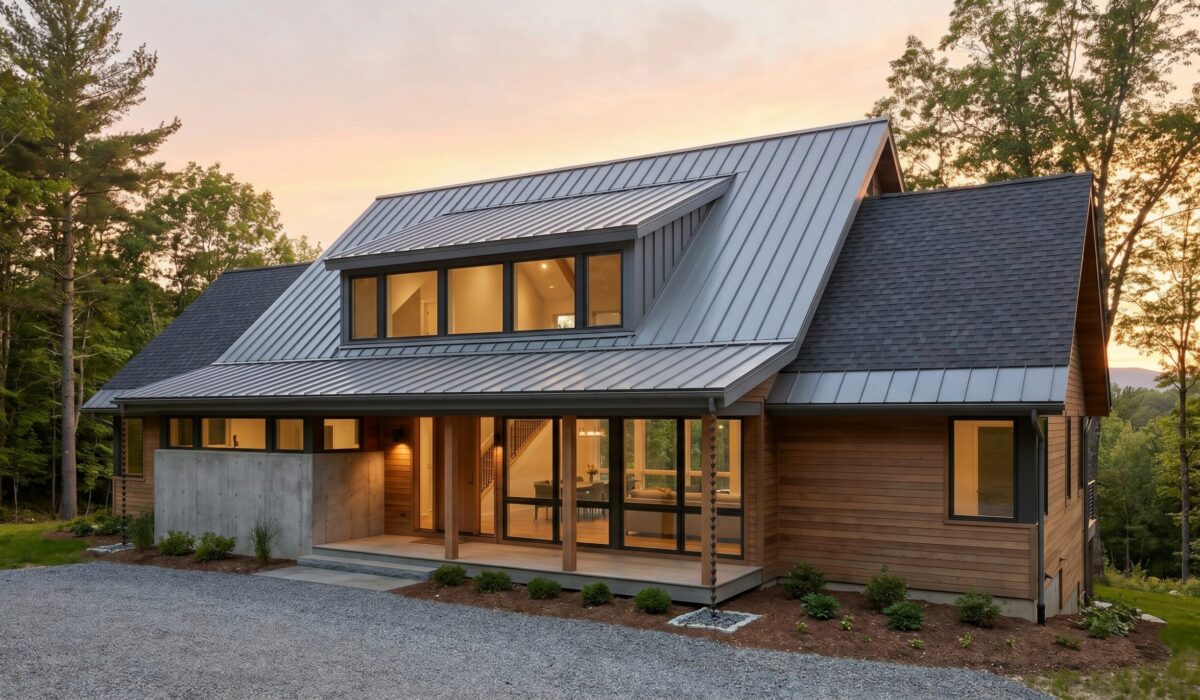
Yes, you can absolutely combine metal roofing and asphalt shingles on the same house. This hybrid approach, often called a combination roof system, allows homeowners to strategically place each material where it performs best while managing costs and enhancing curb appeal.
The key decisions you’ll face include where to use each material, how the combination affects your budget, and finding a contractor skilled in both roofing systems. Most Northeast Ohio homeowners choose this approach to add metal accents over porches, dormers, or bay windows while keeping asphalt shingles on the main roof sections.
Quick Answer: Metal and shingle combinations work best when metal is used for high-wear areas like porches, low-slope sections, and architectural accents, while shingles cover the main roof area to control costs.
In this guide, you’ll learn about popular design configurations, the pros and cons of mixing materials, cost considerations, technical requirements for proper installation, and how to choose the right contractor for your project.
Common ways homeowners use mixed metal and shingle roofs
The most popular approach involves adding metal roofing to specific architectural features while keeping asphalt shingles on the primary roof area. This strategy maximizes the benefits of both materials without the full expense of a complete metal roof.
Metal porch roofs with shingle main roofs represent the most common combination. Front porches, side porches, and covered entryways benefit from metal’s superior water-shedding ability and longevity, while the main house roof uses more affordable asphalt shingles.
Accent roofing over dormers and bay windows creates visual interest and improved performance. These smaller roof sections often experience more weather exposure, making metal an excellent choice for durability. The contrast between materials also enhances the home’s architectural character.
Farmhouse and modern style combinations use metal on specific roof facets or sections. Some homeowners choose metal for the front-facing roof sections and shingles for less visible areas, creating a balanced look that fits traditional or contemporary design preferences.
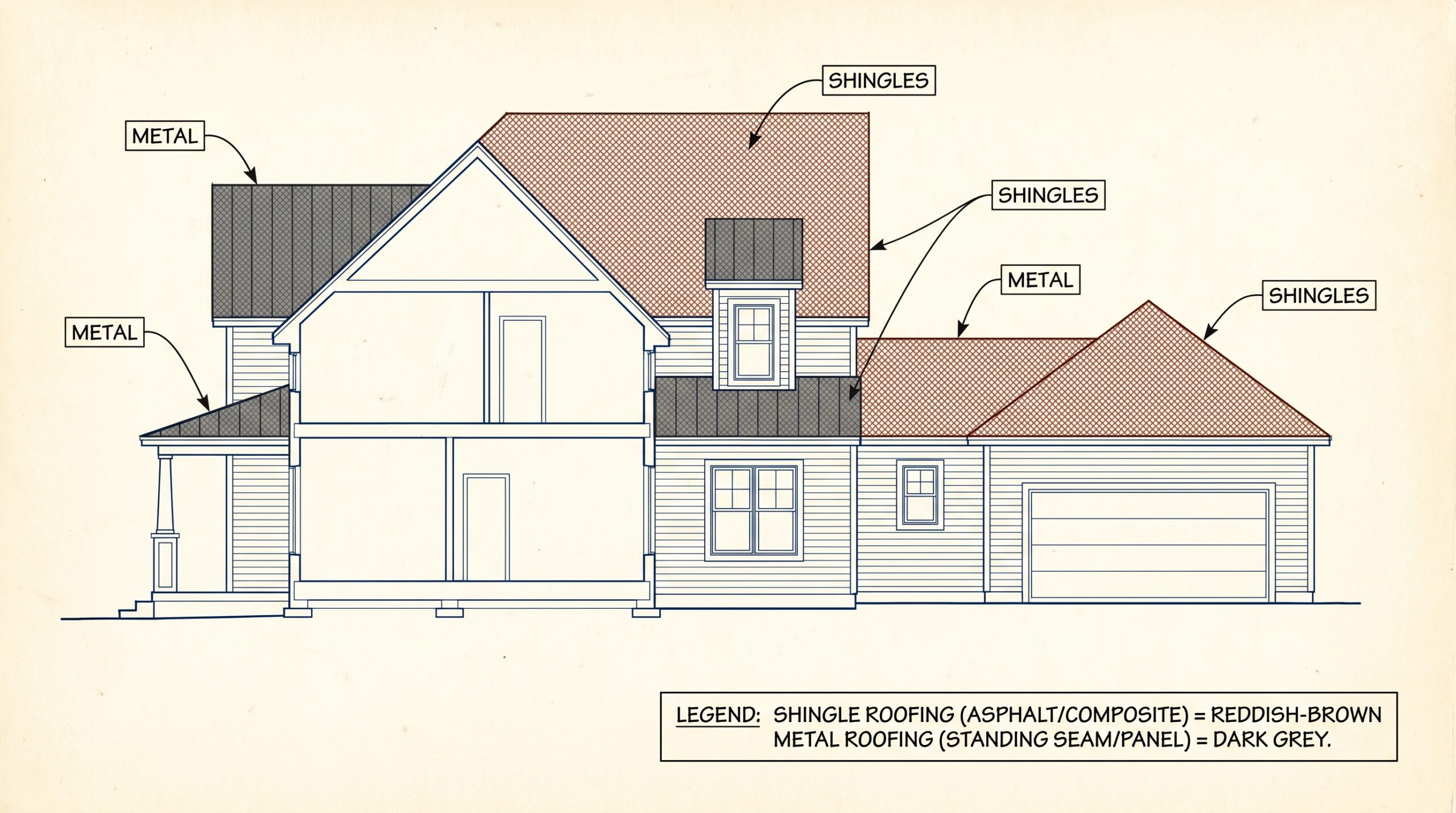
Partial metal on high-wear areas addresses performance concerns. Valleys, low-slope sections, and areas prone to ice damming often perform better with metal roofing, while standard-pitch sections work well with quality asphalt shingles.
Benefits and challenges of combination roofing systems
Enhanced durability where it matters most tops the list of advantages. Metal sections can last 40-50 years while protecting vulnerable areas like porches and low slopes, while asphalt shingles provide 20-30 years of reliable performance on main roof areas at a lower cost.
Improved curb appeal and architectural interest comes from the visual contrast between materials. Metal accents can modernize traditional homes or add sophisticated touches to new construction, often increasing property value more than the additional cost of the metal sections.
Cost-effective performance upgrades allow you to get some benefits of metal roofing without the full investment. You can protect high-wear areas with durable metal while using proven asphalt shingles for the majority of your roof surface.
However, increased installation complexity presents the main challenge. Transitions between materials require specialized flashing and careful attention to water management. Not all roofing contractors have experience with both systems or know how to properly join them.
Important Consideration: The transition points between metal and shingles are the most vulnerable areas for leaks if not installed correctly by experienced professionals.
Different replacement schedules create long-term planning considerations. When your asphalt shingles need replacement in 20-25 years, the metal sections will likely still have decades of life remaining, potentially complicating future roof work.
Cost considerations for metal and shingle combinations
Understanding the financial impact helps you make informed decisions about where to use each material. Metal roofing typically costs 2-3 times more per square foot than architectural asphalt shingles, but the total project cost depends on how much of each material you use.
Strategic metal placement can deliver significant value. Using metal on 20-30% of your roof area for porches, dormers, and accents provides much of the visual and performance benefit at a fraction of the cost of a full metal roof.
| Roof Type | Cost Range per Sq Ft | Typical Lifespan | Best Use Cases |
|---|---|---|---|
| Asphalt Shingles | $4-7 | 20-30 years | Main roof areas, standard slopes |
| Standing Seam Metal | $12-18 | 40-50 years | Porches, low slopes, accents |
| Combination System | $6-10 average | Varies by section | Balanced performance and cost |
Labor costs increase with combination systems because they require more skill and time. Proper flashing, transition details, and coordination between materials add complexity that experienced contractors charge appropriately for.
Long-term value considerations often favor strategic metal use. While upfront costs are higher, metal sections require less maintenance and last significantly longer, potentially providing better value over the roof’s lifetime.
Installation requirements and technical considerations
Successful combination roofs start with proper planning and structural assessment. Your roof deck must be in good condition to support both materials, and the slope requirements for each section need evaluation.
Structural and slope compatibility forms the foundation. Metal roofing can work on slopes as low as 1/4:12 with proper installation, while asphalt shingles typically require 2:12 or steeper. Your existing roof structure usually handles both materials without modification.
Underlayment and moisture management require careful coordination. High-quality synthetic underlayment works well under both materials, but transition areas need ice and water shield protection. Proper ventilation becomes even more critical with mixed systems.

Transition flashing and details represent the most critical technical aspect. Metal-to-shingle junctions need specialized transition strips, step flashing, and sealants designed to handle different expansion rates and water flow patterns.
Professional installation requirements cannot be overstated. The complexity of properly joining different roofing systems requires contractors experienced with both materials and familiar with local building codes for mixed roof applications.
Choosing the right contractor for your combination roof
Finding a contractor qualified to install both metal roofing and asphalt shingles properly makes the difference between a successful project and future problems. Not all roofing companies offer combination installations.
Essential qualifications to verify include current licensing for your area, insurance coverage for both material types, and documented experience with hybrid roof systems. Ask to see photos of similar combination projects they’ve completed recently.
Key questions to ask potential contractors should cover their approach to transition details, what underlayment systems they recommend, how they handle warranties for mixed materials, and their process for ensuring proper water management at junctions.
Warning signs of inexperienced installers include reluctance to discuss technical details, inability to explain transition flashing requirements, pressure to use only one material type, or quotes that seem unusually low compared to other qualified contractors.
Contractor Tip: Ask specifically about their experience with metal-to-shingle transitions and request references from recent combination roof projects you can contact.
Warranty considerations become more complex with mixed systems. Each material typically carries its own manufacturer warranty, and your contractor’s workmanship warranty should cover the entire installation, including transition areas.
At Peak and Valley Roofing, we have extensive experience with both asphalt shingle and metal roofing systems throughout the Cleveland area and Northeast Ohio, including the specialized techniques required for successful combinations. Our team understands the technical requirements for proper transitions and can help you design a system that balances performance, aesthetics, and budget for your specific home and goals. As a family-owned company specializing in insurance restoration work, we also provide honest, no-pressure consultations to help you make the best decision for your property.
The key to a successful metal and shingle combination lies in thoughtful planning, quality materials, and skilled installation. When done correctly, this approach can provide decades of reliable performance while enhancing your home’s appearance and value.