

Choosing a new roof can feel overwhelming, especially when you keep hearing about composite shingles but aren’t sure what they actually are. Composite roof shingles are engineered materials made from recycled plastics, rubber, fiberglass, and synthetic polymers designed to mimic premium materials like slate and cedar shake. They typically cost more than asphalt shingles but far less than natural slate, while lasting 30-50 years with proper installation.
Quick fact: Composite shingles cost $8-14 per square foot installed and can withstand winds up to 130 mph, making them an excellent middle-ground option for Cleveland homeowners wanting premium looks without extreme costs.
At Peak and Valley Roofing, we’ve helped Northeast Ohio homeowners navigate roofing decisions since our founding. This guide covers what composite shingles are made of, their advantages and disadvantages, realistic cost expectations, and how they stack up against traditional roofing materials so you can make the right choice for your Cleveland-area home.
What are composite roof shingles made of?
Composite shingles, also called synthetic or engineered shingles, are manufactured from various blends of materials depending on the manufacturer. The most common compositions include recycled plastics and rubber, fiberglass, synthetic polymers, and sometimes actual fragments of the materials they’re designed to replicate.
The manufacturing process involves creating detailed molds from real slate or cedar shake, allowing composite shingles to replicate these premium materials with remarkable accuracy. Different manufacturers use different formulations – some focus on recycled content for eco-friendliness, while others like DaVinci Roofscapes use virgin synthetic polymers for enhanced durability.
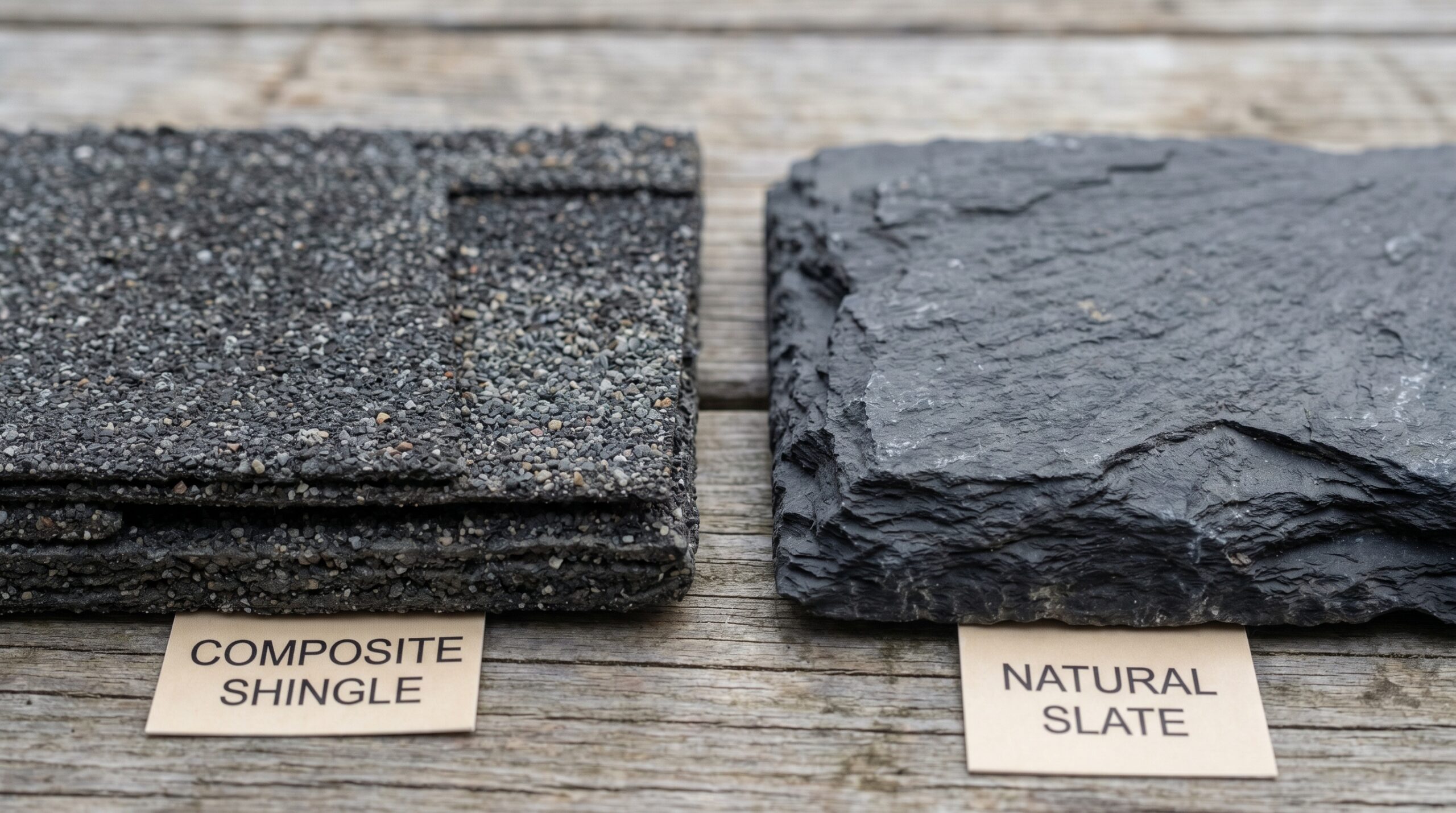
What makes composite shingles particularly appealing is their lightweight construction compared to natural materials. While natural slate can weigh 700-3,000 pounds per square, composite slate-look shingles typically weigh only 150-350 pounds per square. This means most Cleveland-area homes don’t need structural reinforcement, which significantly reduces installation costs and complexity.
Advantages of composite roof shingles
The biggest advantage of composite shingles is their ability to deliver premium curb appeal at a fraction of the cost of natural materials. Manufacturers pay attention to fine details like chisel marks on slate-look products and authentic grain patterns on cedar-shake styles, making it nearly impossible to tell the difference from ground level.
Durability stands out as another major benefit, especially in Northeast Ohio’s challenging weather conditions. Quality composite shingles routinely last 40-50 years in harsh climates like Cleveland’s, compared to 20-25 years for even high-quality asphalt shingles. Many premium brands carry Class 4 impact ratings – the highest rating possible – meaning they can withstand hail up to 2 inches in diameter and winds between 110-130 mph.
Key insight: The extended 40-50 year lifespan means you’ll likely need only one roof installation instead of two asphalt replacements, making composites a smart long-term investment despite higher upfront costs.
Maintenance requirements are minimal compared to natural cedar shake, which needs regular sealing and treatment to prevent decay. Composite shingles won’t rot, crack, or curl like wood, and they resist moss and algae growth that commonly affects natural materials in Ohio’s humid climate. Many are also made from recycled materials, making them an environmentally conscious choice that can often be recycled again at the end of their lifespan.
Drawbacks and limitations to consider
The most significant drawback is cost. Composite shingles typically run $8-14 per square foot installed, substantially more expensive than asphalt shingles at $4-9 per square foot. For a 2,000-square-foot roof in the Cleveland area, you’re looking at $16,000-$28,000 for composite versus $8,000-$18,000 for asphalt.
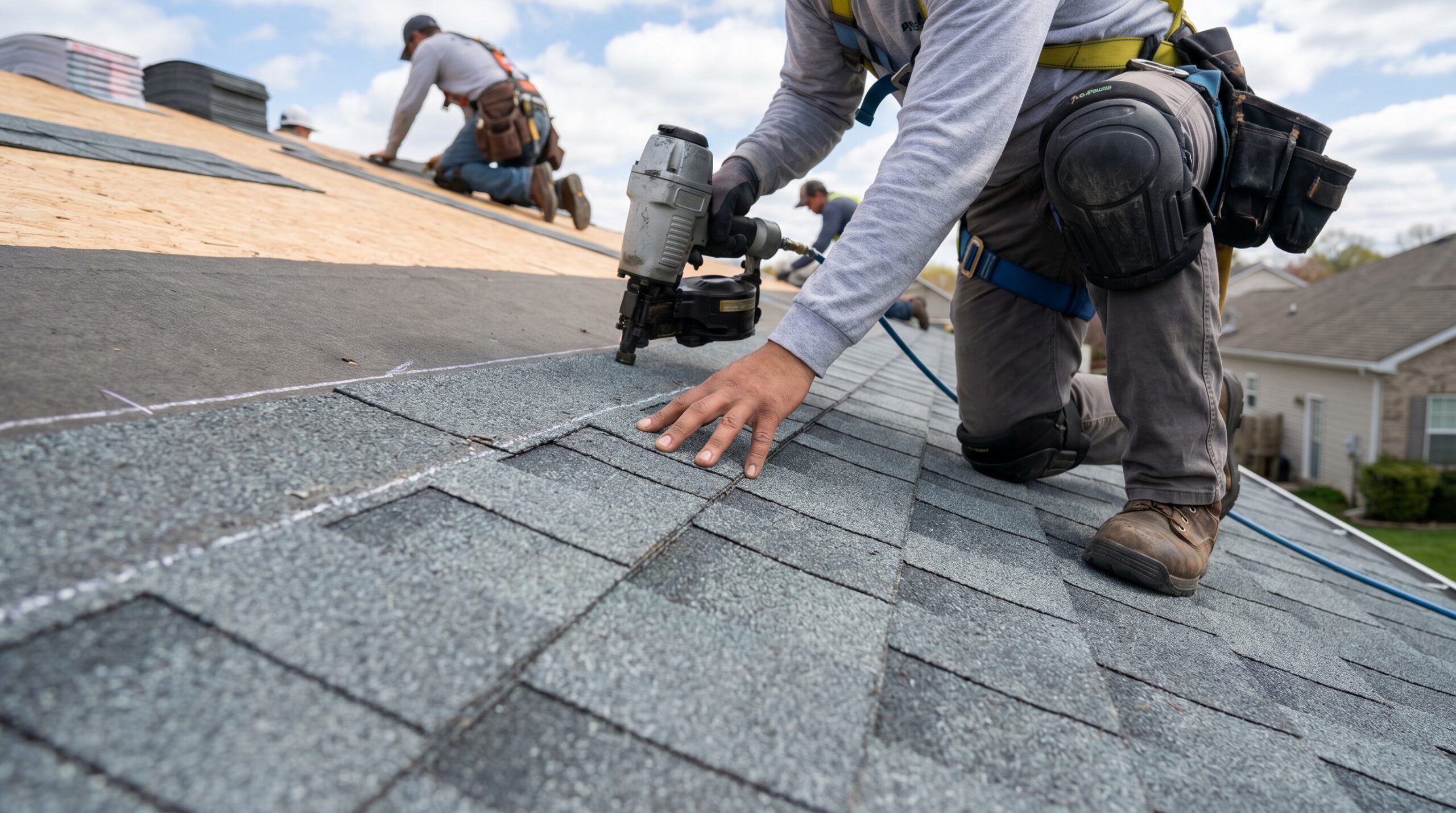
Installation complexity creates another challenge. Composite shingles require specific installation techniques, including open valleys since the shingles can’t bend like asphalt. They’re installed one at a time with precise exposures, requiring contractors experienced with synthetic materials. Not all roofing professionals in Northeast Ohio are familiar with these techniques, which can limit your contractor options or increase labor costs.
Being relatively new to the roofing industry means there’s less long-term performance data compared to asphalt shingles. While manufacturers offer extensive warranties – often 30-50 years or even lifetime limited warranties – real-world performance data relies more on accelerated lab testing than decades of field experience. Some homeowners also report potential color fading over time, though this varies significantly by brand and UV-resistant coating quality.
Cost breakdown and value comparison
Understanding composite shingle costs requires looking beyond the initial price tag. Material costs typically account for 40-60% of the total project cost, with labor making up the remainder due to the complex installation requirements.
| Material | Cost per Sq Ft | Average Lifespan | Cost per Year |
|---|---|---|---|
| Composite | $8-14 | 40-50 years | $0.16-0.35 |
| Asphalt | $4-9 | 20-25 years | $0.16-0.45 |
| Cedar Shake | $12-20 | 25-35 years | $0.34-0.80 |
| Natural Slate | $15-30 | 75-100 years | $0.15-0.40 |
When you calculate cost per year of service life, composite shingles often provide excellent value. The 40-50 year lifespan means avoiding a second roof replacement that asphalt would require, and the Class 4 impact resistance can qualify you for insurance premium discounts in many areas – particularly valuable given Ohio’s severe weather patterns.
Premium composite brands like DaVinci sit at the higher end of the price range, while fiberglass-based composite options tend to be more affordable. Factors that drive costs up include complex roof designs, steep pitches, and premium features like metal accents or copper flashing.
How composite shingles compare to other materials
When comparing composite shingles to asphalt, the trade-off is clear: higher upfront cost for significantly longer lifespan and better storm resistance. Asphalt shingles work well for budget-conscious homeowners or those planning to sell within 10-15 years, but composite makes more sense for long-term owners in areas with severe weather like Northeast Ohio.
Against natural cedar shake, composite offers similar aesthetics without the maintenance headaches. Cedar requires regular treatments to prevent rot and insect damage, while composite maintains its appearance with minimal upkeep. However, some homeowners prefer the authentic aging process of real wood.
Compared to natural slate, composite provides 80% of the visual appeal at roughly half the cost and weight, making them among the longest-lasting roofing materials. Natural slate lasts longer and has unmatched authenticity, but requires structural reinforcement and specialized installation that can double the project cost. Composite slate-look shingles give you the sophisticated appearance without the engineering challenges.
The decision often comes down to your priorities: budget (asphalt), authenticity (natural materials), or the sweet spot of premium looks with practical benefits (composite) when considering the best types of roofing materials. For most Cleveland-area homeowners wanting an upscale appearance with minimal long-term hassle, composite shingles represent an excellent middle ground that delivers both curb appeal and peace of mind.
Consider your local climate, how long you plan to stay in your home, and your budget for both initial installation and ongoing maintenance. Composite shingles work particularly well for homeowners in storm-prone areas like Northeast Ohio who want premium aesthetics without the extreme costs or structural requirements of natural slate or the maintenance demands of cedar shake.