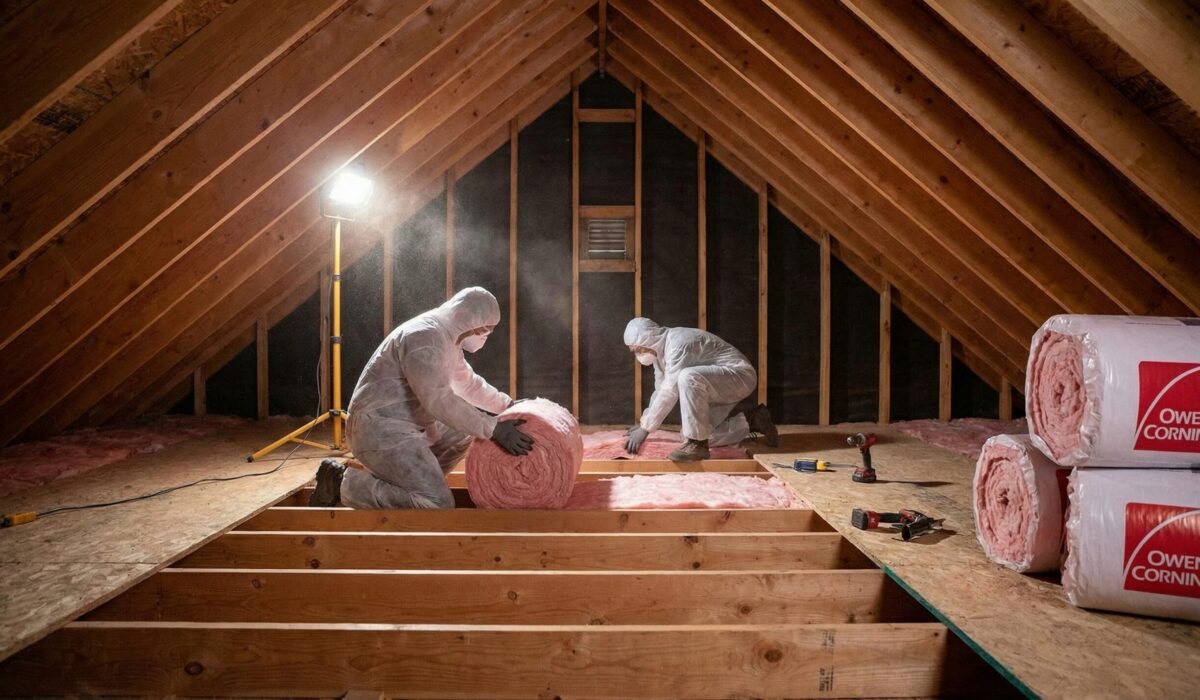
Your attic insulation directly impacts how long your roof will last. In Northeast Ohio’s harsh climate, inadequate insulation can cut your roof’s lifespan in half while doubling your energy bills. Proper attic insulation creates a thermal barrier that prevents ice dams, reduces temperature stress on roofing materials, and maintains optimal conditions year-round.
Quick Fact: Homes with proper R-38 to R-49 attic insulation can extend roof lifespan by 5-10 years while saving 20-30% on heating and cooling costs.
The relationship between insulation and roof health becomes especially critical during Rocky River’s brutal winters and humid summers. When heat escapes through poorly insulated attics, it melts snow that refreezes at roof edges, creating destructive ice dams. Meanwhile, summer temperatures in inadequately insulated attics can reach 160°F, literally cooking your shingles from below.
How Poor Insulation Damages Your Roof
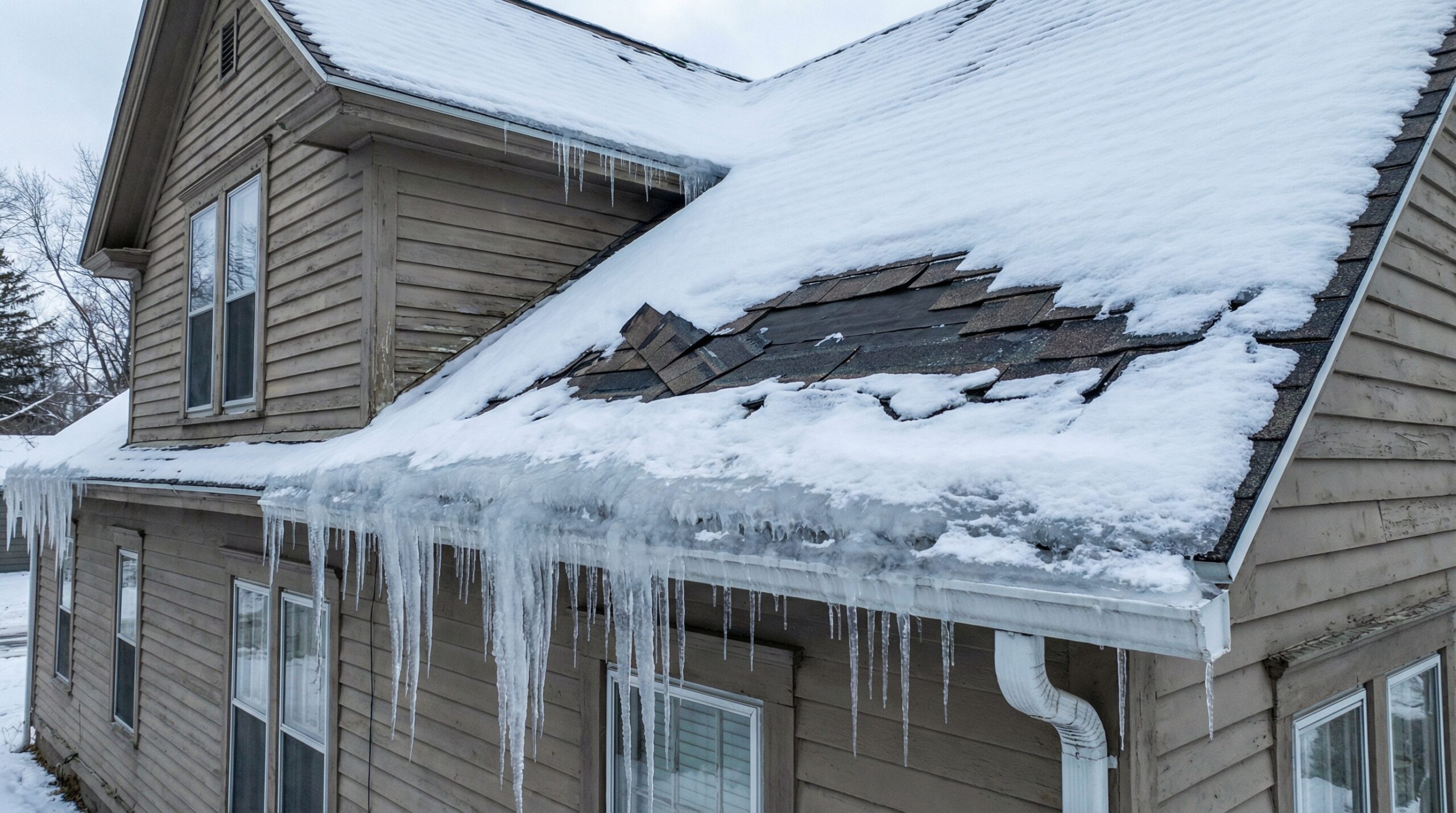
Poor attic insulation creates a cascade of problems that systematically destroy your roofing system. During winter months, heated air escaping through insufficient insulation melts snow on your roof surface. This water flows down and refreezes at the colder eaves, forming ice dams that can force water under shingles and into your home.
The freeze-thaw cycle puts tremendous stress on roofing materials. Shingles expand and contract repeatedly, causing granule loss, cracking, and premature aging.
Summer heat presents equally destructive challenges. Without proper insulation, attic temperatures soar to extreme levels that accelerate shingle deterioration. The intense heat breaks down asphalt compounds, causes adhesive failure, and can even warp roof decking. This thermal stress significantly shortens material lifespan and forces premature replacement.
Critical Insight: Research shows that insufficient attic ventilation and insulation can reduce roof lifespan by up to 50%.
Understanding R-Value Requirements for Northeast Ohio
Northeast Ohio’s climate zone requires specific R-value standards to protect your roof effectively. The Department of Energy recommends R-38 to R-60 for attic insulation in our region, though many older Rocky River homes fall short of these requirements.
R-value measures thermal resistance – how well material resists heat transfer. Higher R-values provide better insulation performance, creating more stable attic temperatures that protect roofing materials. Different insulation types deliver varying R-values per inch, making professional assessment crucial for determining your specific needs.
Current building codes establish minimum requirements, but exceeding these standards often provides better long-term value.
The investment in proper R-value pays dividends through extended roof life and reduced energy costs. Rocky River homeowners typically see 3-7 year payback periods on insulation upgrades, with additional benefits including improved comfort and increased property value.
Choosing the Right Insulation Type
Selecting appropriate insulation depends on your home’s specific needs, budget, and existing conditions. Each type offers distinct advantages for protecting roof health and extending system lifespan.
Fiberglass batt insulation provides cost-effective coverage when properly installed between joists and rafters. However, gaps and compression significantly reduce effectiveness. This option works well for accessible attics with standard joist spacing but requires careful installation to avoid thermal bridging.
Blown-in cellulose offers superior coverage by filling gaps and irregular spaces that batts cannot reach. This material settles over time but provides excellent fire resistance and fits well in existing Rocky River homes during retrofit projects. Professional installation ensures proper density for optimal thermal performance.
Spray foam insulation delivers the highest R-value per inch while creating an effective air seal. Though more expensive initially, closed-cell spray foam provides moisture barrier properties and exceptional durability. This option particularly benefits homes with complex roof lines or air leakage issues, working in conjunction with proper roof underlayment to create a complete moisture protection system.
| Insulation Type | R-Value/Inch | Best Application | Typical Cost |
|---|---|---|---|
| Fiberglass Batt | 3.2-3.8 | Standard joists | Low |
| Blown Cellulose | 3.6-3.8 | Retrofit projects | Medium |
| Spray Foam | 6.0-7.0 | Air sealing needs | High |
Ventilation and Maintenance for Long-Term Performance
Proper ventilation works hand-in-hand with insulation to protect your roof investment.
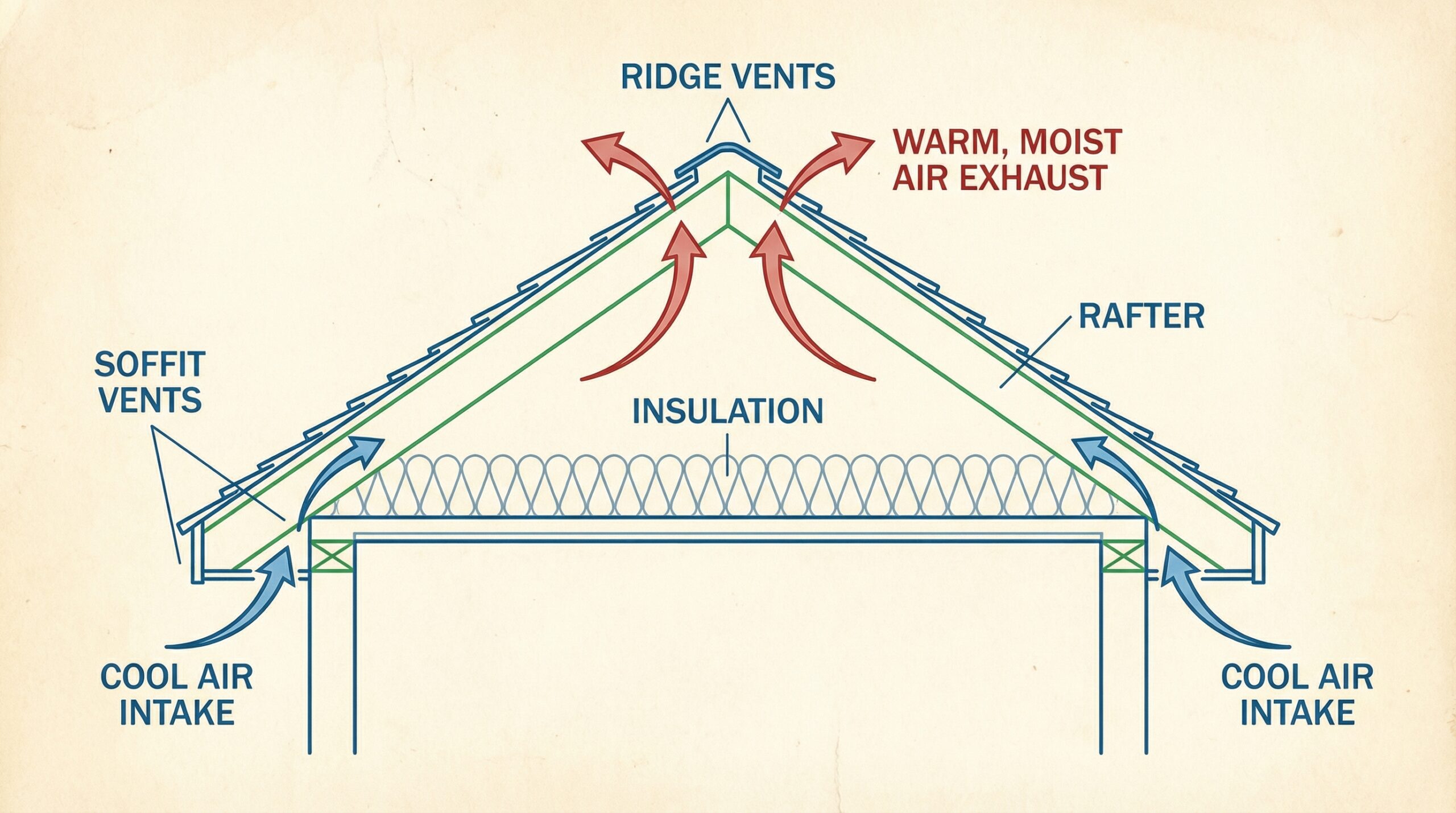
Ridge vents at the roof peak combined with soffit vents at the eaves create natural airflow that removes excess heat and moisture. This circulation prevents condensation that can damage insulation effectiveness and promote mold growth. Understanding roof ventilation systems and the 1:300 ratio guideline helps determine appropriate ventilation sizing for your specific roof area.
Maintenance Tip: Inspect your attic annually for compressed insulation, air leaks, and blocked ventilation pathways to maintain optimal roof protection.
Regular maintenance preserves insulation performance over time. Check for settling in blown-in materials, gaps around penetrations, and signs of moisture damage.
Professional assessment every few years ensures your insulation continues protecting your roof effectively. Peak and Valley Roofing provides comprehensive attic evaluations that identify areas needing attention before small issues become costly repairs. Additionally, maintaining soffit and fascia systems ensures proper ventilation pathways remain unobstructed.
Investing in proper attic insulation represents one of the most effective ways to extend your roof’s lifespan while reducing energy costs. The combination of appropriate R-value, quality installation, and regular maintenance creates optimal conditions that can add 5-10 years to your roofing system’s life. Understanding roof lifespan by material helps homeowners make informed decisions about insulation investments. For Rocky River homeowners facing Northeast Ohio’s challenging climate, this protection proves invaluable for long-term home value and comfort.