

Trees add beauty and value to your property, but they can also pose serious threats to your roof’s longevity. While mature trees provide natural cooling and enhance curb appeal, they create specific challenges that many homeowners don’t recognize until damage occurs. Understanding these risks and taking preventive action can save you thousands in unexpected repair costs.
Key insight: Tree-related roof damage causes over 30% of homeowner insurance claims during storm season, yet most damage is preventable with proper maintenance.
The relationship between trees and roofing systems is complex. Overhanging branches can scrape shingles during windy conditions, while falling debris clogs gutters and creates moisture problems. Dense tree coverage also prevents proper roof drying, leading to moss growth and premature material deterioration. The good news is that with the right approach, you can enjoy your trees while protecting your roof investment.
Common ways trees damage your roof
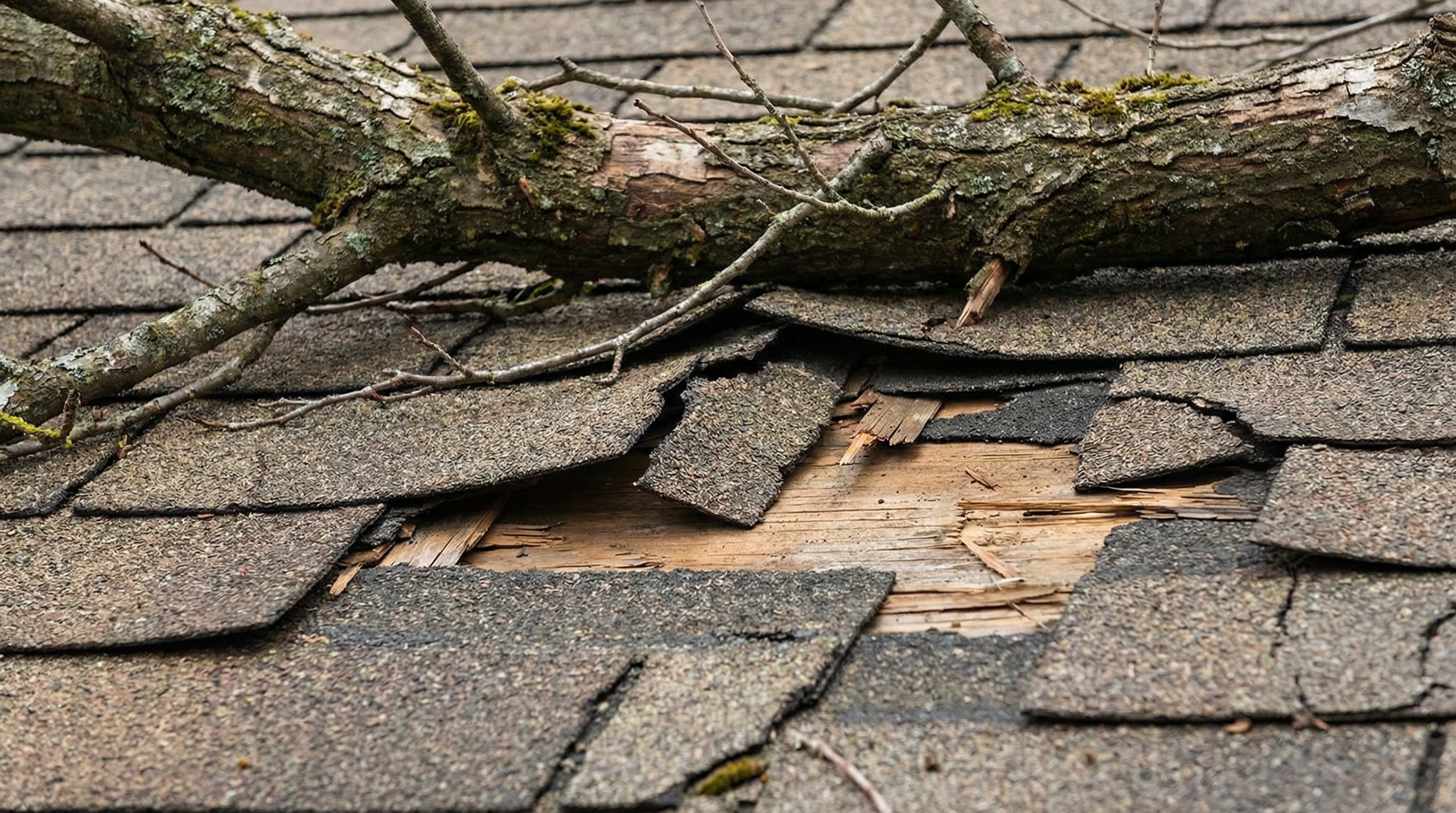
Physical damage from branches represents the most immediate threat to your roofing system. During storms or high winds, even healthy branches can break and fall onto your roof, potentially cracking shingles, damaging flashing, or puncturing the roof surface. More subtle but equally concerning is the constant friction from overhanging branches that scrape against roofing materials, gradually wearing away protective layers. Understanding the 12 common types of roof damage can help you identify tree-related issues early.
Falling debris creates another significant challenge for homeowners. Leaves, twigs, pine needles, and seed pods accumulate in gutters and roof valleys, blocking proper water drainage. When gutters overflow, water can damage fascia boards, stain siding, and pool around your foundation. This standing water also creates ideal conditions for ice dams during winter months.
Important note: According to bigfoottreeservice.com, roots can also threaten your foundation by growing toward moisture sources and creating pressure against foundation walls.
Moisture-related problems develop when trees create excessive shade over your roof. While shade can reduce cooling costs, it also prevents your roof from drying properly after rain or snow. This persistent moisture encourages moss and algae growth, which can retain additional moisture and accelerate roofing material deterioration. Learning how to remove moss from your roof safely and effectively is crucial for maintaining your roof’s integrity. Dense foliage also provides easy access for pests like squirrels and insects to reach your roof.
Warning signs of tree-related roof damage
Early detection of tree damage can prevent minor issues from becoming major repairs. Start by examining your roof from the ground using binoculars to look for cracked, broken, or missing shingles, especially after windstorms. Pay attention to areas directly under tree canopies where damage is most likely to occur.
Check your gutters regularly for excessive debris accumulation or signs of overflow. Water stains on exterior walls, damaged fascia boards, or pooling water around your foundation all indicate gutter problems that may stem from tree debris. Inside your home, look for water stains on ceilings or walls, which could signal roof leaks caused by tree-related damage. If you notice leaks, understanding how much roof leak repair costs can help you budget appropriately.
Moss or algae growth on your roof surface, particularly in shaded areas, suggests moisture retention problems. Dark streaks running down your roof often indicate areas where water isn’t draining properly. Additionally, granule loss from asphalt shingles in heavily shaded areas can signal accelerated deterioration due to persistent moisture.
Prevention strategies that actually work
Maintaining proper clearance between trees and your roof is essential for preventing damage. rileyroofingpa.com recommends keeping branches at least 6 to 10 feet away from your roof surface. This distance prevents direct contact while still allowing you to enjoy the benefits of nearby trees.
Regular tree maintenance should follow a seasonal schedule. Spring is ideal for assessing winter storm damage and trimming new growth before it becomes problematic. Fall preparation involves removing dead or weakened branches that could fall during winter storms. For comprehensive guidance, check out our fall tree trimming guide to protect your roof and gutters. Professional arborists can identify potential hazards that untrained eyes might miss.
| Maintenance Task | Best Timing | Frequency | Professional Needed |
|---|---|---|---|
| Branch trimming | Late winter/early spring | Annually | Yes for large trees |
| Gutter cleaning | Fall and spring | Twice yearly | Optional |
| Roof inspection | After major storms | As needed | Recommended |
| Tree health assessment | Early spring | Every 2-3 years | Yes |
Gutter protection systems can significantly reduce maintenance needs and prevent debris-related problems. Micro-mesh guards effectively filter out leaves and pine needles while allowing proper water flow. Regular gutter cleaning remains important even with protection systems, but the frequency can be reduced substantially. For safe debris removal techniques, explore our guide on safe roof leaf removal in Ohio
Professional solutions for serious tree issues
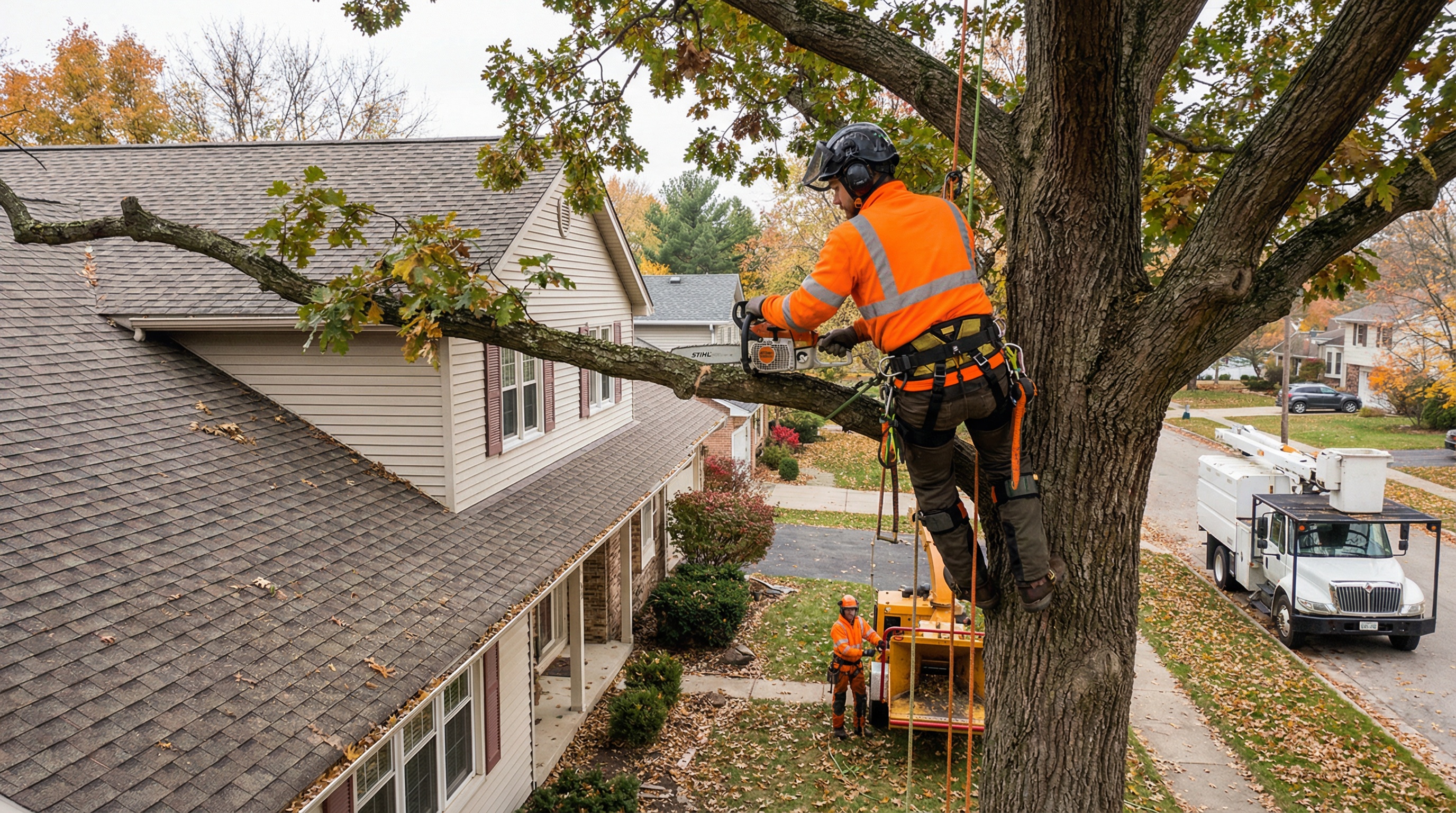
Some tree-related roof problems require professional intervention to resolve safely and effectively. Large trees growing too close to your home may need strategic crown reduction or selective removal to prevent future damage. Professional arborists have the expertise to assess tree health and recommend appropriate actions while preserving valuable trees when possible.
Emergency tree removal becomes necessary when storms damage trees or when diseased trees pose immediate threats to your roof. gaf.com emphasizes prioritizing safety if a tree has fallen on your roof, especially if you see live wires or smell gas. Understanding the types of roof storm damage can help you assess the severity of the situation.
Professional roof inspections can identify tree-related damage before it becomes severe. Experienced contractors know what to look for and can recommend specific solutions based on your local tree species and climate conditions. They can also coordinate with arborists to develop comprehensive protection strategies that address both tree management and roof maintenance needs.
The investment in professional tree and roof maintenance pays dividends through extended roof life and reduced emergency repair costs. Regular professional assessment helps you make informed decisions about tree removal versus management, ensuring you maintain both your property’s beauty and your roof’s integrity.
Taking proactive steps to manage tree-related roof risks protects your home investment while preserving the natural beauty that trees provide. Regular maintenance, proper clearance, and professional guidance when needed create the best outcomes for both your trees and your roof. Don’t wait for storm damage to address obvious hazards – early action prevents costly repairs and keeps your home safe year-round.