
Planning a roof replacement or hearing contractors mention ice and water shield? You’re not alone in wondering what this material actually does and whether your Northeast Ohio roof needs it.
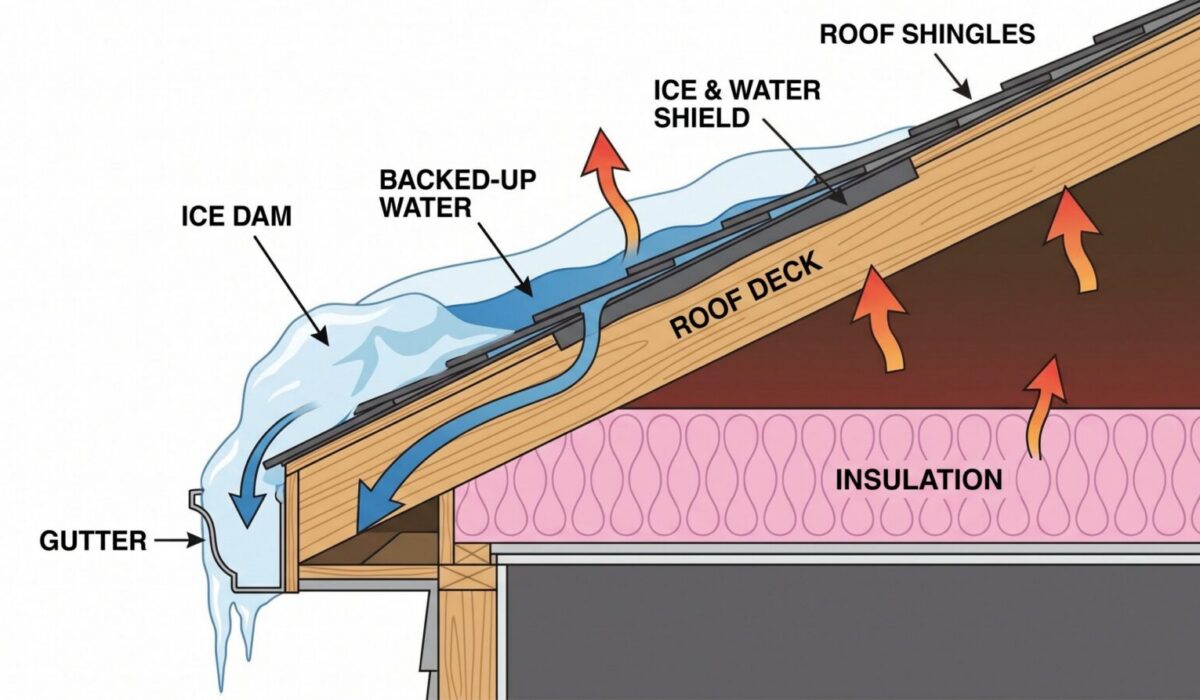
Ice and water shield is a self-adhering waterproof membrane made of rubberized asphalt that bonds directly to your roof deck. It seals around nail penetrations and acts as a backup barrier when water gets under your shingles due to ice dams, wind-driven rain, or other weather events common in the Cleveland area.
Key Insight: Ice and water shield doesn’t prevent ice dams from forming, but it stops water from leaking into your home when they do occur—crucial protection for Northeast Ohio’s harsh winter conditions.
This guide covers what ice and water shield is, where it belongs on your roof, whether you need it everywhere, and what you can expect to pay for this crucial protection in the Rocky River and Cleveland metro area.
What is ice and water shield and how does it work
Ice and water shield is a waterproof roofing underlayment that sticks directly to your roof decking without additional fasteners in most applications. The rubberized asphalt material creates a watertight seal that standard felt underlayment simply can’t match—especially important given Northeast Ohio’s freeze-thaw cycles.
Here’s how it works: when you drive nails through it during shingle installation, the material seals around each penetration. If water somehow gets under your shingles during Cleveland’s notorious winter storms, it hits this membrane and can’t penetrate further into your roof structure.
The product comes in rolls typically 3 feet wide and adheres using a peel-and-stick backing. Unlike regular underlayment that relies on overlapping layers and gravity to shed water, ice and water shield creates a continuous waterproof barrier wherever it’s installed.
You might also hear it called ice and water protector, peel-and-stick underlayment, or self-adhering membrane. These terms all refer to the same type of product designed for high-risk areas of your roof.
Where ice and water shield goes on your roof
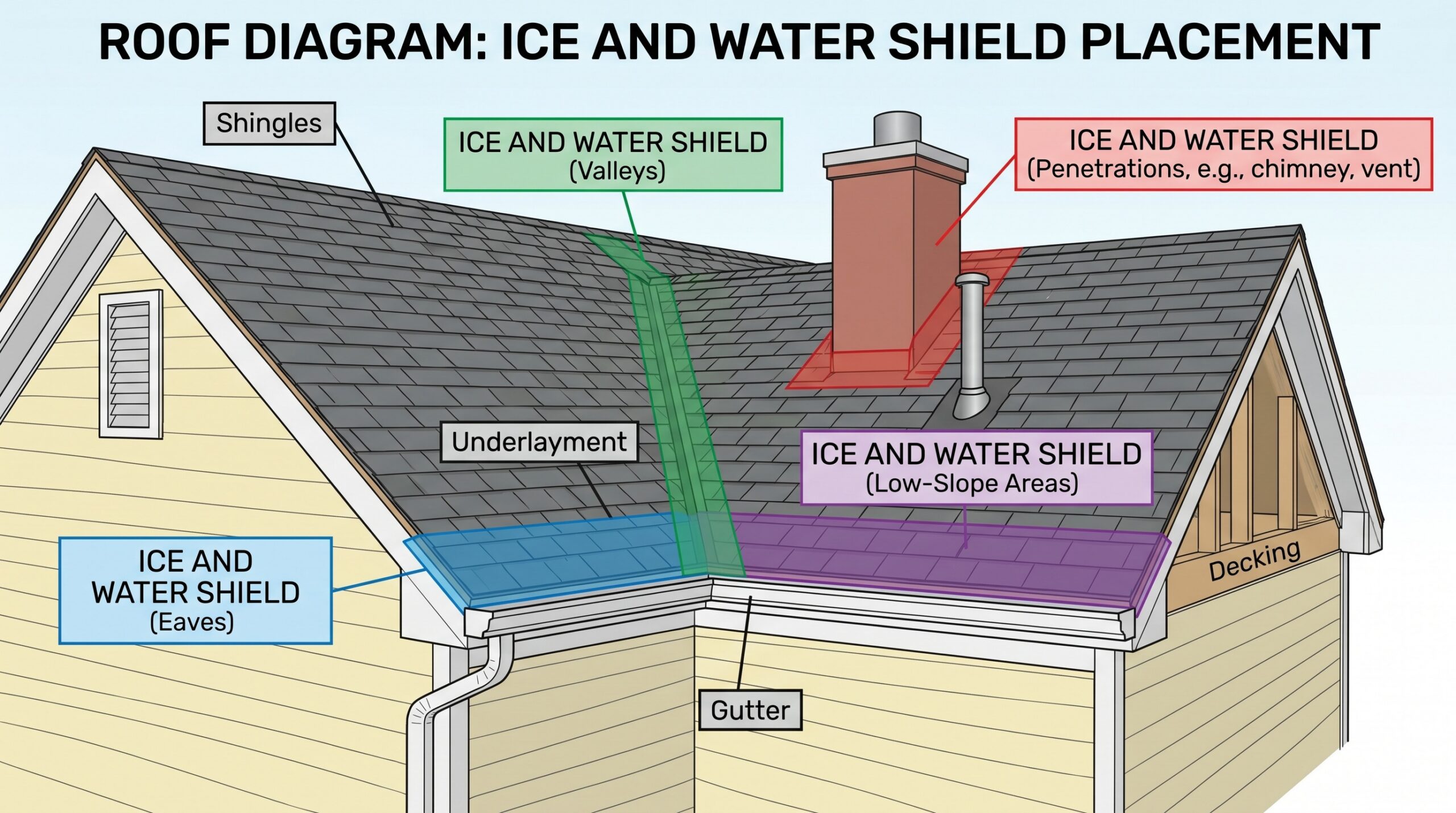
Not every square inch of your roof needs ice and water shield, but certain vulnerable areas absolutely do. Here’s where professional roofers in Northeast Ohio typically install it:
Eaves and rakes get ice and water shield because these edges are where ice dams typically form during Cleveland’s winter months. When snow melts and refreezes at your roof’s edge, the resulting ice ridge forces water back up under your shingles. The shield prevents this backed-up water from reaching your roof deck.
Roof valleys see concentrated water flow from two roof planes meeting. Even without ice dams, valleys handle more water than other areas and benefit from the extra protection—especially during Northeast Ohio’s heavy spring rains and sudden snowmelts. Many contractors install it in all valleys regardless of climate.
Around penetrations like chimneys, skylights, and plumbing vents creates additional protection beyond standard flashing. These areas naturally collect water and represent potential weak points where leaks often start, which is why proper flashing is critical.
Low-slope roof sections with pitches between 2:12 and 4:12 don’t drain water as quickly as steeper areas. Water moves slowly off shallow pitches and has more time to find its way through seams in standard underlayment.
Building Code Note: Ohio building codes require ice and water shield extending from the eaves to at least 24 inches inside the exterior wall line in areas where average January temperatures drop to 25°F or below—which includes the entire Cleveland metro area.
Can you install ice and water shield on your entire roof
You can cover your entire roof with ice and water shield, but it’s usually unnecessary and expensive for most Northeast Ohio homes. The decision depends on your roof type, local conditions, and building code requirements.
Standard asphalt shingle roofs typically only need ice and water shield in vulnerable areas. Synthetic underlayment handles the rest of the roof deck effectively at a much lower cost. Full coverage makes sense mainly on very low-slope sections where water drainage is poor during heavy Cleveland-area storms.
Metal roofing systems often use high-heat ice and water shield across the entire roof as the primary underlayment. The specialized fibers prevent the membrane from sticking to metal panels as they expand and contract with Northeast Ohio’s temperature swings.
Premium roofing materials like cedar shake, slate, or high-end synthetic shingles sometimes get full ice and water shield coverage for maximum protection of the significant investment in roofing materials.
The main downsides of full coverage include significantly higher material costs and potential complications if you ever need to make roof repairs. The strong adhesion that makes ice and water shield effective also makes it challenging to remove cleanly.
Types and costs of ice and water shield
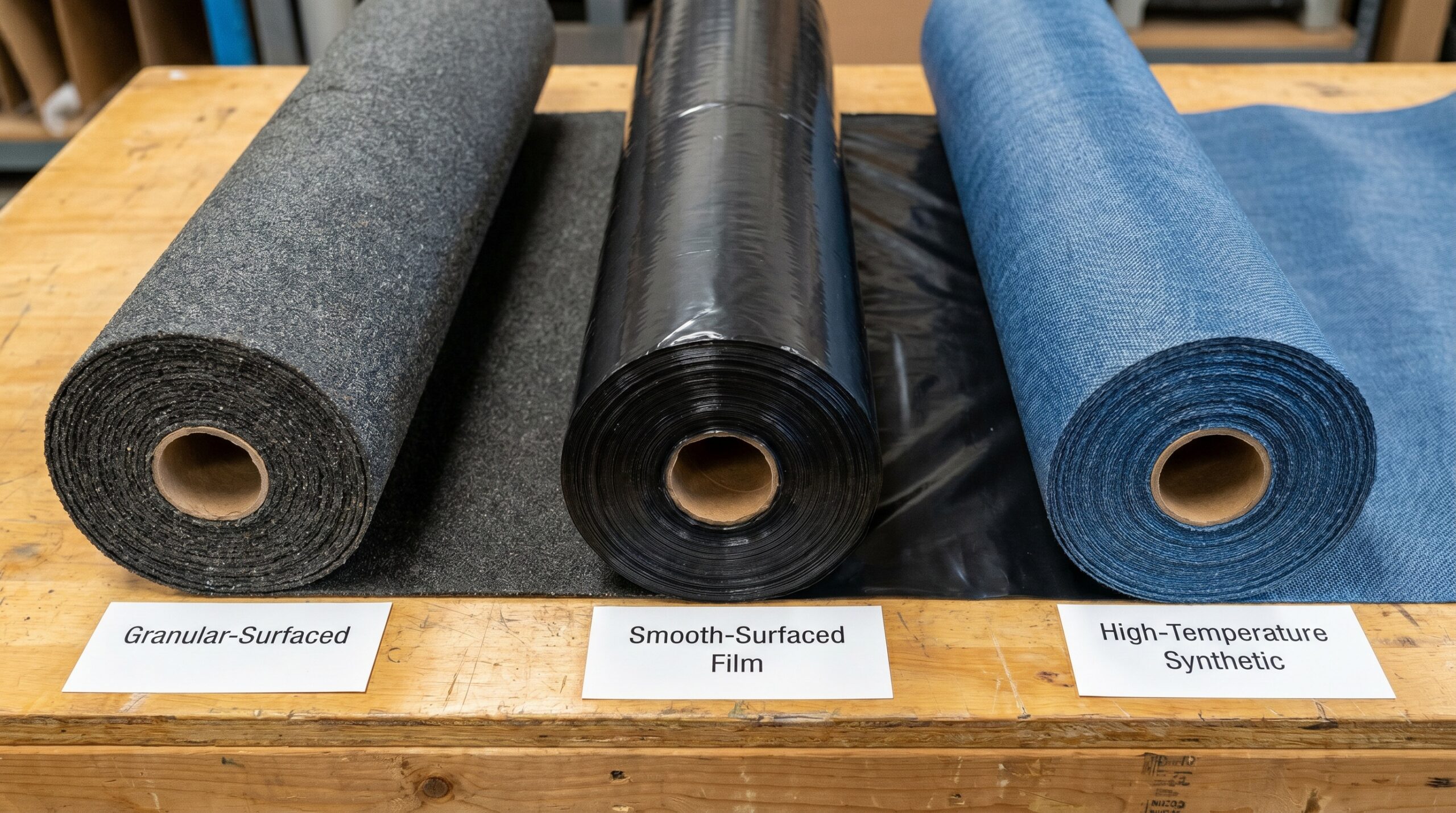
Three main types of ice and water shield serve different applications and budgets:
| Type | Best Use | Approximate Cost per Square | Key Features |
|---|---|---|---|
| Granular/Sand Surface | Valleys, basic protection | $60-80 | Thinnest, most economical |
| Smooth Surface | Low slopes, better seal | $80-120 | More flexible, superior adhesion |
| High-Heat | Metal roofs, premium systems | $125-150+ | Heat resistant, won’t stick to metal |
Granular ice and water shield works well for valleys and meets basic code requirements in Northeast Ohio. It’s the most economical choice when you need protection in specific spots rather than extensive coverage.
Smooth surface varieties offer better flexibility and sealing properties, making them ideal for low-slope areas where water might pond temporarily during heavy spring rains. The improved adhesion justifies the higher cost in critical applications.
High-heat products cost the most but solve specific problems with metal roofing and high-temperature environments. The cotton-like fibers prevent adhesion issues that standard products can cause with metal panels.
For a typical 2,000 square foot roof in the Cleveland area, adding ice and water shield to eaves, rakes, and valleys might add $800-1,500 to your project cost depending on your roof complexity. Full coverage could easily double or triple that investment.
Cost Reality Check: While ice and water shield adds to your upfront roofing costs, it’s far less expensive than repairing water damage from leaks that could have been prevented—especially important given Northeast Ohio’s harsh weather patterns.
Making the right choice for your roof
Ice and water shield represents smart insurance against water damage in vulnerable roof areas. Most roofs in Northeast Ohio benefit from strategic placement rather than full coverage, but your specific situation matters.
Consider Cleveland’s climate patterns, your roof pitch, and local building code requirements when planning your roof project. In cold climates like ours with snow and ice, it’s often required by code and always recommended by experienced local roofers. Even in milder areas, valleys and penetrations benefit from the extra protection.
Work with a qualified roofing contractor who understands Northeast Ohio conditions and code requirements. They can help you determine the right type and coverage area for your specific roof while balancing protection with budget considerations.
Remember that ice and water shield works alongside other roofing components, not as a replacement for proper installation techniques, adequate ventilation, or quality shingles. It’s one important piece of a complete roofing system designed to keep your home dry for decades through Cleveland’s challenging weather conditions.