

Thinking about upgrading to a metal roof but wondering about the investment? You’re looking at costs ranging from $7 to $29 per square foot for materials and installation combined, with most homeowners spending around $15,000 to $25,000 for an average 1,700 square foot roof.
The upfront cost might seem steep compared to asphalt shingles, but here’s what makes metal roofing worth considering. While traditional shingles last 15-20 years, metal roofs can protect your home for 40-70 years. That means you could replace asphalt shingles three times while your metal roof is still going strong.
Quick fact: Metal roofing provides an average return on investment of 85-95% when you sell your home, making it one of the most valuable home improvements you can make.
Let’s break down exactly what you can expect to pay and why metal roofing might be the smartest long-term choice for your home.
Understanding Metal Roofing Material Costs
The type of metal you choose dramatically affects your total investment. Here’s what you can expect to pay per square foot for materials alone, based on current 2026 market prices:
| Material Type | Cost Per Sq Ft | Total Cost (1,700 sq ft roof) |
|---|---|---|
| Corrugated Steel | $1.50 – $2.00 | $2,550 – $3,400 |
| Galvanized Steel | $3.25 – $4.25 | $5,525 – $7,225 |
| Aluminum Shingles | $3.25 – $6.00 | $5,525 – $10,200 |
| Stone-Coated Steel | $5.00 – $11.00 | $8,500 – $18,700 |
| Standing Seam Steel (installed) | $9.00 – $12.00 | $15,300 – $20,400 |
| Standing Seam Aluminum (installed) | $11.00 – $16.00 | $18,700 – $27,200 |
| Standing Seam Copper (installed) | $15.00 – $25.00+ | $25,500 – $42,500+ |
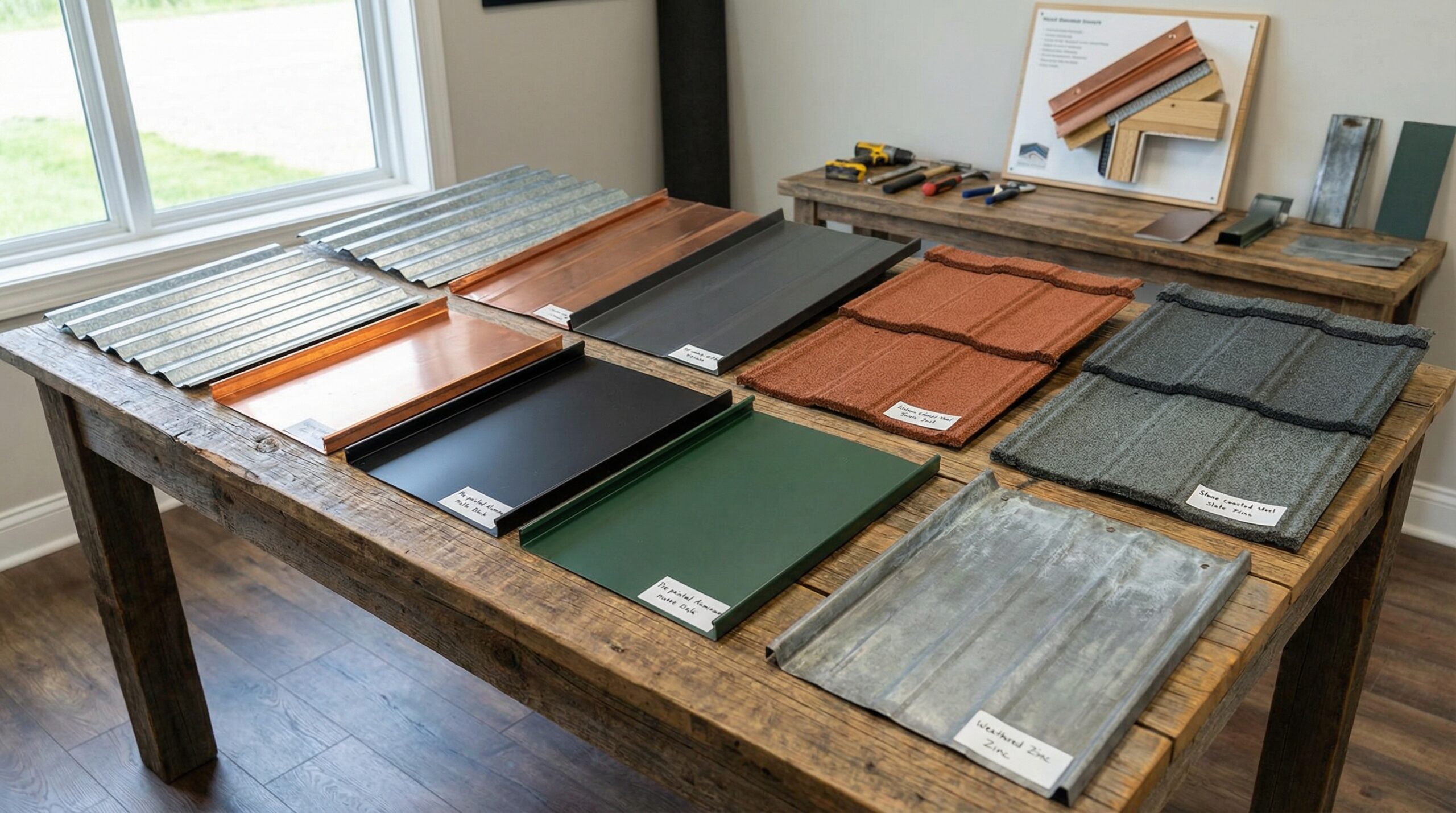
Standing seam is the most common premium metal roofing system, distinguished by vertical panels with raised, interlocking seams that conceal all fasteners. Unlike the material-only pricing above, the standing seam figures include installation, since standing seam is nearly always sold as a complete system rather than a material you’d source separately. Steel standing seam offers the best balance of cost and durability for Northeast Ohio’s climate, typically lasting 40-50 years. Copper standing seam can exceed 100 years and develops a distinctive patina over time, but sits well above the cost of steel or aluminum options.
Corrugated metal offers the most budget-friendly entry point into metal roofing. It’s made from galvanized steel with a protective paint coating, making it ideal if you want metal roof benefits without the premium price tag.
Aluminum shingles bring excellent corrosion resistance and energy efficiency to the table. They’re lightweight yet durable, often coming with warranties exceeding 50 years. The reflective properties help keep your home cooler in summer, potentially reducing your energy bills.
Stone-coated steel combines the strength of steel with the traditional appearance of tile or shingle roofing. The stone granule coating provides extra protection and gives you more design flexibility to match your home’s style.
Installation Costs and Labor Factors
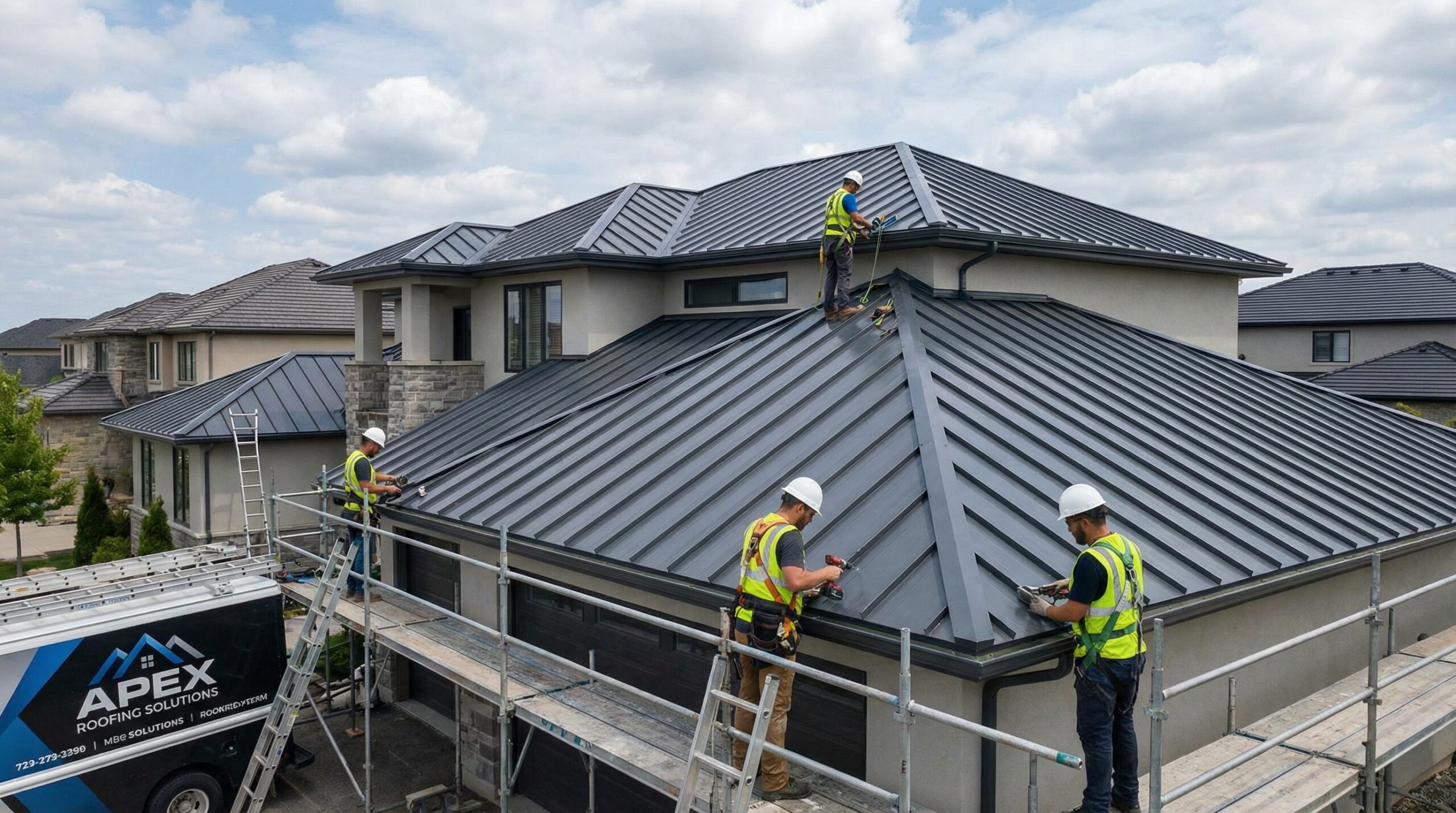
Labor typically accounts for 40-60% of your total metal roofing project cost. Professional installation ranges from $350 to $500 per square (100 square feet), depending on several key factors.
Your roof’s pitch significantly impacts installation complexity and cost. Steeper roofs require more safety equipment and take longer to complete. Expect an 8% cost increase for roofs with pitches between 3/12 and 5/12, and 10-12% more for pitches of 9/12 and above. Understanding how roof pitch affects material choices can help you plan your budget more accurately.
The fastener system you choose also affects pricing. Exposed fastener systems cost less to install but require more maintenance over time. Hidden fastener systems, like standing seam, cost more upfront but provide better weather protection and a cleaner appearance.
Important consideration: While DIY installation might seem tempting to save money, metal roofing requires specialized tools and skills. Improper installation can void warranties and create expensive problems down the road.
Don’t forget about additional components that add to your total cost. Quality roof underlayment runs $4 to $5.50 per square foot installed, which is essential for noise reduction and moisture protection. Trim, roof flashing, and specialized fasteners can add another $1,000 to $3,000 to your project.
Comparing Metal Roofing to Traditional Options
When you compare the total cost of ownership, metal roofing often comes out ahead despite the higher upfront investment. Asphalt shingles might cost $3 to $7 per square foot initially, but you’ll likely replace them 2-3 times during the lifespan of a single metal roof.
Here’s where metal roofing really shines in your wallet. Many insurance companies offer discounts of up to 35% on homeowner’s insurance for metal roofs due to their fire resistance and durability against severe weather. Some metal roofs can withstand wind speeds up to 180 mph, far exceeding the 60 mph resistance of typical asphalt shingles.
The energy efficiency benefits add up over time too. Metal roofs reflect solar heat, potentially reducing your cooling costs by 10-25% during hot months. In colder climates, they help retain heat more effectively than traditional roofing materials.
Maintenance costs remain minimal throughout a metal roof’s lifetime. While asphalt shingles might need repairs every few years and complete replacement every 15-20 years, metal roofs typically require only occasional cleaning and minor maintenance. To understand the differences between various roofing materials, check out our comprehensive comparison of composite vs asphalt shingles.
Metal vs. Asphalt: The Full Picture
Beyond cost, several performance factors separate metal from asphalt shingles over the life of the roof.
| Feature | Metal Roofing | Asphalt Shingles |
|---|---|---|
| Average lifespan | 40-70 years | 20-30 years |
| Weight per sq ft | 1-3 lbs | 2-4 lbs |
| Wind resistance | Up to 140+ mph | 60-130 mph |
| Fire rating | Class A | Class A (fiberglass) |
| Energy savings | 10-25% cooling reduction | Minimal without coatings |
| Maintenance | Low; periodic fastener checks | Moderate; cracks and curls over time |
Metal’s biggest weather advantage in Northeast Ohio is ice dam resistance. Ice dams form when heat escaping through the roof melts snow, which then refreezes at the colder eaves and forces water backward under the roofing material. Metal’s smooth surface and lower heat retention reduce how often this cycle occurs, and standing seam panels shed snow and ice faster than asphalt.
Metal roofing has also been associated with a 1-6% increase in home resale value, with stronger returns in markets where buyers understand the long-term cost advantages.
One common misconception is worth addressing directly: metal roofs aren’t inherently loud in the rain. A metal roof installed over solid decking with proper underlayment performs close to asphalt in terms of noise. The “loud metal roof” reputation comes largely from older agricultural buildings installed without an insulation layer beneath the panels.
Factors That Influence Your Final Price
Several variables can significantly impact your metal roofing investment beyond the basic material and labor costs. Understanding these factors helps you budget more accurately and avoid surprises.
Metal gauge affects both cost and performance. Thicker metals (lower gauge numbers) cost more but provide better durability. Most residential applications use 26 or 29 gauge, with 29 gauge being the most economical choice for typical weather conditions.
Protective coatings add $0.50 to $4 per square foot but are essential for color, weather protection, and longevity. Higher-quality coatings cost more initially but maintain their appearance and protective properties longer.
Your location plays a major role in pricing due to regional labor costs and building code requirements. Areas prone to severe weather might require heavier gauge materials or special installation techniques, increasing your total investment.
Money-saving tip: Getting quotes from multiple contractors can reveal significant price differences. However, don’t automatically choose the lowest bid without verifying the contractor’s experience with metal roofing and checking their references. Make sure you understand what should be on a detailed roofing estimate before signing any contracts.
Removing your existing roof adds to the project cost but is usually recommended for optimal performance. While you can sometimes install metal roofing over existing shingles, removing the old material ensures proper installation and maximizes your new roof’s lifespan. Understanding all the parts of a roof helps you appreciate why proper installation matters.
Can You Install Metal Roofing Over Existing Shingles?
In some cases, yes, and doing so can reduce your project cost by 15-25% by eliminating tear-off labor and disposal fees. But it comes with real trade-offs worth understanding before you decide.
Most Northeast Ohio jurisdictions follow building codes that cap roofing at two layers total. If your home already has two layers of shingles, a full tear-off is required regardless of your material choice. Your existing shingles also need to be in reasonably sound condition. Buckled, cracked, or lifted shingles can telegraph through the new metal panels, creating a visible rippling effect called oil-canning.
Combining a metal roof with existing shingles adds roughly 2.5 to 5.5 pounds per square foot of total roof load. Most homes handle this without issue, but older structures may need a professional structural evaluation first.
The bigger consideration is long-term risk. Installing over shingles makes it impossible to inspect the roof decking underneath, so hidden rot or damage won’t surface until it’s severe enough to cause visible problems inside your home. If a leak does develop, water can travel across the old shingle layer before finding an entry point, making the source difficult to locate. Many manufacturers also void their warranties when metal is installed over an existing layer rather than a clean deck.
For homeowners planning to stay long-term or wanting full warranty protection, a complete tear-off remains the more reliable choice despite the higher upfront cost.
The decision to invest in metal roofing ultimately comes down to your priorities and budget. While the upfront cost is higher than traditional options, the combination of longevity, energy savings, insurance discounts, and increased home value makes metal roofing a smart financial choice for many homeowners. When you factor in the peace of mind that comes with a roof that could last your lifetime, the investment often pays for itself multiple times over. For more insights on selecting the right materials, explore our guide to the best roofing materials for durable roofs in 2026.