

Understanding roof pitch is crucial when you’re planning a roofing project. Your roof’s slope directly determines which materials will work, how much you’ll pay for installation, and how well water drains from your home.
Roof pitch measures how many inches your roof rises vertically for every 12 inches it extends horizontally. A 6:12 pitch means your roof rises 6 inches for every foot of horizontal distance. This measurement affects everything from material warranties to building code compliance.
Quick Fact: Most residential homes use pitches between 4:12 and 9:12, which translates to approximately 18-37 degrees and works well with standard roofing materials.
Understanding roof pitch measurements and categories
Roof pitch is written as a ratio like 6:12 or converted to degrees for easier visualization. perimeterroofing.com explains that a 4:12 pitch equals about 18.4 degrees, while an 8:12 pitch measures around 33.7 degrees.
The industry divides roof pitches into three main categories. Low-slope roofs measure 2:12 or less and are common on modern homes and commercial buildings. Standard residential pitches range from 3:12 to 9:12 and work with most roofing materials. Steep-slope roofs measure 10:12 and higher, often seen on Victorian or Tudor-style homes.
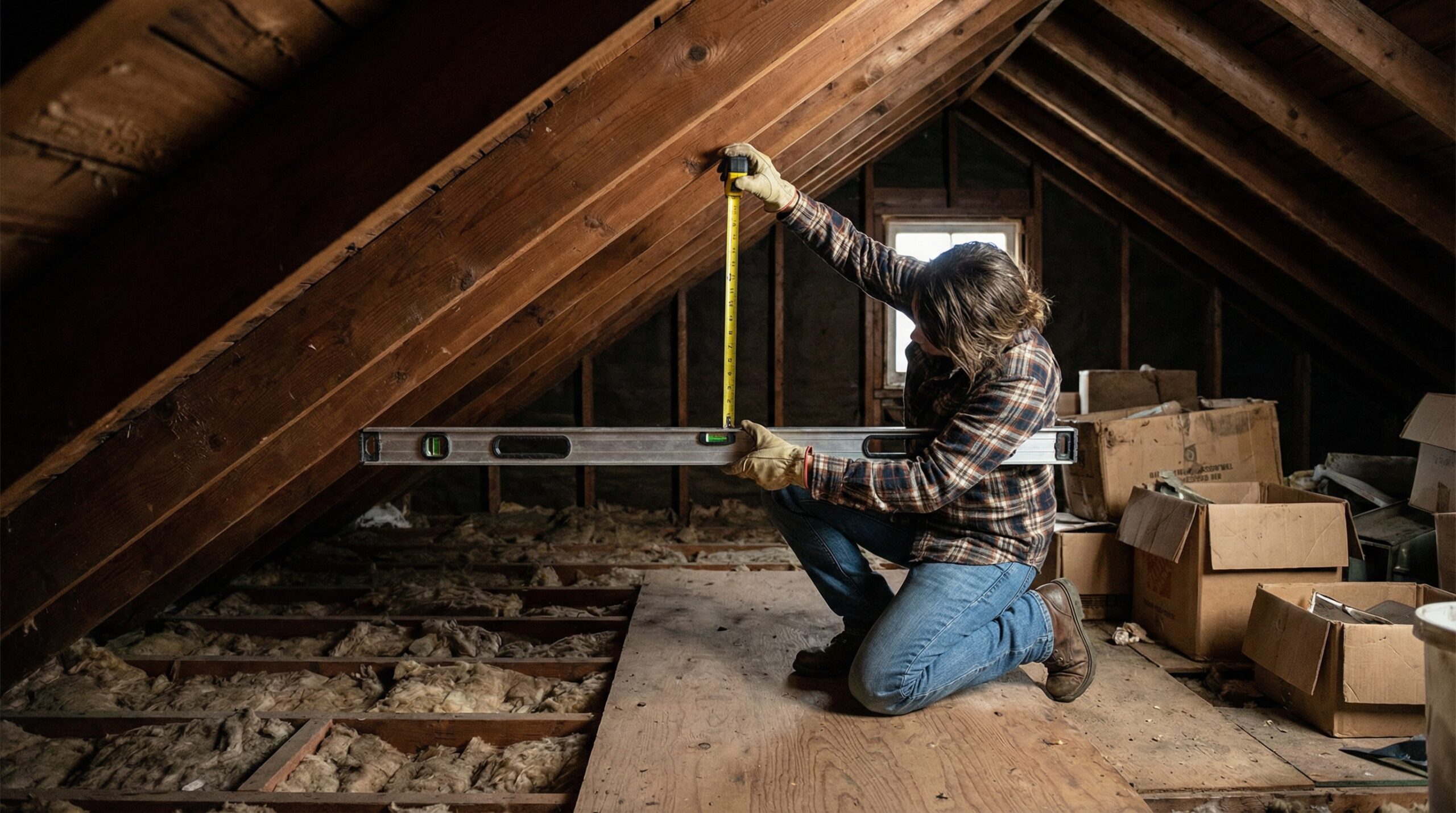
You can measure your roof pitch safely from the attic by placing a level against a rafter, marking 12 inches from the contact point, then measuring vertically to the rafter at that mark. This gives you the rise portion of your pitch ratio.
How pitch determines your material options
Your roof’s slope directly limits which materials manufacturers will warranty. newenglandmetalroof.com notes that asphalt shingles typically require a minimum 2:12 pitch with special underlayment, while standard installation needs at least 3:12.
Low-slope roofs need specialized materials like EPDM rubber, TPO membranes, or modified bitumen because traditional shingles can’t handle water pooling. These materials cost $4-8 per square foot but provide excellent waterproofing for gentle slopes.
Medium-pitch roofs offer the most material flexibility. You can choose asphalt shingles or composite materials ($3-5 per square foot for asphalt, $8-14 per square foot for composites), metal roofing ($7-14 per square foot), or other options. This range balances cost, performance, and aesthetic options effectively.
Steep-pitch roofs can use premium materials like slate or synthetic slate alternatives ($15-30+ per square foot) or clay tiles ($10-25 per square foot) because the aggressive angle sheds water quickly. However, installation complexity increases significantly on these slopes.
Cost Alert: Steep-pitch installations often cost 20-50% more in labor due to safety equipment requirements and slower work pace.
Installation complexity and cost factors by pitch
Installation difficulty and costs vary dramatically based on your roof’s slope.
Low-slope installations demand precise waterproofing techniques and specialized contractor skills. Projects often take longer due to detailed seaming requirements, and material costs run higher per square foot. However, the gentle angle makes the work safer for crews.
Medium-pitch roofs offer the best balance of installation efficiency and safety. Most contractors have extensive experience with these slopes, leading to competitive pricing and faster project completion. Standard safety equipment works effectively, and material waste stays minimal. Understanding what should be included in a detailed roofing estimate helps you compare quotes accurately across different pitch categories.
Steep-pitch projects require fall protection systems, slower work pace, and premium insurance coverage. Crews need specialized training, and material cutting becomes more challenging. These factors combine to create significant cost premiums over standard installations.
| Pitch Category | Labor Cost Impact | Timeline Impact | Safety Requirements |
|---|---|---|---|
| Low-Slope (2:12 or less) | Standard + material premium | Extended for waterproofing | Standard equipment |
| Medium-Pitch (4:12-8:12) | Standard rates | Normal timeline | Standard equipment |
| Steep-Pitch (9:12+) | 20-50% premium | Extended for safety | Specialized fall protection |
Water drainage and weather performance
Roof pitch directly affects how water and snow shed from your home.
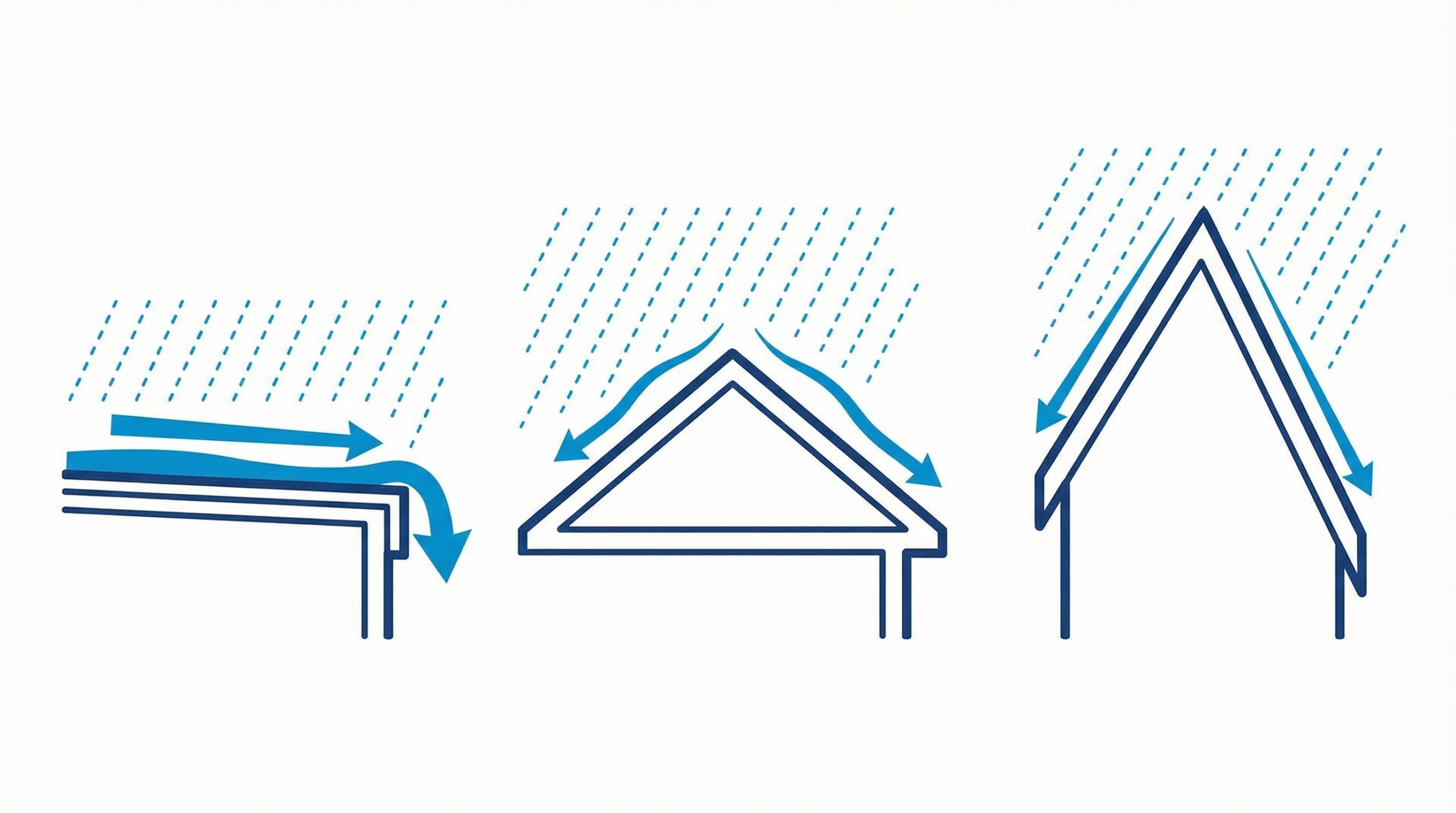
Low-slope roofs struggle with water evacuation, making proper drainage design critical. Ice dams become more problematic because water moves slowly, and pooling can overwhelm material capabilities. You’ll need larger gutters and more downspouts to handle water volume effectively. Proper ice and water shield installation becomes essential for protecting vulnerable areas.
Medium-pitch roofs provide excellent drainage balance. Water moves quickly enough to prevent most pooling while not creating excessive flow rates that overwhelm gutters. This range works well in most climate conditions and reduces maintenance concerns. Roof valleys on medium-pitch roofs require special attention to prevent common failure points.
Steep-pitch roofs excel at shedding water and snow but create other challenges. Fast water flow can overwhelm standard gutters, requiring larger capacity systems. Wind uplift becomes more significant, demanding stronger fastening systems and potentially upgraded materials.
Weather Tip: In snow-prone areas, pitches above 7:12 help prevent ice dams by encouraging faster snow melt runoff.
Pitch isn’t the only way a roof sheds water. The flat and near-flat roofs of Pueblo Revival architecture, common across New Mexico and Arizona, drain through carved wall spouts called canales rather than relying on slope at all. It’s a useful contrast: a 2:12 membrane roof and a centuries-old flat adobe roof solve the same drainage problem in completely different ways — one through material, one through design.
Making the right choice for your project
Choosing the right pitch and material combination depends on your climate, budget, and home style. Consider your local weather patterns first – areas with heavy snow benefit from steeper pitches, while regions with intense sun might favor reflective materials on medium slopes.
Budget plays a major role in your decision. Medium-pitch roofs offer the most material options at various price points, while steep pitches limit you to premium materials and higher installation costs. Factor in long-term maintenance when comparing initial costs. Exploring the best roofing materials for durable roofs can help you understand how different materials perform across various pitch categories.
Your home’s architectural style also influences appropriate pitch ranges. Colonial homes traditionally use 8:12 to 12:12 pitches, while ranch homes work well with 4:12 to 6:12 slopes. Matching your neighborhood’s aesthetic can impact resale value.
Work with experienced contractors who understand local building codes and climate challenges. They can help you balance performance requirements, budget constraints, and aesthetic preferences to find the optimal solution for your specific situation. Understanding all the parts of a roof system ensures you make informed decisions about how pitch affects each component.
Understanding how roof pitch affects your material choices, installation costs, and long-term performance helps you make informed decisions about your roofing project. Whether you’re dealing with a low-slope challenge or planning for a steep-pitch premium installation, the key is matching your pitch category with appropriate materials and realistic budget expectations.