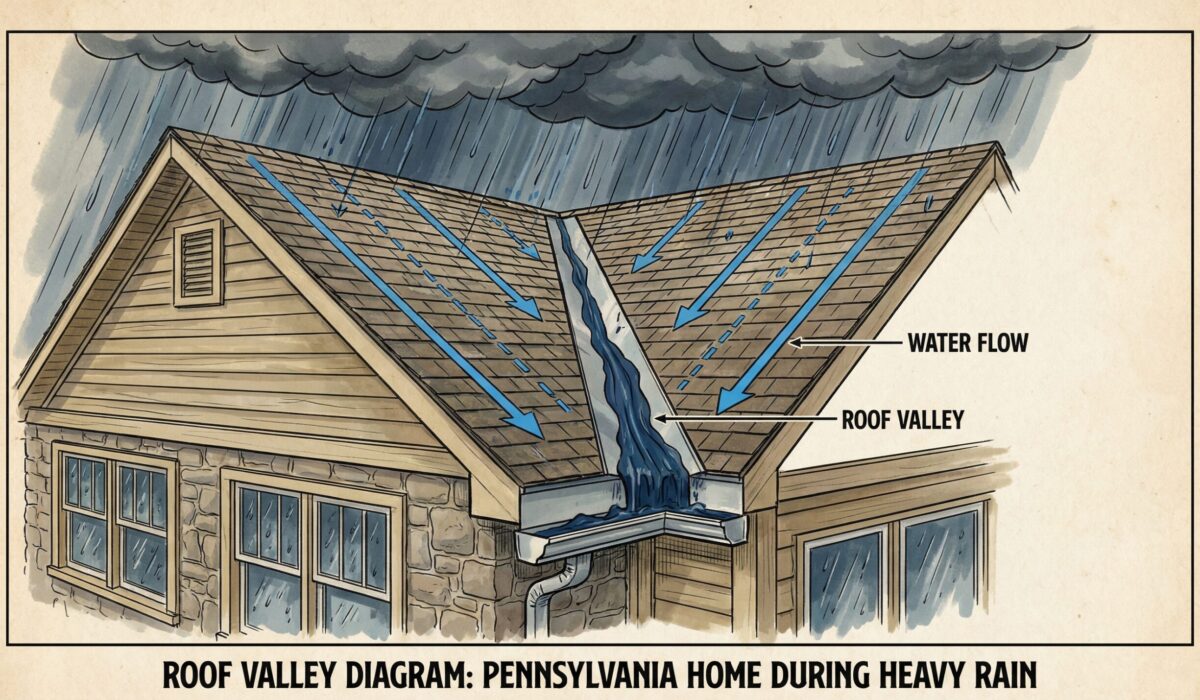
Roof valleys fail fastest during Pennsylvania’s heavy rain and snow cycles, handling up to 80% of your roof’s water runoff through these critical V-shaped channels where two roof planes meet. These essential drainage pathways experience the most stress on your entire roofing system, making them the primary source of leaks in Chester County homes.
Understanding how roof valleys work and why they fail helps you protect your home from the costly water damage that affects thousands of Pennsylvania properties each year. The good news is that most valley problems show warning signs early, giving you time to address issues before they become expensive emergencies.
Quick Fact: Roof valleys handle approximately 80% of rainfall collected during Pennsylvania’s intense weather events, making them eight times more likely to develop leaks than flat roof sections.
What are roof valleys and why they matter
A roof valley forms where two sloping roof sections meet, creating a trough that channels rainwater and melting snow toward your gutters. Think of valleys as highways for water – they collect runoff from multiple roof areas and direct it safely away from your home’s foundation.
During Pennsylvania’s unpredictable weather patterns, these channels bear enormous responsibility. Spring thunderstorms can dump several inches of rain in hours, while winter brings heavy snow loads that create ice dam risks. Your roof valleys must handle this concentrated water flow without failing.
The challenge comes from their location and function. Valleys naturally collect debris like leaves and branches, experience temperature extremes that cause materials to expand and contract, and face constant water exposure that accelerates wear. When valleys fail, water finds its way under shingles and into your home’s structure.
Properties with complex rooflines – featuring dormers, additions, or multiple roof angles – have more valleys and therefore more potential failure points. Each valley represents a critical junction that requires proper installation and regular maintenance to prevent leaks. Understanding the different parts of a roof helps you identify where valleys fit into your overall roofing system.
Three types of roof valley systems
Understanding valley types helps you make informed decisions about repairs and replacements. Each design offers different benefits for Pennsylvania’s challenging climate conditions.
| Valley Type | Water Flow | Durability | Cost | PA Suitability |
|---|---|---|---|---|
| Open Valley | Excellent | High | Higher | Best for heavy snow/rain |
| Closed Cut | Good | Medium | Medium | Good for moderate weather |
| Woven Valley | Fair | Low | Lower | Suitable for older homes |
Open valley construction
Open valleys feature exposed metal flashing running down the center, with shingles cut precisely along each side. The visible metal creates an unobstructed water channel using materials like copper, aluminum, or galvanized steel.
This design excels in Pennsylvania’s harsh winters because ice and snow slide off easily, reducing ice dam formation. The smooth metal surface prevents debris accumulation and handles heavy water flow efficiently. While installation costs more upfront, open valleys typically last longer and require less maintenance. Proper roof flashing installation is critical for open valley performance.
Closed cut valley systems
Closed cut valleys hide the metal flashing under shingles from one roof plane, which extend past the valley center. Shingles from the adjacent plane are cut along a straight line, creating a clean appearance that many homeowners prefer.
This method works well for moderate weather conditions but requires precise installation. The cut edges where shingles meet the valley center can become weak points, especially during Pennsylvania’s freeze-thaw cycles that stress material bonds.
Woven valley methods
Woven valleys interlock shingles from both roof planes across the valley center, creating an overlapping pattern without exposed metal. This traditional approach works with standard asphalt shingles and provides good weather protection when properly installed.
However, woven valleys have limitations with modern architectural or dimensional shingles, which can be too thick for proper weaving. Many older Pennsylvania homes feature woven valleys that may need upgrading during roof replacement projects. Choosing the right roofing materials for durable roofs ensures your valleys perform optimally.
Important Note: Open valleys perform best in Pennsylvania’s climate, handling heavy snow loads and ice dam conditions more effectively than closed or woven designs.
Why roof valleys fail in Pennsylvania homes
Pennsylvania’s seasonal weather extremages create unique challenges for roof valleys. Heavy snowfall, spring downpours, and summer storms put tremendous stress on these critical drainage points.
Temperature fluctuations cause the biggest problems. Metal flashing expands and contracts with temperature changes, potentially loosening fasteners or creating gaps. During winter, ice dams can form when heat escaping from your attic melts snow on the roof, sending water down to valleys where it refreezes at colder edges. Proper attic insulation and ventilation can prevent many of these ice dam issues.
Common failure causes include improper installation with inadequate underlayment, insufficient flashing overlap, or incorrect fastening techniques. Storm debris accumulates in valleys, blocking water flow and causing backup. Over time, protective coatings wear away in high-flow areas, exposing underlying materials to weather damage. Installing quality ice and water shield in valley areas provides critical protection against water infiltration.
Age plays a significant role too. Older valley installations may use materials or techniques that don’t meet current standards for Pennsylvania’s climate demands. Asphalt shingle granules wash away faster in valleys due to concentrated water flow, reducing their protective capabilities. Understanding roof lifespan by material helps you anticipate when valley replacement may become necessary.
Warning signs your roof valley needs attention
Valley problems usually announce themselves through specific warning signs before complete failure occurs. Recognizing these early indicators helps you take action before water damage spreads throughout your home.
Water stains on interior ceilings or walls near valley locations signal active leaks. Check your attic for damp insulation or water marks on rafters after heavy rains. Outside, look for missing, cracked, or curled shingles along valley edges.
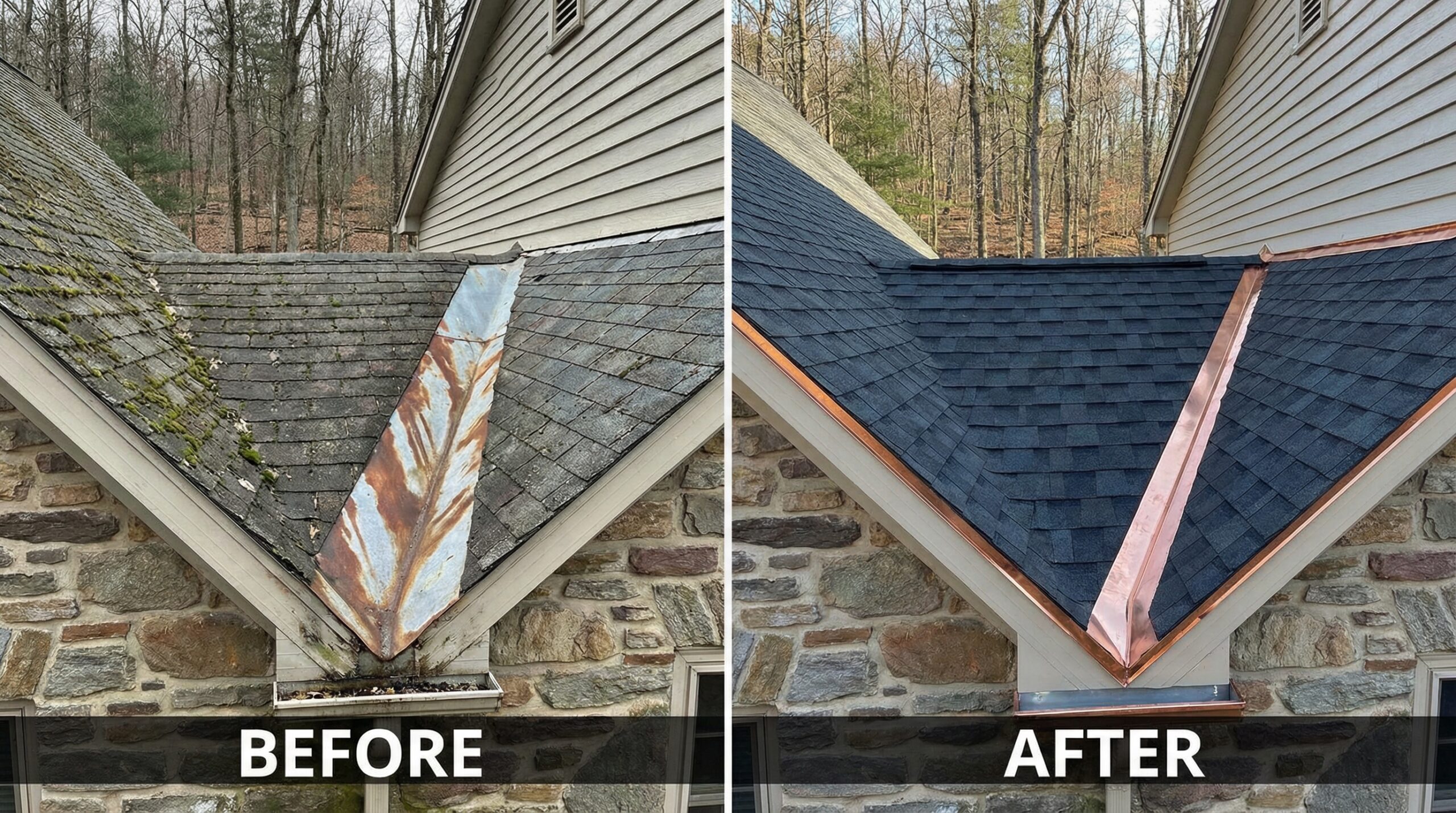
Metal flashing problems show up as rust spots, holes, or visible gaps between flashing and adjacent shingles. Debris accumulation in valleys creates blockages that force water under shingles. Sagging or soft spots in valley areas indicate underlying structural damage from prolonged moisture exposure, potentially affecting the roof decking beneath.
During winter, ice buildup specifically in valley areas suggests poor drainage or ice dam formation. If you notice water backing up during heavy rains instead of flowing smoothly toward gutters, your valley system needs professional attention.
Don’t ignore these warning signs. Valley leaks worsen quickly once water penetrates your roof’s protective barriers, leading to expensive structural repairs and potential mold problems.
Act Fast: Valley leaks can cause $8,000 to $25,000 in interior damage according to insurance industry data, making early detection and repair crucial for Pennsylvania homeowners.
Valley repair versus complete replacement
When valley problems develop, you face an important decision between targeted repairs and full replacement. The right choice depends on the extent of damage, age of materials, and overall roof condition.
Minor issues like small flashing holes, loose shingle edges, or limited debris damage often respond well to professional repairs. These targeted fixes prove cost-effective when the underlying valley structure remains sound. Many roofing contractors can address isolated problems quickly before they spread.
Complete replacement becomes necessary when you see widespread deterioration, multiple leak points, or significant structural damage. Extensive rust on metal flashing, rotted decking around valleys, or repeated repair failures indicate the valley system has reached the end of its useful life.
Consider your roof’s overall age too. If your roof approaches 15-20 years old and valleys show problems, replacement during a full roof project often makes more financial sense than temporary repairs that may fail again soon. A detailed roofing estimate should clearly outline the scope of work needed for valley repairs or replacement.
Professional evaluation helps determine the best approach for your specific situation. Experienced roofers assess not just visible damage but also underlying conditions that affect long-term performance.
How to prevent roof valley leaks
Proactive maintenance significantly extends valley life while preventing expensive water damage. Schedule professional roof inspections twice yearly – preferably in spring and fall – to catch developing problems early.
Keep valleys clean, especially after storms and during autumn leaf season. Remove debris that could block water flow, but avoid walking on your roof yourself. Professional cleaning ensures safety while protecting your roof materials from damage.
Consider installing gutter guards to prevent downstream blockages that can cause water backup into valley areas. For older homes, evaluate whether valley ice dam damage requires improved attic insulation or ventilation during your next maintenance cycle.
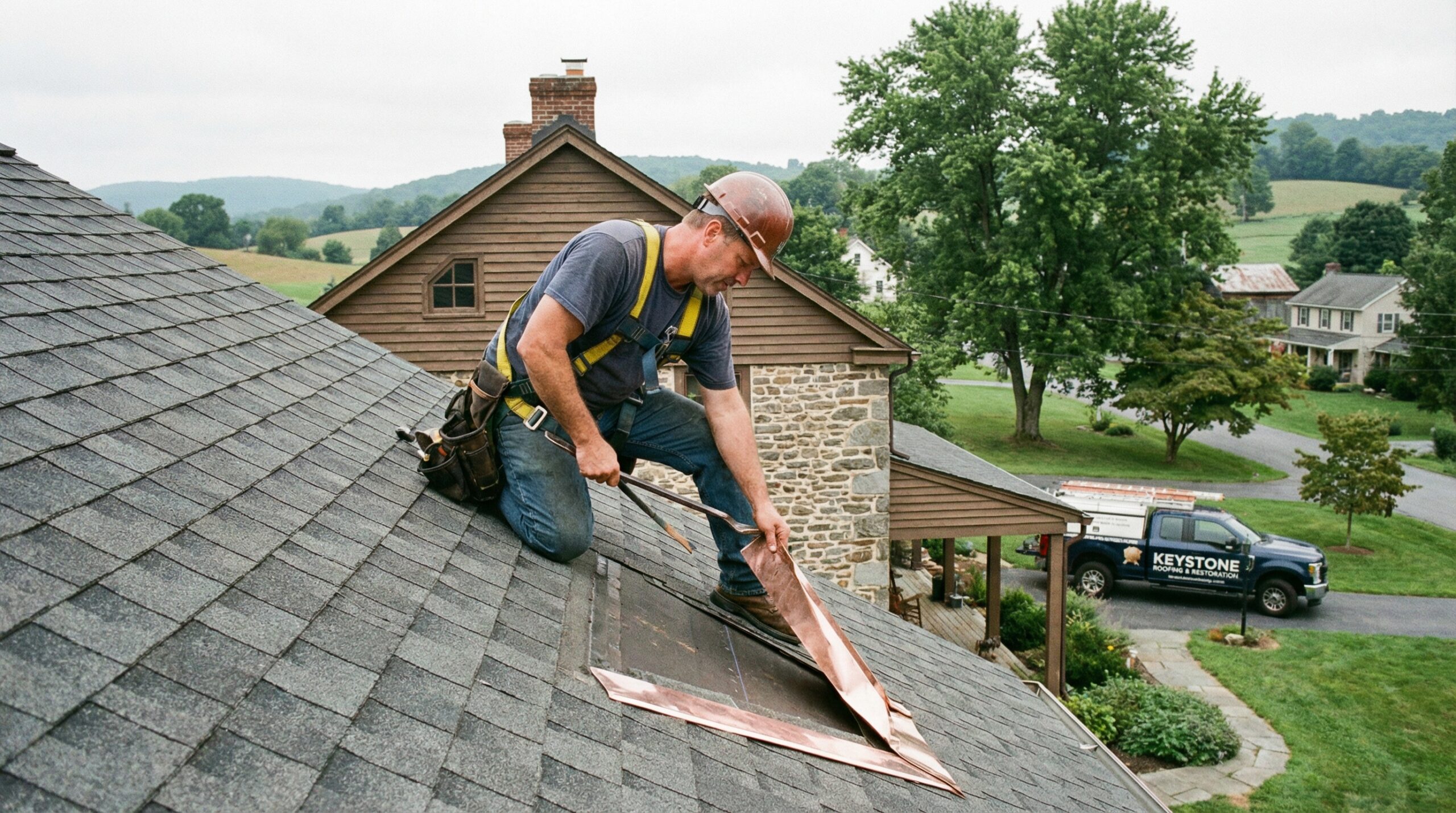
Quality materials matter for valley longevity. When repairs or replacements become necessary, invest in proper roof underlayment, appropriate flashing materials for Pennsylvania’s climate, and professional installation by experienced contractors. Don’t forget the importance of drip edge installation to direct water away from vulnerable areas.
Regular gutter maintenance supports valley function by ensuring water flows away from your roof efficiently. Clogged gutters can cause water backup that stresses valley systems and increases leak risk.
Understanding roof valley types, failure patterns, and prevention strategies helps you protect your Pennsylvania home from water damage. While valleys represent vulnerable points in your roofing system, proper maintenance and timely professional attention keep them functioning effectively for years. When problems do arise, early action prevents minor issues from becoming major expenses that affect your home’s structure and value.