Roofs age faster when exposed to extreme weather cycles, poor ventilation, and deferred maintenance. In Northeast Ohio, the combination of freeze-thaw cycles, ice dam formation, sustained winds off Lake Erie, and UV exposure accelerates deterioration beyond the natural aging process. A roof designed to last 20-25 years can fail in 15 years or less when these factors compound, particularly if minor damage goes unaddressed.
Most homeowners in Rocky River, Westlake, and Strongsville assume their roof will last as long as the warranty suggests. In practice, roofs throughout Northeast Ohio frequently show significant aging after just 15-18 years. The difference between a roof that reaches its expected lifespan and one that fails prematurely comes down to specific, measurable factors.
How Northeast Ohio Weather Accelerates Roof Deterioration
Northeast Ohio experiences an average of 50-70 freeze-thaw cycles each winter. Water from melting snow penetrates small cracks in shingles, then expands when temperatures drop below freezing. This expansion widens existing damage and breaks granule bonds. A hairline crack in November becomes a lifted shingle tab by February.
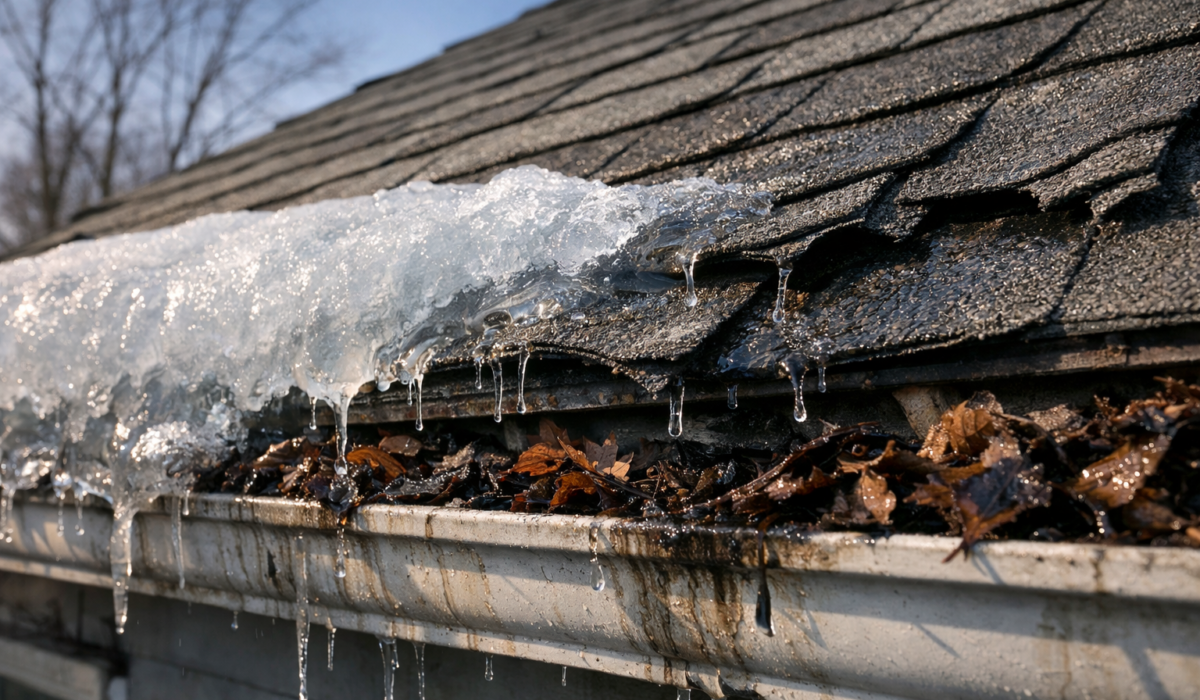
These cycles work hand-in-hand with ice dam formation. When heat escaping from your attic melts rooftop snow, that water refreezes along colder eaves, creating an ice barrier. The trapped water behind it has nowhere to go but up, underneath shingles designed to shed water downward, not to resist upward pressure.
Wind compounds these moisture problems. Sustained winds off Lake Erie lift shingle edges and test the adhesive bond between layers. Lake-effect weather systems carry higher moisture content than typical wind events, meaning your roof absorbs atmospheric moisture while also dealing with mechanical stress. In addition to the aforementioned, direct sunlight degrades the petroleum-based components in asphalt shingles, causing them to become brittle and lose flexibility. South and west-facing roof sections age fastest from intense sun exposure.
Ventilation Problems That Age Roofs Prematurely
Proper attic ventilation requires balanced intake through soffit vents and exhaust through ridge vents. When this balance fails, heat and moisture become trapped. Summer attic temperatures in poorly ventilated spaces regularly exceed 150°F, breaking down shingle adhesives from below while UV rays cook them from above. This double exposure accelerates aging by 40-60% compared to properly ventilated roofs.
Warning: Poor ventilation can reduce a 25-year roof to 15-year performance regardless of shingle quality.
Winter brings different problems with the same result. Warm, moist air from your living space rises into the attic. Without adequate ventilation to remove it, moisture condenses on cold roof decking, promoting wood rot and mold growth. Insufficient insulation makes matters worse by creating uneven temperature distribution across your roof surface, leading to ice dam formation. When insulation blocks soffit vents, it eliminates intake airflow and effectively disables your ventilation system.
How Deferred Maintenance Compounds Roof Damage
The most preventable aging comes from putting off minor repairs. A single damaged shingle seems minor, especially if it’s not currently leaking, but water infiltration through one damaged shingle affects the underlayment beneath it. Once compromised, adjacent shingles begin absorbing moisture from below. What started as a single shingle replacement becomes a multi-shingle repair, then a section replacement.
Note: Installation errors may not cause immediate failure, but they reduce your roof’s effective lifespan by 5-10 years.
Gutters also affect roof aging more than most homeowners realize. Clogged gutters cause water to back up under the bottom edge of shingles. This area is already vulnerable to ice dam damage. Adding regular water backup accelerates deterioration significantly. During heavy rain, water that can’t drain often runs back up the roof plane, pushing moisture under shingle tabs. Northeast Ohio’s heavy leaf seasons mean gutters can clog multiple times between October and November, aging roof edges years ahead of the main field.
Protecting Your Investment

Regular maintenance is the most cost-effective way to extend roof life. Debris removal prevents water pooling, particularly in valleys and around roof penetrations. Bi-annual inspections in spring and fall catch minor damage before it spreads. Most repairs cost $200-$600 when addressed promptly but escalate to $2,000-$5,000+ when deferred. In Northeast Ohio, clean gutters at minimum in late October after leaf drop and again in late spring after maple seed drop.
Note: Professional inspectors identify patterns that indicate specific causes and determine appropriate intervention.
For insurance purposes, detailed inspection reports with photographs establish your roof’s condition before storm events. This documentation proves the difference between pre-existing wear and new storm damage. Records of regular inspections, completed repairs, and gutter cleaning demonstrate responsible ownership and can affect both claim approval and depreciation calculations.
Peak & Valley Roofing provides transparent roofing services for homeowners throughout Northeast Ohio. We identify the specific factors causing accelerated aging in your roof and explain exactly what needs attention without unnecessary upselling.
Contact Peak & Valley Roofing today to request a free estimate. Our roofing services include attic ventilation assessment, moisture detection, and documentation that supports insurance claims when storm damage occurs.
Frequently Asked Questions
What is the average lifespan of a roof in Northeast Ohio?
Architectural shingles typically last 18-22 years in Northeast Ohio compared to 25-30 years in milder climates. Three-tab shingles average 12-15 years locally versus 20 years in regions without freeze-thaw cycles. The difference stems from ice dam stress, temperature cycling, and lake-effect weather exposure that accelerates normal wear patterns.
How do I know if my roof is aging prematurely?
Check for curling shingles, excessive granule loss in gutters, dark streaks on roof surfaces, or interior water stains before your roof reaches 12 years old. Compare your roof’s condition to similar-aged roofs in your neighborhood. If your shingles show significantly more deterioration than nearby homes with similar exposure, you likely have accelerated aging from ventilation problems, installation defects, or deferred maintenance.
Should I repair or replace an aging roof?
Repair makes sense when damage is isolated to less than 20% of the roof surface and the remaining roof has at least 8-10 years of expected life remaining. Replace when you have widespread shingle deterioration, multiple leak locations, or repairs would cost more than 30% of replacement cost. Also consider replacement timing with planned home sales or major renovations.
How often should I have my roof inspected?
Schedule professional inspections every 3-5 years for roofs under 10 years old, every 2-3 years for roofs 10-15 years old, and annually for roofs over 15 years. Also inspect after severe weather events like sustained winds over 60 mph, hail, or heavy snow loads. Spring and fall self-inspections from the ground can identify obvious damage between professional assessments.
What causes shingles to age faster in some spots than others?
Differential aging indicates concentrated stress. Valleys age faster from water volume concentration. South and west-facing slopes age faster from UV exposure. Areas above poorly vented attics age faster from heat stress. North-facing sections may age faster from moisture retention and organic growth. Sections around penetrations age faster when flashing fails. Identifying the pattern reveals the underlying cause.