

When you think about protecting your roof, shingles and gutters probably come to mind first. But there’s a hidden hero working behind the scenes that many homeowners overlook: proper roof ventilation. This invisible system can make the difference between a roof that lasts decades and one that fails prematurely.
Roof ventilation creates a continuous flow of air through your attic space, allowing hot air to escape through exhaust vents near the peak while fresh air enters through intake vents lower on the roof.
Quick fact: A poorly ventilated attic can reach temperatures of 150°F or higher during summer months, literally baking your roofing materials from underneath and accelerating their breakdown.
How roof ventilation actually works
Think of your attic like your lungs. Just as you need to breathe in fresh air and exhale stale air, your attic needs intake and exhaust to stay healthy. The system works on a simple principle: hot air naturally rises and escapes through exhaust vents at the ridge or upper roof areas, while cooler fresh air enters through intake vents at the soffits and fascia.
This creates what Energy Star calls a “natural flow of outdoor air” that keeps your attic temperature close to outside conditions rather than creating a superheated space beneath your shingles. The key is balance – you need equal amounts of intake and exhaust ventilation for the system to work effectively.
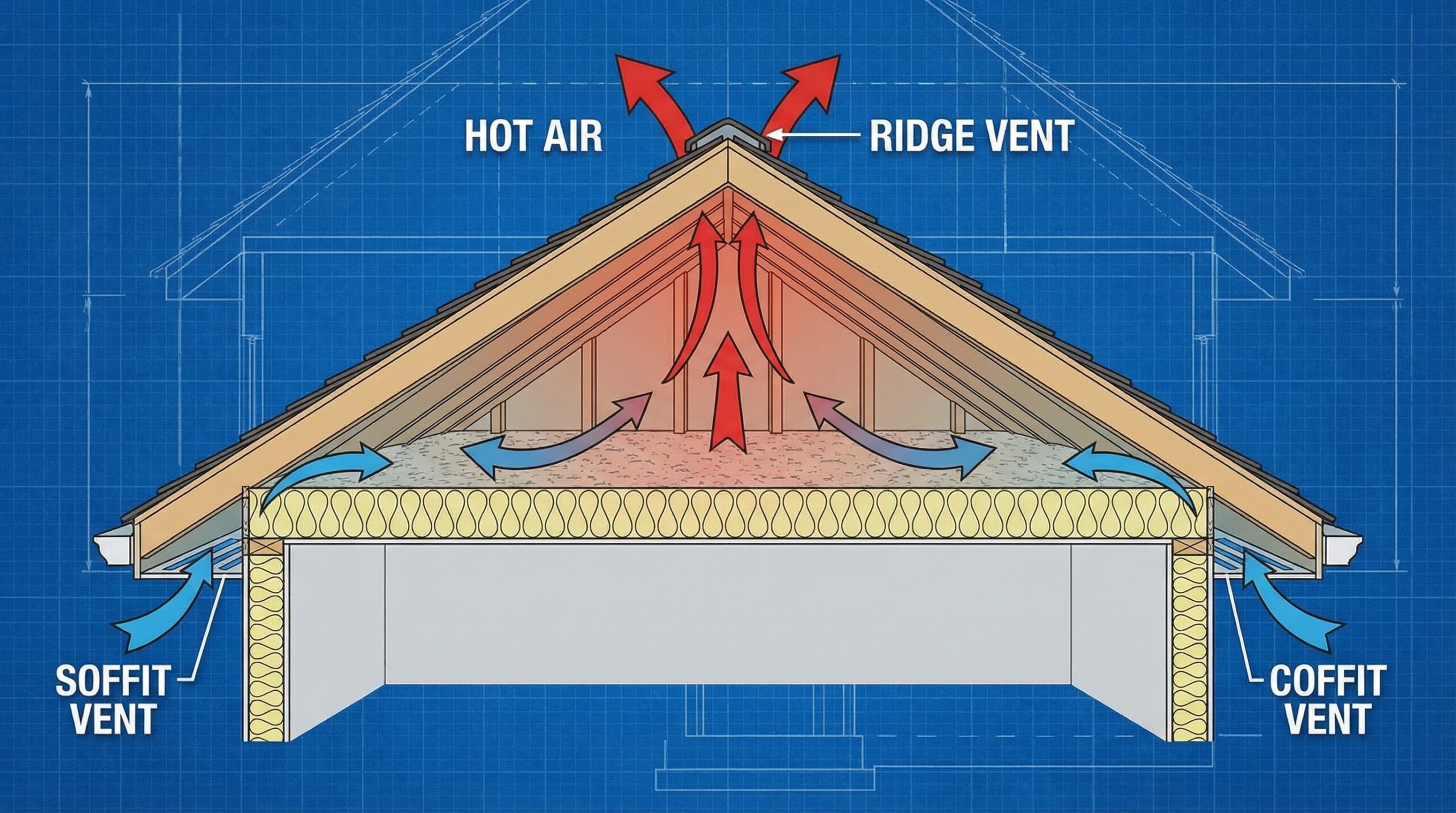
Most experts recommend at least 1 square foot of ventilation for every 300 square feet of attic floor space, split evenly between intake and exhaust. When this balance is achieved, your entire roofing system functions as designed.
The hidden costs of poor ventilation
Poor ventilation doesn’t just affect your roof – it impacts your entire home’s comfort and your wallet. During summer months, trapped heat forces your air conditioning system to work overtime, driving up energy bills significantly. GAF research shows that proper attic ventilation can reduce cooling costs by preventing your AC from fighting against superheated attic air.
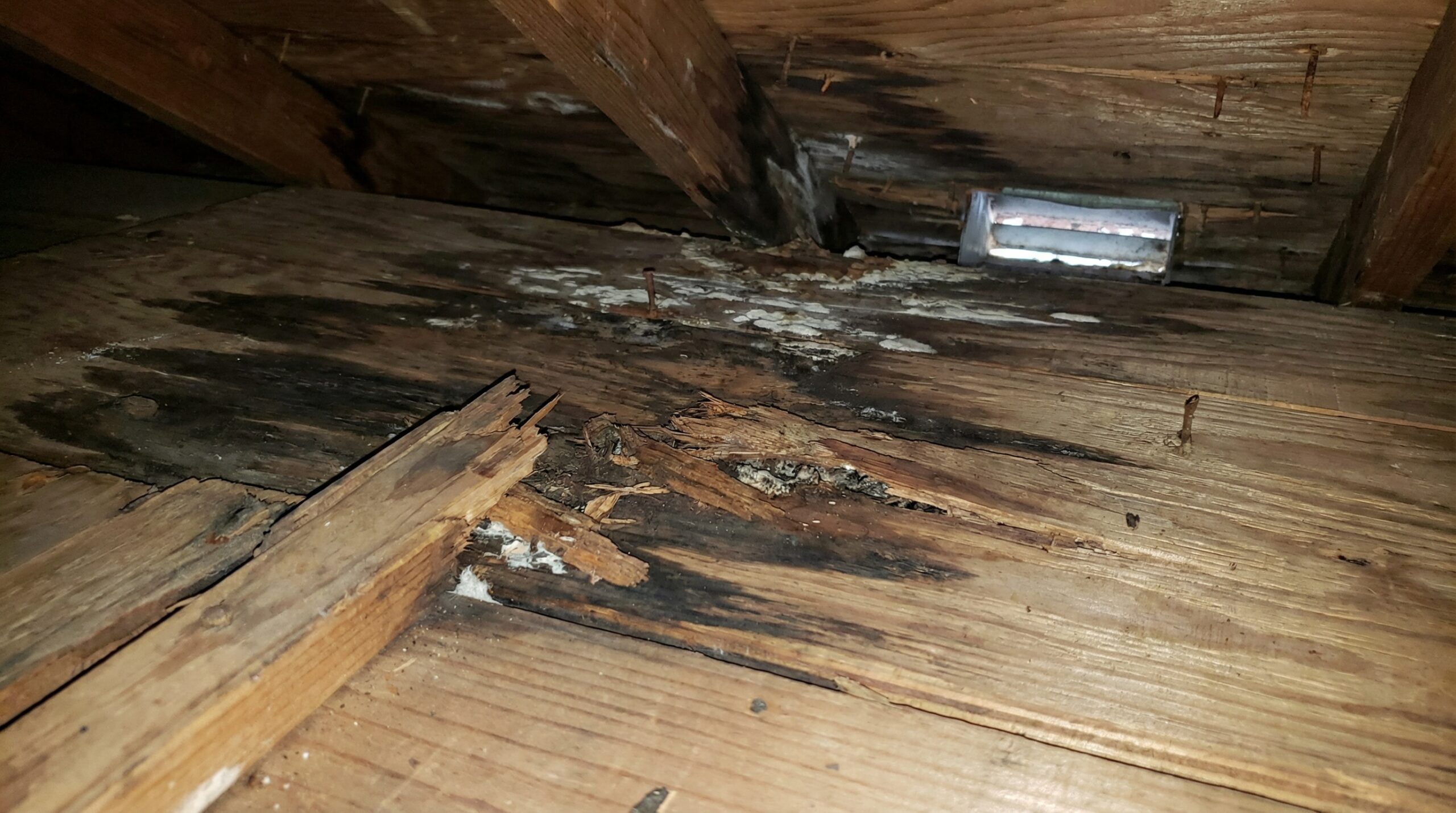
Winter brings different but equally serious problems. Your daily activities – cooking, showering, even breathing – generate moisture that rises into the attic. Without adequate ventilation, this moisture becomes trapped, leading to mold growth, wood rot, and deterioration of insulation effectiveness. Understanding how attic insulation impacts roof lifespan is crucial for maintaining a healthy roofing system.
Warning sign: If you notice mold, mildew, or musty odors in your attic, or if paint is peeling around your roofline, poor ventilation is likely the culprit.
Perhaps most costly of all, inadequate ventilation can cause ice dams in snowy climates. When your attic stays too warm, it melts snow on your roof, which then refreezes at the colder eaves, creating ice barriers that can damage your roof structure and cause leaks. Installing ice and water shield along the eaves can help protect against this damage.
Signs your home needs better ventilation
Your home will often tell you when ventilation isn’t working properly, but you need to know what to look for. The most obvious sign is an attic that feels excessively hot during summer or humid year-round. If stepping into your attic feels like entering a sauna, your ventilation system isn’t doing its job.
Energy bills that spike during summer months can also indicate ventilation problems. When your attic becomes superheated, it radiates that heat down into your living spaces, forcing your cooling system to work much harder than necessary.
Visual clues around your home can reveal ventilation issues too. Look for paint peeling or blistering on exterior walls near the roofline, water stains on attic walls or ceiling, or frost buildup on the underside of your roof during winter. These signs often indicate moisture problems caused by inadequate airflow. Damage to roof decking is often one of the first structural casualties of poor ventilation.
Professional solutions for lasting protection
While understanding ventilation is important, implementing effective solutions requires professional expertise. At Peak and Valley Roofing, we evaluate your entire roofing system to ensure proper ventilation that protects your investment for years to come.
Our certified specialists don’t just install vents – we calculate the exact ventilation needs for your specific home size and design. We check for blocked soffit vents, ensure proper insulation placement that doesn’t restrict airflow, and verify that intake and exhaust are properly balanced. We also examine all critical roof components to ensure they work together harmoniously.
Professional tip: Never cover soffit vents with insulation, and maintain at least 3 inches of clearance around recessed lighting fixtures to prevent fire hazards and ensure proper airflow.
Every home is different, and what works for your neighbor might not be right for your roof. Factors like roof pitch, attic size, local climate, and existing ventilation all influence the best solution for your situation. When planning a roof replacement, understanding what should be included in a detailed roofing estimate helps ensure ventilation improvements are properly accounted for.
Proper roof ventilation isn’t just about installing a few vents and hoping for the best. It’s about creating a balanced system that protects your roof, improves your home’s energy efficiency, and prevents costly moisture damage. When done correctly, good ventilation can add years to your roof’s life while keeping your home more comfortable and your energy bills lower. If you’re experiencing any of the warning signs mentioned, or if you’re unsure about your current ventilation setup, having a professional assessment can save you significant money and headaches down the road.