

If you live in an area prone to severe weather, knowing how to spot hail damage on your roof could save you thousands of dollars. Hail damage often appears as small dents, granule loss, or exposed dark spots on asphalt shingles, but it can be surprisingly subtle and easily missed from ground level. The key is understanding what to look for and acting quickly, as most insurance policies require prompt reporting of storm damage.
Quick Fact: According to the National Weather Service, hailstorms cause over $1 billion in property damage annually in the United States, with roofing being the most commonly affected component.
After a hailstorm passes, you might think your roof escaped damage if you don’t see obvious holes or missing shingles. However, hail damage is often more subtle than you’d expect. Even small hailstones can compromise your roof’s protective capabilities, creating vulnerabilities that lead to expensive problems down the road if left unaddressed.
Identifying hail damage by severity level
Understanding the severity of hail damage helps you prioritize repairs and communicate effectively with insurance adjusters. Hail damage typically falls into three categories, each requiring different approaches.
Minor damage appears as surface-level granule loss without exposing the underlying asphalt. You’ll notice small, scattered dark spots where protective granules have been knocked away. While this might seem cosmetic, these exposed areas become vulnerable to UV rays and weathering, accelerating your roof’s aging process.
Moderate damage includes visible dents along with granule loss and possible small cracks. The impact marks create circular indentations that you can feel when running your hand over the shingle surface. This level of damage compromises the shingle’s integrity and creates potential entry points for moisture.
Severe damage exposes the roof’s underlayment or creates punctures through the shingle material. You might see the black asphalt mat beneath or even holes that penetrate completely through the roofing system. This level of damage requires immediate attention to prevent water intrusion and structural issues.
Insurance Tip: Document damage severity with photos showing a coin or ruler for scale. Insurance adjusters use specific criteria to determine coverage, and clear visual evidence strengthens your claim significantly.
How different roofing materials respond to hail
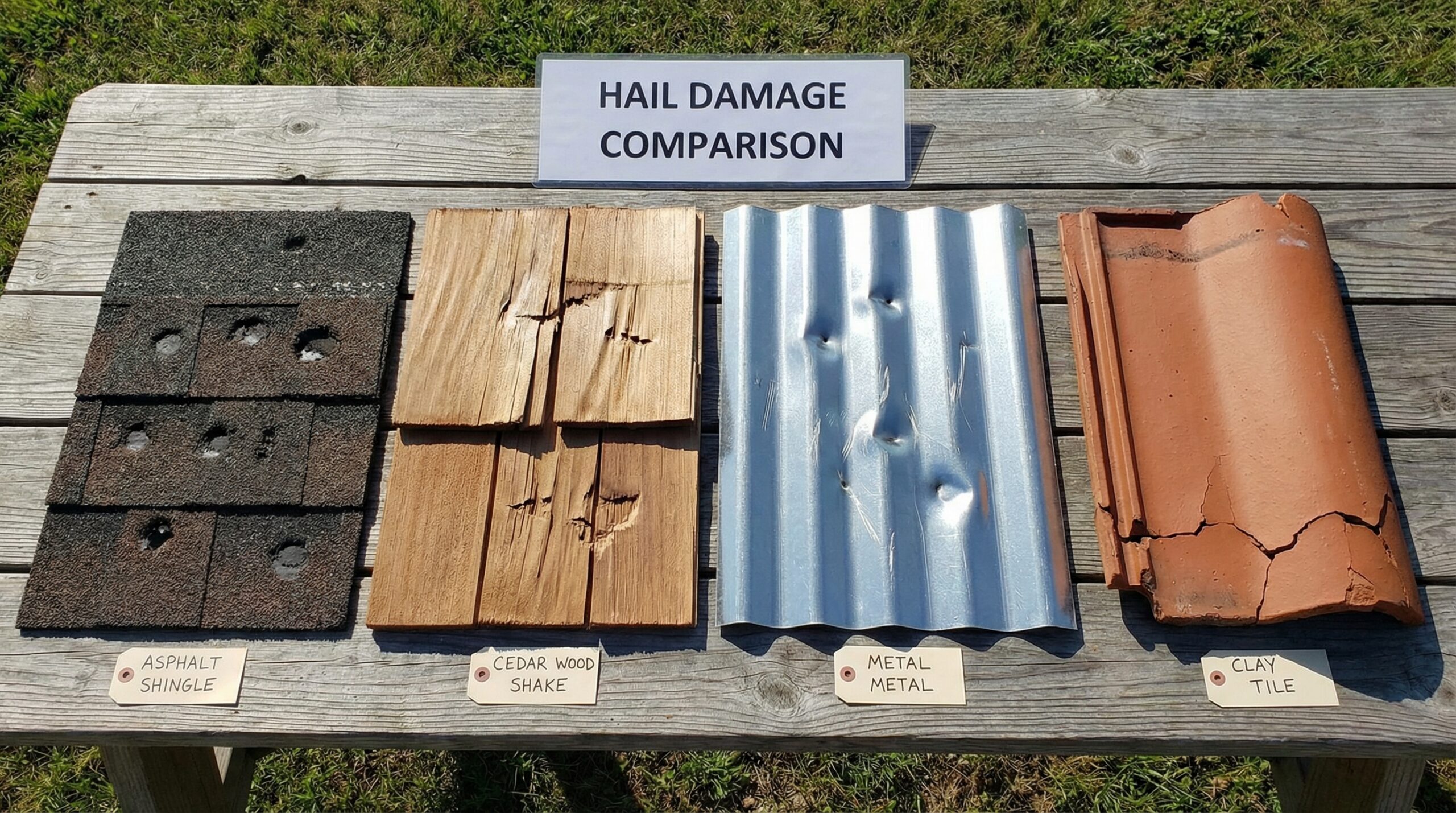
Your roof’s material determines how hail damage manifests and how easily you can spot it. Each material has unique characteristics that affect both damage patterns and repair requirements.
Asphalt shingles show damage through granule displacement and denting. The protective granules get knocked loose, creating shiny or dark spots where the underlying asphalt shows through. Older asphalt shingles become more brittle over time, making them increasingly susceptible to cracking and splitting from hail impact. Understanding how to clean roof shingles for lasting protection can help you maintain their integrity after storm damage.
Wood shingles and shakes typically crack or split when struck by hail. These cracks often appear near the edges where the wood is thinnest. Unlike asphalt, wood damage is usually more visible as clean breaks or splits that you can see clearly from ground level.
Metal roofing develops dents that catch light differently than the surrounding surface. While metal roofs resist puncturing better than other materials, they show impact marks more readily. Look for circular dimples or areas where the finish appears scratched or scraped. For proper maintenance after hail events, learn how to clean a metal roof step-by-step.
Tile roofs may crack or chip, with pieces sometimes falling to the ground around your home’s perimeter. Clay and concrete tiles can also develop hairline cracks that aren’t immediately visible but compromise the tile’s water-shedding ability.
Spotting damage from ground level safely
You don’t need to climb onto your roof to assess hail damage effectively. Ground-level inspection techniques can reveal most damage while keeping you safe from falls and further roof damage from foot traffic.
Start by walking around your home’s perimeter, looking for obvious signs like damaged gutters, dented downspouts, or scattered granules in flower beds. Hail typically damages everything it hits, so collateral damage often indicates roof impact as well.
Use binoculars to examine your roof surface more closely. Look for areas where the color appears different or where you can see circular patterns. Pay special attention to roof edges, ridges, and areas around vents or chimneys where damage often concentrates due to wind patterns during storms.
Check your gutters and downspouts for dents, which indicate hail size and impact force. Examine window screens, outdoor furniture, and siding for similar damage patterns. If these items show impact marks, your roof likely sustained damage as well. Regular post-winter roof and gutter maintenance can help you identify storm-related issues early.
Take photos from multiple angles, including wide shots showing the entire roof and close-ups of any suspicious areas. These photos become crucial documentation for insurance claims and help professional inspectors focus their detailed examination.
Understanding the insurance claim process
Filing a successful hail damage claim requires understanding what insurance companies look for and how to present your case effectively. The process involves specific steps and timelines that can significantly impact your settlement.
Most homeowner policies cover sudden storm damage but exclude normal wear and tear. Insurance adjusters distinguish between these by examining damage patterns, checking weather reports, and assessing your roof’s overall condition. Fresh hail damage typically shows clean impact marks with sharp edges, while wear-related issues appear gradual and weathered. Understanding the 12 common types of roof damage and repair solutions helps you communicate more effectively with adjusters.
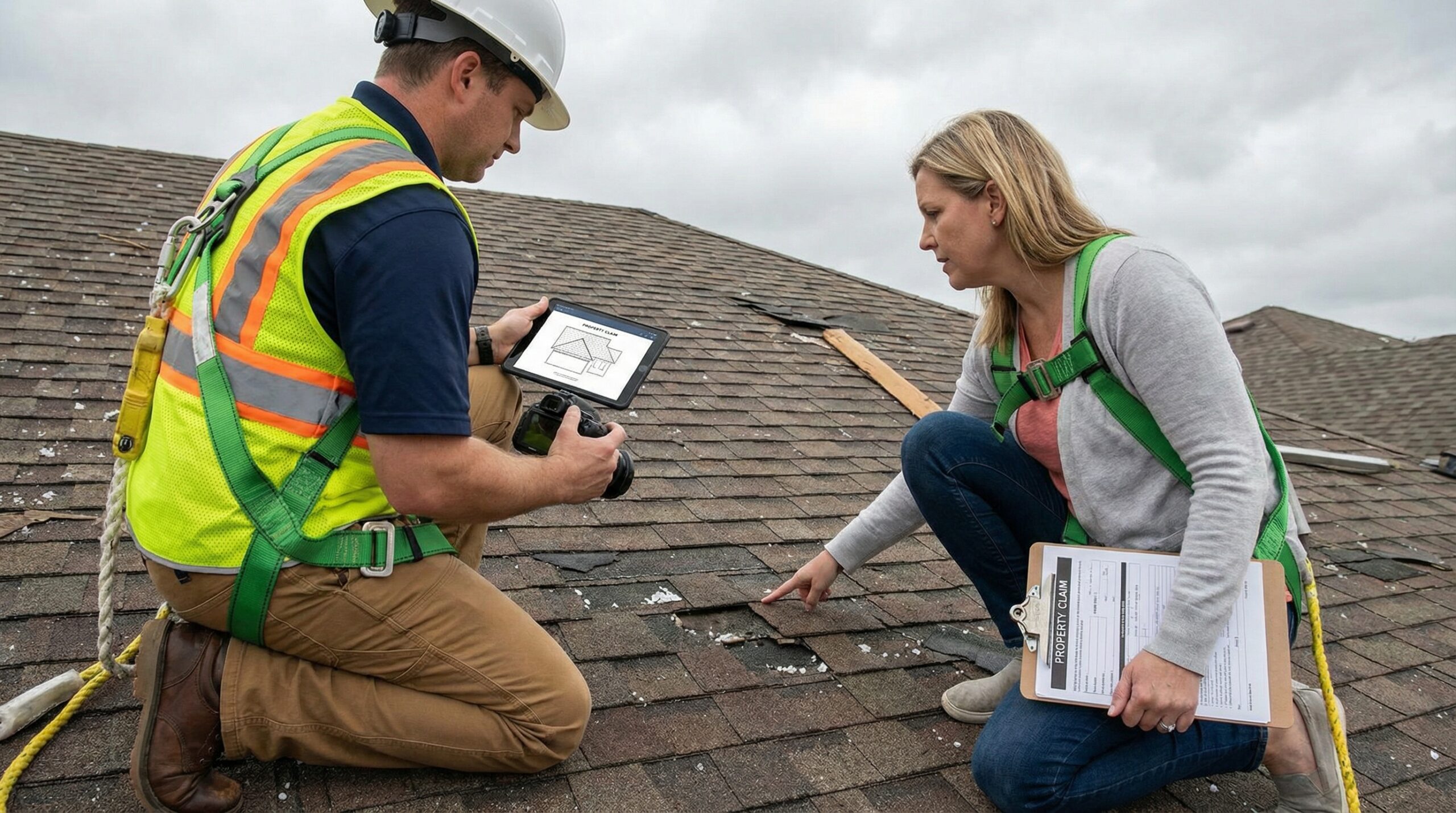
Document everything before making any repairs. Take timestamped photos showing damage extent, note the storm date and time, and save weather reports confirming hail in your area. This documentation establishes the timeline and proves the damage resulted from a specific weather event rather than gradual deterioration.
Contact your insurance company promptly, as most policies require notification within a specific timeframe after discovering damage. However, avoid signing any paperwork or agreeing to settlements until you fully understand the damage extent and repair costs involved.
Professional Insight: Insurance adjusters sometimes miss subtle damage or underestimate repair costs. Getting a professional inspection from Peak and Valley Roofing before the adjuster’s visit ensures nothing gets overlooked and provides an independent damage assessment.
Consider hiring a public adjuster if your claim gets denied or if the settlement seems inadequate. These professionals work on your behalf to document damage thoroughly and negotiate with insurance companies. While they charge a percentage of your settlement, they often secure significantly higher payouts than homeowners achieve on their own.
The key to protecting your home lies in recognizing hail damage early and taking appropriate action. Even minor damage can evolve into major problems if moisture penetrates compromised shingles and reaches your roof’s structural components. Regular post-storm inspections, combined with prompt professional assessment when damage occurs, help maintain your roof’s integrity and maximize your insurance coverage when you need it most. If you’re dealing with storm-related issues, explore types of roof storm damage to better understand what to look for, and don’t hesitate to seek emergency roof repair services when severe damage occurs.
| Damage Severity | Visual Signs | Typical Repair Cost | Insurance Coverage |
|---|---|---|---|
| Minor | Granule loss, small dark spots | $300 – $800 | Often covered with deductible |
| Moderate | Visible dents, cracks, granule loss | $800 – $3,000 | Usually covered if storm-related |
| Severe | Exposed underlayment, punctures | $8,000 – $15,000+ | Full replacement often covered |
| ## FAQ |