

As autumn arrives in Northeast Ohio, you might think roofing season is winding down. Actually, fall presents the perfect window for roof repairs and replacements. The combination of moderate temperatures, lower humidity, and contractor availability makes this season ideal for protecting your home before winter arrives.
Rocky River homeowners who schedule repairs during autumn avoid the spring rush, often securing better pricing and faster completion times.
Quick Fact: Fall’s moderate temperatures and lower humidity create ideal conditions for roofing materials to bond properly, resulting in installations that can last 15-20% longer than those completed during extreme weather periods.
With winter storms approaching and the insurance industry seeing increased roof damage claims, timing your repair correctly can save thousands in emergency costs. Let’s explore why fall stands out as the optimal season for your roofing project.
Perfect weather conditions make all the difference
Fall weather in Northeast Ohio creates the goldilocks zone for roofing work. Temperatures typically range between 50-70°F, which allows roofing materials like shingles and sealants to achieve proper adhesion without the stress of extreme heat or cold.
During summer, intense heat can make shingles too pliable, while winter’s freezing temperatures make materials brittle and difficult to work with. Fall’s moderate conditions mean your roofing materials will cure properly, creating stronger bonds that withstand Northeast Ohio’s harsh, lake-effect winters.
The lower humidity levels during autumn also play a crucial role. High humidity can interfere with adhesive curing and create moisture problems during installation. Fall’s drier air ensures that underlayments, flashing, and sealants set correctly, providing better long-term protection for your home.
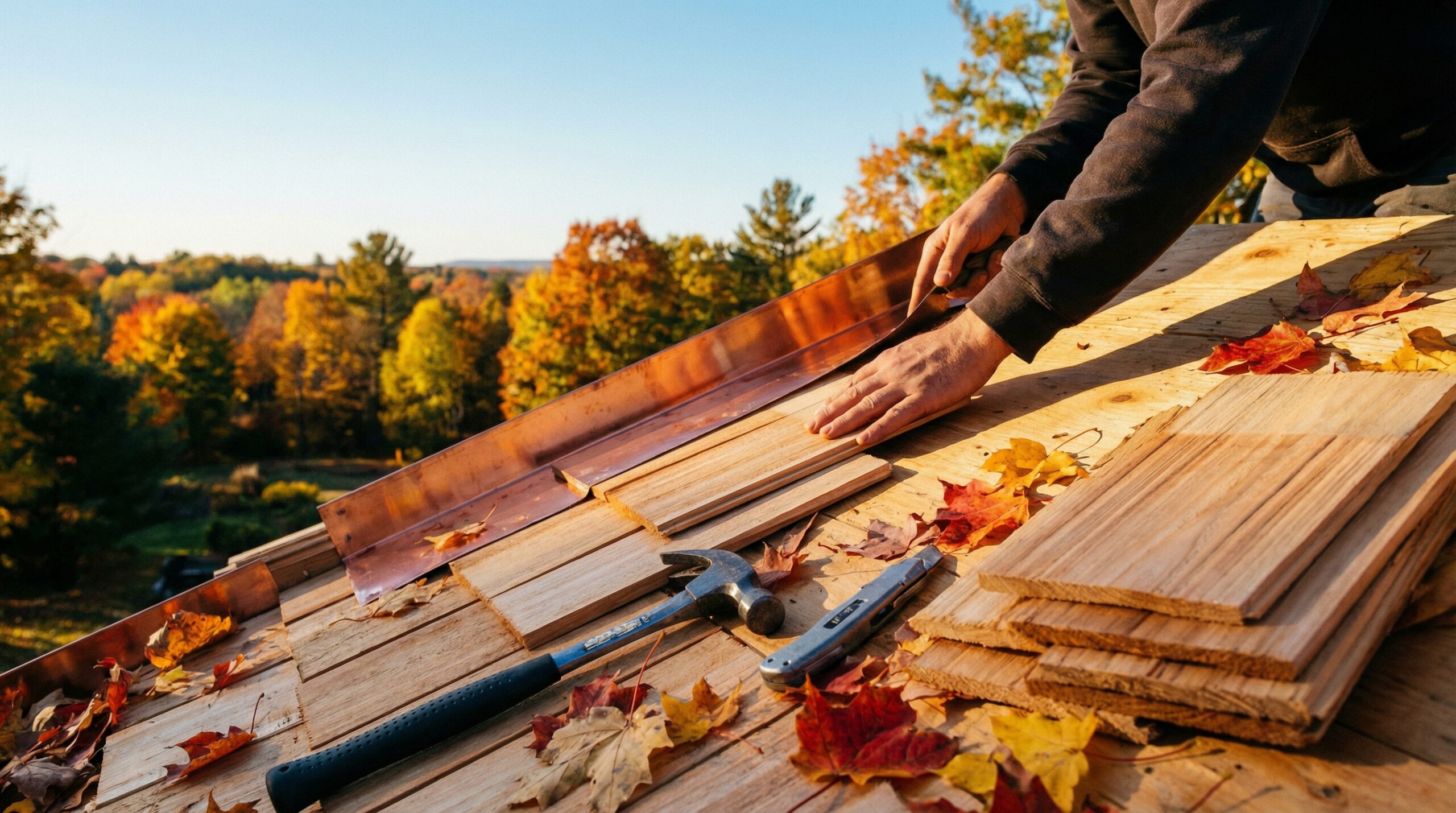
Additionally, fall typically brings more stable weather patterns compared to spring’s unpredictable storms or summer’s sudden downpours. This stability means fewer weather delays and a more predictable project timeline for your roof repair.
Avoid the spring rush and save money
Spring is traditionally the busiest season for roofing contractors, as homeowners discover winter damage and scramble for repairs. By scheduling your project in fall, you’re working with contractors when their schedules are more flexible and competitive pricing is available.
Northeast Ohio roof repair costs in 2026 average around $1,152, but fall scheduling can often secure 10-15% savings compared to peak season pricing.
Contractors appreciate fall projects because they can take more time to ensure quality work without the pressure of a packed schedule. This often translates to better attention to detail and superior craftsmanship for your project.
Money-Saving Tip: Many roofing companies offer fall promotions and flexible financing options to fill their schedules before winter, making this an ideal time to negotiate better terms for your project.
The reduced demand also means you’ll have better access to premium materials and your preferred contractor, rather than settling for whoever’s available during the spring rush.
Prepare your home for winter storms
Northeast Ohio winters can be brutal on roofing systems. Snow loads, ice dams, and freeze-thaw cycles put tremendous stress on your roof. Completing repairs in fall ensures your home is fortified before these challenges arrive.
Recent data from the insurance industry shows a significant increase in winter roof damage claims.
Fall repairs allow you to address summer damage before it worsens. Heat damage, storm impacts, and UV degradation from the summer months can create vulnerabilities that winter weather will exploit. Understanding common types of roof damage and repair solutions helps you identify issues early and address them before winter arrives. Fixing these issues now prevents small problems from becoming major disasters.

Winter emergency repairs are not only more expensive but also more dangerous for workers and potentially damaging to your home’s interior. Ice, snow, and freezing temperatures make emergency repairs challenging and often temporary at best. If you’re dealing with winter roof leaks in Northeast Ohio, addressing vulnerabilities now can save you from costly emergency situations during the February thaw.
Boost energy efficiency before heating season
A properly maintained roof plays a crucial role in your home’s energy efficiency. Fall roof repairs can significantly impact your heating costs throughout the winter months ahead.
Addressing issues like damaged insulation, poor ventilation, or air leaks before heating season begins can result in substantial energy savings. According to industry studies, proper roof maintenance can reduce heating costs by up to 20% during winter months.
Fall is also an excellent time to upgrade to energy-efficient roofing materials. Cool roofing technologies and improved insulation systems work year-round but show their greatest benefits during extreme weather seasons.
| Repair Type | Energy Savings | Payback Period |
|---|---|---|
| Insulation upgrade | 15-20% | 2-3 years |
| Ventilation improvement | 10-15% | 3-4 years |
| Air sealing | 5-10% | 1-2 years |
Working with certified contractors ensures you’re getting materials and installation techniques that maximize energy efficiency. Quality workmanship during fall installation means these efficiency gains will last throughout the winter and beyond.
The moderate fall temperatures also allow for better testing of your home’s thermal envelope. Contractors can more easily identify air leaks and insulation gaps when there’s a noticeable temperature difference between indoor and outdoor conditions, but not the extreme variations that make winter assessments difficult.
Protect your investment with proper fall maintenance
Before winter arrives, it’s essential to prepare all aspects of your roof system. This includes addressing potential vulnerabilities from surrounding trees and ensuring proper drainage. Fall tree trimming to protect your roof and gutters is a critical step that prevents branches from damaging your roof during winter storms and keeps gutters clear of debris.
Additionally, if your home has skylights, don’t overlook their maintenance. Fall skylight maintenance and weather protection ensures these vulnerable points in your roof system are properly sealed and ready for harsh weather conditions.
For homeowners near Lake Erie, understanding storm damage roof repair procedures can help you quickly assess and address any damage from fall gales and early lake-effect storms before winter intensifies weather challenges.
Fall roof repair in Rocky River isn’t just about fixing current problems – it’s about strategic home protection that saves money, ensures safety, and provides peace of mind throughout the challenging winter months ahead. The combination of ideal weather conditions, cost savings, and thorough winter preparation makes autumn the smart choice for your roofing project.