

Northeast Ohio homeowners know the pattern well. Weeks of bitter January cold and heavy lake-effect snow followed by a sudden 50-degree February day. That warm sunshine feels wonderful, but it often reveals an unwelcome surprise – water stains on your ceiling that weren’t there yesterday.
The February thaw doesn’t create new roof problems. Instead, it exposes leaks that ice has been hiding all winter long. When temperatures drop below freezing, ice can form around vulnerable areas like flashings and small cracks, acting like a temporary plug. Once that ice melts during the thaw, water finds its way into your home through paths that were always there.
Quick Answer: February thaw leaks happen because ice that was plugging small roof openings melts rapidly, allowing trapped water to flow under shingles and into your home. The leak existed before – the ice was just hiding it.
Understanding this cycle helps explain why some winter leaks only appear during warm spells, not during actual snowstorms. The damage mechanism is already in place, waiting for the right conditions to reveal itself.
Why ice acts like a temporary roof patch
During extended cold periods, water around roof penetrations freezes solid. This ice formation can seal small gaps around chimneys, skylights, or damaged shingles that would normally allow water entry. Think of it as nature’s temporary caulk job.
When February brings those classic warm days, everything changes quickly. The ice melts faster than it can drain away, creating a surge of water that overwhelms the roof’s ability to channel it properly. This meltwater takes the path of least resistance, often flowing under shingles or behind flashing where the original vulnerability exists.
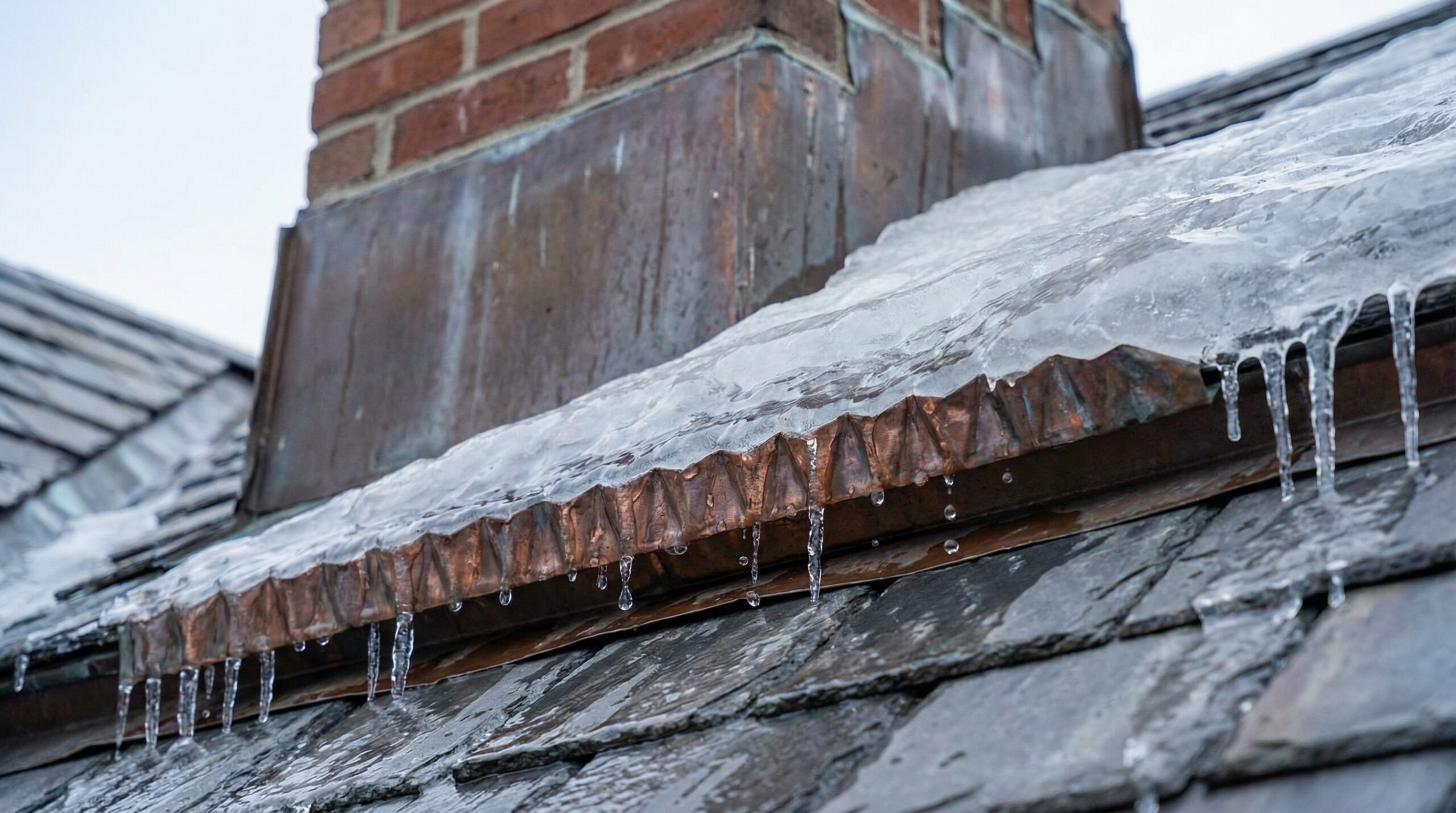
The freeze-thaw cycle also expands and contracts roofing materials. Metal flashing shifts, sealants crack, and small gaps that were barely noticeable in fall become significant entry points by February. Each temperature swing makes these openings slightly larger.
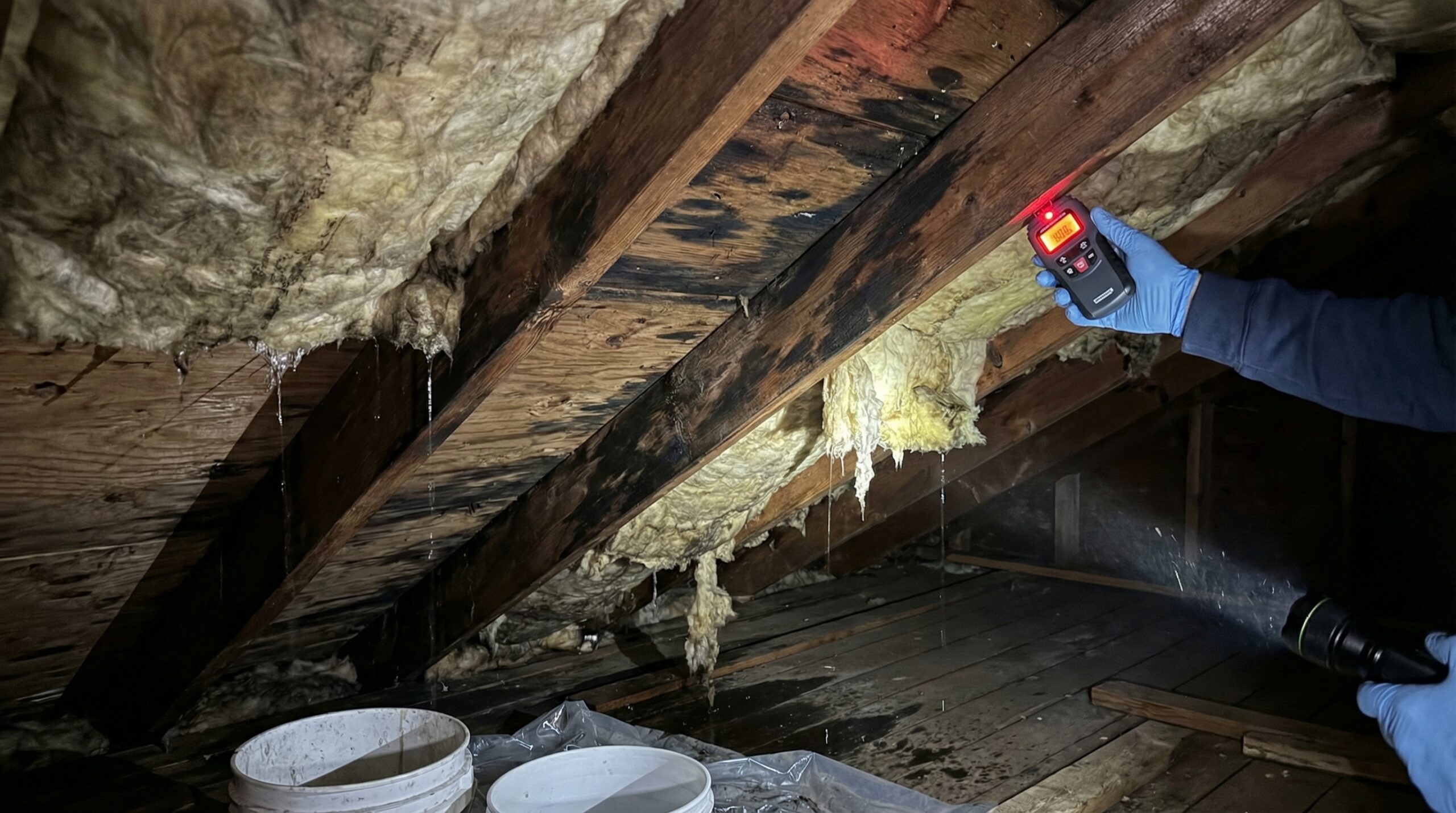
Important: The water causing new stains may still be trapped in your insulation or wall cavities, creating ongoing moisture problems even after the visible leak stops.
Common leak locations during Northeast Ohio thaws
Certain areas of your roof are particularly vulnerable during February thaws. These spots combine high water volume with complex sealing requirements, making them prime candidates for hidden winter damage.
Chimney flashing tops the list because chimneys interrupt the roof plane and require multiple sealing components. The step flashing along the sides and back flashing at the base must work together perfectly. When freeze-thaw cycles stress these connections, even small gaps can channel significant water into your home. Proper chimney roof integration maintenance is essential for preventing these vulnerabilities.
Roof valleys present another challenge during thaws. These areas collect water from large roof sections, creating high-volume drainage channels. In complex Rocky River rooflines, valleys can be quite long and steep. If the valley metal has aged or shifted, a rapid thaw can overwhelm its capacity and push water sideways under shingles.
Skylights rely on precise flashing and weatherproof seals to keep water out. The repeated expansion and contraction of freeze-thaw cycles can stress these seals, creating microscopic gaps that become major problems during a thaw. Many homeowners first notice skylight leaks as drips in kitchens or bathrooms during the first warm February day. Regular fall skylight maintenance can help prevent these issues before winter arrives.
Immediate steps when you spot a new stain
Finding a fresh water stain after a warm winter day requires quick but careful action. Your first priority is documenting the problem and preventing additional damage while you arrange for professional assessment.
Take clear photos of the stain and note the exact date and weather conditions when you discovered it. This information helps roofing professionals understand the leak pattern and identify the most likely source. Remember that water can travel along framing members before becoming visible, so the stain location may not be directly below the actual entry point.
Check your attic if you can do so safely. Look for wet insulation, active dripping, or dark stains on wood framing. Wet insulation loses its effectiveness and can harbor mold growth, so identifying moisture in the attic helps gauge the severity of the problem.
Resist the urge to poke holes in drywall or attempt temporary patches without professional guidance. Well-meaning attempts to “help” the water drain can actually make the problem worse by creating additional openings or directing water into new areas. Understanding the common types of roof damage can help you communicate effectively with roofing professionals.
Action Tip: Place a bucket under any active drips and move furniture or belongings away from the affected area, but avoid major interventions until a professional can assess the situation.
Preventing future February surprises
The best defense against thaw-related leaks is addressing vulnerabilities before winter arrives. Fall roof maintenance should focus on the areas most likely to develop problems during freeze-thaw cycles.
Professional roof inspections in late fall can identify loose flashing, worn sealants, or damaged shingles that could become leak sources during winter. This timing allows for repairs during favorable weather conditions, rather than emergency fixes during February thaws. There are compelling reasons for fall roof repair that every Northeast Ohio homeowner should understand.
Proper attic insulation and ventilation play crucial roles in preventing ice dam formation. When your attic stays close to outdoor temperatures, snow melts more evenly across the entire roof surface instead of creating the uneven melting patterns that lead to ice dams on roofs and backup problems.
Regular gutter cleaning also supports proper drainage during thaws. Clogged gutters can’t handle the sudden water volume from melting lake-effect snow and ice, leading to overflow that can work its way under roofing materials. Comprehensive post-winter roof and gutter maintenance ensures your drainage system is ready for the next season.
The February thaw is a predictable Ohio weather pattern, but the roof leaks it reveals don’t have to be inevitable. Understanding how ice masks existing problems helps you take the right steps when those problems finally surface. Quick documentation and professional assessment protect your home from the hidden water damage that can develop long after the visible leak stops.
If you’ve discovered new water stains this February, don’t wait for spring rains to make the problem worse. Peak and Valley Roofing provides thorough inspections to identify the true source of thaw-related leaks and recommend appropriate repairs to prevent future occurrences.