

Living near Lake Erie means enjoying beautiful waterfront communities, but it also means preparing for Mother Nature’s powerful storms. From devastating lake-effect snows to sudden summer squalls and high winds, your home faces constant weather challenges throughout the year. When severe weather strikes Rocky River, Westlake, Fairview Park, or Lakewood, your roof becomes your first line of defense against the elements.
The challenge with storm damage is that it’s not always visible from ground level. Your roof might appear intact from your driveway while hiding lifted shingles, compromised flashing, or small punctures that could become major leaks during the next storm. Understanding how to properly assess storm damage can save you thousands in repairs and protect your family’s safety.
Quick Fact: Northeast Ohio experiences an average of 15-20 significant storm events annually, making post-storm roof inspections crucial for homeowner protection and insurance claims.
At Peak and Valley Roofing, we help Northeast Ohio homeowners identify hidden damage quickly using advanced inspection technology and provide clear next steps for protection and repairs.
Immediate safety steps after a storm
Your family’s safety comes first after any severe weather event. Before you even think about checking your roof, make sure everyone is accounted for and your home is structurally sound.
Never attempt to climb on your roof immediately after a storm. Wet surfaces, loose shingles, and debris create dangerous conditions that can lead to serious injury. Instead, focus on these essential safety measures from ground level.
If you notice active leaks, missing shingles, or tree damage, take immediate action to protect your home’s interior. Place buckets under drips, move valuables away from affected areas, and use tarps if you can safely access them from inside your attic.
Document everything you can see from the ground with photos. These images create a timeline for insurance purposes and help professionals understand the scope of damage before they arrive for inspection.
Safety Reminder: If you smell gas or notice electrical issues after a storm, evacuate immediately and call emergency services before addressing any roof concerns.
Common types of storm damage in Northeast Ohio
Northeast Ohio’s lakeside location and varied weather patterns create specific types of roof damage that homeowners should recognize. Understanding these damage types helps you communicate effectively with contractors and insurance adjusters.
Wind damage appears as missing, lifted, or curled shingles, especially in exposed areas. Lakefront communities see this frequently due to Lake Erie gales, but wind damage can occur anywhere in the region during severe storms.
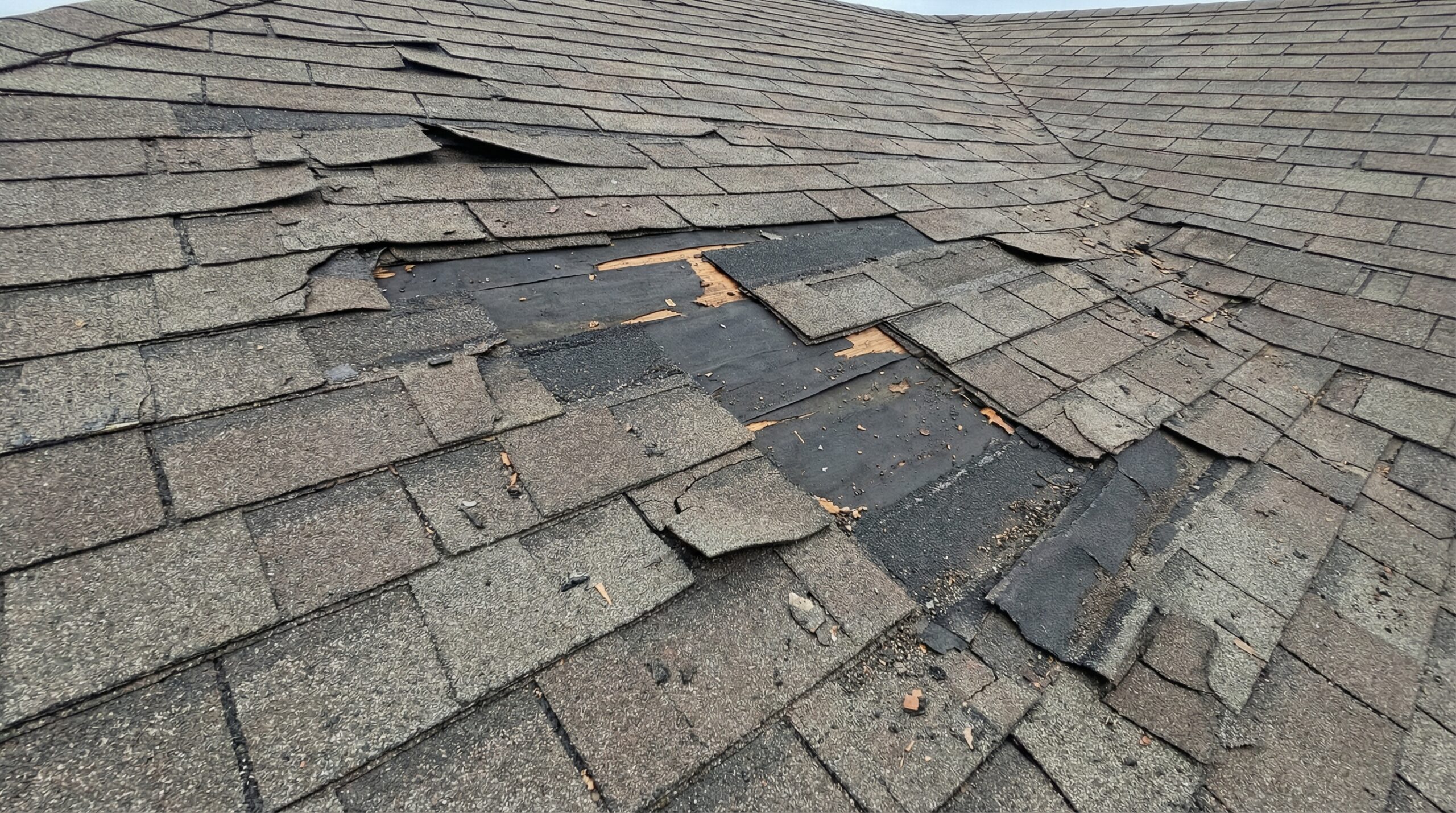
Hail damage creates small dents or “pockmarks” that knock off protective granules from shingles. Even when hail doesn’t cause immediate leaks, it significantly shortens your roof’s lifespan and accelerates aging.
Water intrusion manifests as ceiling stains, attic moisture, or active dripping. Common entry points include chimney flashing, pipe boots, roof vents, valleys, skylights, and step flashing where roofs meet walls.
| Damage Type | Visual Signs | Immediate Risk |
|---|---|---|
| Wind | Missing/lifted shingles | High leak potential |
| Hail | Granule loss, dents | Accelerated aging |
| Water | Stains, moisture | Structural damage |
Professional inspection advantages
While you can spot obvious damage from the ground, hidden issues require professional assessment. Modern inspection technology provides comprehensive evaluation without the safety risks of ladder climbs.
Advanced drone inspections capture high-definition images of your entire roof, including hard-to-reach areas around chimneys, valleys, and complex roof lines. These inspections identify missing or creased shingles, punctures, impact marks, compromised flashing, and drainage problems that aren’t visible from ground level.
Professional inspectors understand how Northeast Ohio’s specific weather patterns affect different roofing materials and can spot subtle signs of damage that untrained eyes might miss. They also provide detailed documentation that insurance companies require for claims processing.
The inspection process typically takes 30-60 minutes and results in a comprehensive report with photos, measurements, and repair recommendations. This documentation proves invaluable during insurance negotiations and helps you make informed decisions about repairs versus replacement.

Navigating insurance claims effectively
Insurance coverage for storm damage depends on your specific policy and the cause of loss. However, proper documentation significantly improves your chances of claim approval and fair compensation.
Take photos of all visible damage immediately after the storm, including interior water damage, debris impact, and any temporary repairs you make. Create a timeline by noting the date and time of the storm and when you first noticed damage.
Professional inspection reports provide the detailed documentation insurance adjusters expect. High-resolution photos, precise measurements, and expert assessment of damage causation help support your claim during the review process.
Insurance Tip: Many Ohio policies cover sudden storm damage but exclude gradual deterioration, making professional damage assessment crucial for distinguishing between covered and non-covered issues.
Keep all receipts for emergency repairs, temporary protection measures, and professional inspections. These costs are often reimbursable under your policy’s additional living expenses or emergency repair provisions.
Contact your insurance company promptly after documenting damage, but avoid accepting the first settlement offer without professional evaluation. Many homeowners receive inadequate initial settlements that don’t cover the full scope of necessary repairs.
Understanding how to properly assess storm damage protects both your home and your financial investment. While obvious damage like missing shingles or active leaks demands immediate attention, hidden damage can be equally costly if left unaddressed. Professional inspection technology provides the comprehensive evaluation needed for both safety and insurance purposes, giving you confidence in your next steps whether you need emergency repairs or full replacement.
For Northeast Ohio homeowners facing post-storm uncertainty, understanding the different types of roof storm damage and knowing when to schedule fall roof repairs can prevent costly damage down the line. If you experience winter roof leaks or notice issues after severe weather, professional assessment removes the guesswork and provides clear documentation for informed decision-making about your home’s protection.