

Living along the Lake Erie shoreline in Northeast Ohio means your roof faces unique challenges that inland properties never encounter. If you’re a homeowner in Rocky River (44116), Bay Village, or Lakewood, those seemingly mild lake-effect gusts can actually compromise your roof’s integrity without you even realizing it. Wind damage often happens silently, with shingles lifting and sealing strips breaking while everything looks normal from your driveway.
Quick Answer: Wind damage in the Cleveland area can occur at speeds as low as 25-40 mph, causing lifted shingles and broken seals that make your roof vulnerable to leaks during the next heavy rain event or a sudden March thaw.
The tricky part about Lake Erie wind damage is that it doesn’t always announce itself with missing shingles scattered across your yard. Instead, it weakens your roof’s defenses gradually, setting you up for expensive interior damage when the next major storm rolls off the lake.
Why Lake Erie lakefront properties face unique wind challenges
Your Rocky River or Bay Village home deals with more than typical Midwest weather patterns. The combination of high-velocity lake winds, constant moisture, and rapid temperature changes creates a perfect storm for roof deterioration.
The “wind tunnel” effect along the shoreline accelerates wear on metal components like flashing, gutters, and fasteners. What might last 25 years in an inland suburb like Strongsville could fail in 15-18 years near the lake. Meanwhile, consistent wind pressure gradually weakens the adhesive strips that keep your shingles properly sealed against Ohio’s horizontal rain.
Winter brings additional challenges when heavy lake-effect snow and ice cycles load your gutters with extra weight. This stress, combined with wind uplift, can pull gutters away from fascia boards, creating gaps where water can penetrate behind your home’s protective barriers.
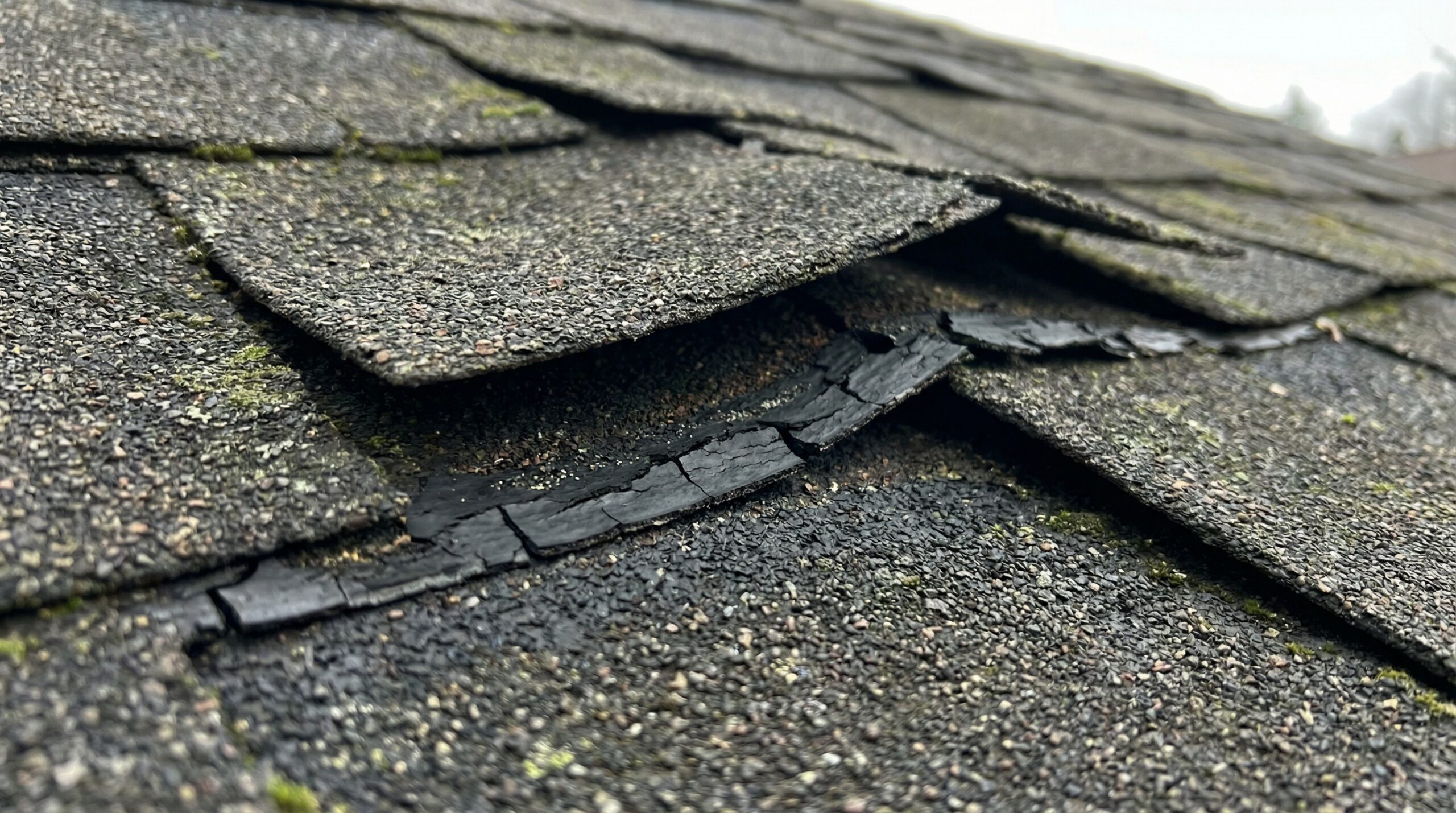
If you’ve noticed flapping sounds during recent wind events, or if your shingle lines look uneven from the ground, your roof’s wind resistance may already be compromised by our local climate.
Critical wind damage signs every Ohio homeowner should check
The most dangerous wind damage often goes unnoticed because it doesn’t create obvious visual cues. Here’s what you need to look for around your Cleveland-area property.
Lifted shingles with broken seals represent the most common lakefront wind damage. A shingle can lift during a gust and settle back down, appearing normal from street level. However, once that adhesive seal breaks, wind-driven rain and lake-effect snowmelt can work underneath the shingle during future weather events.
Gutter separation or sagging becomes critical after freeze-thaw cycles load gutters with heavy Ohio ice. When gutters pull away from fascia boards, water runs behind the gutter system and soaks the underlying wood. This leads to rot, staining, and structural damage over time.
Granule loss acceleration shows up as increased grit in your downspout outlets or at the base of downspout extensions. While some granule loss is normal, a sudden increase after a Lake Erie storm indicates your shingles are experiencing accelerated wear that shortens their lifespan.
Important: In Ohio homes, a ceiling stain is often a late-stage symptom. Moisture can travel along framing members and appear far from the actual entry point, making the source difficult to identify.
Why acting early prevents expensive interior damage
Many Cleveland homeowners wait until they see water stains on ceilings or walls before addressing roof issues. Unfortunately, this approach often means the damage has already spread to insulation, framing, and interior finishes.
Wind-related roof problems typically start small and grow progressively worse with each weather event. A lifted shingle that allows minor moisture penetration during one storm becomes a major leak during the next heavy rain or rapid snowmelt. Understanding common types of roof damage and repair solutions can help you identify issues before they escalate.
Early intervention allows you to address wind damage before it compromises your home’s interior. Simple repairs like resealing lifted shingles or securing loose flashing cost significantly less than dealing with water damage, mold remediation, and structural repairs. This is why fall roof repair is so critical for Ohio homeowners who want to prepare for a long winter.
The key is understanding that lakefront properties need more frequent attention than inland homes. What seems like minor cosmetic damage can quickly become a serious problem when consistent wind pressure and lake-effect moisture are involved.
Professional inspection advantages for Northeast Ohio homes

Peak and Valley Roofing uses advanced inspection techniques specifically designed for Northeast Ohio properties. Our digital roof assessments provide high-resolution documentation of your roof’s current condition without the safety risks of traditional ladder inspections during our slippery months.
We focus on areas most vulnerable to lake winds, including roof edges, flashing around chimneys and vents, and any zones where shingles show signs of lifting. This targeted approach helps identify problems before they become emergency repairs. For comprehensive guidance on identifying and addressing storm damage, our free drone inspections provide detailed documentation.
| Inspection Focus Area | Why Critical for Lakefront Homes | Typical Ohio Issues Found |
|---|---|---|
| Roof edges and corners | Highest wind uplift forces from the lake | Lifted or missing shingles |
| Flashing systems | Rapid freeze-thaw expansion | Loose or cracked flashing seals |
| Gutter attachments | Heavy snow loading and wind stress | Separation from fascia boards |
| Shingle seal integrity | Constant offshore wind pressure | Broken adhesive strips |
Our inspection process includes clear recommendations prioritized by urgency and cost, so you can make informed decisions about protecting your investment. We serve Rocky River, Bay Village, Lakewood, and surrounding communities. If you’re concerned about winter roof leaks during the March thaw, early detection is essential.
For immediate concerns or to schedule a comprehensive roof assessment, contact Peak and Valley Roofing at (216) 777-9876. Don’t wait for the next nor’easter to test your roof’s defenses.
Your Cleveland-area home deserves protection that matches the unique challenges of lakefront living. By staying proactive about wind damage identification and repair, you can avoid the stress and expense of emergency roof repairs when Ohio’s next big storm arrives. Learning about different types of roof storm damage helps you understand what to look for during your own visual inspections.