
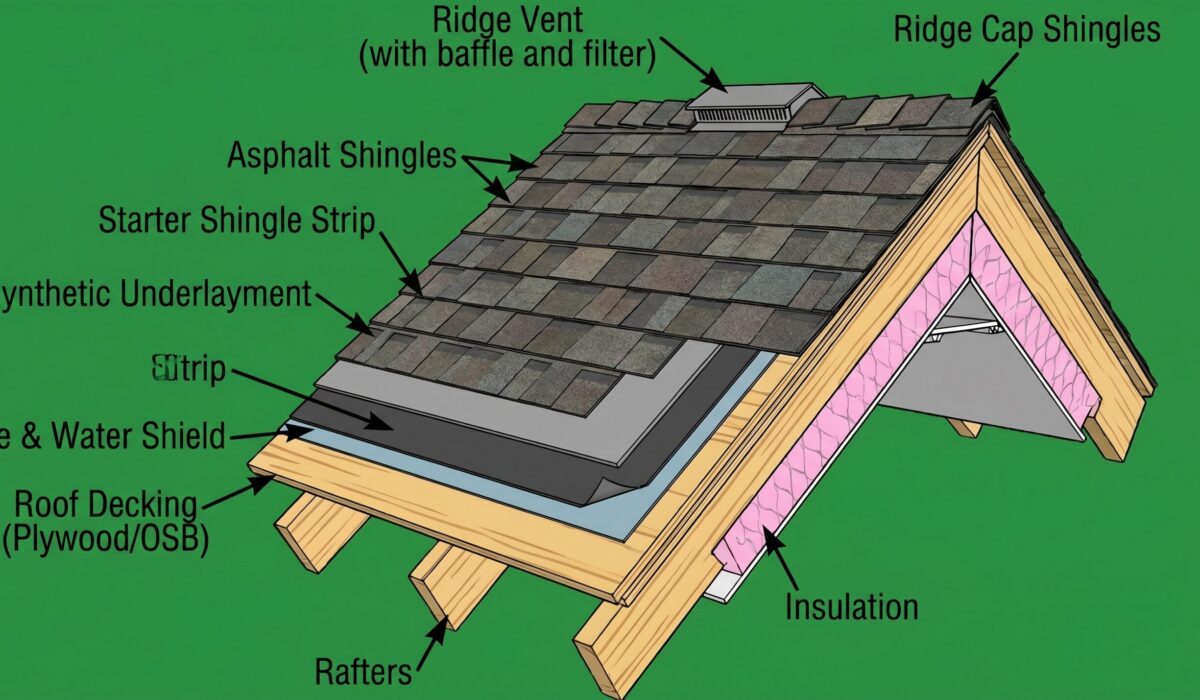
When you look at an asphalt shingle roof in Rocky River or the greater Cleveland area, you see the shingles on top. But underneath lies a complex system of components working together to protect your home from Northeast Ohio’s harsh weather conditions. An asphalt shingle roof system includes nine essential parts: roof decking, drip edge, underlayment, ice and water shield, roof flashing, asphalt shingles, ridge capping, roof vents, and pipe boots.
Understanding these components helps you make informed decisions during roof replacement and ensures contractors include everything necessary in their estimates. Missing even one component can lead to leaks, failed inspections, and costly repairs down the road—especially important in our climate where ice dams and severe storms are common concerns.
Key Insight: Each roof component impacts your total replacement cost, but leaving any component off your estimate creates a much bigger expense when water damage occurs.
Peak and Valley Roofing has helped Cleveland area homeowners understand their roofing systems and navigate insurance claims for storm damage. This guide breaks down each component so you know exactly what goes into a complete asphalt shingle roof replacement in Northeast Ohio.
What makes up an asphalt shingle roof system
An asphalt shingle roof system consists of multiple layers and components that work together like puzzle pieces. Each part serves a specific purpose in protecting your home from water, wind, and weather damage—particularly important in Northeast Ohio where we face everything from lake-effect snow to severe summer storms.
The system starts with structural decking as the foundation, then adds protective barriers like underlayment and ice and water shield. Metal components like drip edge and flashing direct water away from vulnerable areas. Finally, the visible elements – shingles, ridge caps, and vents – complete the weather-tight seal.
Think of it like building a house. You need a solid foundation (decking), weatherproofing (underlayment and barriers), proper drainage (flashing and drip edge), and the finished exterior (shingles and caps). Skip any layer, and the entire system becomes vulnerable to our region’s challenging weather conditions.
| Component | Location | Primary Purpose | Risk if Missing |
|---|---|---|---|
| Roof Decking | Base layer | Structural foundation | Roof collapse |
| Drip Edge | Roof edges | Water control | Fascia rot |
| Underlayment | Over decking | Secondary water barrier | Leak damage |
| Ice & Water Shield | Problem areas | Extra protection | Ice dam leaks |
| Roof Flashing | Transitions | Water redirection | Major leaks |
Essential structural and protective components
Roof decking forms the foundation of your entire roof system. This wooden base, made from plywood or oriented strand board (OSB), supports all other components. Older homes in Rocky River and Cleveland might have plank decking – individual wooden boards rather than sheets.
Your contractor cannot determine how much decking needs replacement until after removing old shingles. In Northeast Ohio’s climate, moisture infiltration can cause significant decking damage that isn’t visible from the surface. Rotted or damaged decking must be replaced before installing new roofing materials, which affects your project timeline and cost.
Drip edge is metal flashing installed along roof edges to prevent water from getting underneath roofing materials. Ohio building codes require drip edge installation, and inspectors will fail roofs without it. This L-shaped metal piece protects your fascia boards and roof decking from water damage—especially important during our heavy spring rains and winter freeze-thaw cycles.
Some contractors skip drip edge to lower their bid prices. Always verify that drip edge appears as a line item on your roofing estimate, as it’s both required by code and essential for long-term protection.
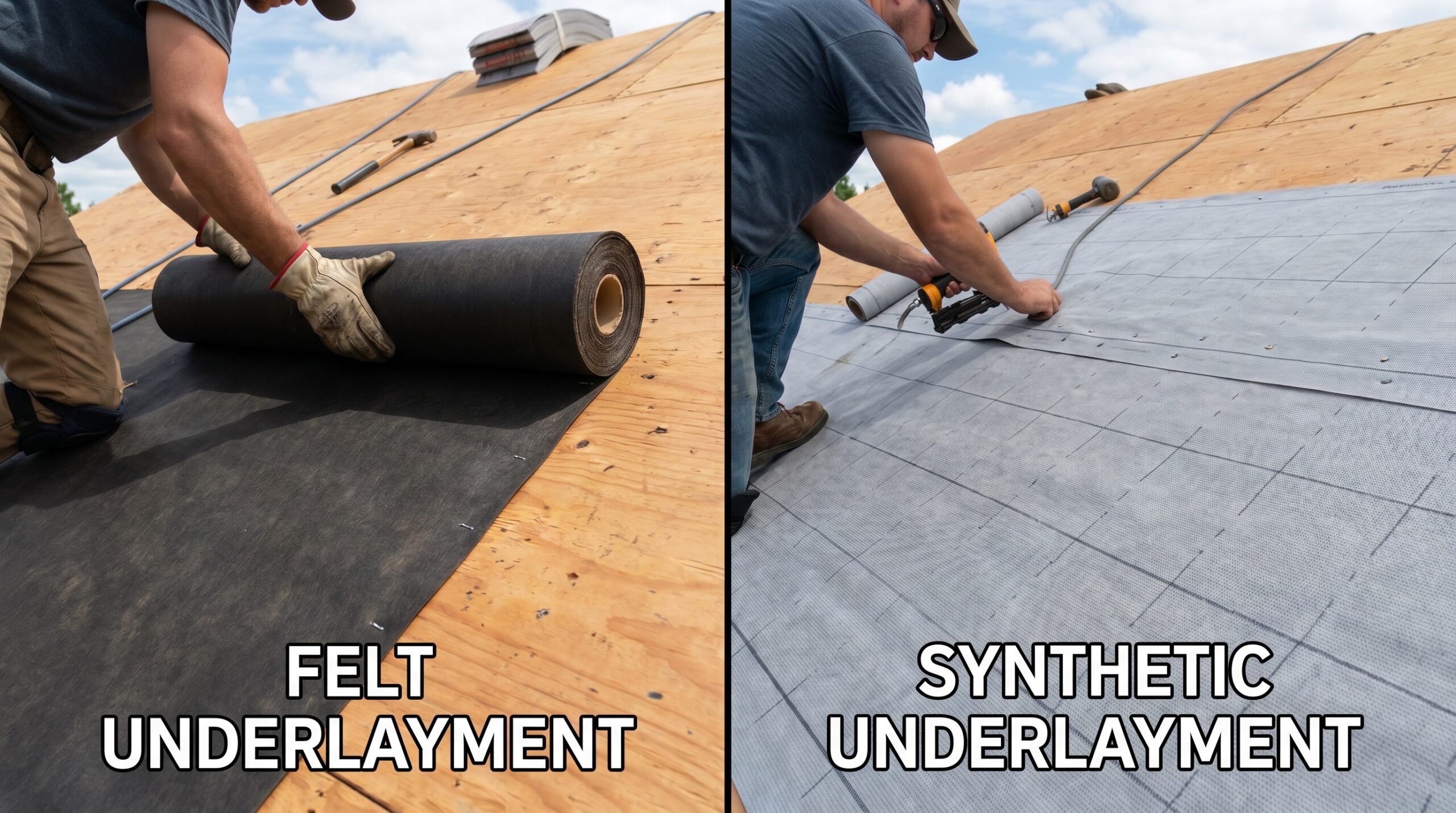
Underlayment creates a secondary water barrier between your decking and shingles. Two main types exist: traditional felt underlayment and synthetic materials. In Northeast Ohio’s climate, synthetic underlayment offers significant advantages—better performance during temperature fluctuations, superior water resistance during storms, and improved durability against our region’s weather extremes.
Water protection and drainage systems
Ice and water shield provides extra protection in vulnerable roof areas and is particularly crucial in Northeast Ohio where ice dams are a common winter concern. This self-adhering membrane goes around penetrations, in valleys, and along roof edges to prevent ice dam damage that can cause significant water infiltration during our harsh winters.
Ohio building codes require ice and water shield installation along roof edges in our climate zone. Peak and Valley Roofing often recommends extending ice and water shield coverage beyond minimum code requirements for enhanced protection against areas prone to water infiltration during severe weather events.
Roof flashing directs water away from areas where different roof planes meet or where the roof connects to walls, chimneys, or other structures. Common flashing locations include valleys, step flashing along walls, chimney bases, and around skylights—all critical areas during Cleveland’s heavy rainfall and snow melt periods.
Flashing materials include aluminum, steel, and copper. Steel offers the best balance of durability and cost for most Northeast Ohio homeowners, providing excellent performance against our region’s weather conditions. Copper provides premium aesthetics at higher prices and exceptional longevity. Always replace flashing during roof replacement to keep all components the same age and maintain warranty coverage.
Important Note: Roof flashing prevents leaks in the most vulnerable areas of your roof system. Reusing old flashing during replacement often leads to premature failure and water damage—especially problematic when dealing with insurance claims for storm damage.
Visible components and finishing elements
Asphalt shingles form the top layer and bulk of your roof system. Three main types exist with different price points and lifespans suitable for Northeast Ohio conditions. Three-tab shingles offer basic protection at the lowest cost but typically last 15-20 years in our climate. Architectural shingles provide better durability against wind and weather, lasting 22-25 years. Luxury shingles deliver premium appearance and 30-year lifespans with enhanced storm resistance.
Your shingle choice significantly impacts total project cost, curb appeal, and warranty options. Many manufacturers require specific underlayment types or ventilation systems to honor their warranties—details Peak and Valley Roofing ensures are properly coordinated in every installation.
Ridge capping seals the peak where two roof slopes meet—a critical component for preventing wind-driven rain infiltration during Northeast Ohio storms. Proper ridge caps are pre-bent, thicker shingles designed specifically for ridges. Never accept regular three-tab shingles cut and bent for ridge applications – this creates leak points and may void warranties.
Ridge caps often integrate with ridge vents to provide both sealing and ventilation at the roof peak, essential for managing moisture in our climate.
Ventilation and penetration sealing
Roof vents allow proper attic airflow to extend shingle life and reduce energy costs—particularly important in Northeast Ohio where temperature extremes can create significant attic moisture issues. Active ventilation systems include ridge vents with baffles, turbine vents, and powered exhaust fans. Passive systems use static box vents or ridge vents without baffles.
Proper ventilation requires balanced intake (usually soffit vents) and exhaust (roof vents) to create airflow. In our climate, poor ventilation shortens shingle lifespan, increases ice dam risk, and raises cooling costs during humid summer months.
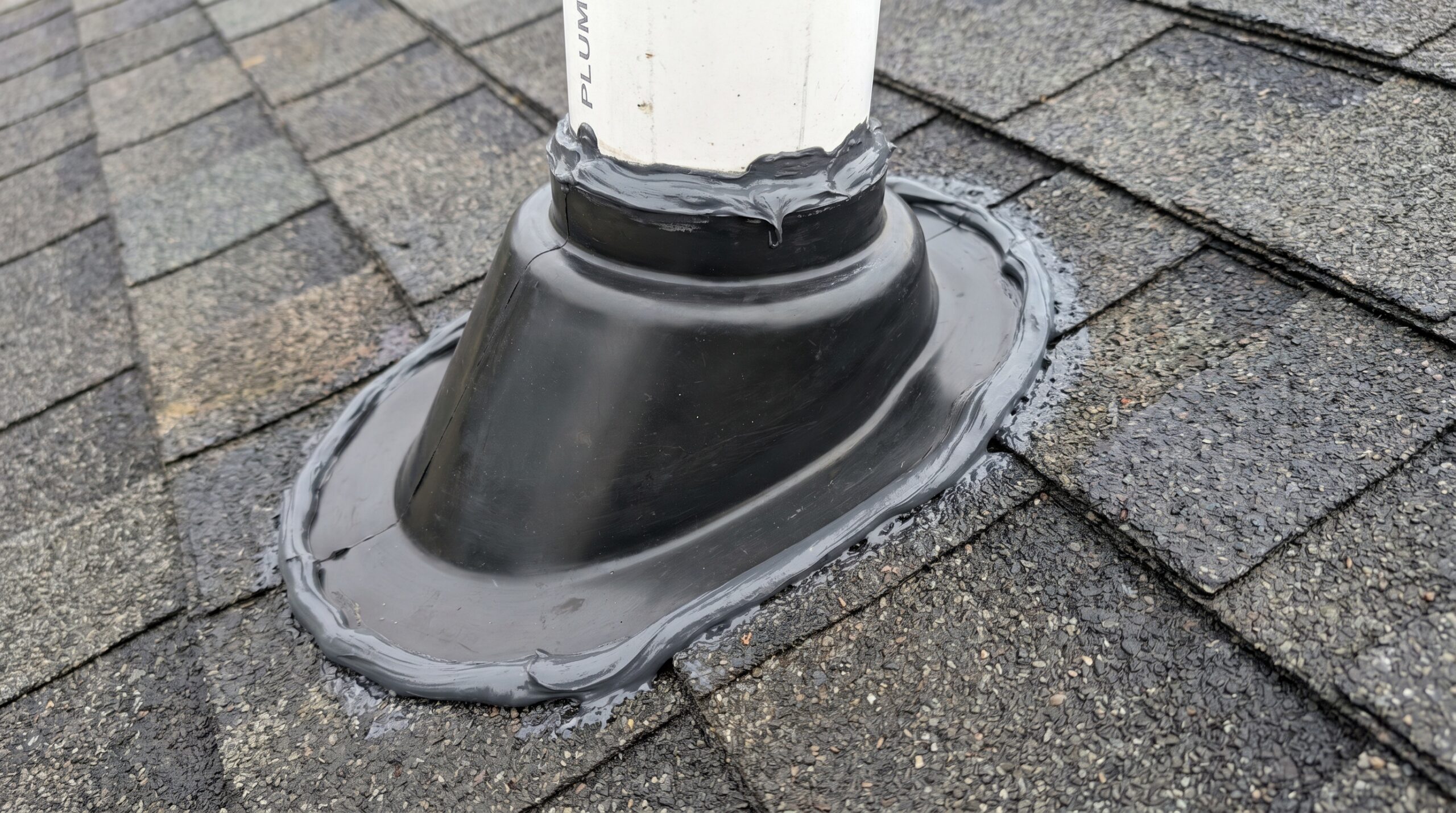
Pipe boots seal around plumbing vents and other roof penetrations—components that face particular stress from Northeast Ohio’s freeze-thaw cycles. These synthetic rubber boots prevent water from running down pipes into your home. In our climate, pipe boots typically need replacement every 10-15 years, often before the rest of the roof system, due to temperature-related deterioration.
Always replace pipe boots during roof replacement since they represent common leak sources as they age and crack from our region’s temperature fluctuations.
Understanding these nine components helps you evaluate contractor estimates and ensure nothing gets overlooked—especially important when dealing with insurance claims for storm damage. Each piece plays a crucial role in keeping your Northeast Ohio home dry and protected. When contractors skip components or use inferior materials, you pay the price through leaks, repairs, and shortened roof life.
Peak and Valley Roofing includes all necessary components in every estimate and backs our installations with comprehensive warranties. As a local, family-owned company specializing in insurance restoration, we understand Northeast Ohio’s unique challenges and ensure every detail is properly addressed for long-term protection.