

The connection between your chimney and roof represents one of the most vulnerable areas of your home’s protective system. In Ohio’s harsh climate, this integration point faces constant stress from freeze-thaw cycles, heavy snow loads, and seasonal temperature swings. Proper maintenance of these critical junctions can prevent thousands of dollars in water damage while ensuring your heating system operates safely throughout the winter months.
Quick Fact: Regular chimney-roof maintenance can extend your roof’s lifespan by 25-40% while preventing 90% of water infiltration issues at integration points.
Understanding how these systems work together helps you protect your investment. The flashing, sealants, and structural connections at chimney-roof intersections require specific care tailored to Ohio’s unique weather patterns. When properly maintained, these components create an impenetrable barrier against moisture while allowing your heating system to function efficiently.
Understanding critical vulnerability points
Ohio’s climate creates specific challenges for chimney-roof integration. The repeated freeze-thaw cycles cause materials to expand and contract, gradually weakening seals and creating gaps where water can penetrate. These vulnerable areas require your attention throughout the year.
Step flashing around the chimney base often shows the first signs of failure. This metal barrier directs water away from the intersection, but thermal movement can cause it to separate from surrounding materials. Counter flashing, which covers the step flashing and embeds into mortar joints, faces similar challenges as seasonal movement affects its seal.
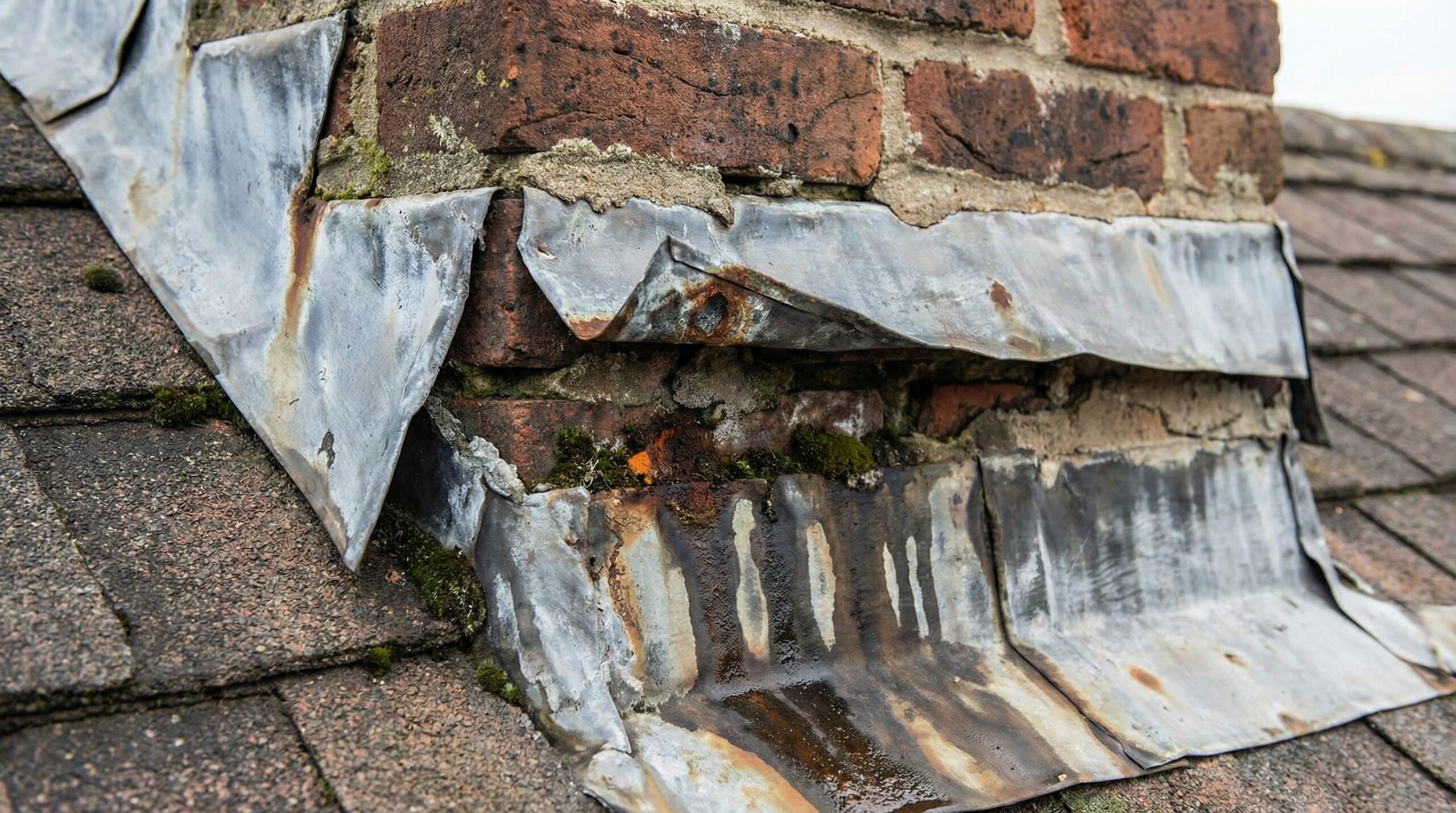
Sealant breakdown occurs predictably in Ohio’s climate. The constant temperature changes cause even high-quality sealants to crack and shrink, creating pathways for water infiltration. Cricket areas on the upslope side of larger chimneys collect debris and snow, making them particularly susceptible to ice dam formation and subsequent water backup. Understanding ice dam formation and prevention strategies helps protect these vulnerable integration points.
Professional Tip: Inspect flashing and sealants twice yearly – once in spring after winter damage assessment and again in fall before harsh weather arrives.
Seasonal maintenance strategies
Your maintenance approach should align with Ohio’s distinct seasons. Spring brings the opportunity to assess winter damage, while fall preparations help your chimney-roof system withstand upcoming harsh conditions. This seasonal approach prevents small issues from becoming major problems.
Spring maintenance focuses on damage assessment and repair. After winter’s freeze-thaw cycles, check for loose or damaged flashing, cracked sealants, and any signs of water infiltration in your attic space. Look for water stains on ceilings near the chimney, which indicate active leaks requiring immediate attention. Following a comprehensive post-winter roof and gutter maintenance approach ensures you catch all potential issues early.
Summer provides ideal conditions for major repairs and preventive treatments. The warm, dry weather allows sealants to cure properly and gives you access to perform thorough inspections. This season works best for crown repairs, flashing replacement, and applying protective coatings to masonry surfaces.
Fall preparations ensure your system can handle winter’s challenges. Clean gutters and downspouts around the chimney area, remove debris from cricket areas, and verify that all flashing remains secure. Install heat cables if ice dam formation has been problematic in previous years. Consider fall tree trimming to protect your roof and gutters from debris accumulation around chimney areas.
Flashing system maintenance and repair
Your flashing system requires specific attention to maintain its protective function. Step flashing pieces should lie flat against both the roof surface and chimney wall, creating overlapping layers that direct water downward. Any gaps or raised sections compromise this water management system.
Counter flashing inspection involves checking the mortar joints where metal pieces embed into the chimney structure. These joints often crack due to thermal movement, allowing water to penetrate behind the flashing system. Proper repair requires removing damaged mortar, cleaning the joint thoroughly, and installing new mortar that matches existing materials.
When flashing shows significant deterioration, replacement becomes necessary. This process involves carefully removing old materials without damaging surrounding roof components. New flashing installation requires proper overlap patterns, secure fastening, and quality sealants designed for Ohio’s temperature extremes.
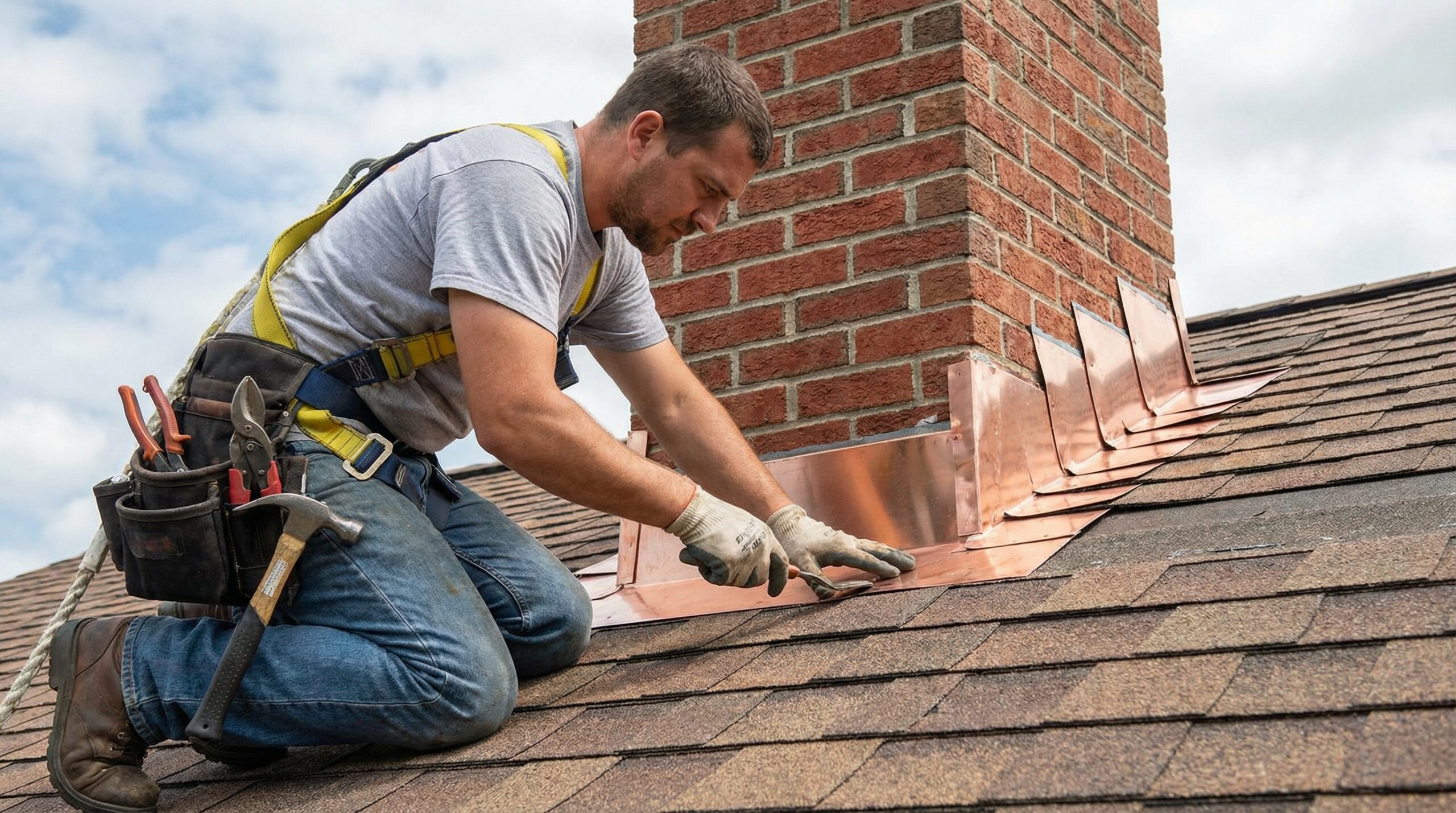
Professional assessment helps determine whether repair or replacement offers the best value. Minor sealant issues often respond well to targeted repairs, while extensive corrosion or physical damage typically requires complete flashing system renewal. Recognizing common types of roof damage helps you identify when professional intervention becomes necessary.
Chimney crown and masonry care
The chimney crown serves as your first line of defense against water infiltration from above. This concrete or mortar cap should slope away from the flue opening, directing water toward the roof surface rather than allowing it to pool around the chimney structure.
Crown maintenance involves regular inspection for cracks that allow water penetration. Small cracks often respond to specialized crown sealers that remain flexible through temperature changes. These products bridge minor gaps while allowing for thermal movement without compromising the seal.
Weather Alert: Ohio’s freeze-thaw cycles can turn small crown cracks into major structural issues within a single winter season.
Masonry maintenance focuses on mortar joint integrity throughout the chimney structure. Deteriorated mortar allows water infiltration that accelerates brick damage and compromises structural stability. Tuckpointing involves removing damaged mortar and installing new material that matches existing joints in both appearance and performance. For older Ohio homes, specialized historic roof repair techniques may be necessary to preserve architectural integrity while ensuring proper protection.
Cap installation and maintenance ensure proper ventilation while preventing water and wildlife entry. Quality caps feature spark arrestor screens that protect surrounding roof materials from fire hazards during heating season use. Regular cleaning maintains these protective features while ensuring adequate airflow for safe operation.
Your chimney-roof integration system requires consistent attention to maintain its protective function throughout Ohio’s challenging climate. Regular inspections, prompt repairs, and seasonal maintenance help prevent costly water damage while ensuring safe heating system operation. When you notice signs of deterioration or feel uncertain about any aspect of maintenance, consulting with roofing professionals ensures proper care for these critical home systems. Peak and Valley Roofing provides expert chimney-roof integration services throughout Ohio, helping homeowners maintain safe, dry, and efficient homes year-round.