

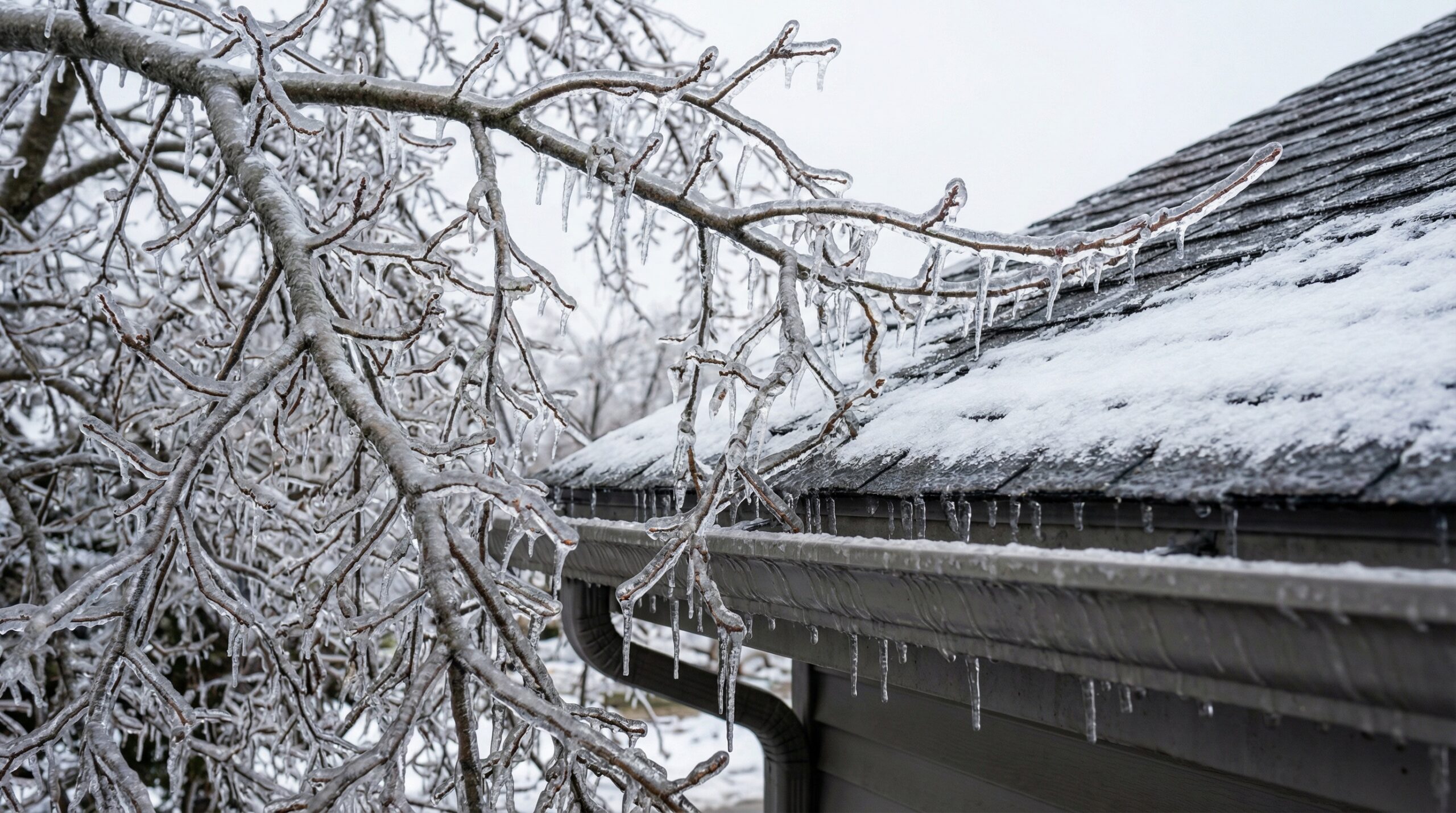
Fall tree trimming isn’t just about aesthetics—it’s your first line of defense against costly winter roof and gutter damage. When ice and snow accumulate on overhanging branches, the added weight can increase a limb’s load by several hundred pounds, creating serious risks for your home’s roofing system. Rocky River homeowners face unique challenges with mature tree coverage that requires proactive maintenance before winter weather arrives.
Quick Fact: Properties that maintain proper tree clearance from their roofs report 78% fewer winter weather insurance claims compared to homes with overhanging branches.
The dormant season provides the ideal window for tree work, as reduced sap flow minimizes stress on trees while giving you clear access to gutters and rooflines before leaves return in spring.
Why fall timing matters for tree maintenance
Fall represents the optimal season for tree trimming because trees enter their natural dormancy period. During this time, sap flow decreases significantly, which reduces stress on the tree when branches are removed. You also gain better visibility of your roof and gutter systems without summer foliage blocking your view.
Rocky River’s climate creates specific challenges that make fall trimming essential. Northeast Ohio experiences an average of 40-45 freeze-thaw cycles annually, which can cause significant expansion and contraction in tree branches. When combined with lake-effect ice accumulation, these cycles create conditions where even healthy-looking branches can fail unexpectedly
The timing also allows you to address any storm damage from summer weather before winter compounds the problems. Damaged branches that might survive mild fall weather often become hazardous when loaded with snow and ice, potentially leading to various types of roof damage that require professional attention.
Identifying trees that need attention
Not all trees pose the same risk to your roof and gutters. Start by examining any branches within 10 feet of your roofline, as these create the highest risk for contact damage during storms. Look for dead or dying branches, which you can identify by their brittle texture, missing bark, or lack of flexibility when gently moved.
Pay special attention to trees with weak branch structures. Bradford pears, for example, have notoriously weak branch unions that make them prone to splitting. Silver maples grow quickly but develop brittle wood that breaks easily under ice loads. These species require more aggressive pruning or, in some cases, complete removal if they’re too close to your home.
Safety Alert: Never attempt to trim branches near power lines yourself. Contact your utility company first, as they often provide free trimming services for branches threatening electrical infrastructure.
Check for signs of disease or pest damage, particularly in ash trees where emerald ash borer has become a significant concern. Diseased trees are unpredictable and should always be evaluated by certified arborists before any trimming work begins.
| Tree Species | Risk Level | Common Issues | Recommended Clearance |
|---|---|---|---|
| Silver Maple | High | Brittle wood, fast growth | 20+ feet |
| Bradford Pear | Very High | Weak branch structure | Remove if near roof |
| Oak | Moderate | Disease susceptibility | 15-20 feet |
| Pine | Medium | Heavy snow accumulation | 12-15 feet |
Protecting your roof through strategic trimming
Strategic tree trimming provides multiple benefits for your roofing system. Removing branches that scrape against shingles prevents abrasion damage that can compromise your roof’s protective barrier. Overhanging branches also create excessive shade that promotes moss and algae growth, particularly on north-facing roof sections. If you’re already dealing with this issue, learn how to remove moss from your roof safely and effectively.
Proper clearance allows better air circulation around your roof, which helps moisture evaporate more quickly after rain or snow. This improved drying reduces the risk of ice dam formation and extends the life of your roofing materials. Understanding ice dams on roofs and their prevention is crucial for Rocky River homeowners.
Focus your trimming efforts on maintaining clear sight lines to roof valleys and areas where debris typically accumulate. These spots are particularly vulnerable to water backup when gutters become clogged with leaves and branches.
Keeping gutters functional through winter
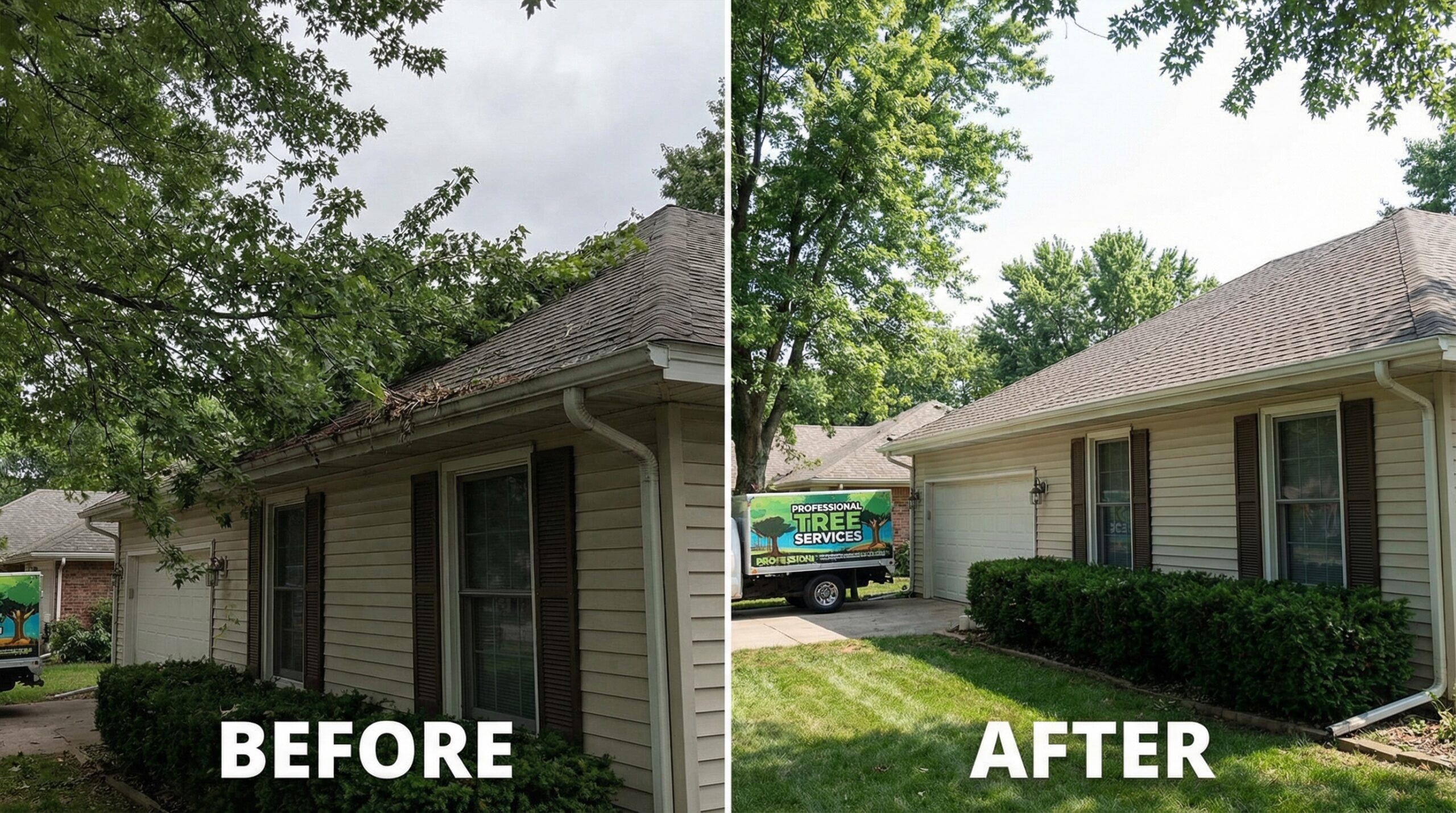
Your gutter system depends on proper tree maintenance to function effectively during winter months. Overhanging branches drop leaves, twigs, and other debris directly into gutters, creating clogs that prevent proper drainage. When water can’t flow freely, it backs up and can cause ice dams or overflow that damages your home’s foundation and siding.
Trimming branches that hang over gutters reduces the volume of debris that accumulates throughout fall and winter. This maintenance extends the time between gutter cleanings and reduces the risk of ice-related damage when temperatures fluctuate. For comprehensive seasonal maintenance, consider our guide on post-winter roof and gutter maintenance.
Pro Tip: Trim branches to maintain at least 6 feet of clearance over gutters. This distance prevents most debris from falling directly into the gutter system while still allowing the tree to provide shade and aesthetic value.
Consider the mature size of trees when planning your trimming strategy. Young trees that seem harmless now may create problems in just a few years as they grow. Planning ahead prevents more expensive removal costs later. For more insights, read about the impact of tree coverage on your roof.
When to call professionals vs DIY approaches
You can handle basic trimming tasks yourself if branches are small (under 2 inches in diameter) and easily reachable from the ground. Use clean, sharp tools and always wear safety equipment including eye protection and gloves. Never use ladders for tree work, as falls account for a significant percentage of tree-related injuries.
Professional tree services become necessary when branches exceed 15 feet in height, are larger than 2 inches in diameter, or require ladder work. Certified arborists have the proper equipment, insurance coverage, and expertise to handle complex situations safely. They also understand local permit requirements and can coordinate with utility companies when necessary.
Professional services also provide value through proper technique. Incorrect cutting can damage trees and create entry points for disease and pests. Certified arborists use methods like the three-cut technique to prevent bark stripping and promote healthy healing.
The investment in professional services often pays for itself through prevented damage and extended tree life. Many homeowners insurance policies also require professional documentation for coverage of tree-related claims. If you’re preparing for the colder months, check out our compelling reasons for fall roof repair to ensure your home is ready.
Fall tree trimming represents a critical investment in your home’s protection against winter weather damage. By addressing overhanging branches and maintaining proper clearances before snow and ice arrive, you significantly reduce the risk of costly roof and gutter repairs. Whether you tackle basic maintenance yourself or hire certified professionals for complex work, taking action this fall will help ensure your home weathers the winter months safely. Remember that proper tree care not only protects your property but also maintains the health and beauty of your landscape for years to come.